
Dog Boot Camp in Fort Wayne, IN
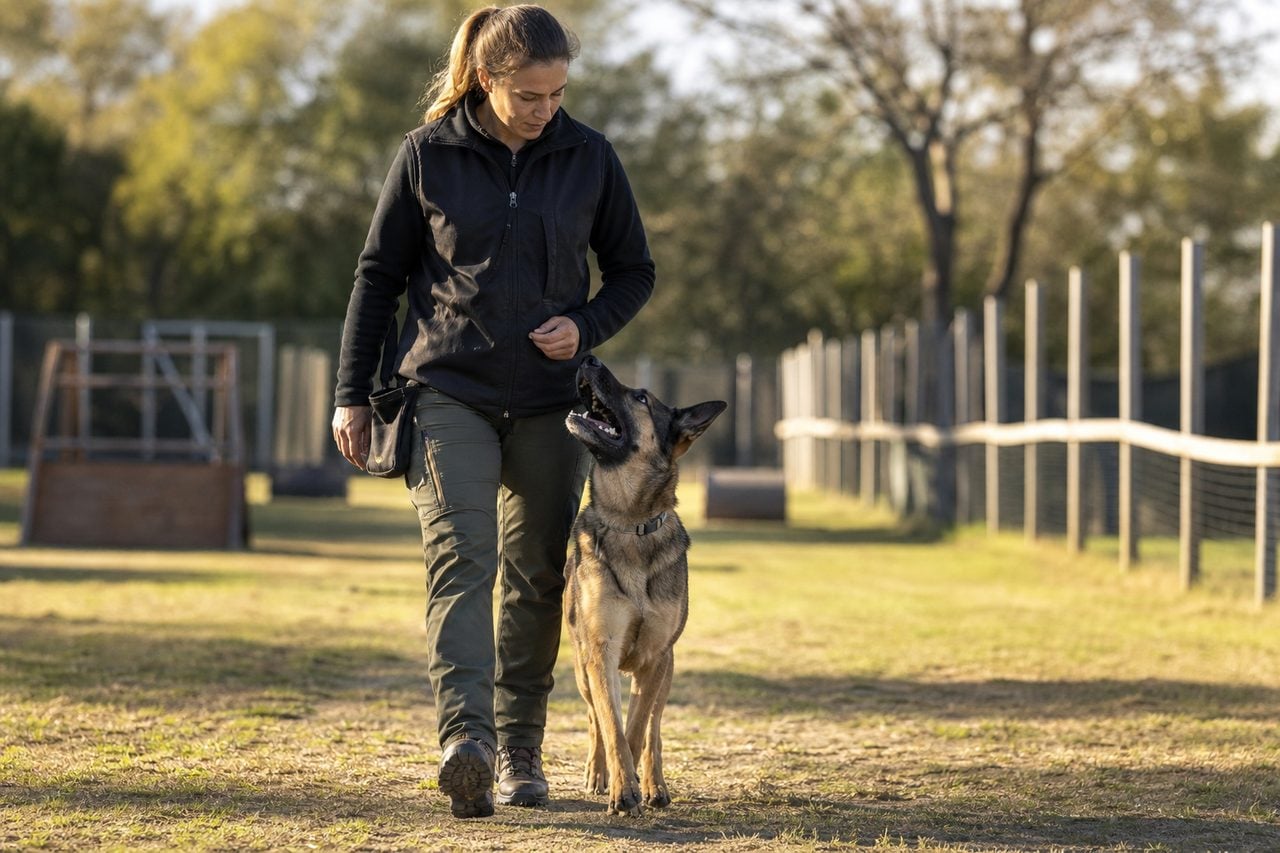
Dog boot camp is the intensive end of obedience training — a concentrated program built to install reliable manners and control in a compressed timeframe rather than spread across months of weekly classes. The term covers a range of formats, from residential stays where the dog lives with a trainer to intensive day-camp schedules where the dog attends daily and goes home each night. What they share is volume: a lot of focused, well-timed practice packed into a short window.
- What dog boot camp really means
- Is your dog a good candidate for boot camp?
- Day camp versus residential — choosing the format
- What a boot camp week looks like
- Vetting a boot camp in Allen County and nearby towns
- Making the gains stick after camp ends
- Boot camp versus other training options
- Reviewed trainers
- FAQ
For Fort Wayne families, boot camp appeals when the usual once-a-week group class has not moved the needle fast enough, or when an adolescent dog’s energy and habits have outrun what an owner can manage alone. A dog that drags you down the Rivergreenway, ignores recall at Franke Park, or turns every visitor into chaos is a common candidate. The promise is a big jump in obedience and control in weeks rather than seasons.
This guide explains what dog boot camps actually deliver, the difference between the day-camp and residential formats, how to judge a program in Allen County and the surrounding towns, and how to keep the gains once camp ends. The honest through-line: boot camp accelerates training, but the dog you get back still depends on what you do next.
What dog boot camp really means
Boot camp is a marketing term more than a technical one, and it covers several formats. The common thread is intensity — more training reps, more consistency, and faster progression than a standard weekly class delivers. Instead of one lesson every seven days with days of drift in between, a boot camp stacks daily sessions so the dog is constantly building and reinforcing skills.
The two main formats are residential and day-camp. In a residential boot camp the dog boards with the trainer for the duration, which maximizes control over the dog’s environment and routine — the trainer manages every meal, rest period, and rep. In a day-camp model the dog attends the facility on a daily or near-daily schedule and returns home each evening, which keeps the owner closer to the process and lets the dog practice in the home environment nightly. Both compress the timeline; they differ mainly in how much of the dog’s life the trainer controls.
Whatever the label, the curriculum usually centers on practical obedience: attention and focus, sit, down, place, a solid stay with duration, loose-leash walking, reliable recall, and impulse control around doors, food, and distractions. Some programs push into off-leash reliability. The goal is a dog you can actually live with and take places — not competition polish, but dependable everyday control.
Is your dog a good candidate for boot camp?
Boot camp shines for the high-energy adolescent — the roughly six-to-eighteen-month dog with more drive than manners, whose habits (pulling, jumping, bolting, selective hearing) have gotten ahead of a first-time owner. That developmental window is when many dogs test boundaries hardest, and a concentrated program can channel that energy into structure before the habits calcify.
It also suits owners whose own efforts have plateaued. If you have taken the group class, watched the videos, and still cannot get a reliable recall or a calm walk, the problem is often consistency and timing — exactly what an intensive program with a skilled trainer provides. And it fits families facing a specific, fast-approaching need: a move, a new baby, a dog that has become genuinely unmanageable on daily walks.
Boot camp is a poorer fit for a few cases. Dogs with serious aggression or deep fear-based reactivity usually need a behavior-focused approach rather than an obedience boot camp, because the underlying emotion has to be addressed first. Very young puppies often do better in an owner-involved program during the critical socialization window. And any owner unwilling to maintain the training afterward should temper expectations — intensity up front does not exempt you from follow-through.
Day camp versus residential — choosing the format
The format you pick shapes both the experience and the cost. A residential boot camp hands the trainer total control of the dog’s environment. Every rep, meal, rest, and correction happens on the trainer’s terms, which tends to produce the fastest raw progress and is ideal when the home environment is part of the problem — a chaotic household, other dogs undoing the work, or an owner who cannot yet enforce rules. The trade-off is time apart from your dog and a heavier reliance on the go-home transfer.
A day-camp boot camp keeps the dog home each night, which has real advantages. The owner stays involved, the dog practices skills in the actual home environment daily, and the nightly reunion lets you begin applying what the trainer built while support is still fresh. It suits owners who want to stay hands-on and dogs who handle their home setting well enough to reinforce rather than erode the day’s work. The trade-off is that the trainer does not control the evenings, so household consistency matters more from day one.
Practical logistics matter in the Fort Wayne area. Day camp means a daily drive, so a facility in Fort Wayne proper, New Haven, or Huntertown is far more sustainable than one out in the lake country. Residential removes the daily commute but means you will still return for go-home lessons, so proximity helps either way. Match the format to your schedule, your home environment, and how involved you want to be.
What a boot camp week looks like
Inside a well-run boot camp, the day is deliberately structured. Dogs learn best in short, frequent sessions with rest between, so a typical day interleaves several focused teaching blocks — foundation cues, then proofing, then duration and calmness work — with decompression, enrichment, and potty breaks. The rest is not idle time; it is when the day’s learning consolidates.
Progression is the whole point. Early sessions establish clear communication — a reward marker, a release word, and consistent rules — and teach the core cues. As the dog becomes fluent, the trainer systematically raises difficulty by adding the three D’s: duration (holding longer), distance (obeying from farther away), and distraction (performing around other dogs, people, and movement). Distraction-proofing is the hardest piece to build at home, which is where an intensive program earns its value.
Expect the trainer to communicate progress. Good programs share updates, photos or video, and are candid about what is clicking and what needs more time. Ask up front how methods are applied — many area trainers use reward-based systems, some add an e-collar for off-leash reliability — and make sure you are comfortable with the approach. A trainer who can explain the plan for your specific dog, rather than running every dog through an identical script, is doing it right.
Vetting a boot camp in Allen County and nearby towns
The Fort Wayne metro and surrounding communities — New Haven, Huntertown, Leo-Cedarville, Auburn, Columbia City, and out toward Angola — offer a spread of intensive-training options, so do the homework. Start with the trainer’s experience and transparency. A professional will explain their methodology, the tools they use, and why, without dodging, and will let you tour the facility and observe before you commit.
Credentials add confidence. A CPDT-KA certification through the Certification Council for Professional Dog Trainers, or a Fear Free designation, signals real investment in the craft — though hands-on experience and clear communication matter just as much as letters after a name. Look for references or reviews from actual local clients, and ask specifically about dogs similar to yours in age, breed energy, and issue.
Watch for red flags. Be cautious of any program that guarantees a perfectly finished dog, refuses to let you observe or visit, relies on fear-based sales pressure (train now or lose your dog), or cannot clearly describe what happens during a typical day. On the facility itself, look for clean and safe housing, secure fencing for any off-leash work, and dogs that appear comfortable rather than shut down. The right operation talks as much about your dog’s welfare and your long-term success as about the fast result.
Making the gains stick after camp ends
The hard truth of any intensive program is that the results last only as well as the maintenance. Boot camp installs the skills; the household keeps them. The transfer is where this lives — a good program includes go-home lessons where the trainer coaches you through the exact cues, hand signals, and rules the dog learned, plus written protocols so everyone in the house stays consistent.
Consistency is the whole game. A dog told place by the trainer, lie down by one family member, and go to bed by the kids will lose the behavior quickly. Keep the same words, honor the same boundaries — the threshold wait at the door, the place command during dinner — and practice in short daily sessions rather than occasional long ones. Ten focused minutes a day sustains far more than a weekly cram.
Then proof it in the real world. Northeast Indiana gives you a natural difficulty ladder: start in the yard or a quiet stretch of the Rivergreenway, then work up to busier settings like Franke Park, Foster Park, or the trails at Metea and Fox Island County Parks, where other dogs and wildlife raise the challenge. Because Indiana has no statewide leash law — control rules come from local ordinances across the Fort Wayne area — a dependable recall and steady leash manners genuinely matter on shared trails. Maintained this way, a few intensive weeks become a well-mannered dog for years.
Boot camp versus other training options
Intensive boot camp is one path among several, and the right choice depends on your dog, your schedule, and your budget. Weekly group classes cost less and build the owner’s handling skills directly, but they progress slowly and offer limited one-on-one attention — a fine fit for a foundation-level dog and an owner with time, a weaker one for an entrenched problem on a deadline. Private lessons split the difference: focused, tailored coaching that trains the owner and dog together, at a pace between a class and a boot camp.
A full residential board & train sits at the most hands-off, highest-intensity end — the trainer does the heavy lifting over weeks. An intensive boot camp, especially the day-camp format, aims for a similar acceleration while keeping the owner more involved. If your main obstacle is time and consistency, an intensive program makes sense; if it is handling skill and confidence, private lessons or classes may serve you better long term because you build the ability yourself.
Whatever the format, the deciding factors are the same: an honest match between the program and your dog’s actual needs, a trainer whose methods you trust and understand, and a real plan for maintaining the training afterward. Speed is only worth paying for if the results are built to last, and that always comes back to the transfer and your follow-through at home.
Reviewed Dog Boot Camp Trainers in Fort Wayne
These reviewed Fort Wayne-area trainers from our directory handle dog boot camp. Each links to a full profile with specialties, certified credentials, reviews, and contact info:
- Dog Training Elite Northeast Indiana — 5.0★ (170 reviews)
- Off Leash K9 Training of Fort Wayne LLC — 5.0★ (120 reviews)
- Perfect Pup LLC — 5.0★ (46 reviews)
- Solid Foundation Dog Training — 5.0★ (18 reviews)
- Lee’s Dog Training — 4.6★ (86 reviews)
- Dog Psychology and Training Center – Fort Wayne — 4.6★ (14 reviews)
- animal training & development — 4.5★ (14 reviews)
- Northeastern Indiana Kennel Club Training Classes
See all Fort Wayne dog boot camp trainers →
Frequently Asked Questions
How is a dog boot camp different from a regular obedience class?
The main difference is intensity and pace. A weekly group class delivers one lesson every seven days with days of drift in between, and progress is gradual. A boot camp stacks daily sessions — far more reps, tighter consistency, and faster progression — so a dog can make weeks of gains in the time a class covers in a season. Classes build your handling skills directly and cost less; boot camps prioritize installing reliable behavior in the dog quickly. The best choice depends on whether your bottleneck is time or handling skill.
Should I choose day camp or a residential program?
It depends on your home environment and how involved you want to be. Residential gives the trainer total control of the dog’s routine and tends to produce the fastest raw progress, which helps when the home setting is part of the problem. Day camp keeps the dog home each night, keeps you hands-on, and lets the dog practice in its real environment daily — but it requires household consistency from day one and a daily drive, so a nearby facility matters. Match the format to your schedule and how much of the process you want to own.
What ages and types of dogs benefit most from boot camp?
High-energy adolescents, roughly six to eighteen months, tend to benefit most — that is when drive outpaces manners and habits form fast, so structure pays off. Dogs whose owners have plateaued despite genuine effort also do well, since the issue is often consistency and timing that a skilled trainer supplies. Very young puppies frequently do better in owner-involved programs during the socialization window, and dogs with serious aggression or deep fear usually need a behavior-focused approach rather than an obedience boot camp.
Will boot camp fix aggression or severe anxiety?
Usually not on its own. Aggression and severe anxiety are emotional problems, not simple obedience gaps, and an intensive obedience program teaches cues without necessarily changing the underlying emotion — and some methods can make fear worse. Those cases call for a behavior-focused specialist, sometimes alongside a veterinary workup to rule out pain or medical contributors. If your dog has bitten or shows intense fear or reactivity, start with an assessment from a professional who specifically handles behavior cases rather than booking a general boot camp.
How do I keep the training from fading after camp?
Consistency and practice. Make sure the program includes go-home lessons and written protocols so the whole household uses the same cues and honors the same boundaries — mixed signals erode trained behavior fastest. Practice in short daily sessions rather than occasional long ones, and proof the skills in gradually harder settings, from your yard to busier local parks and trails. Following up with the trainer during the first few weeks home, when habits either lock in or slip, makes a big difference in whether the gains hold.
What should make me walk away from a boot camp program?
Several red flags. Be wary of any program that guarantees a perfectly finished dog, refuses to let you observe or tour the facility, uses fear-based sales pressure, or cannot clearly explain what a training day looks like and which tools they use. On site, watch for unclean or unsafe housing, insecure fencing where off-leash work happens, or dogs that look shut down rather than comfortable. A trustworthy operation is transparent about methods, welcomes your questions, and talks about your dog’s welfare and long-term success, not just a fast result.
Related: read our complete dog boot camp guide or the full Fort Wayne dog training overview.
Ready to find the right dog boot camp pro in Fort Wayne?