
Dog Boot Camp in Indianapolis, IN
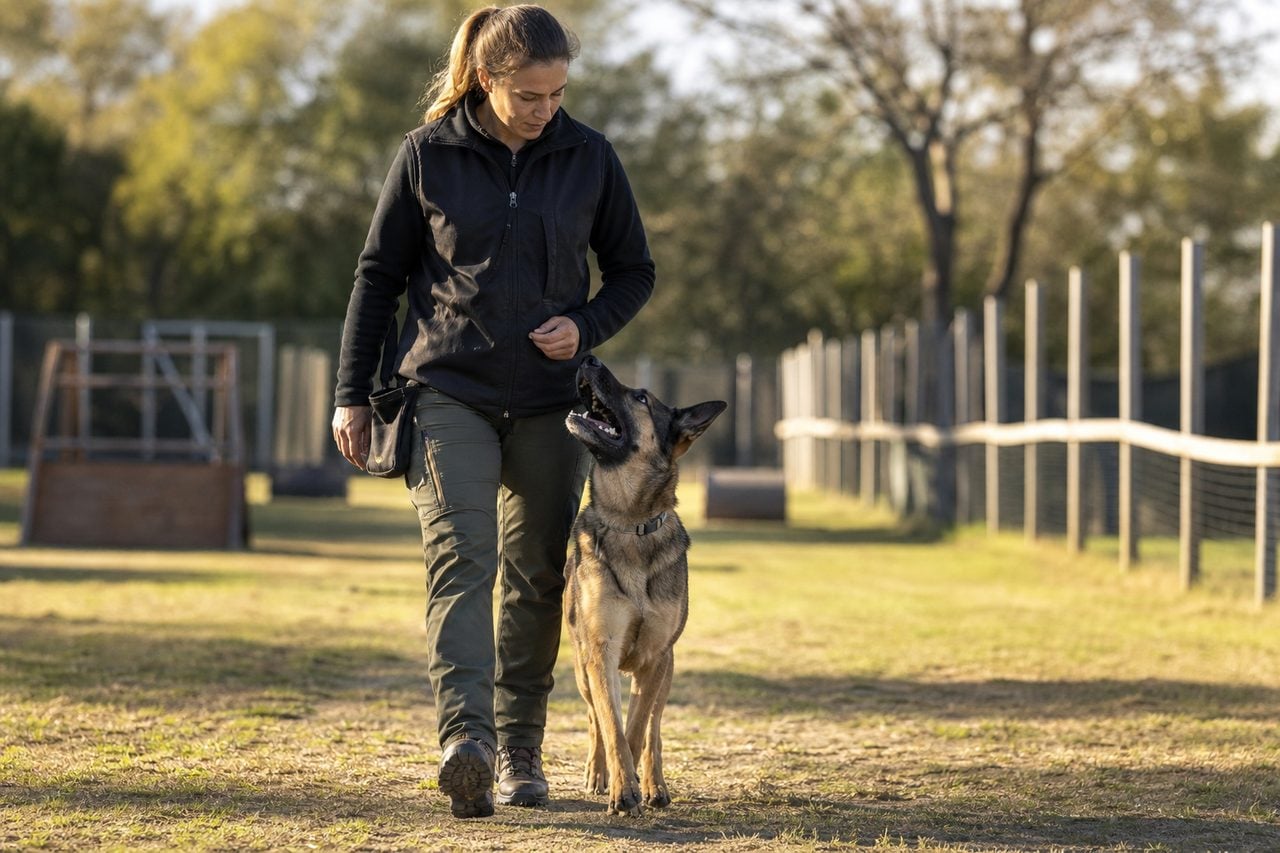
Dog boot camp is built for one thing: speed. When you need a fast, intensive turnaround on obedience or unwanted behaviors — rather than the slow drip of one class a week — a boot-camp program compresses weeks of progress into a short, high-intensity sprint. It’s the accelerated end of the training spectrum, and across Indianapolis it comes in two flavors: residential camps where your dog stays overnight, and day camps where you drop off in the morning and pick up at night.
- What makes a program a "boot camp"
- Day camp vs. residential boot camp
- Behaviors that respond well to the fast-track
- Why the intensive model fits Indianapolis life
- What follow-through looks like after camp
- Setting realistic expectations going in
- What a boot camp typically costs
- How to vet an intensive program
- Reviewed trainers
- FAQ
The appeal is obvious for time-pressed Indy households. Whether you’re commuting daily on I-465, raising a wild adolescent in Fishers, or trying to fast-track a new rescue in Greenwood before a move or a new baby arrives, the intensive model front-loads the heavy work into a defined window instead of dragging it out for months.
This page breaks down how boot camps differ from a standard course, the day-camp-versus-residential decision, what behaviors respond well to the fast-track approach, and how to tell a legitimately intensive program from one that just talks fast.
What makes a program a "boot camp"
The word “boot camp” describes intensity and pace, not a specific facility type. The defining feature is frequency: instead of a single weekly session, your dog trains multiple times a day across consecutive days, so skills get installed and reinforced before they have a chance to fade. That density is what produces the rapid, visible change owners are paying for.
It’s worth being clear about the overlap: many residential boot camps are board-and-train programs marketed for their intensity. The distinction this page draws is one of emphasis. Board-and-train centers on the residential structure and the long-term go-home transfer; boot camp centers on the accelerated outcome — getting from chaos to control quickly. If your top priority is a fast behavior reset on a tight timeline, the boot-camp framing is what you’re shopping for.
A good boot camp still respects how dogs actually learn. Intensity means more well-timed reps, not endless drilling that fries a dog’s attention. Reputable Indianapolis trainers build in rest and decompression precisely because tired, stressed dogs don’t retain.
Day camp vs. residential boot camp
The biggest structural choice is whether your dog sleeps at home or at the facility.
Day camp (day-training intensive) means you drop your dog off in the morning — often several days a week — and pick up in the evening. Your dog gets concentrated professional training during the day, then comes home each night, which keeps the bond and home routine intact. It’s a strong fit for owners who can’t bear to be apart for weeks, who want to practice each evening, and who live close enough to a facility for a daily round trip. In a metro split by I-465, drive time genuinely factors in.
Residential boot camp means your dog stays overnight for the program’s duration. You lose the daily check-in but gain full-time environmental control — the trainer manages every meal, rest period, and exposure around the clock, which can accelerate results, especially for ingrained habits. It’s also the only practical option if no facility is within a reasonable daily drive of your home.
Neither is universally superior. Day camp trades a little speed for connection and continuity; residential trades daily contact for maximum immersion.
Behaviors that respond well to the fast-track
Intensive programs are at their best with skills and habits that improve through high-frequency repetition and consistent structure:
- Core obedience — sit, down, place, stay, and reliable recall, proofed against distraction.
- Leash manners — ending the constant pulling that makes walks along Indy’s trails and neighborhoods miserable.
- Impulse control — jumping on guests, counter-surfing, door-dashing, and bolting.
- Adolescent “selective hearing” — the classic 6-to-18-month phase where a once-trainable puppy seems to forget everything.
- Crate and settle behaviors for dogs that can’t relax at home.
Deeper emotional issues — serious fear, anxiety, or aggression — are a different category. They can start in an intensive program, but they don’t resolve on a stopwatch; behavior change there is gradual by nature. Be skeptical of any camp that guarantees to “fix” aggression in a fixed number of days.
Why the intensive model fits Indianapolis life
The fast-track approach maps neatly onto how a lot of central Indiana households actually live. Long suburban commutes from Carmel, Fishers, Noblesville, and Westfield leave little energy for nightly training drills. Families on the south side in Greenwood and Franklin or out west in Avon, Plainfield, Brownsburg, and Speedway often want results before a life change — a move, a new baby, visiting relatives over the holidays.
Indiana’s weather adds another wrinkle. Owners frequently struggle to stay consistent through a humid July or an ice-locked February, and an intensive program at a facility with indoor training space keeps progress moving regardless of what’s happening outside. A camp can install reliable indoor manners in winter and then proof them outdoors once central Indiana’s pleasant spring and fall weather returns.
The trade-off is cost and the need for follow-through — intensity gets you a trained dog quickly, but you still have to maintain the structure once camp ends.
What follow-through looks like after camp
Even the most intensive program is only the launch, not the finish line. The skills your dog leaves with are conditioned to a trainer and a routine; keeping them alive at home is on you. The good news is that boot-camp graduates typically arrive with momentum that’s easy to maintain if you don’t let it lapse.
Expect a quality program to send you home with clear instructions — how each cue works, how to reward and correct with good timing, and a maintenance routine you can realistically keep. Many Indianapolis camps include at least one coaching session for the owner and offer follow-up or refresher options. Day-camp programs have a built-in advantage here: because you practice each evening, the transfer happens gradually and naturally throughout the program.
When comparing camps, ask specifically what owner support is included after the intensive ends. The fastest results in the world won’t last without it.
Setting realistic expectations going in
The most common reason owners feel let down by a boot camp isn’t the program — it’s a mismatch between what was promised and how dogs actually learn. Setting clear expectations before you enroll protects both your money and your dog.
First, understand that ‘intensive’ means accelerated, not instant. A dog can make remarkable obedience progress in one to a few weeks, but it’s still learning new patterns that need reinforcement to become permanent. The camp builds the skill and the momentum; you keep them alive afterward. Owners who treat pickup day as the finish line are the ones who watch results fade.
Second, understand that intensity has limits. There’s a point past which more drilling stops helping and starts stressing a dog into shutting down. The best programs interleave focused work with real rest, and a camp that brags about training a dog ‘all day, every day’ with no decompression is describing a problem, not a selling point.
Third, match the timeline to the goal. Manners, leash skills, and obedience respond quickly to the fast-track. Emotional issues — deep fear, anxiety, true aggression — do not, and any program guaranteeing to resolve those on a fixed schedule is overpromising. Going in with calibrated expectations is the single best way to come out satisfied.
What a boot camp typically costs
Intensive programs sit toward the higher end of dog-training pricing because you’re paying for concentrated, frequent professional time — and, in residential formats, for boarding on top of that. In the Indianapolis market, the rough shape of pricing looks like this (always confirm directly, since scope varies widely):
- Day-camp intensives are generally less expensive per program than residential, since there’s no overnight boarding — you’re paying for the training day, often billed by the week or by a block of days.
- Residential boot camps cost more because room and board are bundled with the training, and the duration of the stay drives the total.
- Behavior-focused intensives command the highest rates, reflecting the specialized experience required and the longer timelines involved.
When comparing quotes, look past the headline number. A program that includes owner coaching, written instructions, and one or more follow-up sessions is frequently better value than a cheaper option that bills every bit of support separately. Ask exactly what’s bundled, how many daily sessions you’re actually getting, and whether any refresher support is included after the intensive ends.
How to vet an intensive program
“Boot camp” is a marketing term with no licensing behind it, so vetting matters. Before you enroll a dog from any part of the metro — from downtown and the near-north side to Broad Ripple, the east side and Irvington, or the Zionsville area — do this:
- Tour the facility. See where dogs train, rest, and are housed. A camp that won’t let you look around is a hard pass.
- Ask about methods. A good trainer can explain in plain language how they teach and how they handle mistakes, and they should balance intensity with rest.
- Check the daily structure. Several short sessions plus genuine decompression beats marathon drilling.
- Confirm owner handoff. Ask exactly what coaching and follow-up you get after the program.
- Match the program to the problem. Be wary of one-size-fits-all promises or guaranteed cures for complex behavior.
Browse the intensive and boot-camp providers below for your part of the Indianapolis metro, then compare a couple before you commit.
Reviewed Dog Boot Camp Trainers in Indianapolis
These reviewed Indianapolis-area trainers from our directory handle dog boot camp. Each links to a full profile with specialties, certified credentials, reviews, and contact info:
- Good Bones K9 Training — 5.0★ (31 reviews)
- Pup Club — 5.0★ (20 reviews)
- Steven’s Bootcamp Dog Training Indianapolis — 5.0★ (9 reviews)
- Lead & Learn Canine Solutions — 5.0★ (7 reviews)
- Paws a Moment Dog Training LLC — 5.0★ (1 reviews)
- Brooks Canine Training Services — 5.0★ (1 reviews)
- Ultimate Canine — 4.9★ (435 reviews)
- Club Canine — 4.9★ (233 reviews)
- Indy K-9 — 4.9★ (123 reviews)
- Big N’ Small Paws 317 — 4.9★ (97 reviews)
See all Indianapolis dog boot camp trainers →
Frequently Asked Questions
What's the difference between a dog boot camp and board-and-train?
They overlap heavily. Board-and-train describes the residential model — your dog lives at the facility — with emphasis on structure and the long-term go-home transfer. Boot camp describes the intensity and accelerated pace, and it comes in both residential and day-camp formats. If your priority is a fast turnaround on a deadline, you’re shopping the boot-camp framing; the underlying program may well be a board-and-train.
Should I choose a day camp or a residential boot camp?
Day camp keeps your dog home each night, preserves the bond, and lets you practice every evening — ideal if you live near the facility and can’t be apart for weeks. Residential gives the trainer round-the-clock control for maximum immersion and faster results on ingrained habits, and it’s the practical choice when no facility is within a daily drive. Drive time across the Indy metro is a real factor in this decision.
How fast will I see results from a boot camp?
Because dogs train multiple times a day, many owners see clear obedience and manners improvements within the program’s window of one to a few weeks. Pace depends on your dog’s age and temperament and the specific behavior. Core obedience and leash manners move fast; deep-seated fear or aggression changes gradually and shouldn’t be promised on a fixed timeline.
Will the training last after boot camp ends?
Yes, if you maintain it. Camp installs the skills with momentum, but they’re conditioned to a trainer and routine. Follow the maintenance plan, use the cues consistently, and complete any included owner coaching or follow-up sessions. Day-camp graduates often hold results especially well because the owner practices throughout the program.
What problems is a boot camp best for?
Skills and habits that improve through high-frequency repetition: core obedience, recall, leash pulling, jumping, door-dashing, counter-surfing, crate and settle behaviors, and the adolescent ‘selective hearing’ phase. It’s less of a fast fix for serious fear, anxiety, or aggression, which require gradual, longer-term work.
Does the Indiana weather affect intensive training?
It can help you stay on track. Owners often lose consistency during humid Indiana summers or icy winters, but an intensive program at a facility with indoor training space keeps progress moving year-round. A camp can build reliable indoor manners in winter, then proof them outdoors once central Indiana’s milder spring and fall weather returns.
Related: read our complete dog boot camp guide or the full Indianapolis dog training overview.
Ready to find the right dog boot camp pro in Indianapolis?