
Dog Boot Camp in Johnstown, PA
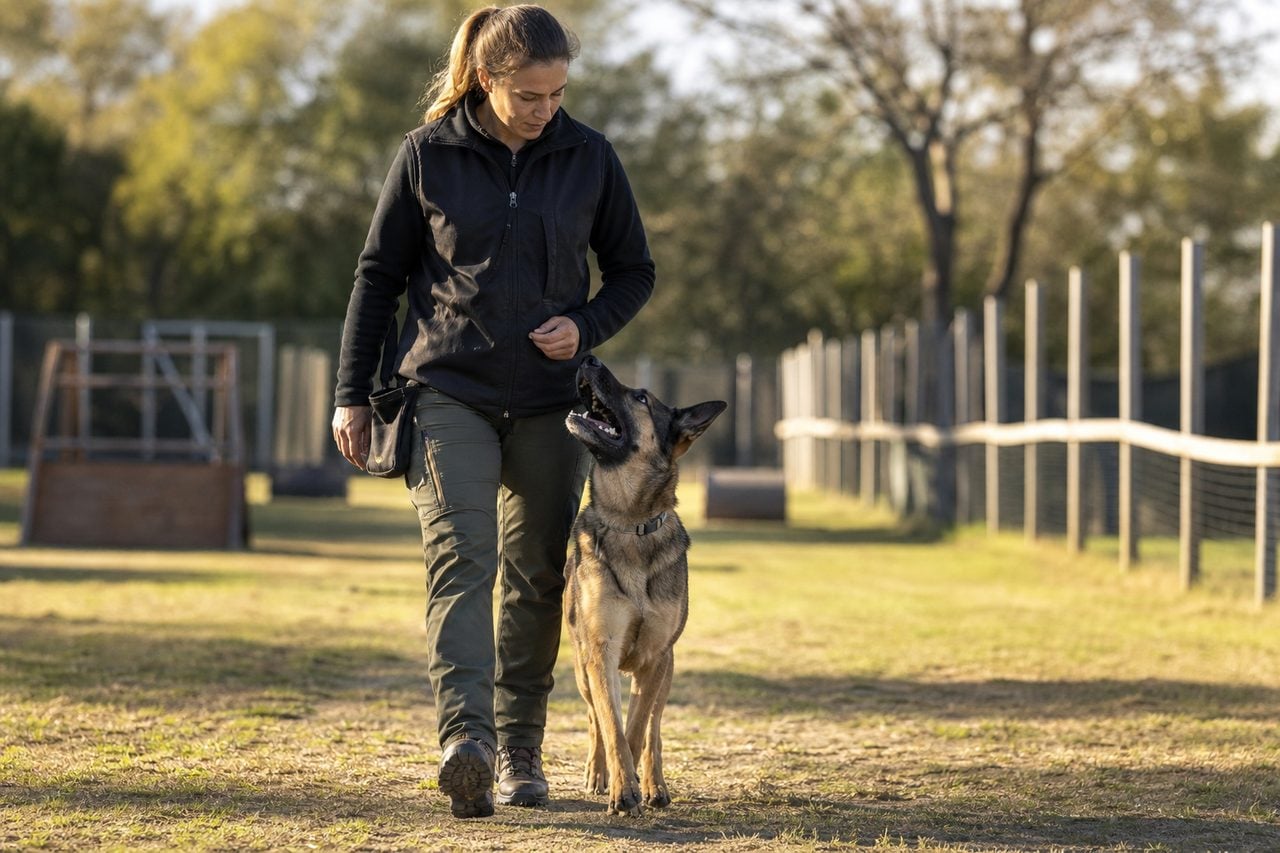
“Dog boot camp” is a marketing phrase more than a fixed product, but it usually points to one idea: an intensive, structured training program that packs a lot of work into a short window. In practice, most boot camps are day programs — your dog trains for concentrated daytime hours with a professional, then comes home each night. That distinguishes them from residential board-and-train, where the dog boards overnight. For a busy Johnstown household — hospital shifts, a commute over the ridge, kids and a full calendar around Richland or Ebensburg — the draw is the pace: real progress without you running a training session every single evening.
We should be straight about the local reality. Cambria County is a small market served by a limited number of trainers, and formats vary widely under the same “boot camp” label. Some local providers offer day-based intensives; others mean something closer to residential; a few use the term loosely. For the widest choice of dedicated intensive and residential programs, and for board-certified behavior help when a case is complex, the nearest larger markets are Pittsburgh (about an hour and fifteen minutes west) and Altoona (roughly forty minutes northeast). We would rather send you where the depth is than oversell a thin local option.
This guide breaks down what a boot camp actually delivers, how the day-program model differs from residency, which dogs benefit and which do not, what a well-structured training day looks like, and the questions that separate a sound program from hype. From downtown by the rivers to Windber in the southern highlands, and out through the coal-patch boroughs, the aim is a clear-eyed choice you can live with — one that fits your dog, your schedule, and the real drive times of Cambria County. We are the GetDogSchool Editorial Team; we do not run or sell training — we help you evaluate it honestly.
What A Dog Boot Camp Really Is
Strip away the branding and a boot camp is an intensive training program compressed into a short period, most commonly delivered as a day program: your dog attends for concentrated daytime hours and sleeps at home. The intensity is the point — multiple short training sessions across the day, more reps than a once-weekly class delivers, and faster momentum on obedience, leash manners, recall, and impulse control.
The military metaphor oversells it, though. Good modern training is not about breaking a dog down; it is about clear structure, consistent cues, and well-timed rewards repeated often enough to stick. A quality boot camp builds skills in a low-distraction setting first, then layers in real-world challenges — other dogs, new places, the kind of distractions your dog meets on a walk along the Path of the Flood Trail. Because the “boot camp” label is used loosely around Johnstown, the first thing to nail down with any provider is the actual format: how many hours per day, over how many days or weeks, and whether the dog goes home each night or boards. Two programs sharing the name can be very different products.
Day Program Versus Residential
The clearest line to draw is day program versus residential. In a day-program boot camp, the dog trains intensively during the day and returns home at night. In a residential program — usually marketed as board-and-train — the dog boards overnight for the program’s length. Same intensity goal; different answer to where the dog sleeps and who runs the evening routine.
Each has real trade-offs. A day program keeps your dog in its own home environment overnight, which helps when the issues are house-based — settling in your living room, door manners, counter-surfing — because those skills get practiced where you need them. It also lets you stay involved daily, reinforcing between sessions. The cost is your time and the daily transport. Residential removes the commute and gives the trainer full-day control, which can suit households that simply cannot supervise a training regimen for a few weeks, but it typically costs more because of the boarding care. Around Johnstown, availability often decides the matter: ask each provider plainly which model they run, and if you specifically want overnight residency, be ready to look toward Altoona or Pittsburgh where the selection is broader.
Which Dogs Benefit Most
Boot camps are not a universal fix, but they suit certain dogs well. The strongest candidates are healthy adolescents and adults who need a fast, structured foundation — a young dog whose pulling, jumping, and ignoring recall have outpaced casual training, or an adopted adult with no prior obedience. The concentrated reps of a day program can build habits far quicker than a session squeezed in after a long shift.
Other dogs are poor fits. Young puppies in their prime socialization window usually do better with owner-guided classes, where the goal is positive experiences with your family and your own neighborhood rather than a trainer’s facility. Dogs whose problems trace to inconsistent household rules will not be cured by intensity alone; the humans have to change the daily routine too, or old patterns return. And any dog showing genuine aggression or severe anxiety needs an assessment first — often a veterinary check — before enrolling in a general boot camp, because those cases need targeted, individualized work rather than a group-style intensive. Matching the format to the dog is what makes the investment pay off; forcing the wrong dog into a boot camp wastes money and can set progress back.
What A Boot Camp Day Looks Like
Knowing the daily rhythm helps you judge whether a program is serious. A well-run day-program boot camp is not one long grind; it is a series of short, focused training blocks broken up by rest, because dogs learn best in brief, frequent sessions. Expect obedience and manners drills, leash work, impulse-control exercises, and structured exposure to distractions, with plenty of recovery time so the dog stays engaged rather than fried.
Progression matters as much as the drills. Early on, the trainer builds skills in a calm, controlled space. As the dog succeeds, difficulty ramps up — more distractions, new environments, longer duration — so the behaviors hold up outside the training room. A good program also loops you in throughout: updates on progress, and hands-on time where you practice the cues yourself, so the training transfers to you rather than staying locked to the trainer. When you tour or interview a Johnstown-area boot camp, ask to see or hear the actual daily schedule. A provider who can describe the structure of a typical day in concrete terms is a better bet than one who talks in slogans about discipline.
Questions To Ask Before Enrolling
Protect your dog and your budget by getting specifics up front. Ask exactly what the program covers, how many hours per day and over how many days, and whether it is a day program or residential — do not assume. Ask what methods and tools the trainer uses and how they handle a dog that is struggling; you want a clear description, not reassurance. Request credentials and references from past boot-camp clients you can contact directly.
Then check the practical safeguards. What is the group size or is it one-on-one? What is the staff-to-dog ratio? How are dogs supervised, and how are rest and play managed between sessions? What happens if your dog is injured or falls ill during the day — which vet, and how are you reached? Crucially, ask how they transfer skills to you: without owner coaching, gains fade once the intensive ends. Get the full price, what it includes, and any follow-up support in writing. In a small market like Johnstown, a trainer who answers these plainly earns more trust than one leaning on the boot-camp label alone — and the same questions serve you well if you compare programs in Altoona or Pittsburgh.
Neighborhoods And Getting There
Because most boot camps are day programs, travel time is a daily factor, not a one-off — you may be driving your dog back and forth for a week or more, so location genuinely matters. From Downtown Johnstown & the Rivers, at the Stonycreek and Little Conemaugh meeting point, a nearby day program is far more practical than a distant one; if the closest suitable option sits in Altoona or Pittsburgh, a residential format may make more sense than a long daily round trip.
From Westmont & the Hilltop above the Inclined Plane and Richland, Geistown & the Eastern Suburbs, the Route 219 corridor eases travel toward Altoona. Ebensburg & the Allegheny Ridge sits along the high ground partway to Altoona, shortening that trip. The Coal-Patch Boroughs — Nanty Glo, South Fork, Cresson and their neighbors — are spread through the valleys, so map exact drive times before committing to daily transport. Windber & the Southern Highlands, on the edge of the Laurel Highlands, leans toward the Somerset direction. Wherever you live in Cambria County, weigh the commute honestly: a day-program boot camp only works if you can realistically make the drive on schedule, every day, for the program’s length.
A Sensible Approach For Johnstown Owners
Here is a level-headed way to proceed. First, define the goal in plain terms. “Teach solid obedience and stop the pulling and jumping” is exactly what a day-program boot camp targets well. “My dog is reactive or aggressive toward people or other dogs” is a different category that needs an assessment first, often a veterinary check, and possibly a specialist — not a general intensive.
Second, find out what Johnstown and Cambria County actually offer and pin down each provider’s real format, since the boot-camp label hides very different products. If local day programs are limited or your dog’s needs are specialized, widen the search to Altoona or Pittsburgh rather than settling. Interview at least two providers with the questions above, and be skeptical of guarantees — lasting results depend on what you do at home after the intensive, which no trainer can promise on your behalf. Finally, plan for maintenance. A boot camp builds momentum fast, but you keep it by reinforcing the cues on your own walks around Stackhouse Park and in your own home. Treat the program as a strong start you then sustain, not a one-time fix. Our directory is a research starting point, not an endorsement of any specific program.
Dog Boot Camp in Johnstown: Local Options & Nearest Specialists
A few Johnstown-area trainers can help with milder dog boot camp needs:
- Optimum K9 Services — 4.5★ (8 reviews)
- Katdare K9 Coaching
Nearest dog boot camp specialists — Pittsburgh
For complex cases, the closest metro with dedicated dog boot camp trainers is Pittsburgh (an easy drive for an assessment or a board-and-train stay). Top-reviewed options:
- Sit Means Sit Dog Training Pittsburgh North — 5.0★ (130 reviews)
- H-D Interactions Dog Training Co. — 5.0★ (72 reviews)
- Paw & Order Dog Training Westmoreland — 5.0★ (66 reviews)
- Paw & Order Dog Training Washington PA — 5.0★ (64 reviews)
- Suburban K9 Dog Training — 5.0★ (53 reviews)
- Paw & Order Dog Training Harmony — 5.0★ (38 reviews)
- McWreath Dog Training – Washington, PA — 5.0★ (36 reviews)
- Control Is Key Dog Training — 5.0★ (36 reviews)
See all Pittsburgh dog boot camp trainers →
Frequently Asked Questions
Is a dog boot camp the same as board-and-train?
Not usually. Most boot camps are day programs — intensive daytime training with the dog home each night — while board-and-train is residential, with the dog boarding overnight for the program’s length. The terms are marketed loosely, though, so never assume. Ask each Johnstown-area provider directly which model they run: how many hours per day, over how many days, and whether your dog sleeps at home or boards.
How long does a dog boot camp usually run?
It varies widely because the label is not standardized. Some run a single intensive week, others spread daytime sessions over several weeks. Length should match your goals and your dog’s needs rather than a fixed package. Ask providers how they set the timeline and what results are realistic in that window, and be cautious of anyone promising a total transformation in just a couple of days.
Are boot camps available in Johnstown itself?
Cambria County is a small market with a limited number of trainers, and formats under the boot-camp name vary. Some local providers offer day-based intensives; others mean something closer to residential. For the widest choice of dedicated intensive and residential programs, many owners look to Pittsburgh (about an hour and fifteen minutes west) or Altoona (roughly forty minutes northeast). Confirm each provider’s actual format before booking.
Which dogs get the most out of a boot camp?
Healthy adolescents and adults needing a fast, structured foundation tend to benefit most — for example a young dog with runaway pulling and jumping, or an adopted adult with no obedience. Puppies in their socialization window usually do better in owner-guided classes, and dogs showing real aggression or severe anxiety need an assessment first, often a veterinary check, rather than a general intensive.
Will boot-camp results last after the program ends?
Only if the program transfers skills to you and you keep reinforcing them. Intensity builds momentum quickly, but gains fade if the cues are never practiced at home. Look for programs that coach you hands-on and provide follow-up support, then plan to maintain the training on your own walks and in your own house. No ethical trainer guarantees permanent results, because the follow-through is yours.
How do I evaluate a boot-camp provider?
Ask for specifics in writing: the exact daily hours and length, whether it is a day program or residential, the methods and tools used, credentials, and references you can contact. Check group size or one-on-one, staff-to-dog ratio, supervision, and the plan if your dog is hurt or sick. Confirm how they coach you so skills transfer, and get the full cost and any follow-up support documented. Clear answers matter more than the boot-camp label.
Related: read our complete dog boot camp guide or the full Johnstown dog training overview.
Ready to find the right dog boot camp pro in Johnstown?