
Dog Boot Camp in Lafayette, IN
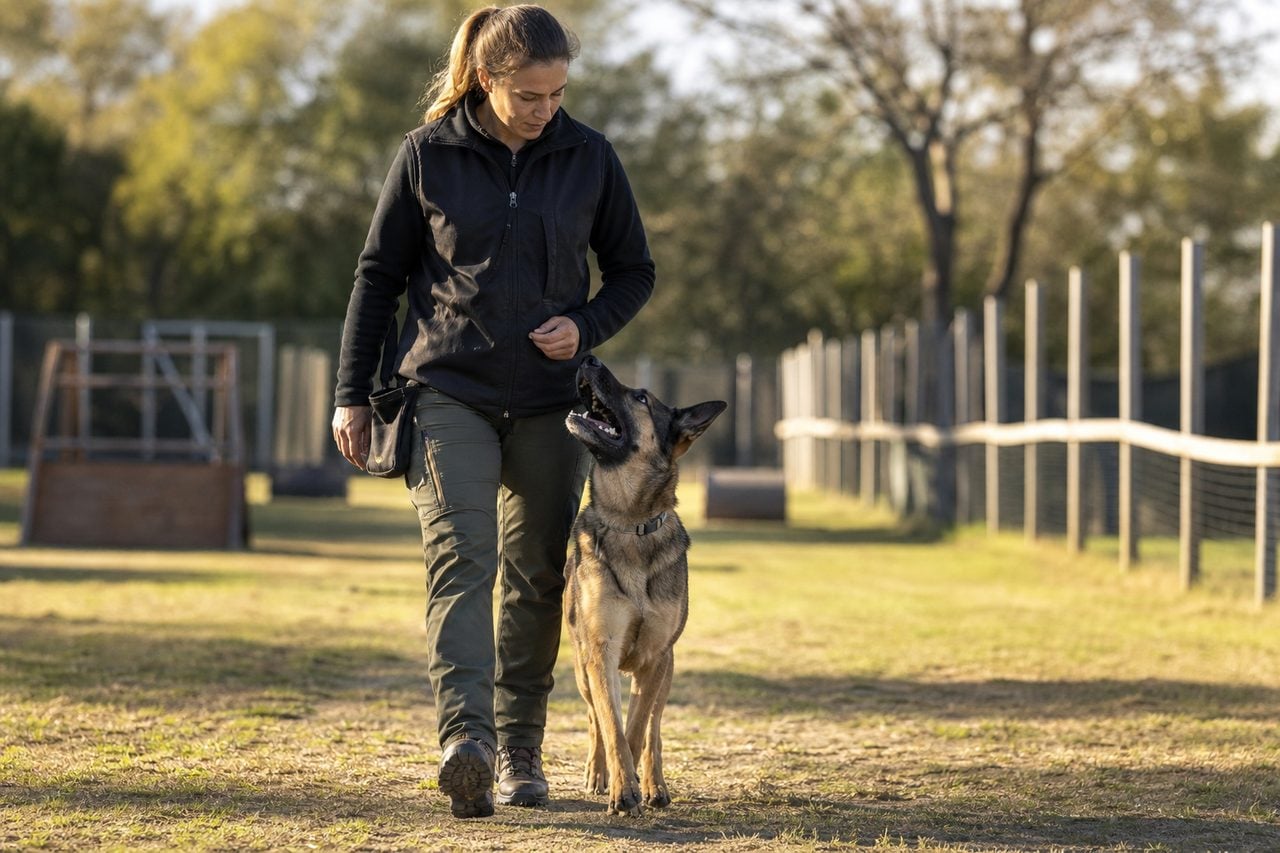
Dog boot camp is the informal name for an intensive, immersive obedience program that compresses weeks or months of training into a short, focused stretch. The term covers a range of formats — some are residential, where the dog boards with the trainer, and some are day-based, where the dog attends daily sessions and goes home each night. What they share is intensity: a high volume of structured, professional training delivered over a concentrated period rather than spread thin across a weekly class.
For owners across Greater Lafayette — whether you are near campus in West Lafayette, out toward Battle Ground, or south of town heading toward Crawfordsville — a boot camp appeals for one simple reason. Life is busy, and a dog that pulls, ignores recall, jumps on guests, or bolts out the door is a daily source of stress. An intensive program promises to move the needle fast.
This guide explains what dog boot camp really involves, what it can and cannot deliver, how the day-camp and residential formats differ, and how to judge a program so your investment produces a dog that is genuinely easier to live with — and stays that way. The theme throughout is realistic expectations paired with high standards, because the intensity that makes boot camp effective is the same intensity that makes choosing the right program matter.
What Dog Boot Camp Really Means
There is no regulated definition of boot camp, so the label gets used loosely. In practice it describes obedience training run at high frequency and high structure. Instead of one class a week where the dog and owner both slowly build skills, the dog trains multiple focused sessions a day, usually with a professional handler, over one to several weeks.
The name can be misleading. A good intensive program is not about harshness or breaking a dog’s spirit — it is about density of practice. Dogs, like people, learn faster when repetition is frequent and consistent and when the gap between sessions is short enough that yesterday’s lesson has not faded. That is the real mechanism behind boot camp results: compressed, consistent repetition delivered by someone who reads the dog well and adjusts on the fly.
It also helps to be clear about what an intensive format is best suited to teach. Boot camp excels at obedience and manners — the concrete, teachable behaviors that respond well to daily drilling and structured proofing. It is far less suited to problems rooted in a dog’s emotional state, such as fear, anxiety, or aggression, which are not skill gaps and cannot be drilled away. Owners sometimes hope an intensive program will resolve reactivity or nervousness simply because it is intensive, but intensity applied to the wrong kind of problem does not help and can add stress. When the issue is emotional rather than a matter of the dog not knowing what to do, the right path is a behavior assessment first, not a heavier dose of obedience.
Most programs target the same practical outcomes: reliable obedience in the face of distraction, better leash manners, a solid recall, impulse control around doors and food and guests, and calm settling on cue. Some layer in off-leash work where the dog and setting allow. The best programs make a point of proofing these behaviors in varied, real-world environments — a busy sidewalk, a park with wildlife scent, a spot with car noise — so the obedience holds up outside the training room.
Common goals of an intensive program
- Reliable response to core cues even around distractions
- Loose-leash walking without constant pulling
- A recall the dog actually comes back on
- Impulse control at doors, gates, and around food or guests
- Calm settling and duration on place or down
Residential vs. Day Boot Camp
The biggest structural choice is whether your dog stays overnight or comes home each day. Both can work; they suit different dogs and different families.
In a residential boot camp, the dog boards with the trainer for the duration. The advantage is total environmental control — the trainer manages the dog around the clock, so there is no chance of old habits being reinforced at home between sessions, and the dog gets the maximum density of training and structured rest. The trade-off is that your dog is away from you, and the crucial work of transferring the training to you happens all at once at the end, which puts extra weight on the handoff lessons.
In a day boot camp, the dog attends intensive daily sessions and returns home each evening. The advantage is that you stay involved throughout, your dog sleeps in its own home, and you can practice each evening what the trainer worked on that day — which can make the training transfer more smoothly. The trade-off is that evenings and nights at home are outside the trainer’s control, so consistency on your end matters more from day one, and progress can be slightly slower because the environment is less controlled.
Which format fits
- Residential suits busy households, entrenched habits, and dogs who tolerate boarding well
- Day camp suits owners who want to stay hands-on and dogs with separation sensitivity
- Day camp requires you to be available for evening practice and a consistent home routine
- Residential puts more weight on a thorough turnover process at the end
A Realistic Timeline: What Weeks Actually Produce
Intensive training genuinely accelerates learning, but it does not suspend the biology of how dogs learn. Setting an honest timeline protects you from disappointment and from programs that overpromise.
In the first several days, the trainer assesses your dog and establishes foundation behaviors in a low-distraction setting. Progress here can look fast because you are seeing the dog learn clean versions of cues, sometimes for the first time. Through the middle of the program, the work shifts to proofing — adding duration, distance, and distraction — which is less flashy but where the durable value is built. By the end, a good program has a dog that performs reliably for the trainer across varied situations and is ready to be handed off to you.
What a few weeks realistically delivers is a strong, reliable obedience foundation and a marked reduction in common nuisance behaviors. What it does not deliver is a finished, self-maintaining dog. Skills need ongoing reinforcement, and behaviors that are rooted in fear or anxiety rather than simple lack of training usually need a different, longer approach. A trainer who tells you this up front is being straight with you; one who guarantees a permanent cure in two weeks is selling something.
Reasonable expectations by phase
- Early days: assessment plus clean foundation cues in low distraction
- Middle: proofing for duration, distance, and distraction
- End: reliable performance for the trainer across settings, ready for handoff
- After homecoming: your consistent maintenance turns a fast start into lasting behavior
Training Methods and Why They Matter
The single best predictor of whether a boot camp is right for your dog is the trainer’s methodology — how they teach and how they respond when a dog gets something wrong. Because the format is intensive, the method is applied many times a day, so a sound, humane approach compounds into good results and a poor one compounds into stress.
Ask the trainer to walk you through how they introduce a new behavior. You want to hear that they build the behavior first, reward it clearly, and only add pressure or corrections once the dog understands what is being asked — not before. Ask how they handle a dog that is frustrated, shut down, or over-aroused. A skilled professional adjusts to the individual dog rather than forcing every dog through an identical template.
Also ask about equipment. Whatever tools a trainer uses, they should be able to explain how each one is introduced, conditioned, and faded, and why it suits your particular dog. Tools are not the issue — the reasoning and skill behind them is. If a trainer cannot explain their choices in clear, calm language, keep looking. The Lafayette training community is small enough that a good reputation is verifiable, so ask for references from clients whose dogs had similar challenges to yours.
Pay attention, too, to how a trainer talks about your dog and your goals during the initial conversation. A professional listens carefully, asks pointed questions about your dog’s history and daily life, and tailors their answer to your specific situation rather than reciting a fixed pitch. Watch how they handle disagreement or hard questions: openness and clear reasoning are good signs, while defensiveness or pressure to commit on the spot are not. Because an intensive program means handing your dog over for concentrated daily work, the trust you place in the trainer’s judgment matters as much as any single technique. Take the time to get that judgment right before you book, and do not let a discount or a fast start date rush a decision that your dog will live with.
What to listen for
- A clear, humane explanation of how behaviors are taught and mistakes handled
- Willingness to tailor the approach to your individual dog
- An explanation of any equipment: how it is introduced and why it fits your dog
- Local references and, ideally, video of dogs before and after their programs
Keeping the Results: Life After Boot Camp
An intensive program is a launch, not a destination. The dogs whose training sticks are the ones whose owners fold the new skills into daily life. This is where many boot camp investments quietly unravel — not because the training was bad, but because it was never maintained.
The handoff is the hinge. Whether residential or day-based, the program must teach you the exact cues, timing, and mechanics the dog now responds to, and give you a maintenance plan for the first month or two at home. Expect to keep sessions short and frequent at first, to enforce the standards consistently, and to gradually reintroduce the real-world situations that used to trigger problems — visitors at the door, other dogs on the trail, the temptation of an open gate.
Build practice into things you already do. A few minutes of obedience before meals, cue work on your regular walk along the Wabash Heritage Trail or around Columbian Park, and a place command while you cook or watch TV all keep skills sharp without carving out separate training time. The goal is for the trained behaviors to become the dog’s default because they are practiced in ordinary life, not saved for special sessions.
A simple maintenance routine
- Short daily reps woven into meals, walks, and downtime
- Consistent cues from every member of the household
- Gradual reintroduction of real-world distractions
- Follow-up lessons with the trainer when a behavior starts to slip
How Boot Camp Compares to Other Training Options
Boot camp is one point on a spectrum of training formats, and seeing it next to the alternatives makes the trade-offs clear. No single format is best for everyone; the right one balances speed, cost, your involvement, and your dog’s needs.
Group classes are the most economical and social option. They meet weekly, teach you and your dog together, and give the dog valuable practice working around other dogs and people — useful for socialization and mild manners issues. The trade-off is pace: progress is gradual, the once-a-week cadence means the work depends heavily on your practice between sessions, and a group setting is not ideal for a dog with serious distraction or reactivity problems. Group classes are a strong starting point for a well-adjusted dog and a motivated owner.
Private lessons sit in the middle. A trainer works one-on-one with you and your dog, usually in your home or a chosen location, tailoring everything to your specific goals and problems. This format is excellent when you want to be the primary trainer and learn the skills yourself, and it handles house-specific issues well because the training happens where the behavior occurs. It costs more than group classes and less than an intensive program, and progress depends on how consistently you practice.
Boot camp trades money and hands-on involvement for speed and density. You get fast results driven by a professional’s daily repetition, at the highest cost, and with the crucial caveat that the training must be transferred to you and maintained. A sensible way to think about it: choose group classes for socialization and mild manners on a budget, private lessons when you want to build the skills yourself, and boot camp when you need a strong foundation fast and your schedule makes consistent self-directed training hard.
Quick comparison
- Group classes: lowest cost, social, gradual, great for well-adjusted dogs
- Private lessons: tailored, you learn to train, good for home-specific issues
- Boot camp: fastest and most intensive, highest cost, requires strong handoff
- Behavior professional: the right path when the issue is fear, anxiety, or aggression
Is a Boot Camp the Right Choice for You?
Intensive training is powerful, but it is one option among several, and the best choice depends on your dog, your schedule, and your goals. Weighing it honestly against the alternatives leads to a better outcome than defaulting to the fastest-sounding option.
Boot camp is a strong fit when you need results relatively quickly, when your dog has entrenched habits that daily repetition can break, and when your own schedule makes consistent at-home training hard to sustain. It suits high-energy dogs that thrive on structure and households that have tried the once-a-week class cadence and found it too slow to produce change.
It is a weaker fit in a few cases. If your dog’s core problem is fear, anxiety, reactivity, or aggression rather than a simple training gap, an obedience boot camp may not address the real cause — a behavior assessment, and often a veterinary workup, should come first. If you genuinely want to learn to train your dog yourself, private or group lessons will build your skills alongside the dog’s. And if your budget is tight, a longer, lower-intensity path can reach similar goals for less money, just more slowly.
Boot camp makes sense when
- You want a fast, strong obedience foundation and will maintain it
- Your dog has nuisance habits that daily repetition can break
- Your schedule makes consistent home training difficult
- You have vetted the trainer’s methods, facility, and handoff process
Consider group classes, private lessons, or a behavior professional instead when the issue is fear-based, when you want to be the primary trainer, or when the problem needs diagnosis before drills. A reputable Lafayette-area trainer will help you make this call honestly — and will tell you if their intensive program is not what your dog actually needs.
Reviewed Dog Boot Camp Trainers in Lafayette
These reviewed Lafayette-area trainers from our directory handle dog boot camp. Each links to a full profile with specialties, certified credentials, reviews, and contact info:
- Engineering Change: Canine + Equine Training — 5.0★ (22 reviews)
- Greater Lafayette Kennel Club — 5.0★ (2 reviews)
- Leader of the Pack Canine — 4.9★ (107 reviews)
- Markay’s Castle of the Dogs — 4.7★ (46 reviews)
- Swiss Army K9 Academy
- Salty Raccoon Ranch Kennels & Training
See all Lafayette dog boot camp trainers →
Frequently Asked Questions
What is the difference between dog boot camp and a regular obedience class?
A regular obedience class usually meets once a week and teaches you and your dog together at a gradual pace. A boot camp compresses training into a short, intensive period — multiple focused sessions a day over one to several weeks, typically led by a professional handler. The boot camp advantage is speed through repetition density; the class advantage is that you build the handling skills yourself and it usually costs less. The right choice depends on your goals, schedule, and budget.
Does boot camp mean harsh or forceful training?
It should not. The name refers to intensity and structure, not harshness. A good intensive program builds behaviors, rewards them clearly, and only adds pressure once the dog understands what is being asked — and it adjusts to the individual dog rather than forcing every dog through the same template. Ask any Lafayette-area trainer to explain how they teach a behavior and how they handle mistakes. A calm, clear, humane explanation is what you want; vagueness or an emphasis on domination is a reason to look elsewhere.
Should I choose a residential or day boot camp?
Residential means your dog boards with the trainer, giving total environmental control and maximum training density — good for busy households and entrenched habits, provided the dog tolerates boarding. Day boot camp means intensive daily sessions with the dog coming home each night, which keeps you involved, suits dogs with separation sensitivity, and lets you practice each evening. Day camp asks more consistency from you day to day; residential puts more weight on a thorough handoff at the end. Match the format to your dog and your availability.
How long until I see results from an intensive program?
Foundation behaviors often appear within the first several days, which can look impressively fast. The more durable work — proofing cues against distraction, distance, and duration — happens through the middle of the program and is less flashy. By the end, a good program hands you a dog that performs reliably across varied settings. But lasting results depend on your maintenance afterward; the program provides the head start, and your consistency at home turns it into permanent behavior.
Can a boot camp resolve my dog’s aggression or fear?
Usually not on its own. Obedience boot camps are designed to teach commands and manners, not to resolve behavior rooted in fear, anxiety, reactivity, or aggression, which often has a medical or emotional cause. For those cases, start with a behavior assessment and, when appropriate, a veterinary workup — the Purdue College of Veterinary Medicine in West Lafayette is a regional veterinary resource. Address the underlying cause first; obedience training can then support the plan rather than mask the problem.
How do I keep the training from fading after boot camp?
Fold the skills into daily life. Practice short reps before meals, on your regular walk around Columbian Park or the Wabash Heritage Trail, and during downtime at home. Keep cues consistent across everyone in the household, reintroduce real-world distractions gradually, and use the trainer’s follow-up support when a behavior slips. The dogs whose training lasts are the ones whose owners make the trained behaviors the default through ordinary daily practice rather than saving them for formal sessions.
Related: read our complete dog boot camp guide or the full Lafayette dog training overview.
Ready to find the right dog boot camp pro in Lafayette?