
Dog Boot Camp in Lancaster, PA
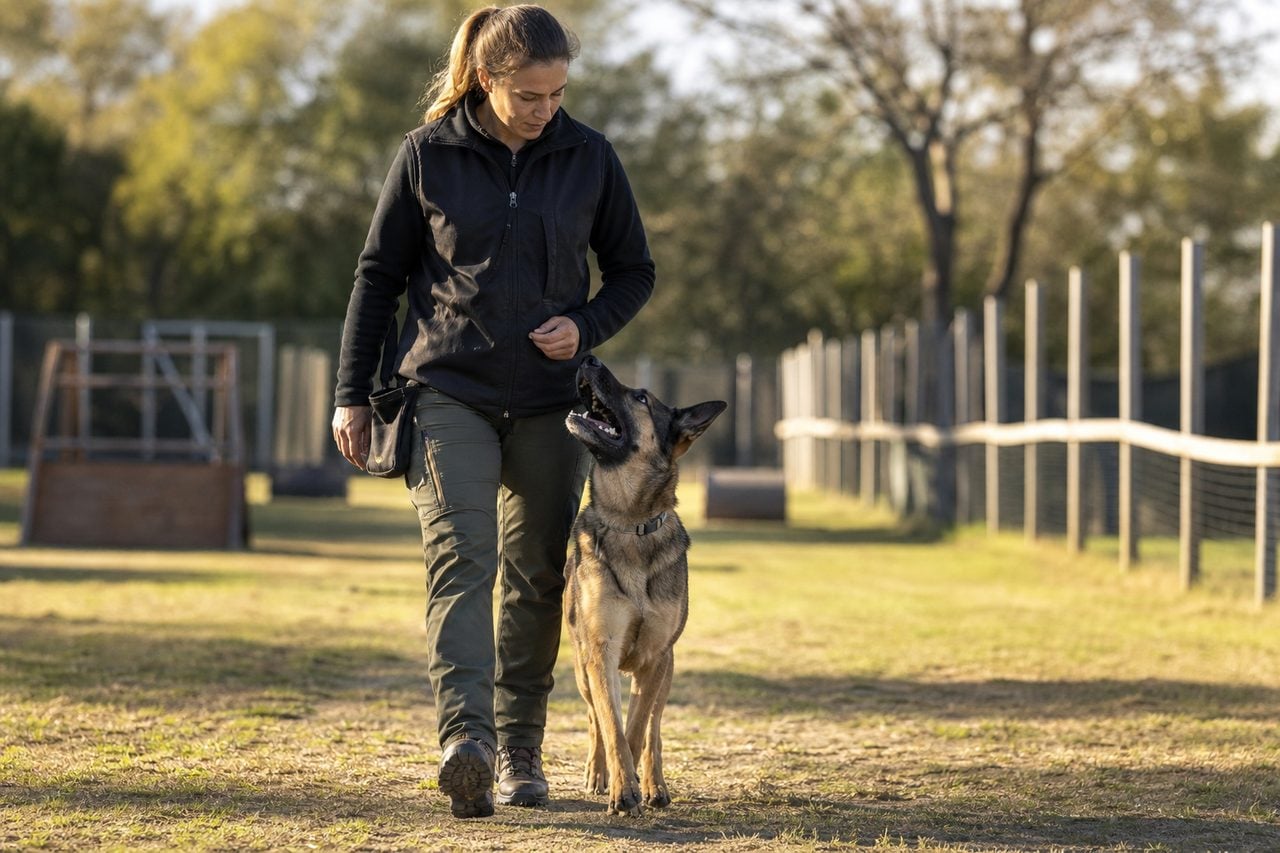
Dog boot camp in Lancaster, Pennsylvania is an intensive, accelerated training program designed to make fast progress on obedience and manners — without your dog living away from home. Unlike a residential stay, a boot camp is typically a day-program or a compressed series of frequent sessions: your dog trains hard with a professional for several hours over consecutive days, then comes home to you each evening. It is the high-intensity, you-stay-involved option, and it suits owners who want speed but do not want to send their dog away.
- What A Dog Boot Camp Is — And How It Differs From Board-And-Train
- A Typical Boot Camp Day In The Lancaster Region
- Why The Day-Program Format Keeps You Involved
- Choosing A Boot Camp Program In Lancaster County
- Which Dogs And Owners Are A Good Fit
- Setting Realistic Expectations For Intensive Training
- Keeping The Momentum After Boot Camp
- Reviewed trainers
- FAQ
For Lancaster County families, that structure has real appeal. Many owners want the momentum of immersive training but prefer to keep their dog home overnight, stay closely involved in the process, and learn the handling skills firsthand rather than receiving a trained dog back at the end. A boot camp delivers concentrated, daily repetition — the thing that actually drives quick progress — while keeping you in the loop day by day. You see the work happen, you practice it yourself each evening, and you carry it straight into your own routines around the county.
This part of Pennsylvania asks a lot of a well-trained dog. A local dog might walk a busy downtown sidewalk near Central Market in the morning, cross open acreage out toward Manheim or Quarryville in the afternoon, and need to settle calmly indoors during a long, snowy winter evening. A boot camp builds the reliability to handle that range through focused, graduated practice that climbs in difficulty as the program goes on. This guide explains how dog boot camps work in the Lancaster region, how they differ from residential board-and-train, what a typical day looks like, which dogs and owners fit the format, how to choose a program around the county, and how to keep the momentum going once the intensive phase ends and your dog is back to its everyday routine.
What A Dog Boot Camp Is — And How It Differs From Board-And-Train
A dog boot camp is an intensive day-program: your dog attends concentrated training sessions — often several hours a day across consecutive days — and returns home each night. The defining traits are intensity and frequency packed into a short window, paired with the dog staying in your household throughout. That keeps you involved daily and lets the dog practice new skills in its own home environment between sessions.
This is the key contrast with board-and-train, which is residential — the dog lives at the trainer’s facility for weeks. Both are immersive, but a boot camp trades round-the-clock supervision for daily owner involvement and zero separation. Many Lancaster owners prefer boot camp precisely because they do not want to send their dog away, they want to learn the handling themselves, and they like seeing progress in real time rather than receiving a trained dog back later.
Boot camp suits owners who can commit to the schedule and to nightly practice at home. The trainer drives the intensive daytime work; you reinforce it each evening, which accelerates how fast skills transfer into your real routines around Lancaster County. If your week cannot accommodate daily drop-offs and homework, a different format may fit better — but when you can commit, the day-program model produces fast, well-anchored results.
A Typical Boot Camp Day In The Lancaster Region
A boot camp day is built around short, focused training blocks separated by rest. A dog cannot absorb hours of nonstop drilling, so good trainers alternate concentrated work — leash skills, sit and down stays, recall, impulse control — with decompression and enrichment. The intensity comes from frequency and consistency across the day, not from grinding the dog into exhaustion.
Difficulty climbs deliberately as the program goes on. A skill that begins in a quiet indoor space moves outdoors, then into busier settings with the distractions a Lancaster dog actually meets: passing dogs, foot traffic, vehicles, the kind of bustle you find on a downtown block or at a trailhead parking lot. This graduated exposure is what turns a command that works in a calm room into one that holds when a carriage rolls past or a squirrel darts across an open field.
Because your dog goes home each evening, the day’s lessons get a second rehearsal in your living room and yard the same night. Trainers usually send you home with specific homework — the exact cues practiced that day and how to reinforce them — so the dog experiences consistent rules from morning to bedtime. That daily loop of intensive session plus home practice is the engine behind a boot camp’s speed.
Why The Day-Program Format Keeps You Involved
The biggest advantage of a boot camp over a residential program is that you stay in the driver’s seat. Because you drop off and pick up daily, you see the work unfold, talk with the trainer about what changed, and learn the handling techniques as they develop rather than all at once at the end. Training is as much about teaching the owner as the dog, and the day-program format builds that owner skill steadily.
Daily involvement also smooths the transfer of skills. In a boot camp there is no single dramatic handoff — the transfer happens a little every evening as you practice the day’s lesson at home. By the time the program ends, you have already been cueing and rewarding your dog correctly for days, so there is far less risk of the dog performing for the trainer but not for you. The skills are anchored in your home, your yard, and your neighborhood from the start.
For Lancaster households this matters practically. A dog that learns calm leash walking while also practicing it on your actual street, or recall that is rehearsed in your own yard, generalizes faster to the places you frequent — whether that is a quiet block in Mount Joy or a busier route near Central Market. Keeping the dog home each night also avoids any separation stress and lets the dog rest in a familiar place, which can help it absorb the next day’s training.
Choosing A Boot Camp Program In Lancaster County
When you evaluate boot camps around Lancaster, start with the schedule and commitment. Confirm the daily hours, how many days the program runs, and what nightly homework you will be expected to do. The format only works if you can reliably attend and reinforce the lessons at home, so be honest about your availability before enrolling. A program that assumes daily practice will underdeliver if that practice does not happen.
Ask about methods, group size, and individual attention. How many dogs train at once, and how much one-on-one work does each receive? What training approach does the trainer use, and how do they handle a dog that struggles or gets overwhelmed? You want clear, plain answers and a trainer comfortable explaining their reasoning. Watching a session, if permitted, tells you a great deal about how dogs are handled day to day.
Cover the practical details too. Confirm vaccination and health requirements, what happens if your dog needs a break or a slower pace, and how the trainer communicates progress and homework each day. For owners coming in from rural areas around Strasburg, the southern end near Willow Street, or up toward Lititz and Manheim, factor the daily drive into your decision — the format demands consistent attendance, so a manageable commute makes the program far easier to complete successfully.
Which Dogs And Owners Are A Good Fit
Boot camp works best for dogs that need a concentrated push on foundation behaviors and for owners who can commit to the intensive schedule. Dogs that pull on leash, ignore recall, jump on visitors, or struggle with impulse control often respond well to the rapid, consistent repetition a day-program provides — especially when an evening of home practice reinforces each day’s lesson.
Energetic young adults and boundary-testing adolescents are common candidates, as are dogs whose owners have tried weekly classes but found the once-a-week pace too slow to overcome inconsistent practice. Rural Lancaster County dogs learning to stay reliable around open acreage and wildlife, and city dogs building composure around downtown stimulation, can both benefit from the trainer’s graduated exposure work combined with nightly rehearsal at home.
The format is less suited to owners who cannot make the daily commitment or who want to hand the work off entirely — those owners may be better served by a residential program. And as with any general obedience training, serious behavioral concerns such as aggression or significant fear call for an assessment-first, specialized approach rather than a standard boot camp. An honest Lancaster trainer will tell you when a boot camp is not the right match and suggest a better path for your dog and your schedule.
Setting Realistic Expectations For Intensive Training
A boot camp can produce fast, visible improvement in manners and obedience, but it is a head start, not a permanent fix. Intensive training establishes strong foundations quickly; keeping those foundations reliable depends on the practice that continues after the program ends. Expect meaningful progress and a clear roadmap — not a dog that will behave flawlessly forever with no further effort.
Because the format keeps you involved daily, you finish the program already knowing how to maintain the work, which is a genuine advantage. Still, the first weeks after the intensive phase are decisive. Dogs that keep practicing the new behaviors in daily life hold their gains; dogs whose households drift back to old habits tend to backslide. The trainer gives your dog a steep start and gives you the tools — using them consistently is what makes the results last.
Pricing for boot camps in the Lancaster region varies with the number of days, hours per day, group size, and any follow-up included, so ask for a written outline of what the fee covers. Reputable trainers describe outcomes in terms of improvement and reliability, never guarantees. Be cautious of any program that promises a perfectly trained dog — fast progress is realistic, but a no-caveats guarantee is a reason for skepticism, not confidence.
Keeping The Momentum After Boot Camp
The habits you build in the days right after a boot camp determine how well the results hold. Keep using the exact cues, rewards, and rules the trainer taught, and make sure everyone in the household applies them the same way. Short, frequent practice sessions folded into ordinary routines — a few minutes before meals, on walks, at the door — beat occasional long ones for keeping skills sharp.
Lean on Lancaster’s range of environments to deepen reliability. Once your dog is steady at home, practice in gradually busier places: a quiet street, then a local park, then a more stimulating spot like a trailhead or a downtown sidewalk near Central Market. This deliberate generalization continues the graduated exposure the boot camp used and turns home-trained obedience into behavior that holds up anywhere in the county.
Plan for the long haul. Consider periodic tune-up sessions with your trainer, especially after a long, snowy winter when cold weather has limited outdoor practice. Watch for early signs of slipping — renewed pulling or slower recall — and respond with a quick return to basics rather than letting old habits reset. Because a boot camp keeps you hands-on from the start, you are well equipped to spot and correct drift early and keep your dog reliable for the long term.
Reviewed Dog Boot Camp Trainers in Lancaster
These reviewed Lancaster-area trainers from our directory handle dog boot camp. Each links to a full profile with specialties, certified credentials, reviews, and contact info:
- Carolyn Hart Dog Training — 5.0★ (63 reviews)
- Paw & Order Dog Training Harmony — 5.0★ (38 reviews)
- Ray’s Canine Services — 5.0★ (32 reviews)
- Magnus K9 — 5.0★ (11 reviews)
- Custom Canine — 4.6★ (9 reviews)
- Faithful Companion Dog Training, LLC — 4.3★ (31 reviews)
See all Lancaster dog boot camp trainers →
Frequently Asked Questions
How is a dog boot camp different from board-and-train?
A boot camp is an intensive day-program — your dog trains for several hours over consecutive days and comes home each night — while board-and-train is residential, with the dog living at the trainer’s facility for weeks. Both are immersive and accelerated, but boot camp keeps you involved daily and avoids any separation. Lancaster owners often choose boot camp when they want fast progress, want to learn the handling themselves, and prefer to keep their dog home overnight.
How long does a boot camp program take?
Boot camps are compressed by design, often running a set number of consecutive days with several hours of training each day, though the exact length varies by program and by your goals. The intensity comes from packing frequent, consistent sessions into a short window. Ask each Lancaster-area trainer for the specific daily hours and total number of days so you can confirm the schedule fits your availability, since the format depends on consistent attendance.
Do I need to practice with my dog at home during boot camp?
Yes — nightly home practice is central to how a boot camp works. Trainers typically send you home with specific homework: the cues practiced that day and how to reinforce them. Because your dog returns home each evening, that practice lets the dog experience consistent rules from morning to night and anchors the new skills in your own environment. If you cannot commit to daily homework, a residential program may suit you better.
Is a boot camp suitable for an aggressive or very fearful dog?
Serious behavior concerns like aggression or significant fear are not a good fit for a standard obedience boot camp. They require an assessment-first, specialized approach, and a responsible Lancaster trainer will evaluate the dog before recommending any program rather than promising to fix the issue. If aggression or deep fear is your main concern, seek a trainer or behavior professional who focuses on it specifically and is upfront that there are no guarantees with such issues.
Will my dog be overwhelmed by an intensive schedule?
A well-run boot camp protects against overload by alternating short, focused training blocks with rest, enrichment, and decompression — intensity comes from frequency and consistency, not nonstop drilling. Good trainers also raise difficulty gradually and adjust the pace for dogs that struggle. Ask any prospective trainer how they structure the day and what happens if your dog needs a break; a thoughtful answer is a sign the program respects the dog’s limits.
How much does a dog boot camp cost in the Lancaster area?
Costs depend on the number of days, hours per day, group size, and any follow-up support included, so ask for a written breakdown of what the fee covers. Rather than chasing the lowest price, weigh the value — a program with clear daily homework, good individual attention, and follow-up tends to deliver more durable results. Reputable trainers describe outcomes as improvement and reliability, never as a guaranteed perfectly trained dog.
Related: read our complete dog boot camp guide or the full Lancaster dog training overview.
Ready to find the right dog boot camp pro in Lancaster?