
Dog Boot Camp in Reading, PA
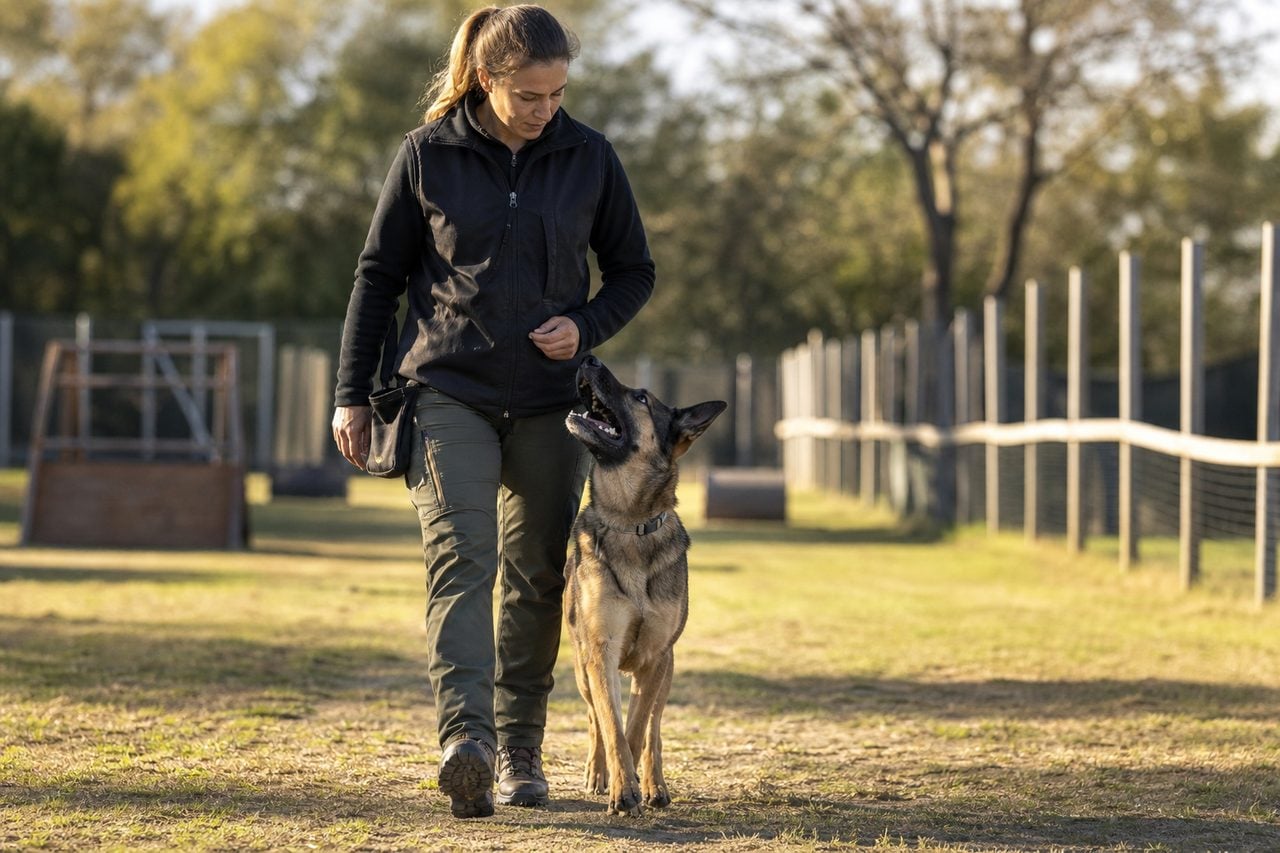
A dog boot camp is an intensive, day-based training program: you drop your dog off in the morning and pick up in the evening, with hours of structured work packed in between, and your dog comes home with you every night. For Reading-area owners who want fast, concentrated progress but don’t want to send their dog away for weeks, this day-program format hits a practical middle ground — serious training intensity without overnight separation. It’s essentially the difference between sending a kid to all-day camp versus boarding school.
- What A Dog Boot Camp Is — And Isn't
- Boot Camp Versus Board-And-Train: The Key Difference
- Which Dogs And Owners Are A Good Fit
- What A Typical Boot Camp Day Looks Like
- Your Nightly Role: Where Results Are Won Or Lost
- Choosing A Boot Camp Near Reading Responsibly
- Boot Camp Across Reading And Berks County
- Reviewed trainers
- FAQ
The format suits the geography of Berks County well. Reading sits at the county seat, where the old Reading Railroad ran — the Monopoly namesake — with the Pagoda on Mount Penn overlooking neighborhoods that fan out into Pennsylvania Dutch farm country. Many owners can manage a daily round trip from Wyomissing, Sinking Spring, Kutztown, or the Pottstown edge to a boot-camp facility, dropping off on the way to work and picking up on the way home. The dog gets professional-level daily training; you stay involved each evening, reinforcing what was learned that day and watching the progress happen in real time rather than receiving a finished dog at the end.
This guide covers how a Reading-area dog boot camp works day to day, how it differs from a residential board-and-train, which dogs and owners it fits best, what a typical day actually looks like from drop-off to pickup, the nightly role you’ll play, and how to choose a program responsibly without falling for tough-sounding marketing. The recurring theme is that intensity alone doesn’t create lasting results — your nightly involvement and consistent follow-through at home in Berks County are what turn a great camp day into a permanently better-behaved dog. We’ll also be honest about the format’s limits, including the dogs and the long-distance commutes for which a day program simply isn’t the right tool.
What A Dog Boot Camp Is — And Isn't
A dog boot camp is best understood as an intensive day program. Your dog spends the working day at a training facility — often several hours of structured sessions broken up with rest, play, and socialization — and returns home each night. That nightly return is the defining feature and the cleanest way to tell a boot camp apart from a residential board-and-train, where the dog lives at the facility for the entire stay. Both are intensive; only one involves overnight separation.
The “boot camp” name can be misleading, so it’s worth clearing up. The label suggests harsh, military-style drilling, but in practice most reputable Reading-area programs use the term simply to convey intensity and structure, not severity. A good boot camp is about a lot of well-organized, positive practice in a short window — many short reps, clear feedback, and gradual exposure to distractions — rather than punishment-heavy discipline. When you evaluate programs, look past the name and ask what actually happens during the day. The methods matter far more than the marketing. A program that can explain its approach calmly and specifically is a better sign than one that leans hard on tough-sounding branding.
Boot Camp Versus Board-And-Train: The Key Difference
These two intensive formats get conflated constantly, but the distinction is simple and important. A dog boot camp is a day program — drop-off and pickup the same day, dog home every night. A board-and-train is residential — your dog lives at the facility for the full program, typically two to four weeks. The training philosophies overlap; the logistics and the owner’s role do not.
The day format carries real advantages for many Berks County households. You see progress daily and can ask questions at every pickup, which keeps you informed and involved throughout. There’s no overnight separation, which matters for dogs — and owners — who’d find weeks apart stressful. And because you reinforce the day’s lesson each evening, the skills transfer to you continuously rather than all at once at the end. The trade-offs: boot camp requires a workable daily commute to the facility, so it favors owners reasonably close to Reading rather than out in the far corners of the county; it depends on your nightly consistency to stick; and it doesn’t double as boarding the way a residential stay can. If you travel constantly or your home environment is itself driving the problem behavior, a residential program may fit better. If you want intensity while staying hands-on and keeping your dog home, boot camp is often the stronger choice.
Which Dogs And Owners Are A Good Fit
Boot camp works especially well for high-energy adolescent dogs — the six-month-to-two-year range where enthusiasm outruns self-control — who benefit from burning energy and building focus in a structured setting every day. Dogs that pull on leash, ignore recall, jump on visitors, or generally lack manners are classic candidates, and the daily intensity tends to move the needle faster than once-a-week lessons. Owners who want a hands-on role — who like seeing progress and getting coached at each pickup — are an ideal match for the format.
The format also has clear limits. Dogs with serious aggression, significant fear, or severe anxiety need an assessment-first approach and may not be appropriate for a group-oriented day program; a responsible trainer will evaluate before enrolling and recommend private work or a different path when warranted. Very young puppies and dogs that don’t cope well with a busy, stimulating environment may also be better served elsewhere. And boot camp simply isn’t viable for owners too far from a Reading-area facility to make the daily trip — a round trip from the Oley Valley or the northern reaches near Hamburg twice a day adds up fast. Be honest about your commute and your dog’s temperament before committing; the format rewards proximity and owner consistency.
What A Typical Boot Camp Day Looks Like
A well-run boot-camp day is structured to alternate work and recovery, because dogs — like people — learn poorly when overtired. A typical day starts with drop-off and a settling-in period, then moves into the first training block: focused, short sessions on core skills such as attention, loose-leash walking, sit and down with duration, place or station work, and recall. These sessions are usually kept brief and frequent rather than long and grinding, which keeps the dog engaged and successful.
Between training blocks, good programs build in rest, supervised socialization or play, and decompression time. Many will gradually layer in distractions as the day and program progress — moving from quiet indoor work to busier settings so skills hold up in the real world your dog actually navigates, whether that’s a snowy sidewalk in winter or a crowded park. At pickup, a quality program spends a few minutes showing you what was worked on, how your dog did, and what to practice that evening at home. That daily debrief is part of what makes the format valuable: you’re not just collecting a tired dog, you’re collecting the day’s lesson plan to reinforce. Ask any prospective program to walk you through a representative day so you understand the work-to-rest balance and how much genuine training time your dog actually gets.
Your Nightly Role: Where Results Are Won Or Lost
The biggest advantage of boot camp — your dog comes home every night — is also where the responsibility shifts to you. Each evening you have the chance to reinforce what was trained that day, and doing so consistently is what converts daily camp work into permanent behavior. Skip the nightly reinforcement and you blunt much of the program’s value; the dog learns to behave at camp but stays inconsistent at home, where it matters most.
In practice this doesn’t mean hours of drilling. It means short, consistent practice of the day’s cues in your own kitchen, on your own street, around your own family — the contexts where you actually need the behavior. It means using the same marker words and mechanics the trainer showed you, so the dog gets a consistent picture rather than mixed signals. The home setting is where generalization happens: a dog that sits reliably at a Reading facility still has to learn to sit reliably in your living room, on a walk past the Pagoda, or while greeting guests. A good boot-camp program coaches you on exactly this at each pickup and may offer follow-up sessions to troubleshoot. Treat the evenings as part of the program, not an afterthought, and the daily investment pays off in a dog that behaves everywhere — not just at camp.
Choosing A Boot Camp Near Reading Responsibly
Vetting a day program is more straightforward than a residential one since your dog comes home nightly, but the fundamentals still matter. Ask to see the facility and observe a session if possible — you want a clean, safe, well-supervised space where dogs are managed calmly. Ask how many dogs are in the program per day and what the staff-to-dog ratio is, since that drives how much real training attention your dog receives versus simply being managed in a group.
Press for specifics on methods. A trustworthy trainer can explain in plain language what techniques they use, how they handle mistakes, and why — and they’ll set realistic expectations rather than promising a transformed dog by a fixed date. Ask how they assess dogs before enrollment, how they handle a dog that turns out not to be a fit, and what the daily pickup debrief and any follow-up support look like. Practical logistics matter too in Berks County: confirm hours, what to bring, how they handle the snowy winter months and bad-weather exercise, and whether the location truly works for a twice-daily commute from where you live. Finally, weigh cost against what’s actually included — especially the owner coaching at pickup, which is what makes the daily structure translate into lasting change. The cheapest option that skips owner instruction often costs more in the long run.
Boot Camp Across Reading And Berks County
Where you live in Berks County shapes how a day-based boot camp fits your life. In Reading City & Mount Penn, with dense neighborhoods beneath the Pagoda, owners often choose boot camp for the daily leash-manners and impulse-control work that close-quarters city living demands — and proximity makes the commute easy. In Wyomissing & the Western Suburbs, including Sinking Spring and Wernersville, the day format suits households that want intensive manners training while keeping the dog home with the family each night.
Up in Kutztown & Northern Berks, toward Fleetwood and Hamburg near Kutztown University, the longer drive means owners should weigh the daily round trip carefully before committing to a day program. In Birdsboro, Boyertown & the East, near French Creek State Park, owners frequently want focus and recall that hold up on trails and around wildlife. The Pottstown & Schuylkill Edge, along the river and the Schuylkill River Trail, draws owners aiming for calm, reliable behavior in active outdoor settings. And from the Oley Valley & Berks Farm Country, the distance to a Reading-area facility can make a twice-daily commute impractical — rural owners there may find a residential board-and-train a better logistical fit than a day camp. Match the format to both your dog’s needs and your realistic daily driving radius.
Reviewed Dog Boot Camp Trainers in Reading
These reviewed Reading-area trainers from our directory handle dog boot camp. Each links to a full profile with specialties, certified credentials, reviews, and contact info:
- Cappuccino Dog Training Inc. — 5.0★ (109 reviews)
- For Them Dog Training — 5.0★ (30 reviews)
- Alpha U dog training — 5.0★ (23 reviews)
- Happy Wags Dog Training LLC — 5.0★ (20 reviews)
- AHAS Dog Training — 5.0★ (12 reviews)
- Peacock Bridge Kennels — 4.8★ (226 reviews)
- Joe’s Dog Training and Boarding — 4.7★ (3 reviews)
- Equidus K9 — 4.6★ (25 reviews)
- D and D Kennel — 4.3★ (22 reviews)
See all Reading dog boot camp trainers →
Frequently Asked Questions
What is the difference between a dog boot camp and board-and-train?
A dog boot camp is a day program — you drop off in the morning, pick up in the evening, and your dog sleeps at home. A board-and-train is residential, with your dog living at the facility for the full program, typically two to four weeks. Both are intensive; boot camp keeps you hands-on with nightly reinforcement and no overnight separation, while board-and-train offers full immersion. The right choice depends on your dog, schedule, and distance from the facility.
Is “boot camp” harsh or military-style training?
Despite the name, most reputable Reading-area boot camps use the term to convey intensity and structure, not harsh discipline. A good program means lots of well-organized, positive practice in a short window — short frequent sessions, clear feedback, and gradual distraction work — not punishment-heavy drilling. Look past the branding and ask what actually happens during the day; a trainer who can explain their methods calmly and specifically is a better sign than one relying on tough-sounding marketing.
How far do I need to live from the facility to make boot camp work?
Because boot camp requires twice-daily drop-off and pickup, it favors owners reasonably close to the Reading-area facility. A daily round trip from Wyomissing, Sinking Spring, or the Pottstown edge is usually manageable, but a twice-daily commute from the far corners of the county — the Oley Valley or the northern reaches near Hamburg — can be impractical. If the daily drive isn’t realistic for you, a residential board-and-train may be the better logistical fit.
What happens during a typical boot camp day?
A well-run day alternates work and rest. It usually starts with settling in, then moves through short, frequent training blocks on core skills like attention, loose-leash walking, sit and down, place work, and recall — with rest, supervised play, and decompression in between. Good programs gradually add distractions so skills hold up in real settings. At pickup, the trainer should show you what was worked on and what to practice that evening at home.
Do I still have to train my dog if I send it to boot camp?
Yes — and that’s by design. The format’s main advantage is that your dog comes home each night, giving you the chance to reinforce the day’s lesson in your own home. Short, consistent evening practice using the same cues the trainer showed you is what turns daily camp work into permanent behavior. Skipping it tends to produce a dog that behaves at camp but stays inconsistent at home, where it matters most.
Can a boot camp handle an aggressive or very anxious dog?
Not as a default. Dogs with serious aggression, significant fear, or severe anxiety need an assessment-first approach and may not suit a busy, group-oriented day program. A responsible trainer will evaluate your dog before enrolling and recommend private work or a different path if a day camp isn’t appropriate. Be cautious of any program that promises to resolve deep behavioral issues quickly without first assessing the individual dog.
Related: read our complete dog boot camp guide or the full Reading dog training overview.
Ready to find the right dog boot camp pro in Reading?