
Dog Boot Camp in Saginaw, MI
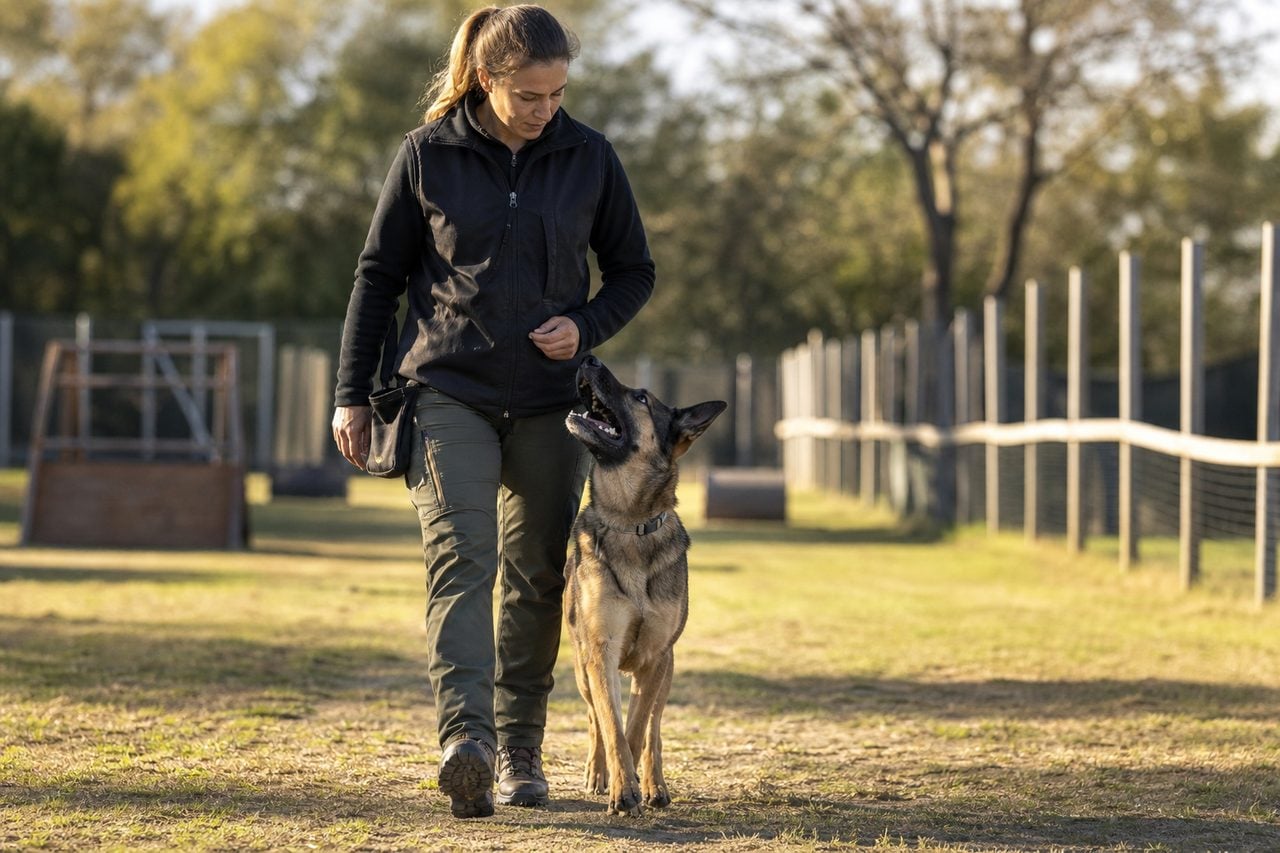
“Dog boot camp” is one of the most searched and most misunderstood terms in dog training. For many Tri-Cities families juggling work in Saginaw, Bay City, or Midland, the idea of sending a dog away for a week or two of intensive training and getting back a well-behaved companion is deeply appealing. Board-and-train programs, the industry term for boot camps, can genuinely help, but they are not magic, and the results depend enormously on the program’s methods and on what happens after the dog comes home.
- What a Dog Boot Camp Actually Is
- When a Board-and-Train Makes Sense for a Tri-Cities Family
- The Methods Question: Why It Matters More Than the Marketing
- The Handoff: Why the Weeks After Camp Decide Everything
- Boarding Welfare: Where Your Dog Sleeps for Two Weeks
- Evaluating Boot Camp Options in the Saginaw Valley
- What Results Realistically Look Like
- Reviewed trainers
- FAQ
This guide explains what a dog boot camp actually is, when it makes sense, what to be cautious about, and how to evaluate a board-and-train program in the Saginaw Valley. The most important thing to understand up front is that a boot camp trains the dog, but the dog then comes home to you. If you do not learn to maintain what the trainer built, the results fade. The best programs know this and build owner transfer into the process.
Used well, with the right provider and realistic expectations, a board-and-train can jump-start progress that a busy household struggles to make on its own. Used carelessly, it can waste money or, in the worst cases with harsh methods, damage a dog’s trust. Knowing the difference is what this guide is for.
What a Dog Boot Camp Actually Is
A dog boot camp, properly called a board-and-train, is a program where your dog lives with a trainer or at a training facility for a set period, typically one to several weeks, receiving daily structured training. Instead of you doing the daily reps, a professional does them, often multiple short sessions a day, in a consistent environment. At the end, the trainer teaches you how to handle the dog and maintain the behaviors.
Board-and-trains generally target one of a few goals:
- Foundation obedience: reliable sit, down, stay, place, recall, and loose-leash walking.
- Manners and impulse control: greeting people without jumping, settling calmly, not bolting through doors.
- Specific problem behaviors: leash reactivity, some forms of anxiety, or persistent house-soiling.
What a boot camp is not is a cure for serious aggression or deep-seated fear delivered by force. Those issues need a qualified behavior professional and careful, individualized work, not a one-size-fits-all intensive. Be skeptical of any program that promises to “fix” aggression quickly or guarantees results, since no ethical trainer can guarantee an animal’s behavior. In Michigan and everywhere else, guarantees in dog training are a red flag, not a reassurance.
It also helps to understand why boot camps became popular in the first place. Modern life is busy, and daily training takes a consistency that many households genuinely struggle to sustain between work, school, and everything else pulling at a Saginaw, Bay City, or Midland family’s week. A board-and-train concentrates that effort into a professional’s hands over a short, intensive window, which is appealing precisely because it removes the daily discipline burden from the owner. That convenience is real, but it is also exactly why the methods and the handoff deserve such close scrutiny: you are trading daily involvement for concentrated results, and the value of that trade depends entirely on how the dog is treated and how well the skills are transferred back to you.
When a Board-and-Train Makes Sense for a Tri-Cities Family
Board-and-train is not the right tool for every dog or every household, but there are situations where it genuinely shines. It tends to be a good fit when the obstacle is time and consistency rather than a need for the owner to build hands-on skill from scratch.
- Time-crunched households. If your family is stretched thin between jobs and school runs across the Tri-Cities and simply cannot commit to daily training sessions, an intensive program can build the foundation for you.
- A specific, well-defined goal. Dogs that need solid obedience or help with a particular manners problem often make fast progress in a structured setting.
- A dog that struggles to focus at home. Some dogs learn faster away from the distractions and established habits of the household, then transfer the skills back with the trainer’s coaching.
- A bridge before a life change. A new baby, a move, or a busy season can make a jump-start worthwhile.
It is a weaker fit when the core issue is the human-dog relationship or when the owner actually needs to learn handling skills, because those are built through doing, not delegating. It is also the wrong first stop for complex behavior cases. If your dog has bitten, shows real aggression, or has severe anxiety, start with a qualified behavior professional to assess the dog before considering any intensive program.
Be honest with yourself about which situation you are in. A board-and-train that solves the wrong problem is money poorly spent.
The Methods Question: Why It Matters More Than the Marketing
This is the part of the boot-camp world that families most need to understand, because it is where the biggest differences and the biggest risks live. Board-and-train programs vary enormously in their training philosophy, and because your dog is away from you the whole time, you do not see how it is being trained. That makes vetting the methods in advance essential.
The mainstream, evidence-based standard among reputable trainers is reward-based training: the dog is taught what to do and paid for getting it right, with unwanted behaviors managed and redirected rather than punished harshly. This builds reliable behavior and preserves the dog’s trust and confidence.
At the other end are programs that lean heavily on aversive tools and “pressure” — prong collars, remote shock (“e-collars”), and dominance framing. These can suppress behavior quickly, which is why some boot camps favor them and show impressive-looking before-and-after videos. But suppression is not the same as teaching, and harsh methods carry documented risks of fear, anxiety, and even escalated aggression, especially when applied intensively by someone the dog does not know. A dog that comes home “obedient” but shut down or nervous has not been helped.
- Ask exactly what tools and methods the program uses, and what happens when a dog gets something wrong.
- Ask to observe a session or the facility; reluctance to let you see how dogs are handled is a warning sign.
- Favor programs that emphasize rewards, clear communication, and owner education over quick suppression.
You are trusting a stranger with your dog around the clock. The methods question is not a technicality; it is the whole decision.
The Handoff: Why the Weeks After Camp Decide Everything
Here is the truth that separates successful board-and-trains from disappointing ones: the dog learns to respond to the trainer, in the trainer’s environment. Bringing those behaviors home, with your cues, your family, and your distractions, is a separate skill that has to be transferred. A program that drops off a trained dog and drives away has done half the job at best.
Good programs build the handoff into the process:
- Owner training sessions where you learn the exact cues, rewards, and handling the dog was taught, so you are consistent with what it knows.
- Written instructions and follow-up support for the weeks after the dog returns, when questions inevitably come up.
- A realistic maintenance plan that fits your life in Saginaw, Bay City, or Midland, because training that is not practiced fades.
Plan for the transition. The dog will test what still applies at home, and behaviors can slip in the first days back as it re-reads the new context. That is normal. Keep practicing the cues in short daily sessions, use the same words and rewards the trainer used, and hold the whole household to the same rules. Take the dog to the places it will actually live its life, a walk on the Saginaw Valley Rail Trail, a quiet visit near the Chippewa Nature Center, so the skills generalize beyond the training environment.
Think of a board-and-train as a strong start you inherit, not a finished product you receive. The families who get lasting value are the ones who show up for the handoff and keep the work going.
Boarding Welfare: Where Your Dog Sleeps for Two Weeks
Because a boot camp means your dog lives away from home, the boarding side deserves as much scrutiny as the training side. A stressed dog in poor conditions will not learn well no matter how skilled the trainer, and your dog’s comfort and safety matter in their own right. Whether the program runs from a dedicated facility near Saginaw or a trainer’s home in one of the outlying towns like Frankenmuth or Chesaning, ask about the daily reality.
- Housing and cleanliness. Where do dogs sleep, how much space do they have, and how often are areas cleaned?
- Daily routine. How much of the day is training versus rest, exercise, and enrichment? Dogs need downtime, sniffing, and decompression, not drilling from dawn to dusk.
- Supervision and safety. How many dogs per staff member, and how are dogs kept separated or grouped? What is the plan if a dog gets sick or injured?
- Communication. Will you get updates, photos, or video while your dog is away? Regular contact is reassuring and a sign of a confident, transparent operation.
Vaccination and health requirements are also worth confirming, both for your dog’s protection and as a signal that the facility takes group welfare seriously. A program that welcomes your questions about boarding conditions, and ideally a visit before you commit, is one that has nothing to hide. If a provider is vague about where your dog will actually stay or resists a tour, keep looking.
Evaluating Boot Camp Options in the Saginaw Valley
Board-and-train is a more specialized offering than basic group classes, so the local pool of providers in the Tri-Cities is smaller and more variable in approach. That makes careful comparison worthwhile. Because you cannot judge one of these programs by a slick video, focus your evaluation on substance.
A practical checklist for vetting a local board-and-train:
- Methods first. Confirm the program uses reward-based, humane training and can explain clearly what happens when a dog succeeds and when it errs.
- Realistic claims. Walk away from guarantees and from anyone promising to fix serious aggression fast. Trustworthy trainers describe likely progress, not miracles.
- Owner transfer built in. Make sure handoff sessions and follow-up support are part of the package, not an afterthought.
- Transparent boarding. Ask to see or hear about where and how dogs live during the stay, and get vaccination requirements in writing.
- Right scope for your dog. Match the program to your actual goal, and route true behavior cases to a qualified behavior professional first.
- Clear terms. Understand the length, what is covered, and what maintenance you are expected to do afterward before you commit.
One more practical note for Tri-Cities families: location and logistics matter more than they first appear. A program a long drive away can make the crucial follow-up handoff sessions harder to attend, and it is those sessions, not the boarding stay itself, that determine whether the results last. A provider closer to home, whether central near Saginaw or out toward Frankenmuth or Freeland, makes it far easier to return for coaching, ask questions, and stay engaged in the weeks that actually decide the outcome. Weigh convenience alongside methods and transparency when you compare your options.
Some Tri-Cities families ultimately decide a board-and-train is not the right fit and instead choose regular private lessons or group classes, which spread the learning across owner and dog and build handling skills directly. That is a perfectly valid path, and often the better one when time allows. The right answer depends on your household, your dog, and your goals. Review what local providers actually offer, ask hard questions about methods and the handoff, and choose the program whose approach you would be comfortable watching from start to finish.
What Results Realistically Look Like
Families weighing a board-and-train understandably want to know what they are actually buying, so it helps to set expectations grounded in how these programs really perform. A well-run program with humane methods can produce a noticeable, genuine improvement: a dog that walks more politely on leash, responds to core cues, greets without launching itself at guests, and settles on command. Those are real gains that make daily life in a busy Tri-Cities household calmer, and for many families that is exactly the outcome they hoped for.
What a boot camp cannot deliver is a permanent, hands-off transformation. Behavior is maintained by consequences and practice, so skills that are never reinforced at home gradually erode. The dog also has to generalize what it learned in the trainer’s environment to yours, which takes deliberate follow-through. Think of the program as buying a strong head start and a clear blueprint, not a finished result you can shelve.
- Expect a transition period. The first days home often look like backsliding as the dog re-reads the new context. Stay consistent and it settles.
- Expect to keep working. Plan on short daily practice, using the trainer’s exact cues and rewards, for weeks after the dog returns.
- Expect honest scoping. A reputable trainer tells you which behaviors a stay can realistically address and which need ongoing work or a different approach entirely.
It is also worth being clear-eyed about cases where a board-and-train is not the answer at all. Deep fear, real aggression, or separation distress rooted in panic are emotional problems that an intensive obedience stay will not resolve and can sometimes worsen if handled with pressure. Those belong with a qualified behavior professional. For the everyday manners and obedience most families want, though, a carefully chosen program in the Saginaw Valley, paired with your own follow-through, can be a sound investment. The key is walking in with accurate expectations: a good start you carry forward, not a magic reset.
Reviewed Dog Boot Camp Trainers in Saginaw
These reviewed Saginaw-area trainers from our directory handle dog boot camp. Each links to a full profile with specialties, certified credentials, reviews, and contact info:
- Pawsonal Training — 5.0★ (102 reviews)
- Paws & Beyond — 5.0★ (81 reviews)
- K9 Optimal Training Solutions — 5.0★ (42 reviews)
- Gnawty Dog Academy — 4.9★ (25 reviews)
- Dog Haven Ranch — 4.6★ (35 reviews)
- Windy Acres Kennels — 4.5★ (124 reviews)
- SHILOH K9 OBEDIENCE TRAINING & BOARDING CENTER, LLC — 3.8★ (166 reviews)
See all Saginaw dog boot camp trainers →
Frequently Asked Questions
What exactly is a dog boot camp?
It is another name for a board-and-train program, where your dog stays with a trainer or at a facility for a set period, usually one to several weeks, and receives daily structured training. A professional does the daily repetitions instead of you, then teaches you how to maintain the behaviors when the dog comes home. It typically targets obedience, manners, and impulse control rather than serious behavior disorders.
Does a board-and-train really work?
It can work well for the right dog and goal, particularly foundation obedience and manners for time-crunched families. But the results depend on two things: the quality and humaneness of the training methods, and whether you learn to maintain the behaviors at home. A boot camp that skips the owner handoff tends to fade. Treat it as a strong start you continue, not a finished, permanent fix.
Are boot camps safe for my dog?
It depends entirely on the program. Reward-based programs run by transparent providers can be safe and effective. Programs that rely heavily on aversive tools like prong or shock collars and dominance methods carry real risks of fear and even worsened aggression, especially applied intensively by a stranger. Always ask what methods and tools are used, ask to see the facility, and confirm the boarding conditions before committing.
Can a boot camp fix my dog's aggression?
Be very cautious here. Serious aggression is a complex behavior problem that needs an individualized assessment and plan from a qualified behavior professional, not a one-size-fits-all intensive. Any program that promises to fix aggression quickly or guarantees results should be a red flag. If your dog has bitten or shows real aggression, start with a proper behavior evaluation before considering any board-and-train.
What should I ask before enrolling my dog?
Ask what training methods and tools are used and what happens when a dog gets something wrong; ask to observe a session or tour the facility; ask how much of the day is training versus rest and enrichment; ask about owner handoff sessions and follow-up support; ask about vaccination requirements and boarding conditions; and confirm the length, cost, and maintenance expectations in writing. Vague answers or refusals to let you see how dogs are handled are warning signs.
Is a boot camp better than regular classes?
Neither is universally better; they solve different problems. Board-and-train front-loads the work with a professional and suits families short on time or dogs needing a focused reset. Regular private lessons or group classes spread learning across you and your dog and build your own handling skills, which pays off long-term. Many Tri-Cities families find ongoing classes the better value when they have the time; others use a board-and-train as a jump-start. Match the choice to your situation.
Related: read our complete dog boot camp guide or the full Saginaw dog training overview.
Ready to find the right dog boot camp pro in Saginaw?