
Dog Boot Camp in Scranton, PA
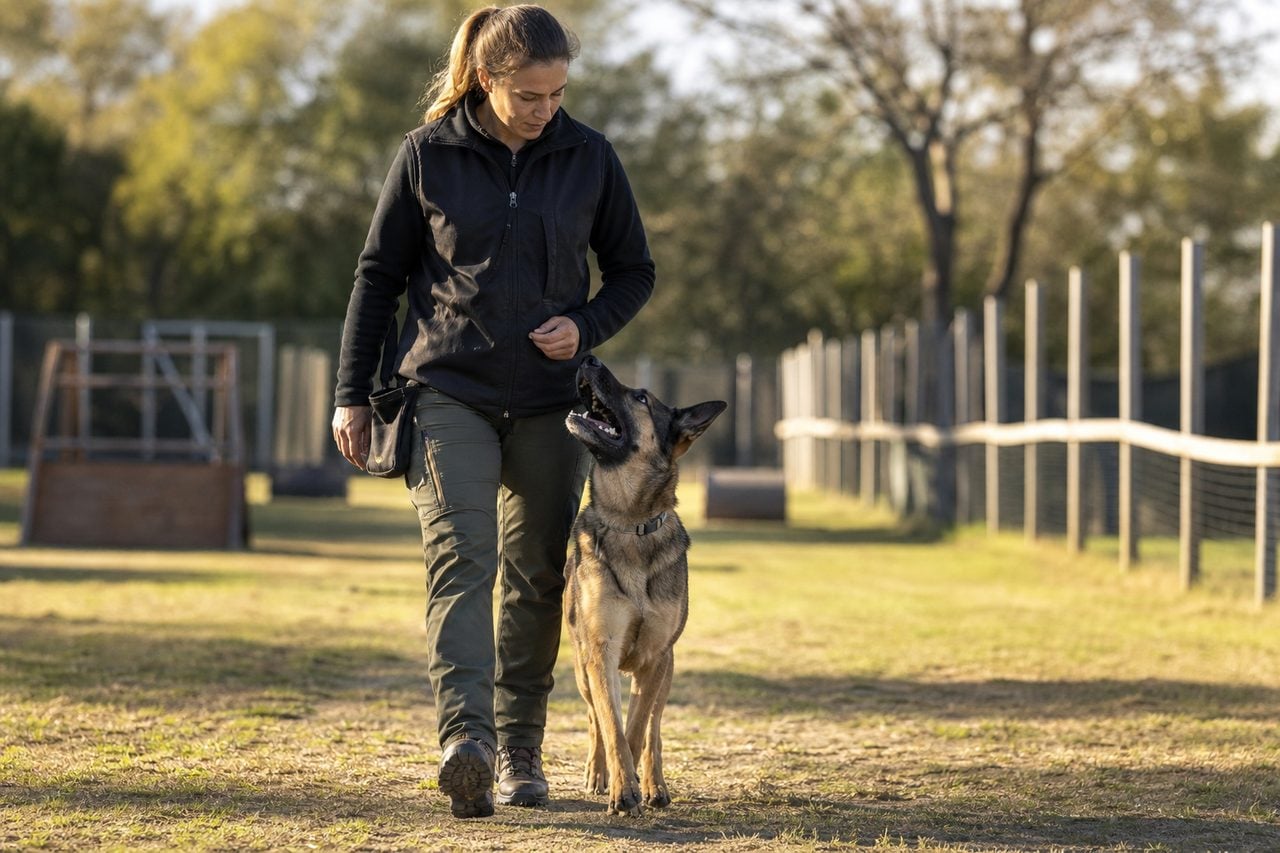
A dog boot camp is an intensive, accelerated training program built to make a lot of progress in a short window. In the Scranton and Wilkes-Barre metro, most providers who advertise a “boot camp” run it as a concentrated day-program: your dog attends for focused sessions — sometimes several hours a day, sometimes across a compressed multi-day block — and comes home in the evening. The idea is to pack far more structured repetition into a short period than a once-a-week class can, without your dog living away from home the way a full residential board-and-train would.
For NEPA families, the day-based intensive has real appeal. Owners across the Lackawanna and Wyoming valleys often want faster results than a slow-drip weekly class, but they also want their dog home each night — whether for peace of mind, an anxious dog, or simply because the household prefers it. A boot camp threads that needle: intense, trainer-led work during the day, with the dog sleeping in its own bed in Dunmore, Kingston, or the Back Mountain. It also keeps the owner more continuously in the loop, since you are handling drop-off and pickup and seeing progress daily. In a region where winter weather can derail a weekly-class routine for weeks at a stretch, that concentrated burst of trainer-led work is an appealing way to make real headway before the momentum slips away.
The format tends to draw owners who feel stuck between two extremes — a slow weekly class that never quite moves the needle, and a full residential stay that feels like too much separation. A boot camp offers a middle gear: serious daily intensity paired with a dog that is home every night.
This guide lays out what a dog boot camp really is, how it differs from residential board-and-train, which dogs and owners it suits best, what a well-run local program should look like, and how to keep the gains going after the intensive ends. GetDogSchool.com is a directory rather than a trainer — the aim here is to help you understand the format honestly and vet the options serving Northeastern Pennsylvania with confidence.
What A Dog Boot Camp Really Is
At its core, a boot camp is about intensity and repetition compressed into a short span. Rather than one lesson a week where a dog practices a skill briefly and then goes days without reinforcement, a boot camp delivers many focused sessions in quick succession — letting behaviors take hold faster because the reinforcement is dense and consistent. The trainer usually leads the bulk of the work, drilling obedience, impulse control, and manners with professional timing.
In the Scranton/Wilkes-Barre market, the term most commonly points to a day-program structure: your dog is dropped off, trains under supervision through the day, and comes home each night. Some programs run as a multi-day intensive over a defined block; others spread daily sessions across a couple of weeks. What unites them is the accelerated pace and the fact that the dog returns to your home rather than boarding overnight at the facility.
It helps to be clear about what a boot camp is not. It is not a lifetime guarantee, and it is not a substitute for your own ongoing involvement. The intensive builds a strong base quickly, but a dog still needs consistent practice at home to keep skills sharp. Think of it as a fast, focused jump-start — a way to cover a lot of ground quickly — rather than a one-and-done fix.
Boot Camp Versus Residential Board-And-Train
The clearest way to understand a boot camp is to contrast it with residential board-and-train, since the two are often confused. The defining difference is where your dog sleeps. In a residential board-and-train, the dog lives at the facility for weeks, with training integrated around the clock. In a day-based boot camp, the dog trains intensively during the day and returns home each evening — the overnight residency is the key thing that is absent.
That single difference drives most of the practical trade-offs. Residential stays fully reset the dog’s environment and remove home triggers for a stretch, which can help with issues rooted in the household routine. A day-program keeps the dog in its own environment each night, which many owners prefer for an anxious dog or for their own comfort, and which can make the skills feel more continuous because the dog practices in its real home context sooner.
Logistics and cost differ as well. Boot camps require daily drop-off and pickup, which is a genuine consideration if you are commuting from Carbondale, Olyphant, Hazleton, or Mountain Top through NEPA winter weather. Residential programs remove the daily drive but generally cost more because they bundle boarding and full-time care. Neither format is universally better — the right choice depends on your dog, your schedule, and whether an environmental reset or nightly homecoming matters more to your situation.
Which Dogs And Owners Fit A Boot Camp
Boot camps tend to suit owners who want accelerated progress but prefer their dog home each night. If a slow weekly class feels too gradual, but the idea of sending your dog away for weeks does not sit right, a day-based intensive is often the middle path. It is also a good fit for people who want to stay closely involved — daily pickup naturally keeps you engaged with the dog’s progress and the trainer’s guidance.
Dog-wise, boot camps work well for young dogs and adolescents who need a concentrated foundation in manners, leash skills, and impulse control, and for dogs whose owners can commit to reinforcing the work at home each evening. Because the dog stays in its own environment overnight, the format can also be gentler for dogs that would find weeks of separation stressful, though a trainer should still assess each dog individually.
The format asks more of the owner than a residential stay does, and that is worth naming. Daily drop-off and pickup take time and reliability, and the evenings at home are part of the program — you are expected to carry the structure through the night rather than handing it off entirely. Owners who cannot commit to that daily rhythm, or who need the household stress removed for a stretch, may be better served by a residential option. An honest trainer in the Scranton or Wilkes-Barre area will help you figure out which model matches your reality.
What A Well-Run Local Boot Camp Looks Like
A quality boot camp starts with an assessment. Before quoting a program, a good trainer wants to understand your dog and set realistic goals for what an intensive can accomplish. Steer clear of any program promising guaranteed results without meeting your dog first — accelerated pace does not change the fact that behavior is individual and outcomes cannot be promised on a fixed schedule.
Ask how a training day is structured. How many sessions, how long, and how much rest and decompression between them? Intensity is the point, but a well-designed day balances hard work with recovery so the dog can actually absorb and retain what it learns. Ask what the program covers in its window, and how the trainer adjusts if a particular dog needs more time on one skill than another.
Because a boot camp keeps you in the loop daily, use that. A good provider will brief you at pickup on what was worked on and what to reinforce at home that evening — turning the overnight hours into part of the program rather than a gap. Confirm vaccination and health requirements, ask how they handle a dog that gets sick or hurt during the day, and find out what happens during NEPA’s snow days when outdoor sessions are limited. A trainer who can walk you through the day clearly, and who treats the owner as a partner, is a strong sign.
Making The Intensive Stick At Home
The accelerated pace of a boot camp front-loads a lot of learning, but the results still depend on what you do once the program ends. Skills built during an intensive fade without practice, the same as with any training format. The advantage of the day-program model is that you have been involved throughout — you have seen the cues, heard the daily debriefs, and started reinforcing at home each evening — so the handover is more of a continuation than a hard reset.
Lean into that continuity. Keep using the exact cues and timing the trainer used, hold the structure steady in the first weeks after the program wraps, and reintroduce freedoms gradually as your dog proves reliable. Expect some boundary-testing as the intensity of the program eases off — that is normal, and the answer is calm consistency rather than frustration or a return to old habits.
Build a simple daily maintenance rhythm rather than relying on marathon sessions. A few short, consistent practice moments woven into ordinary routines — mealtimes, walks along the Lackawanna River Heritage Trail, greetings at the door — keep skills sharp far better than occasional long drills. If your provider offers follow-up or refresher sessions, treat them as a useful safeguard. The families who get the most from a boot camp are the ones who see pickup on the final day as the start of their own ongoing work, not the finish line.
Costs, Scheduling, And What To Expect
Boot camp pricing in the Scranton and Wilkes-Barre market varies with the program’s length and intensity, the trainer’s experience, and the goals involved. Day-based intensives generally cost less than multi-week residential stays because they do not include overnight boarding and around-the-clock care, but they still represent a real investment given the concentrated trainer time involved. As always, focus on what the fee actually covers — number of days or sessions, hours per day, and any follow-up support — rather than on the headline number alone.
Scheduling is a bigger factor for boot camps than for residential programs because of the daily commitment. Map out the drop-off and pickup logistics honestly before you commit, including the drive from your part of the metro and how it works during NEPA’s winter months. If the daily rhythm is not realistic for your household, a residential option may fit better — it is worth being honest with yourself about that up front.
Get the terms in writing: the program length, what is included, health and vaccination requirements, the daily schedule, and the policy if your dog needs veterinary care during the day. Ask whether follow-up or refresher sessions are part of the price or billed separately, and what happens if goals are not fully met in the planned window. Above all, keep expectations grounded — a boot camp is a powerful jump-start, not a permanent guarantee, and any provider promising a “fixed” dog by a set date is overselling what an intensive can honestly deliver.
Finding And Vetting A Boot Camp Near You
The Scranton/Wilkes-Barre region covers a lot of ground — the Lackawanna Valley, the Mid-Valley and Carbondale, the Abingtons, the Wyoming Valley, the Back Mountain, Mountain Top, and Hazleton — and because a boot camp involves daily drop-off and pickup, distance matters more here than it does for a residential stay. Factor the commute realistically into your decision; a program that is excellent on paper can become unsustainable if it is a long haul each way in January.
Vet carefully before booking. If you can, visit the facility to see where dogs train and rest, gauge cleanliness, and watch how staff handle the animals. Ask the trainer about their methods and philosophy and make sure they match how you want your dog treated. Request references, read a spread of reviews rather than a single testimonial, and pay attention to how openly the trainer answers your questions — transparency about the daily routine is a good sign, evasiveness or over-promising is not.
Use this GetDogSchool.com directory as a starting point to find boot camp and day-program options serving the NEPA area, then do your own diligence. Call, ask the questions in this guide, confirm the schedule and what is included, and make sure the format genuinely fits your dog and your daily life. We list providers to help you begin; the final decision about who is right for your dog is always yours.
Reviewed Dog Boot Camp Trainers in Scranton
These reviewed Scranton-area trainers from our directory handle dog boot camp. Each links to a full profile with specialties, certified credentials, reviews, and contact info:
- Loose Leash Canine — 5.0★ (52 reviews)
- Little Bear Canines Dog Training — 5.0★ (4 reviews)
- Dunmore Barks
- K-9 Academy Dog Training School — 4.8★ (46 reviews)
- Off Leash K9 Training, Scranton — 4.8★ (42 reviews)
- The Dog People — 4.8★ (18 reviews)
- Pawsitive Pup
- Springbrook Kennels
- Awesome Pawz Inc
- Lackawanna Kennel Club
See all Scranton dog boot camp trainers →
Frequently Asked Questions
What exactly is a dog boot camp?
A dog boot camp is an intensive, accelerated training program that packs many focused sessions into a short window. In the Scranton/Wilkes-Barre area it most often runs as a day-program: your dog attends concentrated training during the day and comes home each evening, either over a compressed multi-day block or across a couple of weeks. The goal is faster progress than a once-a-week class through dense, consistent repetition, without your dog boarding overnight.
How is a boot camp different from board-and-train?
The key difference is where your dog sleeps. A residential board-and-train has the dog living at the facility for weeks with training integrated around the clock. A day-based boot camp keeps the dog home each night and trains intensively during the day. Residential fully resets the environment and removes home triggers; a boot camp keeps the dog in its own context and keeps the owner more continuously involved. Ask each provider which model they run, since the terms are used loosely.
Will a boot camp fix my dog permanently?
No format offers a permanent guarantee. A boot camp is a fast, focused jump-start that builds a strong foundation quickly, but skills fade without practice at home. Because you are involved daily in a boot camp, the handover is more of a continuation — keep using the same cues, hold the structure steady in the first weeks, and build short daily practice into ordinary routines. Be skeptical of any trainer promising a fully fixed dog by a set date.
How much does a dog boot camp cost around Scranton?
Pricing varies with the program’s length and intensity, the trainer’s experience, and the goals involved. Day-based boot camps generally cost less than multi-week residential stays because they do not include overnight boarding and full-time care, but they still represent a real investment for the concentrated trainer time. Focus on what the fee covers — days or sessions, hours per day, and follow-up support — and get the terms in writing rather than comparing headline numbers alone.
Is a boot camp better for anxious dogs than board-and-train?
It can be, because the dog returns to its own home each night rather than staying away for weeks, which some anxious dogs handle better. It also keeps owners closely involved. That said, every dog is different, and a responsible trainer should assess yours individually before recommending a format. The daily drop-off and pickup demand more of the owner, so weigh whether that rhythm is realistic for your household before committing.
What should I ask a boot camp provider before booking?
Ask for an assessment before any quote, and be wary of guaranteed results offered sight unseen. Ask how a training day is structured, how many sessions and how much rest, and what the program covers. Confirm vaccination and health requirements, how they handle a dog that gets sick or hurt, and what happens on snow days. Ask whether follow-up sessions are included, and get the schedule and terms in writing. Visit if you can, read a range of reviews, and use this directory to find local candidates.
Related: read our complete dog boot camp guide or the full Scranton dog training overview.
Ready to find the right dog boot camp pro in Scranton?