
Dog Training Prices in Fort Wayne, IN
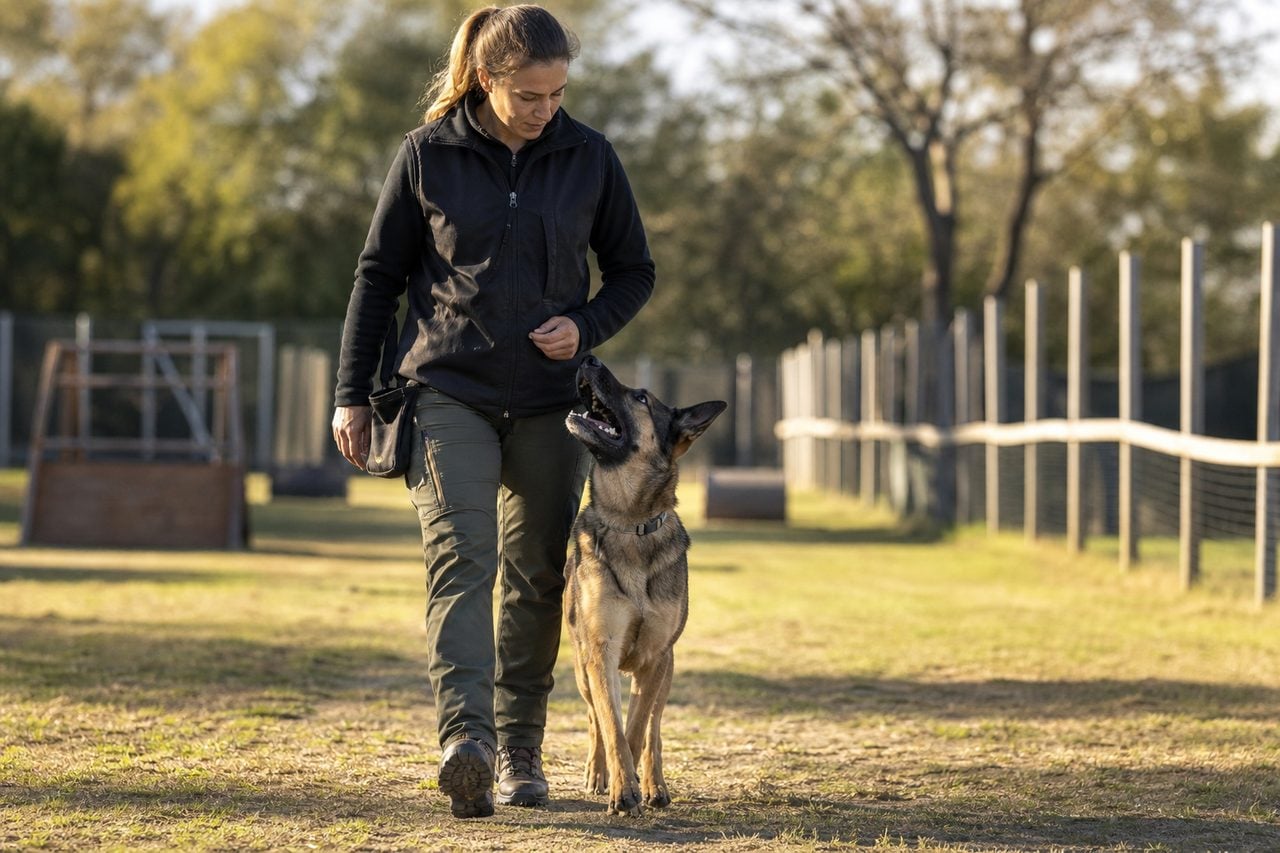
One of the first questions any Fort Wayne dog owner asks when considering professional training is a simple one: what does it cost? The honest answer is that it depends — on the format, the trainer’s experience, the length and intensity of the program, and exactly what you need. Dog training spans everything from an inexpensive group class to a substantial investment in intensive private or board-and-train work, and understanding what drives the price helps you budget realistically and choose the option that fits both your goals and your wallet.
This guide walks through the typical pricing structures for dog training in the Fort Wayne and Allen County area, explains what makes one option cost more than another, and offers guidance on getting good value. Because prices vary considerably from trainer to trainer and change over time, the figures here are presented as general ranges to frame your expectations, not as quotes. Always confirm current pricing directly with any trainer before booking, and treat published ranges as a starting point for your own research rather than a fixed rate.
The aim is to help you become an informed buyer — someone who understands what they are paying for, can compare options meaningfully, and can spot the difference between a genuine bargain and a false economy. Whether you are a student near Purdue University Fort Wayne on a tight budget or a family in Huntertown ready to invest in a well-behaved dog, knowing how training is priced puts you in a stronger position.
What Drives the Cost of Dog Training
Before looking at specific formats, it helps to understand the factors that determine what any given program costs. The same skills can be delivered in very different packages, and price reflects a handful of underlying variables.
- Format. Group classes spread a trainer’s time across many dogs, so they cost the least per session. Private, one-on-one training commands more because you are buying the trainer’s undivided attention. Intensive board-and-train, where the dog lives with the trainer, is the most expensive because it bundles instruction, care, and time.
- Trainer experience and credentials. A highly experienced trainer or a recognized specialist typically charges more than someone newer to the field. More experience often means faster, more reliable results, though it is not a guarantee.
- Length and intensity. A short course costs less than a multi-week program or a package of many sessions. Intensive programs that promise quick results front-load a lot of the trainer’s time and price accordingly.
- Specialization and difficulty. Basic manners cost less than specialized work such as addressing reactivity, fear, or aggression, which requires more skill and time. Behavior modification is generally priced above obedience.
- What is included. Some packages include follow-up support, take-home materials, or a satisfaction guarantee; others are pay-as-you-go. These extras affect both price and value.
Because these variables combine in many ways, two trainers can quote very different prices for what sounds like the same thing. Understanding the drivers lets you ask the right questions and compare offers on an apples-to-apples basis rather than on headline price alone.
Group Class Pricing
Group obedience classes are the most economical form of professional training, which is a large part of why they are so popular. Because the trainer’s time and the cost of the space are shared among several dogs and owners, the per-session cost is low compared with individual attention. For many owners — especially those with a typical, adaptable dog and a goal of solid basic manners — a group class delivers strong value.
Group classes are usually sold as a package covering a series of weekly sessions over several weeks rather than billed one session at a time. Puppy classes, basic manners courses, and intermediate or advanced classes each tend to have their own price point, with more advanced or specialized courses sometimes costing more. The overall outlay for a full beginner series is generally the most affordable path into professional training in the Fort Wayne area, though the exact figure varies from trainer to trainer.
The value of a group class goes beyond the low price. You get professional coaching, a structured curriculum, and — crucially — the chance to practice around the distraction of other dogs and people, which is difficult to replicate at home. The trade-off is that the pace and content are set for the group, so a dog with unusual needs may not get the individualized attention it would in a private setting. For most owners seeking good manners and basic reliability, though, a group class is where the strongest value-for-money lies. Confirm exactly how many sessions are included and what the curriculum covers when comparing options, since two similarly priced courses can differ in length and depth.
Private and In-Home Training Pricing
Private training — one-on-one work with a trainer, either at their facility or in your home — costs more than group classes because you are paying for individualized attention. The price reflects that the entire session is devoted to your dog and your specific goals, and that the program can be tailored precisely to your situation.
Private sessions are commonly sold either individually or, more often, as a package of several sessions at a per-session rate that usually improves when you buy in bulk. In-home training, where the trainer comes to you, may carry a premium over sessions at a facility because it includes travel time, and trainers serving the wider region — from Fort Wayne out to New Haven, Leo-Cedarville, Auburn, or Columbia City — may factor drive distance into their rates. It is worth asking how travel is handled if you live outside the immediate Fort Wayne area.
Despite the higher per-session cost, private training can be well worth it in the right circumstances. It is the natural choice for dogs that would not do well in a group — those that are fearful or reactive around other dogs — and for addressing specific problems that a general class cannot easily target. Because it moves at your dog’s pace and focuses entirely on your goals, it can produce faster progress on the issues that matter most to you. In-home sessions add the advantage of working through problems in the exact environment where they occur, which is especially useful for house-related behaviors. When comparing private trainers, ask what a package includes, how many sessions are typical for your goal, and whether any follow-up support comes with it.
Board-and-Train and Intensive Program Pricing
Board-and-train programs, in which your dog lives with a trainer for a set period of intensive training, sit at the top end of the pricing spectrum. This is by far the most expensive format, and understanding why helps you judge whether it is right for you. The cost bundles several things at once: professional training multiple times a day, the dog’s room and board for the duration, and a large block of the trainer’s time and facility use. Programs are typically priced as a package for a stay of a week or more, and the total can be a significant investment.
The appeal is convenience and speed. For owners who lack the time to do the intensive early work themselves, or who want a jump-start on a difficult issue, having a professional do the heavy lifting can be attractive. But board-and-train comes with important caveats that bear directly on value. The dog learns to respond to the trainer in the trainer’s environment, so a thorough transfer-and-follow-up process is essential to ensure the dog behaves for you at home — ask specifically what that handoff involves and whether follow-up sessions are included. Methods and quality vary widely between facilities, so vetting the program, its approach, and how the dogs are housed and handled is critical before committing a large sum.
Because your own handling skills are central to lasting results, many trainers actually recommend owner-involved formats over board-and-train when time allows. If you do consider an intensive program, treat the price as buying not just the training weeks but the transfer process and support that make it stick. A cheaper program with no follow-up may cost more in the long run than a pricier one that ensures the results carry over to your daily life. As with every format, confirm exactly what is included, and never assume a high price alone guarantees quality.
Getting Value: Free and Low-Cost Options
Professional training is not the only route, and for owners on a tight budget — students near the PFW campus, young families, or anyone watching expenses — there are legitimate low-cost and free ways to train a dog well. These can stand alone or complement paid training.
The most obvious is doing it yourself. With a good book, reputable online resources, and consistency, many owners successfully teach the basics at home for essentially nothing. Self-training works best for confident, easygoing dogs and owners who enjoy the process and can stay consistent. Its limitation is the lack of expert feedback, which matters more for tricky dogs or specific problems, but for straightforward basic manners it is a genuinely viable path.
Community resources can also lower costs. Some shelters and humane organizations offer affordable classes or training resources as part of their mission, and adopting from such an organization sometimes includes access to training support. It is worth checking what is available in the Fort Wayne and Allen County area when you are looking to keep costs down.
A hybrid approach often delivers the best value of all: invest in a modest amount of professional guidance — a group class or a private session or two — to learn correct technique and get feedback, then do the bulk of the daily practice yourself for free. This gives you the benefit of expert instruction without the cost of an extended program, and it puts the responsibility where it belongs anyway, since consistent daily practice by the owner is what truly trains a dog. Spending a little to learn the right methods, then applying them diligently at home, is frequently the smartest use of a limited training budget.
Avoiding False Economy: Cheap vs. Worth It
When money is tight, the temptation is to simply pick the cheapest option, but the lowest price is not always the best value, and the most expensive is not always the best quality. Judging value well means looking past the headline number to what you actually get.
The clearest false economy is paying for training that does not work. A bargain program that uses poor methods, provides little individual attention, or leaves you without the skills to maintain the results can end up costing more — in time, frustration, and eventually paying again for training done right. This is especially true for serious behavior issues, where an inexperienced or heavy-handed approach can make a problem worse rather than better. For fear, reactivity, or aggression, paying for genuine expertise is usually money well spent.
At the same time, a high price is no guarantee of quality. Because dog training is not formally licensed, anyone can set a rate, and an expensive program with weak methods or no follow-up is a poor deal at any price. The way to protect yourself is to evaluate on substance: the trainer’s methods and philosophy, their experience with dogs and issues like yours, what is included in the price, and what past clients say. A moderately priced trainer with humane, effective methods and good follow-up support typically offers better value than either a rock-bottom class with poor instruction or a premium program long on promises and short on transfer.
Frame the decision as a return on investment. Well-chosen training pays off over the entire life of the dog — years of easier walks, safer recalls, and a more enjoyable companion. Viewed that way, spending a reasonable amount to get it right is almost always wiser than saving a little now and dealing with unresolved problems for years. The goal is not the cheapest training or the priciest, but the right training for your dog at a fair price.
How to Compare Quotes and Budget for Training
Armed with an understanding of what drives price, you can approach trainers as an informed buyer and budget sensibly. A methodical comparison keeps you from being swayed by headline numbers and helps you find the genuine best fit.
Start by defining your goal clearly. Basic manners, puppy foundations, a specific problem, or serious behavior modification each point toward different formats and price points, and being specific lets trainers give you relevant quotes. Then, when you contact trainers across the Fort Wayne area, ask consistent questions so you can compare fairly:
- What exactly is included? Number of sessions, length of each, take-home materials, and any follow-up support.
- What is the total cost, not just the per-session rate? Packages and series pricing can differ from a simple hourly figure.
- What methods do you use? Ensure the approach is one you are comfortable applying yourself.
- What results are typical, and what happens if we need more? Understand the expected outcome and the cost of any additional work.
- Are there travel fees? Relevant for in-home training if you are outside the immediate Fort Wayne area.
When budgeting, remember that the sticker price is not the whole cost of a trained dog. Factor in ongoing needs — treats and rewards, possibly follow-up or continuing classes, and the equipment your trainer recommends. Also weigh the value of your own time, since owner-involved formats cost less in money but more in effort, while intensive programs reverse that trade-off. There is no universally correct choice; the right one balances your budget, your available time, and your dog’s needs.
Above all, treat any figures you encounter — here or elsewhere — as general ranges to set expectations, and confirm current pricing directly with the trainer before booking. Rates vary by trainer and change over time, and the surest way to budget accurately is to get specific, up-to-date quotes for your actual goal. An informed conversation with a trainer you trust, more than any published number, is what will tell you what training your dog will really cost.
Reviewed Dog Trainers in Fort Wayne
These reviewed Fort Wayne-area trainers from our directory can walk you through pricing for their programs. Each links to a full profile with specialties, certified credentials, reviews, and contact info:
- Dog Training Elite Northeast Indiana — 5.0★ (170 reviews)
- Off Leash K9 Training of Fort Wayne LLC — 5.0★ (120 reviews)
- The Well Mannered Dog — 5.0★ (115 reviews)
- Perfect Pup LLC — 5.0★ (46 reviews)
- Solid Foundation Dog Training — 5.0★ (18 reviews)
- Trevor’s Dog Training, VSA-CDT, FFCP — 5.0★ (7 reviews)
- The Canine Coach — 5.0★ (3 reviews)
- Polite Paws — 4.9★ (8 reviews)
- Flying Colors Canine Academy Inc. — 4.8★ (112 reviews)
- Riju Dawg Skool — 4.7★ (9 reviews)
See all Fort Wayne dog training prices trainers →
Frequently Asked Questions
How much does dog training cost in the Fort Wayne area?
It varies widely depending on the format, the trainer’s experience, and what you need. Group classes are the most economical because the trainer’s time is shared among several dogs, private one-on-one sessions cost more, and intensive board-and-train programs sit at the top end because they bundle training, care, and a large block of the trainer’s time. Because rates differ from trainer to trainer and change over time, treat any figures as general ranges and confirm current pricing directly with any trainer before booking.
Why are group classes cheaper than private training?
Group classes spread the trainer’s time and the cost of the space across several dogs and owners, so the per-session cost is much lower. Private training costs more because you are paying for the trainer’s undivided, one-on-one attention and a program tailored entirely to your dog. The trade-off is that group classes follow a set pace and curriculum, while private sessions move at your dog’s pace and can target specific issues. Both offer value in different situations, so the cheaper option is not automatically the better one for your needs.
Is board-and-train worth the higher price?
Board-and-train is the most expensive format because it bundles intensive daily training, room and board, and a large amount of the trainer’s time. It can suit owners who lack time to do the early work themselves or who want a jump-start on a difficult issue, but it comes with important caveats. The dog learns to respond to the trainer, so a thorough transfer-and-follow-up process is essential for results to carry over to you at home. Methods and quality vary widely, so vet any program carefully and confirm what follow-up is included before committing.
Are there low-cost or free ways to train my dog?
Yes. Many owners successfully teach the basics themselves using good books, reputable online resources, and consistency — a genuinely viable path for confident dogs and straightforward manners. Some shelters and humane organizations offer affordable classes or training resources, so it is worth checking what is available in the Allen County area. A popular hybrid is to invest in a group class or a private session or two to learn correct technique, then do the bulk of the daily practice yourself for free, which puts effort where it matters most anyway.
Does a higher price mean better training?
Not necessarily. Because dog training is not formally licensed, anyone can set a rate, and an expensive program with weak methods or no follow-up is a poor deal at any price. Conversely, a rock-bottom class with poor instruction can be a false economy if it does not work. Judge value on substance instead: the trainer’s methods and philosophy, their experience with issues like yours, what is included, and what past clients report. A moderately priced trainer with humane, effective methods and good support often offers the best value.
How should I budget and compare training quotes?
Start by defining your goal clearly, since basic manners, puppy foundations, and behavior modification point to different formats and prices. Ask every trainer the same questions: what exactly is included, the total cost rather than just the per-session rate, what methods they use, what results are typical, and whether there are travel fees for in-home visits outside Fort Wayne. Budget for ongoing needs like rewards and any follow-up classes too. Above all, get specific, up-to-date quotes for your actual goal rather than relying on general figures.
Related: read our complete dog training prices guide or the full Fort Wayne dog training overview.
Ready to find the right dog training prices pro in Fort Wayne?