
Dog Training Prices in Portland, OR
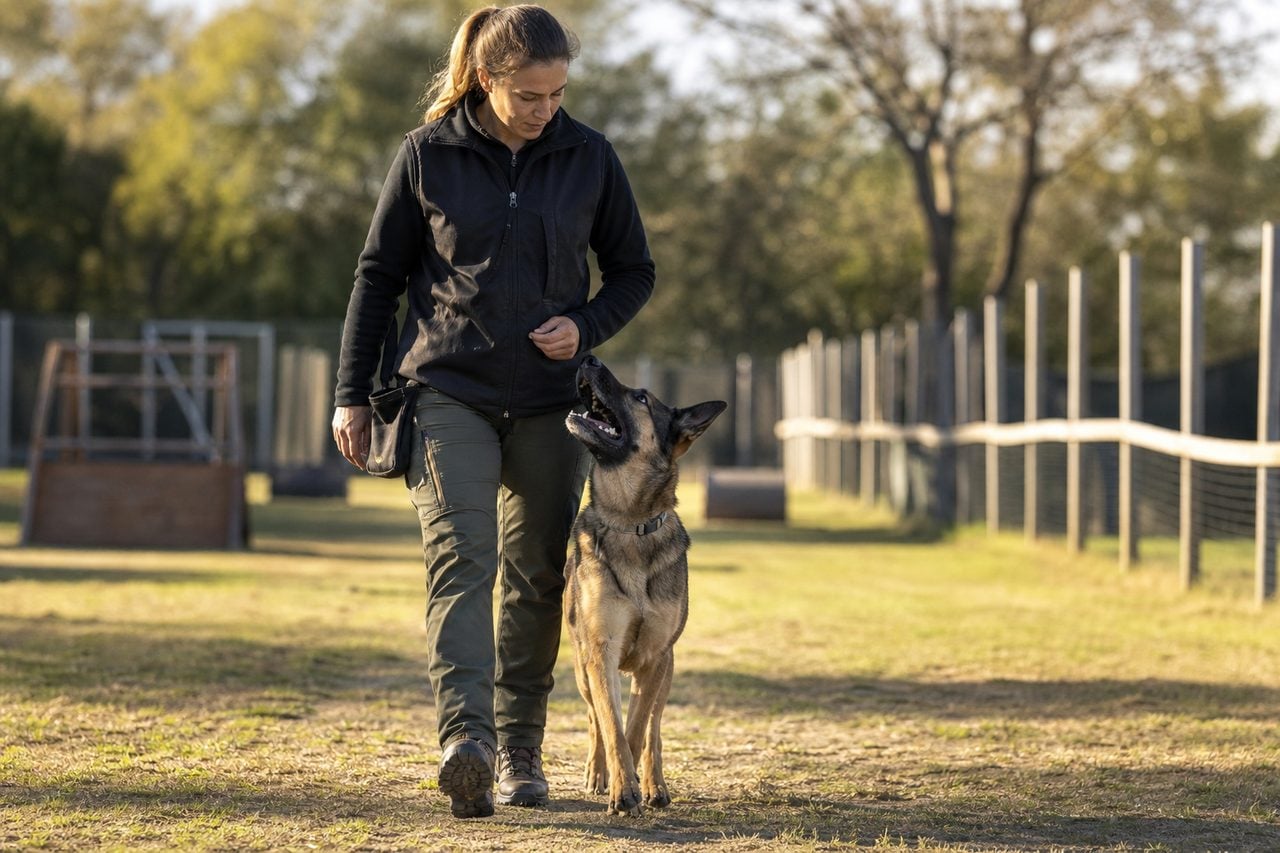
Dog training prices in Portland, Oregon vary widely because the city offers nearly every format: pet-store and shelter classes, neighborhood group series, in-home lessons, drop-off day training, behavior consultations with veterinary behaviorists and multi-week board-and-train stays on rural properties and Sauvie Island farms.
Rather than hunting for a single number, it pays to understand what each format buys, what pushes a quote up or down and how to compare two offers fairly. Several Portland trainers publish their package rates online, while others quote after a free call or evaluation. This guide walks through the factors that matter so you can read any quote with confidence.
What each format buys
The biggest driver of cost is the format, because it decides how much one-on-one time a trainer spends with your dog and with you.
- Group classes. Usually the most affordable way to learn the basics, since the instructor’s time is shared. Portland classes typically run as a multi-week series, such as the six-week classes offered on the east side and in Milwaukie. You get structure and practice around other dogs, but less individual attention.
- Private and in-home lessons. A trainer works with you and your dog alone, at home, in a park or on location. Many Portland trainers sell these singly or in packages of three to twelve lessons, with per-lesson costs often lower in bigger packages.
- Day training. The trainer works directly with your dog, then teaches you. Formats in Portland include pickup sessions in public places, home school programs where a trainer visits several times a week, twice-weekly drop-off days at a school, all-day facility programs with a report card and weekend-only day training. You pay for the trainer’s hands-on time, so it costs more than coaching you to do the work yourself.
- Behavior consultations. For fear, aggression or separation problems, a first consultation builds a plan. At the top of the range, a veterinary behavior practice in Northwest offers two-part behavior health assessments with a board-certified veterinary behaviorist, which combine a physical and behavioral evaluation.
- Board-and-train. Your dog lives with the trainer or at a kennel for a set stay, often two to four weeks, followed by handover lessons. Daily care, housing and intensive training all sit in one price, so this is usually the largest single outlay.
What pushes a quote up or down
Two quotes for the same format can still differ for reasons that are easy to miss.
- The problem itself. Basic manners cost less than reactivity, resource guarding, aggression or separation anxiety, which need assessment, longer plans and more careful work. Several Portland trainers price behavior sessions separately from general training.
- Credentials and specialization. Trainers holding CPDT-KA, KPA CTP or behavior-consultant accreditations, and practices with veterinary behaviorists on staff, may charge more for that expertise.
- Program length. Some trainers set minimums, such as a minimum of five sessions or a three-week day-training minimum, and some programs usually start with five lessons. A higher package total can still mean a lower cost per session.
- Session length. Compare minutes, not just sessions. Consultations can run sixty to ninety minutes, while follow-up lessons are often an hour.
- Travel. In-home trainers cover large areas, and one Portland pet care company adds a mileage surcharge beyond a set distance. If you live across the river or out toward the edges of the metro, ask whether travel is included.
- Housing and care. Board-and-train and stay-and-train prices include feeding, exercise and overnight supervision, which is why a week of live-in training costs far more than a week of lessons.
Costs outside the headline number
The quoted program price is rarely the whole story. Before you commit, ask about:
- The first consultation or evaluation. Some trainers charge for it and some do not.
- Equipment. Leashes, long lines, harnesses, mats, treat pouches and, for balanced programs, any collars the trainer uses.
- Follow-up support. Some programs include text support between sessions, free phone calls between lessons or video recaps. A Portland behavior team includes free lifetime alumni support, and one board-and-train program gives graduates lifetime access to pack walks and group obedience classes. Others charge for each follow-up.
- Board-and-train extras. Owner lessons at the end of a stay, in-home handover visits and boarding during future trips may or may not be included.
- Make-up sessions and cancellations. Classes and packages often have rules about missed weeks.
- Ongoing practice. Some trainers offer monthly memberships with roll-over sessions, which can spread cost over time.
Asking these questions up front avoids surprises and makes it easier to compare a low-headline quote against a more inclusive one.
Ways to lower the cost
Portland has several budget-friendly paths.
- Free first steps. Many trainers start with a free phone call, discovery call, greet-and-sniff meeting or consultation, and a Northwest puppy school begins with a free orientation. Use these to judge fit before paying anything.
- Sliding scale and scholarships. A trainer serving SE Portland and Gresham offers sliding-scale private lessons, a group class scholarship each series and a class discount for recently adopted dogs.
- Adopter and community discounts. A family-run academy gives a discount to people who adopt from a partner rescue, a St. Helens trainer offers senior and military discounts, a Southeast trainer offers a senior discount, and a behavior team offers a discount membership.
- Shelter resources. The shelter campus in North Portland offers training classes, private sessions, virtual training and a free behavior helpline.
- Group before private. For a friendly dog with ordinary manners problems, a group series covers a lot of ground. Save private time for the specific issues a class cannot address.
- Virtual sessions. Many Portland trainers offer virtual coaching, which removes travel time and can suit follow-ups.
How to compare two quotes fairly
When you have two or three quotes, put them side by side and convert each into the same terms.
- Total contact time. Add up the hours the trainer spends with your dog and with you, including consultations and handover lessons.
- Who does the work. In day training and board-and-train the trainer does most of the dog’s training; in lessons you do. Both are valid, but they are not the same product.
- What is included. Written plans, handouts, recaps, follow-up calls, alumni classes and equipment all have value.
- Method and tools. Make sure both trainers would treat your dog in a way you are comfortable with. A cheaper quote for a method you dislike is not a saving.
- Realistic goals. Be wary of any quote that promises a fixed result. Behavior change depends on the dog, the household and the practice you put in, and a good trainer says so.
Finally, ask what happens if progress stalls: whether the plan changes, whether sessions can be added and what that costs. A clear answer is a sign of a trainer who has thought about the whole process, not just the sale.
Reviewed Dog Trainers in Portland
These reviewed Portland-area trainers from our directory can walk you through pricing for their programs. Each links to a full profile with specialties, certified credentials, reviews, and contact info:
- Dog Basics PDX — 5.0★ (260 reviews)
- Sit Down & Beyond — 5.0★ (99 reviews)
- Curated Canines Dog Training — 5.0★ (88 reviews)
- Dog3 Training — 5.0★ (59 reviews)
- Dog Flower — 5.0★ (35 reviews)
- The Cooperative Canine – Portland, OR — 5.0★ (31 reviews)
- Wag N Walk PDX — 5.0★ (28 reviews)
- Bark Meow PDX — 5.0★ (22 reviews)
- Enzo’s Dog Training — 5.0★ (22 reviews)
- Animal House PNW — 5.0★ (21 reviews)
See all Portland dog training prices trainers →
Frequently Asked Questions
Why do some Portland trainers ask me to call for pricing?
Many trainers tailor plans to the dog, especially for behavior cases, so they quote after a short call or evaluation. Others publish package rates for standard programs. Either approach is normal. A free first call is a good chance to ask what the plan would include, how long it might take and what support comes between sessions.
Is board-and-train worth the higher cost?
It depends on your goals and schedule. Board-and-train in Portland ranges from a trainer’s home on a rural Forest Park-area property to a monthly obedience program at a kennel on Sauvie Island, and it bundles housing, care and intensive training. It saves you training time up front, but you still need to learn and practice the skills afterward, so check how many owner lessons are included.
Are group classes a good budget option?
For many dogs, yes. A multi-week class teaches the basics and gives practice around other dogs for less than a private package. Dogs that are very reactive, fearful or have bitten usually need private help first, and some Portland schools run separate reactive-dog classes.
Should I choose the cheapest trainer?
Price alone is a weak guide. Compare contact time, what is included, the trainer’s method and experience, and how they handle setbacks. A slightly higher quote that includes written plans and follow-up support can work out better than a cheaper one that leaves you on your own.
What happens at a free evaluation or consultation?
Usually the trainer asks about your dog’s history and your goals, may meet the dog briefly, and suggests a format and program length. Some Portland trainers do this by phone or video, others in person. Use it to ask about method, tools, total cost and what is included before you decide.
Related: read our complete dog training prices guide or the full Portland dog training overview.
Ready to find the right dog training prices pro in Portland?