
In-Home Dog Training: When It's the Right Choice
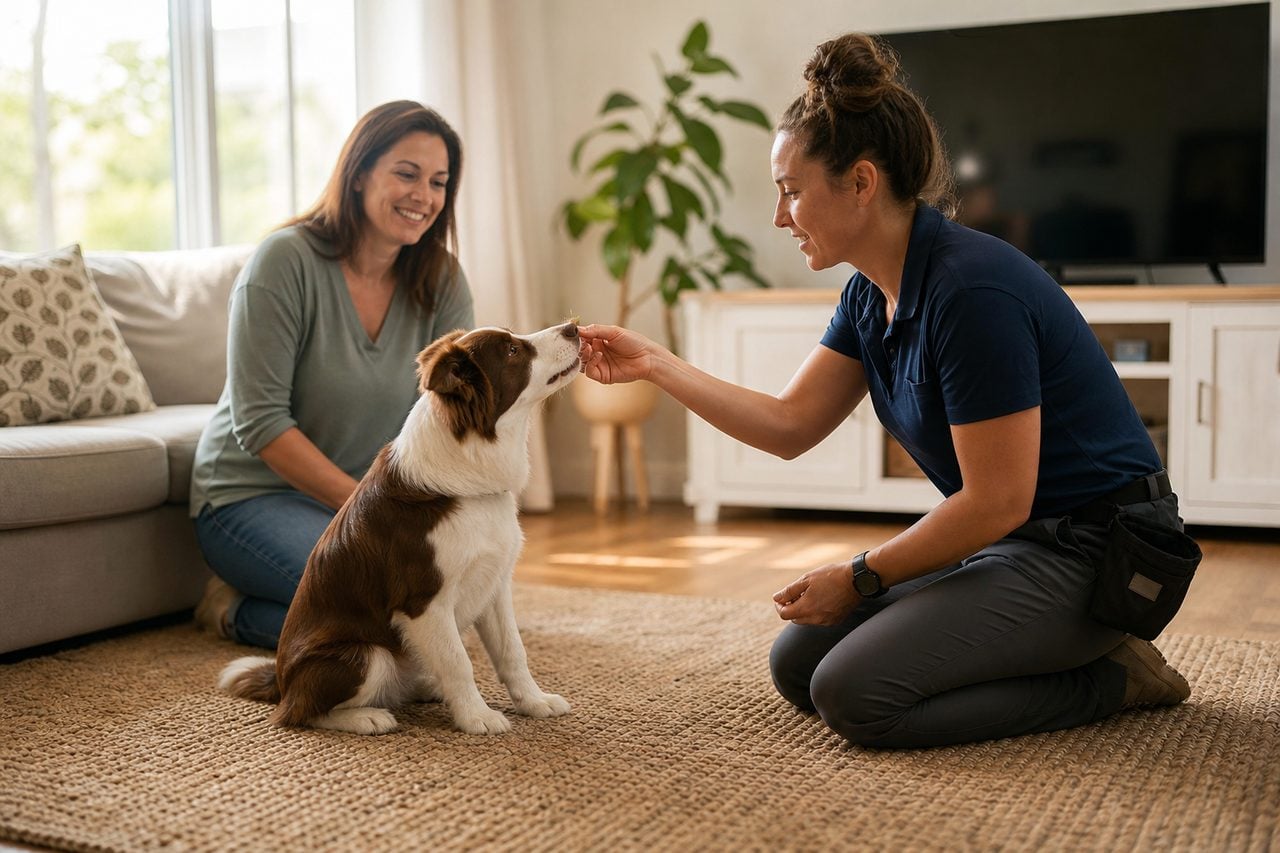
In-home dog training is what it sounds like — a trainer comes to your house and works with you and your dog where the problems actually happen. For house-training, door-dashing, leash manners on your own street, or a dog that’s anxious in new places, training in context beats a class. You’re paying for convenience and relevance, and it shows in the price.
When in-home beats a class
Some problems only show up at home, so that’s where they’re best fixed. A dog that bolts out the front door, marks in the hallway, guards the couch, or loses it at the mail carrier isn’t going to rehearse any of that in a training-center classroom. In-home training also suits reactive or fearful dogs that can’t yet cope around a room full of other dogs, and owners who simply can’t get to a weekly class. Because the lesson happens in your real environment, the skills tend to stick to that environment without extra “generalizing.”
When a class or board-and-train is the better call
In-home isn’t always the answer. If your main goal is socialization, your dog needs other dogs and new places — a group class wins. If you want fast, concentrated results on a tough issue and can’t put in daily reps, a board-and-train may get you there quicker. And pure obedience proofing eventually needs distractions you can’t manufacture in a living room. Many owners mix formats: in-home to fix the house-specific stuff, a class for socialization and proofing.
What an in-home session looks like
A first session usually starts with questions — your routine, the dog’s history, what’s actually happening — then watching the behavior in context and building a plan. Most of the hour is the trainer coaching you, because you’re the one there the other 23 hours. Expect homework between visits and a handful of sessions rather than a one-off.
What in-home training costs
Private in-home sessions typically run $75–$150 per hour, often higher in big metros or for behavior specialists, and many trainers sell discounted packages of four to six visits. It costs more per hour than a group class, but you’re getting one-on-one attention in the exact setting where you need it.
Choosing an in-home trainer
Look for someone who explains their methods plainly, coaches you rather than just handling the dog, and gives you written follow-up. Ask about their experience with your specific issue — house-training and a fear of strangers call for different skills. Reward-based methods are the safe default, especially for anything fear-related. And a good in-home trainer leaves you more capable, not permanently reliant on them.
Frequently asked questions
Is in-home dog training better than a class?
It depends on the goal. In-home is better for house-specific problems, reactive or fearful dogs, and convenience. Group classes are better for socialization and proofing around distractions. Many owners use both.
How much does in-home dog training cost?
Usually $75–$150 per hour, more in large metros or for behavior specialists. Many trainers offer discounted multi-session packages.
What happens in an in-home training session?
The trainer learns your routine and the dog’s history, observes the behavior in context, builds a plan, and mostly coaches you — since you’re the one practicing with the dog day to day. Expect homework and several sessions.
Is in-home training good for puppies?
Yes for house-training, crate work, and manners. But puppies also need socialization with other dogs and new environments, which a class or careful outings provide better than home-only training.
Ready to find a trainer who fits your dog? Browse reviewed, local trainers and filter by specialty, price, and location.