
Off-Leash Dog Training: What It Takes to Get Reliable Recall
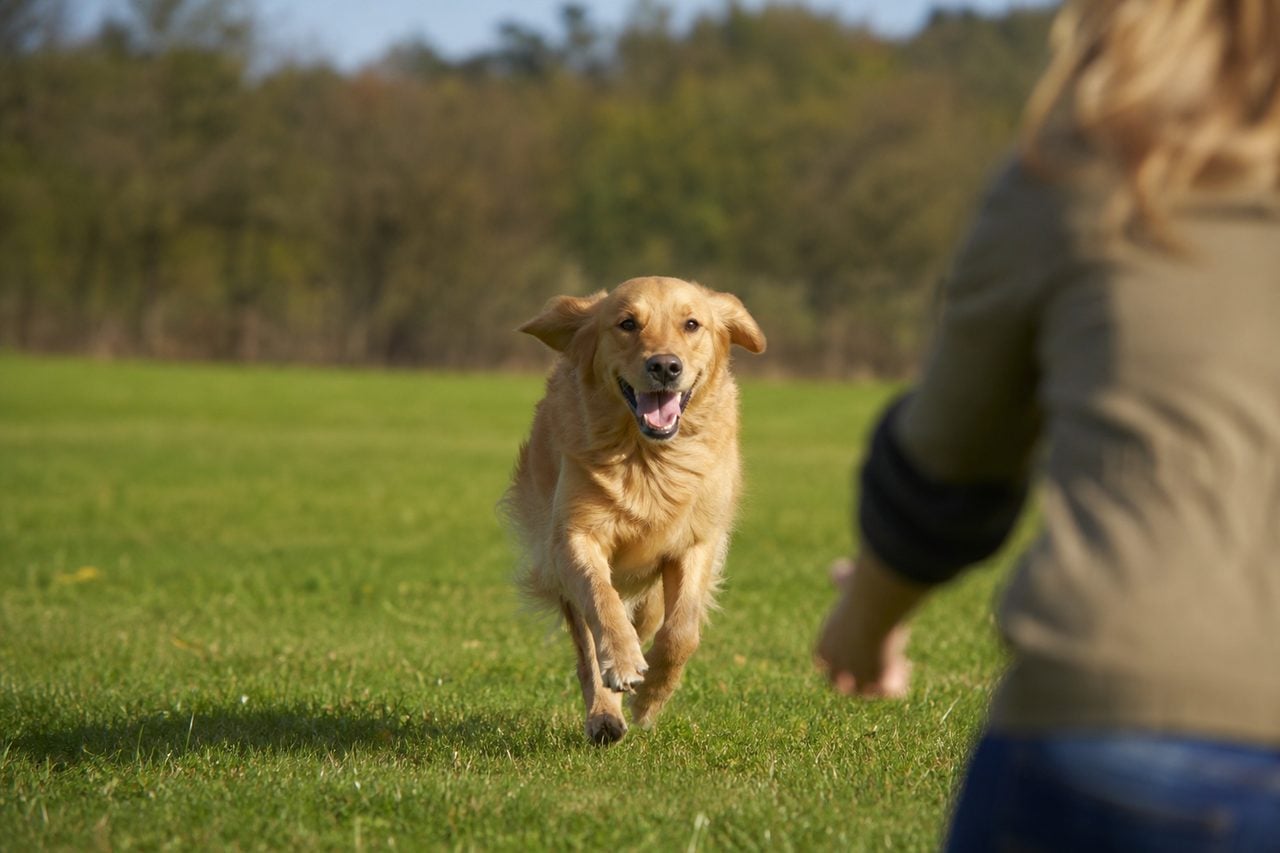
Off-leash training means your dog comes back, stays, and checks in even with no leash and real temptation — squirrels, other dogs, an open field. It’s built on a rock-solid recall, and getting there honestly takes months of proofing. Anyone promising a reliable off-leash dog in a weekend is selling you something.
What “off-leash reliable” actually means
It’s not that your dog ignores you nicely in the backyard. It’s that the recall holds when it counts — a deer breaks from the treeline, a jogger passes, another dog wants to play — and your dog still turns and comes. That standard is high, because the cost of failure (a road, a wildlife encounter) is high. Reliable means close to automatic, not “usually.”
It all rests on recall
Everything starts with a recall the dog finds genuinely rewarding — coming back should be the best thing that happens, not the end of the fun. Good programs build it on a long line first (15–30 feet), proofing against bigger and bigger distractions before the line ever comes off. Rushing to drop the leash is how dogs learn that “come” is optional outdoors.
Methods and the e-collar question
Some dogs reach solid off-leash reliability on reward and long-line work alone. For high-prey-drive dogs in open environments, many trainers use a modern e-collar as a remote communication tool — properly conditioned, at the lowest level the dog feels, never as punishment for coming back. Used well, it’s humane and effective; used badly, it creates fear and confusion. If a trainer uses one, they should be able to explain the conditioning process and let you feel the levels on your own hand. There’s no shame in choosing a long-line-only approach either — it just may cap how much true off-leash freedom is realistic for a strong-prey-drive dog.
Timeline and cost
Expect two to four months of consistent work for genuine reliability, longer for driven or independent breeds. Private programs and off-leash board-and-trains vary widely — anywhere from a few hundred dollars for a package of lessons to a few thousand for an intensive program. The recall you build is only as good as your willingness to maintain it.
Is your dog — and your area — a candidate?
Be honest about prey drive: some sighthounds and working breeds may never be safe off-leash near roads or wildlife, and that’s okay. Also check your local leash laws — plenty of parks and trails legally require a leash regardless of how good your recall is. Off-leash skill is still worth building for the safety margin even where you can’t legally use it everywhere.
Frequently asked questions
How long does off-leash training take?
Usually two to four months of consistent work for genuine reliability, and longer for high-prey-drive or independent dogs. It’s built on a long line before the leash ever comes off.
Do I need an e-collar for off-leash training?
Not necessarily. Many dogs do well on reward-based long-line training. For high-prey-drive dogs in open areas, a properly conditioned e-collar can help — used as communication at the lowest effective level, never as punishment for returning.
Can any dog be trained off-leash?
Most dogs can build a strong recall, but some high-prey-drive breeds may never be fully safe off-leash near roads or wildlife. Honest trainers will tell you where the realistic ceiling is for your dog.
Is it legal to have my dog off-leash?
Often not — many parks and trails require leashes by law regardless of training. Check local leash ordinances; the skill is still valuable as a safety net even where off-leash isn’t permitted.
Ready to find a trainer who fits your dog? Browse reviewed, local trainers and filter by specialty, price, and location.