
Puppy Socialization in Flint, MI
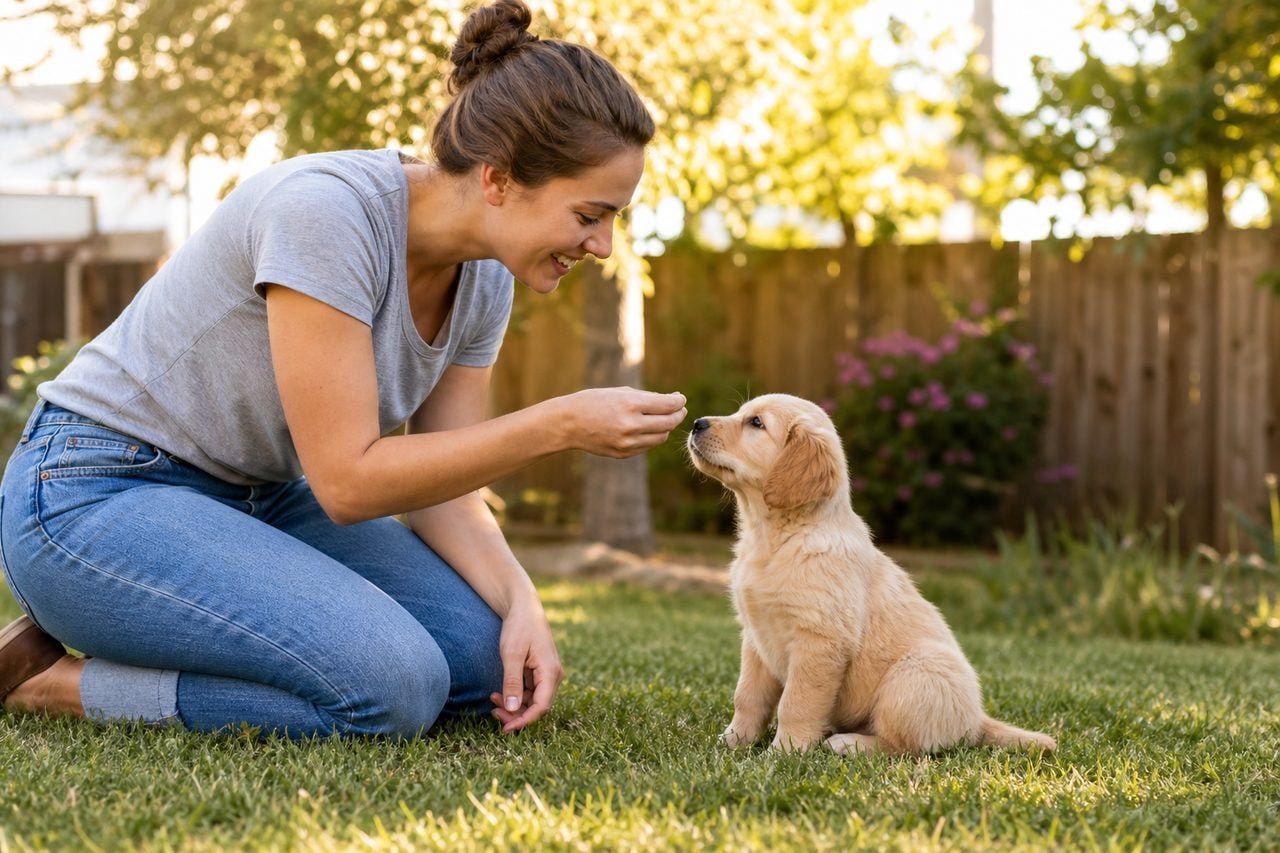
The first few months of a puppy’s life shape the dog it will become for the next decade. In the Flint area, where a young dog might spend its life crossing paths with neighbors along a Grand Blanc cul-de-sac, families at For-Mar Nature Preserve, cyclists on the Flint River Trail, and other dogs at a Burton park, early socialization is one of the most practical investments a new owner can make. Done well, it produces a confident, resilient adult dog. Skipped or rushed, it often leads to the fear, reactivity, and avoidance problems that fill trainers’ schedules years later.
- Why the Socialization Window Matters So Much
- What Good Socialization Actually Looks Like
- Balancing Health and Exposure Before Full Vaccination
- Puppy Socialization Across the Flint Metro
- Choosing a Puppy Class or Trainer in Genesee County
- A Practical Week-by-Week Approach for New Owners
- Keeping Socialization Going After Puppy Class
- Reviewed trainers
- FAQ
Puppy socialization is not simply “letting your puppy meet lots of dogs.” It is a deliberate, carefully paced process of introducing a young dog to the sights, sounds, surfaces, people, and situations it will encounter in ordinary Genesee County life — all while keeping those experiences positive and within the puppy’s comfort zone. This guide explains what socialization actually involves, when the critical windows fall, how to find qualified help across the Flint metro, and how to keep the work going as your puppy grows.
The GetDogSchool Editorial Team compiled this guide to help local families make informed decisions. It is educational in nature and does not replace individualized advice from a qualified trainer or your veterinarian.
Why the Socialization Window Matters So Much
Puppies pass through a developmental period, roughly from three to about fourteen or sixteen weeks of age, when their brains are unusually primed to accept new experiences as normal and safe. During this window, a puppy that meets friendly strangers, walks on grass and gravel and metal grates, hears traffic and thunderstorms, and greets calm adult dogs tends to file all of it under “this is just how the world is.” The same experiences introduced for the first time at eight or ten months of age are far more likely to be met with suspicion or fear.
This is why the socialization window carries so much weight. It is not a marketing idea — it reflects how a dog’s nervous system develops. Once the window begins to close, puppies naturally become more cautious of novelty, which is a healthy survival trait in the wild but a liability for a family pet that needs to tolerate the doorbell, the vacuum, the veterinarian, and a crowded sidewalk in downtown Flint.
The practical takeaway for local owners is urgency without panic. If you have a young puppy, the clock is running, and the weeks between eight and sixteen weeks are especially valuable. But socialization is not a one-time event you complete and check off. It is an ongoing habit of gentle, positive exposure that continues well into your dog’s first and second years.
It also helps to understand what is at stake if the window is neglected. Many of the behavior problems that trainers see in adult dogs — fear of strangers, panic at loud noises, reactivity toward other dogs, difficulty at the vet or groomer — trace back to gaps in early experience. A puppy that never met children calmly may grow into a dog that is uneasy around them; a puppy that never heard a thunderstorm from a safe place may develop noise phobia. None of this is destiny, and dogs that missed early socialization can still improve with patient work later. But an ounce of prevention during these weeks is far easier than a pound of rehabilitation afterward, which is why professionals emphasize the window so strongly.
What Good Socialization Actually Looks Like
Quality socialization is about quality of exposure, not quantity. A puppy that is dragged to a loud, chaotic dog park at ten weeks and overwhelmed by pushy adult dogs may come away more fearful, not less. The goal is a series of short, positive, controlled encounters in which the puppy feels safe and is free to observe, approach, or retreat at its own pace.
A well-rounded socialization plan covers several categories. People: adults, children, people in hats and uniforms, people using mobility aids. Dogs: calm, healthy, vaccinated adult dogs and gentle puppies — not a free-for-all. Environments: different floor surfaces, stairs, car rides, the sounds of a busy street versus a quiet Fenton lakeside road. Handling: gentle touching of paws, ears, and mouth so future grooming and vet visits are uneventful. Novel objects: umbrellas, wheeled carts, bicycles on the Flint River Trail.
- Keep sessions short — a few positive minutes beat a long overwhelming outing.
- Watch body language: loose posture and curiosity are good; tucked tail, freezing, or trying to flee mean back off and add distance.
- Pair new things with something the puppy loves, usually small food rewards.
- Let the puppy choose to approach rather than forcing contact.
- End on a good note, before the puppy tips into fatigue or fear.
Reading a puppy’s stress signals is a skill in itself, and it is one of the main reasons families work with a professional. A trainer who watches your puppy in real time can tell you when to press gently forward and when to give more space — a judgment call that is hard to make from a book or video.
Balancing Health and Exposure Before Full Vaccination
New owners in Genesee County often hit the same tension: the socialization window opens before a puppy has finished its full vaccine series, and parvovirus and other diseases are a real concern. The old advice to keep a puppy fully isolated until all shots are complete has largely given way to a more nuanced approach, because the behavioral cost of missing the socialization window is also serious. Many veterinary and behavior organizations now support carefully managed socialization during this period.
The key word is managed. There is a large difference between letting an under-vaccinated puppy sniff around a public Flint dog park — a genuine disease risk — and hosting a calm puppy playdate in a friend’s clean living room with a healthy, vaccinated adult dog. Between those extremes lie many safe options: carrying your puppy through a store, sitting on a porch in Davison watching the neighborhood go by, or attending a well-run puppy class that requires proof of age-appropriate vaccination and disinfects its floors.
This is a decision to make with your veterinarian, who knows your puppy’s specific vaccination status and the local disease picture. Ask them directly which environments are reasonable at your puppy’s current age. A good trainer and your vet should be partners here, not competing voices.
Puppy Socialization Across the Flint Metro
The Flint metro spreads across a range of settings, and each corner offers different socialization opportunities. Matching the exposure to where you live and where you plan to spend time with your dog makes the work more relevant to your actual life.
Flint & the City Neighborhoods: City living offers dense, valuable exposure — sidewalks, traffic noise, delivery trucks, varied people. Start at a distance the puppy can handle and work closer over days and weeks. Downtown areas and quieter residential streets both have a place in a city puppy’s education.
Grand Blanc & the South: Suburban neighborhoods, parks, and shopping areas here give a good mix of calm residential settings and busier commercial zones. Sidewalk walks past strollers, joggers, and other leashed dogs build everyday confidence.
Burton & Davison to the East: A blend of suburban and semi-rural settings. Local parks and quiet streets are useful for early, low-pressure outings, with easy access to busier areas when your puppy is ready to level up.
Flushing, Swartz Creek & the West: Smaller-town main streets and residential areas offer manageable, less overwhelming environments — often a good fit for a puppy that startles easily and needs gentler first exposures.
Fenton, Linden & the Lake Country: The lake communities to the south add water, docks, boats, and seasonal crowds to the mix. If your family spends summers near the water, early positive exposure to those specific sights and sounds pays off.
The Northern & Rural Townships: More rural surroundings mean fewer spontaneous encounters with people and dogs, so rural owners often need to be more intentional — deliberately arranging outings into busier areas and controlled meetings with other dogs, since these will not happen on their own.
Natural areas such as For-Mar Nature Preserve and the Flint River Trail are excellent for exposing a puppy to new surfaces, wildlife smells, cyclists, and other calm leashed dogs at a comfortable distance. Keep young puppies leashed and away from unknown dogs until your vet clears broader contact.
Choosing a Puppy Class or Trainer in Genesee County
A structured puppy class does two things a solo owner cannot easily replicate: it provides controlled exposure to other puppies of similar age and vaccination status, and it puts a trained set of eyes on your puppy’s development. The Flint area has a reasonable supply of options, so families can afford to be selective.
When evaluating a class or private trainer, look for the following:
- Reward-based methods. Modern puppy training relies on positive reinforcement — rewarding the behavior you want. Be cautious of anyone leaning on fear, intimidation, or harsh corrections with a young puppy, which can damage confidence during a sensitive period.
- Vaccination requirements. A responsible puppy class requires proof of age-appropriate vaccination and keeps its space clean. This protects every puppy in the room.
- Small, supervised groups. Puppy playtime should be actively managed, with pushy or overwhelmed puppies gently separated — not a chaotic pile-up.
- Owner education. Good classes teach you to read your own dog and continue the work at home, not just run drills for an hour.
- Clear communication. A trainer who answers your questions plainly and sets realistic expectations is worth more than one who promises a “perfect” puppy.
Credentials and continuing education are a reasonable signal of professionalism, though no single certification guarantees a good fit. Many families find it worth visiting or observing a class before enrolling. The directory below lists puppy-focused trainers and classes serving the Flint metro so you can compare options in your area.
A Practical Week-by-Week Approach for New Owners
Many families feel overwhelmed by the idea of “socializing” and are not sure where to begin. It helps to think of it as a steady rhythm of small experiences rather than a checklist to complete in a single busy weekend. A loose, sustainable pattern keeps the work manageable and keeps your puppy under threshold.
In the first week or two at home, focus on the household itself: different rooms, floor surfaces, stairs, the sounds of appliances and the doorbell, gentle handling of paws and ears, and calm car rides. This is low-risk exposure you can do regardless of vaccination status, and it builds a foundation of confidence in a safe setting.
As your veterinarian clears broader outings, gradually widen the circle. Sit on a porch in Davison or a bench in a quiet Grand Blanc park and simply let your puppy watch the world go by from a comfortable distance — people, strollers, passing dogs, delivery trucks. Carry your puppy through a dog-friendly store to expose it to bustle without floor contact if vaccines are incomplete. Arrange a calm playdate with one known, healthy, vaccinated adult dog rather than a crowd.
- Aim for variety, not volume: a handful of different new things each week, each kept short and positive, adds up quickly.
- Track what you have covered: people of different ages and appearances, surfaces, sounds, handling, calm dogs, novel objects. Notice gaps and fill them gently.
- Always let the puppy set the pace: reward curiosity, allow retreat, and never force an approach.
This measured approach spreads exposure across the crucial weeks without overwhelming the puppy, and it is easy to sustain alongside ordinary family life across the Flint metro.
Keeping Socialization Going After Puppy Class
One of the most common mistakes is treating a six-week puppy class as the finish line. The formal class builds a foundation, but the reinforcement that makes it stick happens in the months that follow. Fears that were never triggered as a young puppy can still surface during the “adolescent” period, often somewhere between five and twelve months, when many dogs go through a second, more cautious phase and briefly become wary of things they previously took in stride.
To carry the momentum forward, keep introducing your growing dog to new places and experiences on a regular basis, always at a pace it can handle. A weekend outing to a new part of town, a calm walk on the Flint River Trail, a short visit to a dog-friendly store, a stroll through the trails at For-Mar Nature Preserve, or a controlled meeting with a friend’s well-mannered dog all keep the social muscles active. Continue rewarding calm, curious behavior with praise and the occasional treat, and continue backing off when your dog signals it needs more space. Consistency matters more than intensity — a little exposure woven into normal life each week beats an occasional overwhelming outing.
If you notice new fearfulness or reactivity emerging as your dog matures — barking or lunging at other dogs, shrinking from strangers, or panic at certain noises — address it early rather than hoping it fades on its own. Adolescent wobbles are normal and usually very workable with prompt, gentle intervention. A trainer who helped with the puppy stage can often course-correct quickly before a passing phase hardens into a lasting habit. The families who end up with steady, confident adult dogs are rarely the ones who did something extraordinary; they are the ones who kept the gentle, positive exposure going quietly through the first year and beyond.
Reviewed Puppy Socialization Trainers in Flint
These reviewed Flint-area trainers from our directory handle puppy socialization. Each links to a full profile with specialties, certified credentials, reviews, and contact info:
- Positive Pawz Training — 5.0★ (24 reviews)
- The Perfect Pooch Training — 5.0★ (4 reviews)
- Einstein Dog Training — 4.8★ (178 reviews)
- Stonehill Kennels — 4.7★ (195 reviews)
- My Furbabys Resort, LLC — 4.4★ (19 reviews)
- Red Lantern Dog Training, LLC — 5.0★ (59 reviews)
- Canine Co-Pilots Dog Training LLC — 5.0★ (53 reviews)
- Paws and Resolve Dog Training — 5.0★ (26 reviews)
- Highest Hope Dog Sports — 5.0★ (9 reviews)
- J&S K9 — 5.0★ (7 reviews)
See all Flint puppy socialization trainers →
Frequently Asked Questions
When should I start socializing my puppy?
As early as it is safely possible. The most valuable window runs roughly from three weeks to about fourteen to sixteen weeks of age, and much of that overlaps with the time a puppy comes home, typically around eight weeks. Because the window closes as the puppy matures, it is worth starting gentle, controlled exposure right away rather than waiting for the full vaccine series to finish. Coordinate the specifics with your veterinarian, who can advise which environments are reasonable given your puppy’s current vaccination status.
Is it safe to socialize my puppy before all its shots are done?
With care, yes — and most behavior professionals now recommend it, because the risk of missing the socialization window is real too. The key is managed exposure: clean, controlled settings and healthy, vaccinated dogs rather than public dog parks or unknown animals. A puppy playdate in a friend’s home with a vaccinated adult dog is very different from letting an under-vaccinated puppy roam a busy Flint park. Make these decisions with your veterinarian, who knows your puppy’s specific situation.
Does my puppy need a class, or can I socialize at home?
You can and should do a great deal at home and around your neighborhood, but a well-run puppy class adds two things that are hard to replicate solo: controlled interaction with other appropriately matched puppies, and a professional watching your puppy’s body language and development. Many Flint-area families do both — a structured class plus ongoing everyday exposure. The directory on this page lists local puppy classes and trainers you can compare.
How much socialization is too much?
Overwhelming a puppy is a real risk. Signs you have gone too far include a tucked tail, freezing, trying to escape, refusing food it normally likes, or shutting down. The goal is short, positive experiences that end before the puppy tips into stress. If an outing goes badly, add distance and lower the intensity next time rather than pushing through. Several calm, successful two-minute encounters beat one long overwhelming one.
What if I adopted an older puppy or a dog that missed its window?
It is never too late to help a dog become more confident — it just takes more patience and a slower, more careful approach. Dogs that missed early socialization can still make meaningful progress with structured, positive exposure and, in many cases, professional guidance. If your dog already shows fear or reactivity, a qualified trainer can build a plan that respects its current comfort level and rebuilds confidence step by step.
Are Flint-area parks and trails good places to socialize a puppy?
They can be, with caution. Spaces like For-Mar Nature Preserve and the Flint River Trail expose a puppy to new surfaces, smells, cyclists, and calm leashed dogs at a comfortable distance, which is valuable. Keep young puppies leashed, avoid direct contact with unknown dogs until your vet clears it, and use distance to keep the experience positive. Off-leash dog parks are generally not appropriate for young, under-vaccinated puppies.
Related: read our complete puppy socialization guide or the full Flint dog training overview.
Ready to find the right puppy socialization pro in Flint?