
Puppy Socialization in Jackson, MI
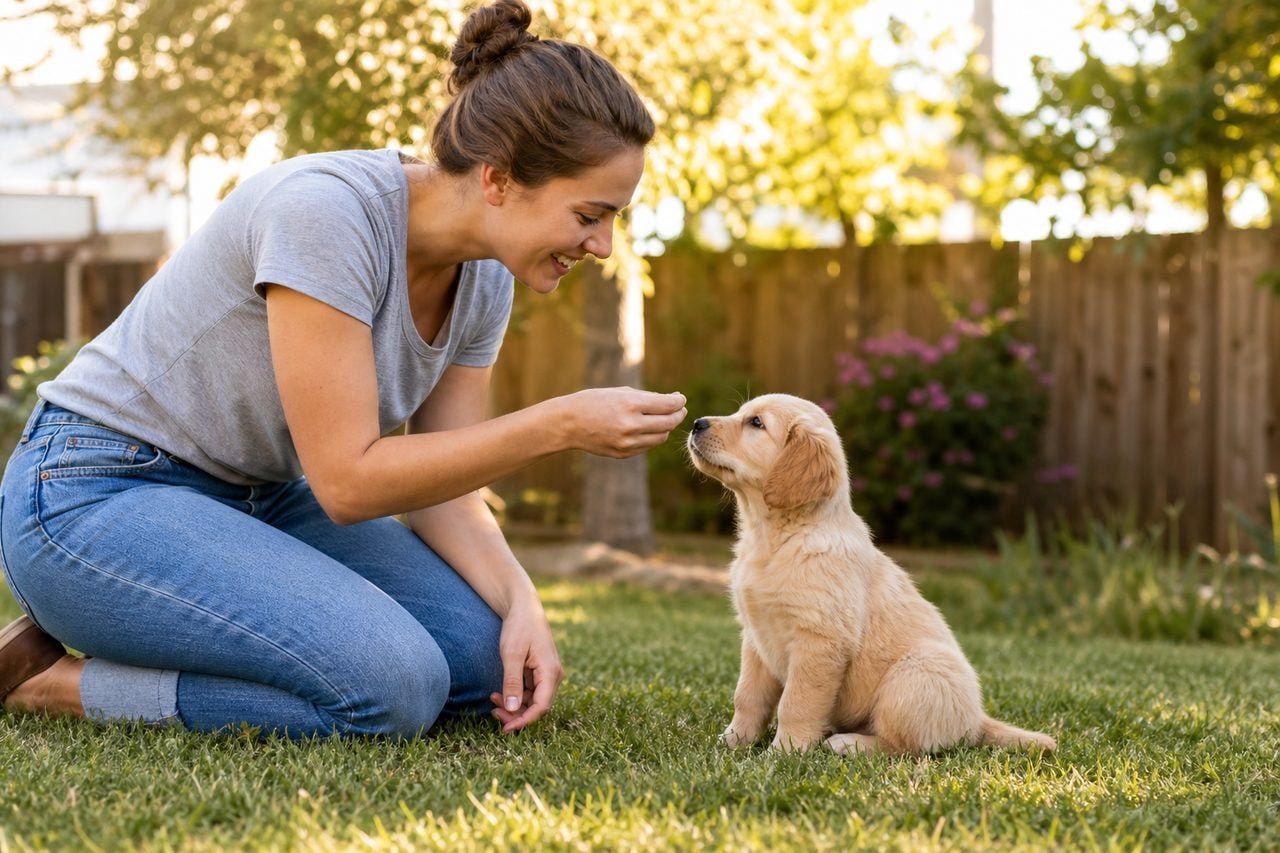
Socialization is one of the most important investments you can make in a puppy, and it is also one of the most misunderstood. It does not simply mean letting your puppy meet as many dogs and people as possible. True socialization is the careful, positive introduction of a young dog to the sights, sounds, surfaces, people, animals, and situations it will encounter throughout life, done in a way that builds confidence rather than fear. Get it right during a puppy’s early months and you lay the groundwork for a stable, adaptable adult dog.
- Why the Socialization Window Matters So Much
- People, Sounds, and Surfaces: The Overlooked Basics
- Safe Dog-to-Dog Introductions in the Jackson Area
- Downtown, Trails, and Town Squares: Real-World Exposure
- Socializing Through a Michigan Winter
- Reading Your Puppy: Confidence Versus Fear
- Building a Socialization Checklist and Keeping It Going
- Reviewed trainers
- FAQ
The Jackson area offers a rich variety of environments to draw on, from the bustle of downtown and the trails at Ella Sharp Park to the quiet of rural roads and the busy summer shorelines around Michigan Center and Napoleon. That variety is an asset, because a puppy that has calmly experienced many different settings tends to take new ones in stride. The challenge, especially through a Michigan winter, is being intentional so that socialization actually happens on a schedule rather than by accident.
This guide explains what socialization really involves, why the timing matters so much, and how to build a thoughtful plan using the people, places, and seasons of south-central Michigan. As always, coordinate with your veterinarian on health precautions for a young puppy.
Why the Socialization Window Matters So Much
Puppies go through a developmental period, roughly during their first several months, when they are unusually open to new experiences. During this window, novel things tend to be filed away as normal and safe, provided the encounters are positive. As a puppy matures past this stage, that natural openness narrows, and new or startling experiences are more likely to be met with caution or fear. This is why the early weeks carry so much weight.
The practical implication is urgency without pressure. You want your puppy to bank a wide range of good experiences while it is still primed to accept them, but you never want to force exposure or overwhelm the puppy, since a frightening encounter can do more harm than no encounter at all. The goal is quality and confidence, not sheer quantity.
This timing creates a genuine tension with health precautions, because the socialization window opens before a very young puppy is fully protected against common illnesses. The widely accepted answer is not to hide your puppy away, since the behavioral risks of under-socialization are serious and lifelong. Instead, socialize thoughtfully: favor clean, controlled environments, avoid areas heavily trafficked by unknown dogs, and let your puppy experience the world in ways that manage health risk while still building confidence. Your veterinarian can help you strike the right balance for your specific puppy and situation.
It is worth being clear about what is at stake, because the consequences of getting this wrong are not trivial. Behavior problems, not illness, are the leading reason dogs end up struggling to fit into their homes, and many of those problems trace back to insufficient or poor-quality early socialization. A dog that never learned as a puppy that strangers, other dogs, loud noises, or new places are safe can grow into an adult that finds ordinary life stressful, which is hard on the dog and hard on the family. Viewed against that backdrop, the modest effort of deliberate early socialization is one of the highest-return investments an owner can make. It is far easier to build confidence in a young, receptive puppy than to rebuild it in a fearful adult, which is precisely why the window matters and why it rewards planning rather than improvisation.
People, Sounds, and Surfaces: The Overlooked Basics
When owners think of socialization, they usually picture other dogs. In reality, some of the most valuable early experiences have nothing to do with dogs at all. A puppy that is comfortable with a wide range of people, everyday sounds, and different surfaces underfoot is far better equipped for life than one that has only played with a few canine friends.
Aim to have your puppy calmly meet many kinds of people: adults and children, people wearing hats or sunglasses, people with beards, people using canes or wheelchairs, delivery workers, and anyone whose appearance or movement differs from your household norm. Each positive, low-pressure encounter teaches your puppy that people in all their variety are nothing to worry about. Let the puppy approach at its own pace and reward calm curiosity.
Sounds deserve deliberate attention, especially given the Michigan calendar. Thunderstorms roll through in summer, and the region has its share of fireworks around holidays. Introducing everyday household noises, traffic, and recorded sounds at low volume during puppyhood, always paired with something pleasant, can prevent noise sensitivities later. The same goes for the vacuum, the doorbell, and kitchen clatter.
Surfaces and textures round out the picture. A puppy that has walked on grass, gravel, pavement, metal grates, wood decking, and slippery floors, and that has climbed a low step or wobbled over an unfamiliar texture, develops physical confidence. Rural and lake-country puppies get some of this naturally, while in-town puppies may need you to seek variety out. These small experiences add up to a dog that moves through the world without hesitation.
Handling is the quiet fourth pillar that owners tend to forget until they need it. A puppy that has learned to accept having its paws held, its ears looked into, its mouth gently opened, and its body brushed will be far easier to care for at the vet, the groomer, and at home during Michigan’s muddy spring and snowy winter. Practice these handling moments in short, positive sessions, pairing each with a treat, so that being touched all over becomes something your puppy welcomes rather than tolerates. This small habit prevents a great deal of struggle later in life.
Safe Dog-to-Dog Introductions in the Jackson Area
Meeting other dogs is a valuable part of socialization, but the quality of those meetings matters far more than the number. A single bad experience with a rough or reactive dog can leave a lasting mark, while a series of calm, positive interactions builds a socially skilled adult. The aim is not to expose your puppy to every dog it sees, but to arrange good encounters with the right dogs.
Early on, the safest introductions are with dogs you know to be healthy, vaccinated, friendly, and gentle with puppies. A neighbor’s easygoing adult dog, a friend’s well-mannered pet, or a structured puppy class where interactions are supervised are all excellent options. These controlled settings let your puppy learn canine social skills, like reading body language and taking play breaks, without the risk of an overwhelming encounter.
Be cautious with unstructured environments where any dog might show up. Busy trailheads at peak times or crowded summer shorelines around the chain of lakes can involve dogs of unknown temperament and health, which is a lot to ask of a young puppy. Save those for later, once your puppy is more resilient and its skills are solid. When you do allow a greeting, keep it brief, watch both dogs’ body language, and end on a good note before either gets overstimulated.
Reading your own puppy is essential. A confident puppy will engage and then disengage naturally, while a nervous one may freeze, hide, or try to retreat. Respect those signals. Forcing an interaction teaches fear, not friendliness. A local trainer running supervised puppy sessions can be an especially good resource, since they can match playmates and step in before things go wrong.
Downtown, Trails, and Town Squares: Real-World Exposure
Once your puppy has some confidence and your veterinarian has cleared broader outings, the towns and public spaces of Jackson County become a living classroom. The goal of these outings is not obedience practice but calm observation: letting your puppy watch the world go by from a comfortable distance and learn that busy, novel places are safe and unremarkable.
A quiet edge of downtown Jackson offers people walking, cars passing, and the general hum of activity, all of which a puppy can absorb while sitting with you and earning the occasional treat. You do not need to march your puppy through a crowd; often the most valuable exercise is simply sitting on a bench and letting the puppy watch. The paved Falling Waters Trail provides a gentler version of the same idea, with cyclists and walkers passing predictably along a calm corridor.
The smaller towns around the county each offer their own flavor of controlled exposure. A short visit to Spring Arbor, Grass Lake, Brooklyn, or Concord gives a puppy new sights and sounds in a lower-key setting than the city center. Seasonal events, from summer gatherings in the Irish Hills resort country to autumn activities, can be great as long as you keep to the edges and read your puppy’s comfort level carefully.
Throughout all of this, let the puppy set the pace. If it seems overwhelmed, increase your distance from the action or take a break. Every outing should end with your puppy feeling that the world is manageable. Follow local ordinances across the Jackson area on leashing and cleanup, and always carry water and waste bags.
Socializing Through a Michigan Winter
Winter presents the biggest practical obstacle to good socialization in south-central Michigan. Many puppies come home in the colder months, and the combination of short days, deep snow, and bitter temperatures can tempt owners to keep outings to a minimum. The danger is that the socialization window does not pause for the weather, so a puppy that is under-exposed during a winter puppyhood can miss experiences it will not easily recover later.
The solution is to get creative and bring socialization indoors and into brief, well-planned outdoor moments. At home, you can work through a rich variety of experiences: introducing household sounds, inviting a rotating cast of friends and family over for calm greetings, exposing the puppy to different surfaces and objects, and playing recorded sounds at low volume. A single afternoon with a few visitors of different appearances can accomplish a lot.
For outdoor exposure, short and frequent beats long and rare. A brief trip to sit in the car and watch a parking lot, a few minutes observing activity from a sheltered spot, or a quick walk on a plowed path all count. Winter also offers its own novel experiences worth introducing positively: snow underfoot, the sound of a snowblower, bulky coats and boots on the people your puppy meets, and slippery surfaces to navigate.
Indoor puppy classes are especially valuable in winter, since they provide structured socialization with other puppies and people regardless of the weather. If you bring home a winter puppy, treat socialization as a deliberate project rather than something that will happen on its own, and you can absolutely raise a confident dog despite the season.
Reading Your Puppy: Confidence Versus Fear
The single most important skill for successful socialization is learning to read your own puppy. Socialization works only when experiences are positive, and the puppy, not the clock, decides what feels positive. A confident, curious puppy is banking good memories, while a frightened one may be learning exactly the wrong lesson from the same situation.
Signs of a comfortable, engaged puppy include a loose, wiggly body, willingness to explore and approach, easy acceptance of treats, and the ability to shake off a mild surprise and re-engage. When you see these signs, you are on the right track and can continue at the current level of challenge.
Signs of stress or fear call for more distance and less intensity. A worried puppy may freeze, tuck its tail, flatten its ears, tremble, refuse food it would normally take, try to hide behind you, or attempt to retreat. Yawning, lip-licking, and turning away can also signal discomfort. When you notice these, the answer is not to push through but to create space, lower the difficulty, and let the puppy recover. Sometimes simply increasing your distance from whatever is worrying the puppy is enough to turn a stressful moment back into a manageable one.
Never force a frightened puppy to face something it is afraid of, and never punish fearful behavior. Both approaches deepen the fear. Instead, build positive associations gradually, at a distance the puppy can handle, and let confidence grow on its own timeline. If your puppy shows persistent or intense fear that does not improve with gentle exposure, consult a qualified local trainer or your veterinarian, since early intervention makes a real difference.
Building a Socialization Checklist and Keeping It Going
Because socialization needs to cover so much ground in a limited window, many trainers recommend working from a checklist rather than trusting memory. A written list of experiences to introduce helps ensure your puppy encounters a genuine variety of people, animals, places, sounds, and surfaces, and it turns a vague goal into a concrete plan you can work through week by week.
Your list might include categories like different types of people, various dogs and other animals, a range of environments from quiet to moderately busy, an assortment of sounds, different surfaces and textures, handling and grooming experiences, and novel objects. As your puppy calmly experiences each item, note it and reward the positive association. The point is not to rush through the list but to make sure nothing important is overlooked during the crucial early months.
It is also worth remembering that socialization does not simply switch off when puppyhood ends. While the most sensitive window is early, an adolescent and adult dog still benefits from ongoing positive exposure to keep social skills sharp. Adolescence in particular can bring a phase where a previously confident dog becomes temporarily more cautious, and continued gentle exposure helps it move through that stage without lasting fear.
A word on quality over quantity is worth repeating here, because it is the mistake owners make most often. Racking up a high number of encounters means little if some of them are frightening, and a single overwhelming experience can undo the good of many gentle ones. Ten calm, positive introductions to different people are worth far more than a chaotic afternoon at a crowded event where the puppy felt trapped. The measure of a good socialization outing is not how much happened but how the puppy felt about it, so aim for experiences your puppy can process comfortably, keep them short, and end while the puppy is still doing well.
Across Jackson County, the ingredients for a well-socialized dog are readily available: varied towns, parks and trails, lake country, and a community of dog owners. Combine that environment with a deliberate plan, an eye on your puppy’s comfort, and the support of a local class or trainer when helpful, and you give your dog the best possible foundation for a calm, adaptable life.
Reviewed Puppy Socialization Trainers in Jackson
These reviewed Jackson-area trainers from our directory handle puppy socialization. Each links to a full profile with specialties, certified credentials, reviews, and contact info:
- Divinity K9 — 4.9★ (136 reviews)
- A1 Positive Dog Training — 5.0★ (3 reviews)
- Passion Fur Paws — 4.2★ (67 reviews)
- All Obedience Dog Training — 3.5★ (8 reviews)
See all Jackson puppy socialization trainers →
Frequently Asked Questions
What exactly does puppy socialization mean?
Socialization is the careful, positive introduction of a young puppy to the many sights, sounds, people, animals, surfaces, and situations it will meet throughout life. The goal is to build confidence so that novel experiences feel safe and normal. It is much broader than meeting other dogs and includes people of all kinds, everyday noises, different environments, and handling, all introduced in a way the puppy finds pleasant rather than overwhelming.
Can I socialize my puppy before it is fully vaccinated?
This is a balance to work out with your veterinarian. Because the socialization window opens before a young puppy is fully protected, most guidance favors thoughtful early socialization in clean, controlled settings rather than isolating the puppy. Favor known healthy dogs and low-risk environments, avoid areas heavily used by unknown dogs, and let your vet help you weigh health precautions against the real behavioral risks of under-socialization.
How do I socialize a puppy during a Michigan winter?
Bring socialization indoors and into short outdoor moments. Invite visitors of different appearances over for calm greetings, introduce household sounds and surfaces, and play recorded sounds at low volume. For outdoors, favor brief, frequent trips, such as watching activity from a sheltered spot or a short walk on a plowed path. Winter itself offers useful novelty like snow and bulky coats, and indoor puppy classes provide structured socialization regardless of weather.
How can I tell if my puppy is scared during socialization?
Watch the body language. A stressed puppy may freeze, tuck its tail, flatten its ears, tremble, refuse treats it would normally take, try to hide behind you, or attempt to retreat. Yawning, lip-licking, and turning away can also signal discomfort. When you see these signs, create more distance and lower the intensity rather than pushing through. Forcing a frightened puppy can deepen fear instead of building confidence.
Is it safe to let my puppy meet dogs at busy trails or the lakes?
Early on, it is safer to favor known, friendly, healthy dogs in controlled settings over unstructured places where any dog might appear. Busy trailheads and crowded summer shorelines around the chain of lakes can involve dogs of unknown temperament and health, which is a lot for a young puppy. Save those settings for later once your puppy is more resilient, and keep early greetings brief, supervised, and positive.
When is it too late to socialize my dog?
The most sensitive window is early, during a puppy’s first several months, so that period is the priority. That said, socialization is not a hard cutoff. Adolescent and adult dogs still benefit from ongoing positive exposure, and dogs that missed early socialization can often make meaningful progress with patient, gradual work, sometimes with the help of a qualified trainer. It is always worth continuing to build positive experiences.
Related: read our complete puppy socialization guide or the full Jackson dog training overview.
Ready to find the right puppy socialization pro in Jackson?