
Puppy Socialization in Kokomo, IN
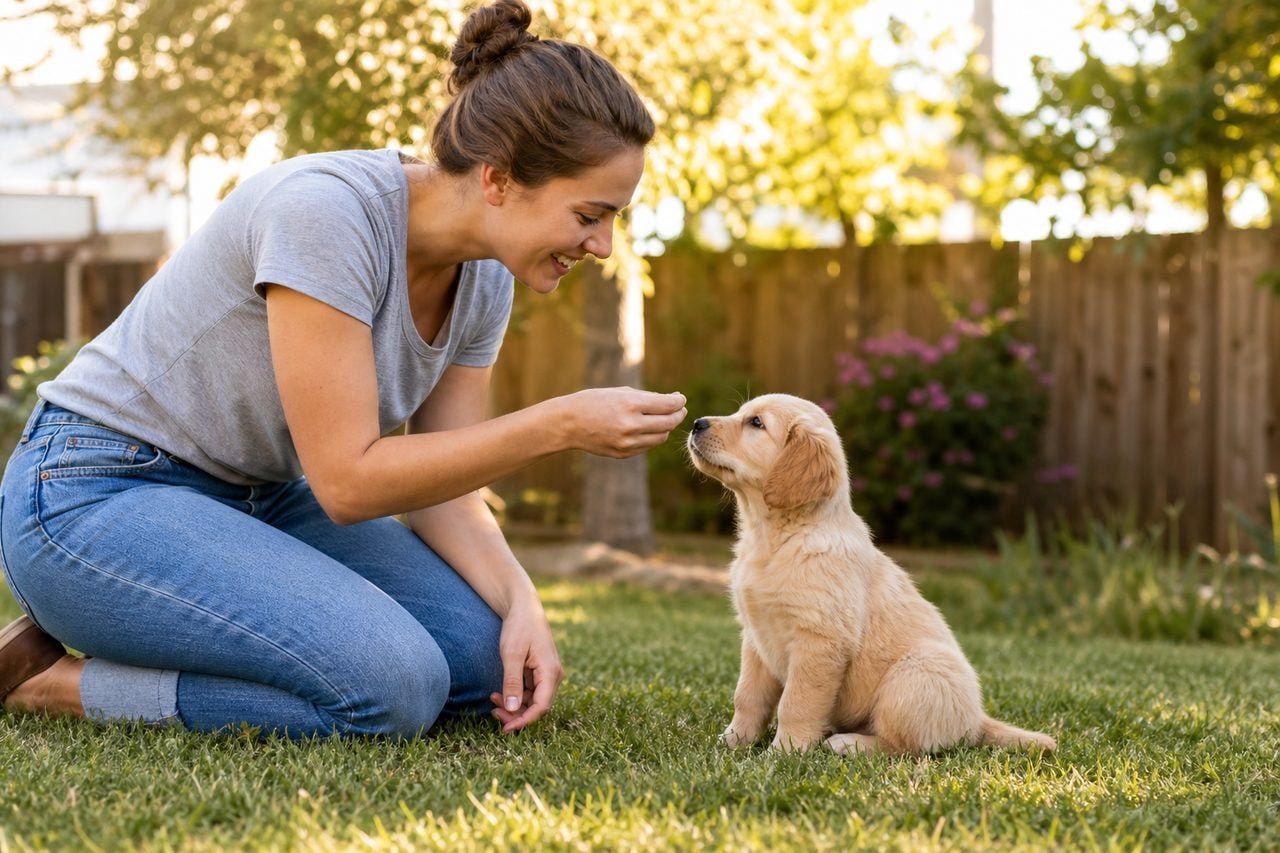
Socialization is the single most important project of a puppy’s first few months, and it is also the one most often misunderstood. Many owners think of it as letting their puppy play with other dogs, and while that can be part of it, real socialization is much broader. It is the deliberate process of introducing a young dog to the sights, sounds, surfaces, people, and situations it will encounter throughout life, all while those experiences stay positive and manageable. Done well, it produces a confident, adaptable adult. Skipped or rushed, it can leave a dog fearful, reactive, or overwhelmed by ordinary things.
- What Socialization Actually Means
- The Critical Window and the Vaccination Balance
- A Socialization Checklist for a North-Central Indiana Puppy
- Safe Places to Socialize Around the Kokomo Area
- Dogs, People, and the Truth About Dog Parks
- The Rural Reality of Socializing Here
- Reading Fear and Over-Arousal
- Reviewed trainers
- FAQ
For families in Kokomo and across Howard, Grant, Wabash, Miami, and Cass counties, socialization comes with a regional twist. This is a mix of small-city and rural country, which means some exposures are easy to arrange and others take planning and a drive. This guide explains the window that matters most, what a good socialization plan looks like here, and how to build a puppy that takes the world in stride.
What Socialization Actually Means
Socialization is not the same as play, and it is not simply about other dogs. At its core, it is teaching a puppy that the world is a safe and predictable place. That includes people of different ages and appearances, other animals, a range of environments, and the countless everyday sounds and sensations a dog will meet over its life. The goal is not for the puppy to interact with everything, but for it to notice new things, feel comfortable, and move on without fear.
Quality matters far more than quantity. One calm, positive encounter with a friendly stranger who lets the puppy approach on its own terms is worth more than a chaotic afternoon of being passed around by a crowd. Forcing a nervous puppy into a situation it finds frightening can actually create the very fear you were trying to prevent. The aim is exposure at a level the puppy can handle, always paired with good things like treats, praise, and the freedom to retreat.
Think of socialization as building a library of positive references. Every good experience the puppy files away makes the next new thing a little less scary. A puppy that has calmly encountered dozens of ordinary sights and sounds grows into a dog that assumes new experiences are probably fine, which is exactly the mindset you want.
It also helps to understand what is at stake, because socialization is not a nicety, it is preventive care for the dog’s mind. Behavior problems, particularly fear and aggression rooted in poor early socialization, are among the most common reasons dogs end up surrendered or struggle to fit into family life. A dog that panics at strangers, cannot cope with everyday noise, or reacts badly to other dogs is harder to live with, harder to exercise, and often lives a smaller, more stressful life as a result. The weeks you spend building positive references now are an investment in a dog that can go places with you, meet your friends, ride calmly in the car, and handle the ordinary surprises of life without falling apart. Framed that way, socialization is easily one of the highest-return activities a new owner can undertake.
The Critical Window and the Vaccination Balance
Puppies have a limited developmental window, generally running through roughly sixteen weeks of age, during which they are unusually open to new experiences. Positive exposures during this period tend to stick, while the same experiences introduced later can be harder for the dog to accept. This is why the early weeks are so valuable and why waiting too long carries a real cost.
The complication is that this window overlaps with the period before a puppy has completed its full vaccination series, which raises legitimate concerns about disease exposure in public places. The answer is not to lock the puppy away at home until it is fully vaccinated, because a dog that misses the socialization window can develop behavior problems that are, statistically, a far more common reason dogs lose their homes than the illnesses owners worry about.
The sensible path is calculated exposure. Favor controlled, lower-risk situations over high-traffic dog areas. Carry the puppy through busy places so it can watch and listen without touching contaminated ground. Invite healthy, vaccinated adult dogs belonging to friends over to your home or yard. Host visitors of all kinds. Take short car rides. Discuss the specifics with your veterinarian, who knows your puppy and the local situation, and build a plan that captures the window while managing the health risk sensibly.
A Socialization Checklist for a North-Central Indiana Puppy
A structured checklist keeps socialization from becoming haphazard. Think in categories and aim for gentle, positive exposure across all of them during the early weeks.
- People: men, women, children, older adults, people in hats and hoods, people with beards, people using canes, walkers, or wheelchairs.
- Sounds: this region has its own soundtrack. A Kokomo puppy should hear traffic on US-31, trains and railroad crossings, farm equipment and grain trucks out in the county, lawn mowers, thunderstorms, and household noises like the vacuum and doorbell.
- Surfaces: grass, gravel, pavement, metal grates, wood decks, tile, and the snow and ice that arrive every winter here.
- Environments: downtown sidewalks, a quiet park, a busy parking lot, the vet’s waiting room, and a friend’s home.
- Handling: paws, ears, mouth, and tail touched gently and paired with treats so grooming and vet care stay easy.
You do not need to check every box in a single week. Spread the exposures out, keep each one positive, and repeat the ones your puppy found mildly uncertain until they become boring. A bored reaction to a formerly novel thing is exactly the outcome you want.
A simple way to stay organized is to keep a running list somewhere visible, such as the refrigerator, and check off exposures as they happen. This turns a vague good intention into concrete progress and quickly reveals the gaps. Many owners discover, for example, that their puppy has met plenty of adults but almost no children, or has heard household noise but never a thunderstorm or a passing train. Seeing the gaps lets you plan for them deliberately rather than leaving them to chance. Pair every new exposure with something the puppy enjoys, so a novel sound or sight predicts good things rather than uncertainty. If a particular item on the list clearly worries the puppy, break it into smaller, easier steps: a distant, quiet version first, then gradually closer or louder over several sessions as the puppy stays relaxed. The checklist is a guide, not a race, and the quality of each exposure always matters more than rushing to tick every box.
Safe Places to Socialize Around the Kokomo Area
The region offers plenty of good socialization settings if you match the location to your puppy’s stage. Early on, favor places where you control the exposure. Sitting on a bench in Highland Park in Kokomo lets a young puppy watch people, strollers, and other dogs pass at a comfortable distance without direct contact. The Wildcat Creek trails offer similar controlled people-watching on a walk.
Downtown Kokomo sidewalks are useful for exposure to town sounds and foot traffic, and a farmers market or an outdoor community event gives a puppy a rich mix of sights, smells, and gentle strangers, provided you keep the puppy from being overwhelmed. Peru, the self-styled Circus City, and the towns around Miami County host seasonal events that can double as socialization outings for a puppy that is ready. The Nickel Plate Trail is excellent for calm, predictable exposure to cyclists, walkers, and open country.
Matter Park in Marion, near Indiana Wesleyan University, adds a college-town crowd and a different setting, and the lakeshores at Mississinewa and Salamonie introduce water, boats, and wildlife. Wherever you go, read your puppy. Keep sessions short, bring plenty of treats, and be ready to leave if the environment proves too much. A good socialization outing ends before the puppy is exhausted or frightened, on a positive note.
Dogs, People, and the Truth About Dog Parks
Socialization involves both other dogs and other people, and the two require different approaches. With people, the goal is for the puppy to greet politely and enjoy human company without becoming either fearful or wildly over-excited. Let strangers offer a treat and pet the puppy calmly, and discourage the frantic jumping that a cute puppy so often gets rewarded for.
Dog-to-dog socialization is where owners most often go wrong, usually at the dog park. Jackson Morrow Park in Kokomo has a fenced dog park, and it can be a fine resource for an older, well-socialized dog. For a young puppy, however, an open dog run is often the wrong choice. The dogs there are unknown, their vaccination and temperament status is unverified, and a single rough or bullying encounter during the sensitive window can create a lasting fear of other dogs. That is the opposite of the goal.
Better early dog socialization comes from arranged playdates with known, healthy, well-mannered adult dogs and puppies, where you can supervise and end things before anyone gets overwhelmed. Structured puppy classes serve the same purpose in a controlled setting. Save the busy dog park for later, once your dog is grown, confident, and reads other dogs well. Quality, supervised interactions beat crowded free-for-alls every time.
It is worth reframing a common assumption here: the goal of dog-to-dog socialization is not for your puppy to love and want to play with every dog it meets. A realistic, healthier goal is neutrality, a dog that notices other dogs, stays calm, and is content to walk past without either fear or frantic excitement. A dog that has learned to greet a few and ignore the rest is far easier to live with than one that pulls toward every dog it sees expecting a play session. When you do arrange interactions, choose the playmate carefully. A gentle, well-socialized adult dog can teach a puppy good manners and appropriate play, while a single overbearing or fearful playmate can teach exactly the wrong lessons. Watch the body language of both dogs, keep sessions short, and build in breaks so play does not tip over into over-arousal. If either dog looks stressed, calmly end the session on a good note. Quality supervision during these early encounters shapes how your dog will relate to other dogs for years.
The Rural Reality of Socializing Here
Socializing a puppy in a densely populated city is easy; the world comes to your doorstep. In much of north-central Indiana, the population is spread thin, and that changes the math. A family on a farm near Converse, Windfall, or Russiaville may go days without the puppy encountering an unfamiliar person or dog if nothing is arranged. That isolation is the single biggest socialization challenge in a rural setting, and it has to be solved deliberately.
The solution is to treat socialization as scheduled errands rather than something that happens on its own. Plan regular trips into Kokomo, Marion, Wabash, Peru, or Logansport specifically to give the puppy new experiences. Combine them with other errands so the drive earns its keep. Invite friends and their vaccinated dogs out to your place. Build a small network of other puppy owners for playdates and shared outings.
Winter compounds the problem, because the cold and short days tempt everyone to stay home during exactly the weeks a young puppy most needs exposure. Push through it. Bundle up for short, positive outings, use car rides as low-effort exposure to motion and new scenery, and keep visitors coming to the house. A rural puppy can absolutely grow up well socialized, but only if the owner makes it happen on purpose rather than waiting for chance encounters that never come.
One underrated advantage of rural life is that it offers exposures a city puppy rarely gets, and those are worth capturing on purpose too. Farm equipment, grain trucks, livestock, tractors, and wide open spaces are all part of a country dog’s world, and a puppy raised comfortably around them has a head start on the rural realities it will live with. The trick is to make those everyday features of country life into deliberate positive experiences rather than background noise the puppy learns to ignore or fear. Pair the sound of machinery with treats, let the puppy watch farm activity from a safe, comfortable distance, and build up gradually. A puppy that grows up genuinely at ease with the sights and sounds of north-central Indiana farm country, and that also gets regular trips into town for people and other dogs, ends up with the best of both worlds: confidence in the rural setting it lives in and comfort in the wider world beyond the property line.
Reading Fear and Over-Arousal
Effective socialization depends on reading your puppy accurately in the moment. A puppy that is comfortable will explore, take treats, and recover quickly from small surprises. A puppy that is over threshold, meaning too stressed or too excited to learn, will show different signals: a tucked tail, flattened ears, lip licking, yawning, freezing, trying to retreat, or on the other end, frantic barking and lunging that it cannot seem to stop.
When you see fear, do not force the issue and do not flood the puppy by pushing it closer to whatever is frightening it. Instead, add distance until the puppy is comfortable again, let it observe from there, and reward calm attention. Over several sessions, you can gradually close the gap as the puppy grows more confident. Comforting a scared puppy calmly is fine and does not reinforce the fear, despite an old myth to the contrary; what matters is not dragging the puppy into a situation it cannot handle.
Over-arousal deserves attention too. A puppy that is wildly overexcited is not actually learning anything positive and may practice unwanted habits like jumping and mouthing. In both cases, the fix is the same principle: manage the intensity so the puppy stays in a zone where it can think, take food, and have a good experience. If you consistently see strong fear that does not improve with careful, gradual exposure, that is the point to consult a qualified trainer or your veterinarian before the pattern hardens.
Reviewed Puppy Socialization Trainers in Kokomo
These reviewed Kokomo-area trainers from our directory handle puppy socialization. Each links to a full profile with specialties, certified credentials, reviews, and contact info:
- Mississinewa Valley Obedience — 4.7★ (10 reviews)
- Perspective K9 Training — 5.0★ (44 reviews)
- Canine Connoisseur Relationship-based Dog Training — 5.0★ (39 reviews)
- Lisa’s Dog Training — 5.0★ (15 reviews)
- Country Road Boarding & Obedience — 5.0★ (10 reviews)
- Anarchy K9 — 5.0★ (10 reviews)
- Impact Dogs — 4.8★ (25 reviews)
- County Line K9 — 4.7★ (63 reviews)
- My Dog Trainer.com — 4.7★ (14 reviews)
- Vohne Liche Kennels — 4.6★ (99 reviews)
See all Kokomo puppy socialization trainers →
Frequently Asked Questions
What is the critical socialization window for puppies?
The most sensitive period runs from roughly three weeks to about sixteen weeks of age, with the weeks after you bring the puppy home being especially important. During this window, puppies are unusually open to new experiences, and positive exposures tend to stick for life. Experiences introduced after this period can still help, but they generally take more effort. This is why owners in the Kokomo area are encouraged to prioritize socialization early rather than waiting.
Can I socialize my puppy before it is fully vaccinated?
Yes, with sensible precautions. Because the socialization window overlaps with the pre-vaccination period, waiting until the series is complete can mean missing critical development time. Favor lower-risk settings: carry the puppy through busy areas, invite healthy vaccinated adult dogs to your home, host visitors, and take car rides. Avoid high-traffic dog areas until vaccinations are further along, and talk with your veterinarian to build a plan that fits your puppy and the local situation.
Is the dog park a good place to socialize my puppy?
Usually not for a young puppy. The fenced dog park at Jackson Morrow Park can be a fine resource for an older, confident, well-socialized dog, but an open dog run exposes a young puppy to unknown dogs whose temperament and health are unverified. A single rough encounter during the sensitive window can create a lasting fear of other dogs. Arranged playdates with known, healthy dogs and structured puppy classes are far safer ways to socialize early.
How do I socialize a shy or fearful puppy?
Go slower and keep the puppy under threshold, meaning at a distance and intensity where it stays comfortable. Add space from anything that worries it, let it observe from a safe distance, and reward calm attention with treats. Gradually close the gap over multiple sessions as confidence grows. Never force a frightened puppy toward what scares it. If strong fear persists despite careful, gradual exposure, consult a qualified trainer or your veterinarian before the pattern becomes ingrained.
Can I socialize an adult dog, or is it too late?
It is never too late, though it takes more patience with an adult than with a puppy in the prime window. Adult dogs can absolutely learn to feel comfortable with new people, places, and situations through gradual, positive exposure at a pace they can handle. Progress may be slower and setbacks more common, so keep sessions short and rewarding, and consider professional guidance for a dog with established fear or reactivity. The core principle, positive exposure below the stress threshold, is the same at any age.
How often should I socialize my puppy?
Aim for regular, small doses rather than occasional big outings. A little positive exposure most days works better than one overwhelming session a week. In rural parts of the region, this often means deliberately scheduling trips into town and inviting visitors and vaccinated dogs to your home, since new encounters will not happen on their own. Keep each session short and positive, and end before the puppy is exhausted or overwhelmed so the overall experience stays good.
Related: read our complete puppy socialization guide or the full Kokomo dog training overview.
Ready to find the right puppy socialization pro in Kokomo?