
Puppy Socialization in Muncie, IN
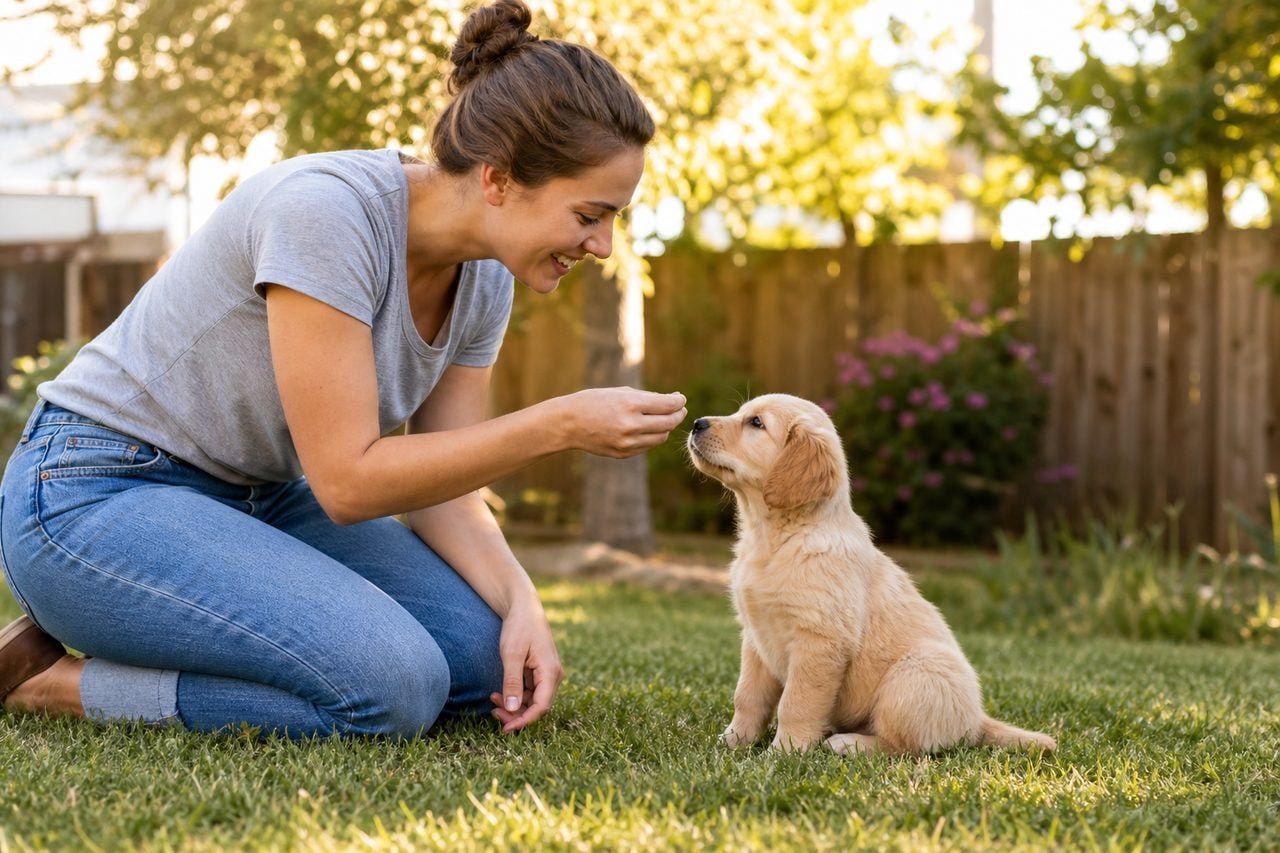
Socialization is the quiet superpower behind every calm, friendly, confident dog — and it is the single most time-sensitive thing you will do with your puppy. In the Muncie and Anderson area, where a young dog might encounter Ball State students on skateboards, cyclists on the Cardinal Greenway, farm equipment out toward Yorktown, and the bustle of a downtown festival, a well-socialized puppy handles it all with an easy shrug. An under-socialized one may spend years anxious or reactive.
Crucially, socialization is not the same as training obedience, and it is not just ˝letting your puppy meet dogs.˝ It is the careful, positive introduction of your puppy to the sights, sounds, surfaces, people, and situations that make up normal life — done during a developmental window that closes surprisingly early. Get it right and you build resilience; miss it and even great obedience training later cannot fully make up the gap.
This guide explains what proper socialization looks like for east-central Indiana owners: the critical timeline, how to do it safely before vaccinations are complete, local places and experiences to seek out, and how the area’s puppy classes fit in. You will also learn to read your puppy’s body language so every outing stays positive, and why the quality of each experience matters far more than sheer quantity when you are shaping a confident, resilient adult dog.
What Socialization Really Means
Ask ten dog owners what socialization means and most will say ˝playing with other dogs.˝ That is a small piece of it, and focusing on it alone can actually create problems. True socialization is the process of teaching your puppy that the enormous variety of things in the human world — loud trucks, umbrellas, wheelchairs, hats, stairs, slick floors, vacuum cleaners — are all normal and nothing to fear.
The goal is a neutral, relaxed response to novelty. A well-socialized puppy is not necessarily one that rushes up to greet every stranger; it is one that can calmly observe something new and carry on. In fact, teaching your puppy to ignore other dogs and people politely is often more valuable than encouraging frantic greetings, which can build over-arousal and leash frustration later.
Quality beats quantity. A handful of calm, positive experiences where your puppy feels safe and in control does far more good than a chaotic dog park visit that overwhelms them. Every socialization experience is teaching an emotional lesson — either ˝the world is safe and interesting˝ or ˝the world is scary.˝ Your job is to stack up the good lessons.
This reframing matters for Muncie owners because it shifts the focus from ˝how many dogs did my puppy meet˝ to ˝how confident and relaxed is my puppy becoming.˝ That mindset guides every decision below, from where you go to how you read your puppy’s body language.
Keep a simple checklist in the early weeks and jot down what your puppy has calmly experienced — different people, surfaces, sounds, vehicles, and places. It is easy to assume you are covering everything when you are actually repeating the same few situations. A quick written record reveals the gaps, so you can deliberately fill them while the window is still open rather than discovering a blind spot months later.
The Critical Socialization Window
Timing is everything, and the biology is unforgiving. Puppies have a primary socialization window that runs roughly from three weeks to about sixteen weeks of age. During this period their brains are wired to accept new experiences readily. After it begins to close, the same experiences that would have been shrugged off can instead trigger fear.
Because most puppies come home around eight weeks, you have a relatively short runway — often just a couple of months — to make the most of this window. That urgency is why waiting until your puppy is ˝fully vaccinated˝ at sixteen weeks or later before doing any socialization is a mistake: by then the most valuable window is largely gone.
This creates a real tension between disease risk and socialization risk, and it is worth understanding both sides. Puppies who are completely isolated until their vaccine series is done miss the window and are statistically far more likely to develop behavior problems — which, sadly, are a leading reason dogs are surrendered. The modern consensus among trainers and many veterinarians is to socialize carefully and safely during this window rather than skip it entirely.
Practically, that means choosing lower-risk experiences early — carrying your puppy through a hardware store, inviting healthy vaccinated adult dogs over, exploring your own neighborhood — while saving high-traffic dog areas for after the vaccine series is complete. The next section covers exactly how to strike that balance.
Individual puppies vary, and some breeds or shy temperaments need extra care and a slower pace during this window. If your puppy seems naturally cautious, do not skip socialization — instead, make each experience gentler, shorter, and more richly rewarded. A timid puppy that gets thoughtful, positive exposure now often grows into a stable adult, whereas one simply left to ˝grow out of it˝ frequently does the opposite.
Safe Socialization Before Full Vaccination
The good news is that you can accomplish a huge amount of socialization safely before your puppy’s vaccine series is finished. The trick is to control the environment and lower the disease risk while still delivering rich new experiences during the critical window.
Start in your own home, which is the safest place of all. Expose your puppy to household sounds, different floor surfaces, gentle handling of paws and ears, the vacuum, visitors of different ages and appearances, and everyday objects. Invite friends over — men with beards, kids, someone in a hat — so your puppy learns that all kinds of people are normal and safe.
Outside the home, you can carry your puppy or use a stroller to expose them to the world without their paws touching high-traffic ground. Sit on a bench along the edge of a Muncie park and let your puppy watch joggers and cyclists from your lap. Take a car ride so travel becomes routine. Arrange playdates with a friend’s healthy, vaccinated, puppy-friendly adult dog in a clean backyard rather than risking a public dog park.
Well-run puppy classes are designed for exactly this stage. Local trainers and the Muncie Obedience Training Club structure early puppy programs to require appropriate vaccinations and keep the environment clean and controlled, giving you supervised, low-risk socialization plus expert guidance. If you are ever unsure about what is safe for your individual puppy, your veterinarian is the right person to ask about local disease risk.
A useful rule of thumb is to think about surfaces and heights rather than just other dogs. Carry your puppy across a parking lot, let them peek into a busy store from your arms, and sit near a playground so they hear children at a safe distance. These controlled snapshots of everyday life build confidence with almost no disease exposure, and they add up quickly if you fit one or two into your normal errands each week.
Introducing People, Sounds, and Surfaces
A confident dog is one that has met the world in small, positive doses. Beyond other dogs, three categories deserve deliberate attention during the socialization window: people, sounds, and surfaces — the everyday variables that trip up under-exposed dogs.
People come in endless variety, and puppies do not automatically generalize. A puppy that only ever meets your immediate family may later be wary of children, tall men, people in uniforms, or someone using a cane. Aim for calm, positive encounters with as many different types of people as you can, always letting your puppy approach at their own pace rather than being swarmed. Pair new people with treats and praise so the association is warm.
Sounds are a frequent blind spot. Thunderstorms roll across east-central Indiana in summer, fireworks light up around the Fourth of July, and everyday life includes doorbells, sirens, and kitchen clatter. Introduce these at low volume and build up gradually, keeping your puppy relaxed and rewarded. A puppy that learns storms and bangs are no big deal becomes an adult that does not panic.
Surfaces and physical challenges round it out. Let your puppy walk on grass, gravel, metal grates, wobbly surfaces, and slick floors; go up and down a few safe steps; explore a cardboard box or a low platform. This kind of confidence-building teaches your puppy that novel footing is nothing to fear, which pays off everywhere from the vet’s office to a friend’s tiled kitchen.
Pace these introductions and avoid stacking too many novelties into one outing. A puppy can absorb a lot, but a barrage of new people, loud noises, and strange footing all at once can tip a good experience into an overwhelming one. Spread exposures out, end each on a positive note, and let your puppy rest afterward — sleep is when young dogs consolidate what they have learned.
Local Places to Socialize Your Puppy
Once your puppy is cleared for more public exposure, the Muncie and Anderson area offers a range of settings to build real-world confidence. The best socialization spots are ones where you can control the intensity — getting close to activity without being overwhelmed by it.
The Cardinal Greenway is ideal for this. Its long, open rail-trail through Muncie and Delaware County lets you position your puppy at a comfortable distance from joggers, cyclists, and other dogs, then gradually close the gap as confidence grows. The White River Greenway and quieter corners of McCulloch Park in Muncie or Shadyside Park in Anderson work the same way — enough activity to learn from, not so much that a young puppy shuts down.
Pet-friendly errands are underrated socialization gold. Many hardware and farm-supply stores welcome leashed dogs, offering novel smells, carts, automatic doors, and calm strangers in a controlled indoor space. Outdoor patios and the edges of a downtown Muncie event let your puppy observe crowds from a safe distance. Around Ball State, sidewalks full of foot traffic are a natural training ground for apartment-dwelling owners.
A word of caution on dog parks: for a young or under-socialized puppy, an off-leash park can do more harm than good. Uncontrolled interactions with unknown dogs can create fear or over-arousal that lingers. Favor structured, calm exposure — a class, a controlled walk, a playdate with a known friendly dog — over the chaos of a busy dog park during these formative months.
When you do venture to busier spots, pick your timing carefully. A weekday morning on the Cardinal Greenway or at Shadyside Park offers a gentler crowd than a sunny Saturday afternoon, and that lower intensity is exactly what a young puppy needs to succeed. You can always add difficulty as confidence grows; you cannot easily undo a scare that came from too much, too soon.
Reading Your Puppy's Body Language
Successful socialization depends on your ability to read how your puppy is actually feeling, moment to moment. Pushing a frightened puppy into a scary situation — often called flooding — can backfire badly, teaching the opposite of what you intended. Learning the basic signals keeps every experience positive.
A relaxed, happy puppy has loose body movement, a soft wagging tail, and an interested, engaged expression. This is the state you want during socialization. When you see it, your puppy is learning that the situation is safe, and you can gently continue or even move a little closer to the activity.
Signs of stress are subtler and easy to miss. Watch for a tucked tail, flattened ears, lip licking, yawning when not tired, turning away, freezing, trembling, or trying to retreat. These say your puppy is overwhelmed. The right response is to calmly increase distance from whatever is worrying them, let them recover, and make the situation easier — never to drag them closer or flood them into ˝getting used to it.˝
Let your puppy set the pace and always give them the choice to approach or retreat. Good socialization is a conversation, not a checklist you power through. If your puppy is consistently fearful despite gentle, gradual exposure, that is a signal to bring in a professional. Certified local trainers such as Deb Dolak at Over the Rainbow Dogs, or a behavior-focused program like Advanced Canine Techniques in Albany, can help you address fear before it hardens into a lasting problem.
Trust your instincts, too. You know your puppy better than anyone, and if something feels like too much, it probably is. There is no prize for pushing through a frightening situation, and nothing is lost by ending an outing early and trying again another day. Consistently giving your puppy the choice to retreat builds the very confidence that lets them choose to engage more boldly next time. Over weeks of these small, respectful choices, a puppy learns that you will never force them into something scary — and that trust becomes the foundation for a dog that looks to you for reassurance rather than reacting on its own.
How Puppy Classes Support Socialization
Structured puppy classes are one of the best socialization investments you can make, and the Muncie and Anderson area’s obedience clubs make them accessible. A good class does far more than teach sit and down — it provides a controlled environment for exactly the kind of positive exposure the critical window demands.
In a quality puppy class, your dog learns to be around other puppies and people while remaining under control, which builds the ability to stay calm around distractions rather than melting into over-excitement. The environment is clean, the other puppies are appropriately vaccinated, and a knowledgeable instructor manages introductions so no puppy is bullied or overwhelmed — a level of safety a dog park simply cannot offer.
Classes also socialize the human end of the leash. You learn to read body language, time your rewards, and handle common puppy challenges with expert eyes watching. That guidance often prevents small issues from becoming entrenched. Local options include the puppy and beginner courses at the Muncie Obedience Training Club and the Anderson Obedience Training Club, plus certified independent trainers like those at Over the Rainbow Dogs and Canine Companion Coaching in Muncie.
If you do only one formal thing for your puppy during the socialization window, a well-run local puppy class is a strong choice. It bundles socialization, foundation training, and expert coaching into a single weekly commitment — and it connects you with a community of other local owners going through the same stage.
If a formal class does not fit your schedule, ask trainers about shorter workshops or single-topic sessions that still deliver structured exposure. Even a few guided meetings can teach you the reading-and-timing skills that make all of your at-home socialization more effective. The point is to get expert eyes on your puppy at least once during this window, whatever the format — a small investment that pays off across your dog’s entire life.
Remember that socialization does not truly end at sixteen weeks; it simply becomes maintenance. Keep exposing your growing dog to varied people, places, and situations through adolescence and beyond, because skills and confidence can fade without practice. A dog that keeps meeting the world in small, positive doses stays adaptable and easygoing for years, which is exactly the kind of companion that thrives in a busy college town like Muncie. The early window gives you a head start; consistent follow-through is what carries it forward.
Reviewed Puppy Socialization Trainers in Muncie
These reviewed Muncie-area trainers from our directory handle puppy socialization. Each links to a full profile with specialties, certified credentials, reviews, and contact info:
- Over the Rainbow Dogs — 4.9★ (15 reviews)
- Muncie Obedience Training Club — 4.6★ (25 reviews)
- Anderson Kennel Club Inc — 3.3★ (8 reviews)
- Canine Companion Coaching
- Advanced Canine Techniques — 5.0★ (34 reviews)
- The V.I.P. K9 Facility — 5.0★ (3 reviews)
- Val-Jan Dog Training School — 5.0★ (1 review)
- sit-stay-play In-home pet sitting & more.inc — 4.8★ (45 reviews)
- Stonegate Farm’s K-9 — 4.2★ (5 reviews)
See all Muncie puppy socialization trainers →
Frequently Asked Questions
What age is the socialization window for puppies?
The primary socialization window runs from about three weeks to roughly sixteen weeks of age. Since most puppies come home around eight weeks, you have a short but crucial runway. Making the most of this period has a lasting effect on how confident and relaxed your dog becomes.
Can I socialize my puppy before it is fully vaccinated?
Yes, and most trainers recommend it because the socialization window closes before the vaccine series is complete. Focus on lower-risk experiences: your own home, carrying your puppy in public, playdates with healthy vaccinated dogs, and well-run puppy classes that require appropriate vaccinations. Ask your veterinarian about local disease risk if unsure.
Is a dog park good for puppy socialization?
Usually not for young or under-socialized puppies. Uncontrolled interactions with unknown dogs at a busy off-leash park can create fear or over-arousal that lingers. Structured alternatives like a puppy class, a controlled walk on the Cardinal Greenway, or a playdate with a known friendly dog are safer and more effective.
Is socialization the same as obedience training?
No. Obedience training teaches specific skills like sit and stay, while socialization teaches your puppy that the everyday world of people, sounds, surfaces, and situations is safe and normal. Both matter, but socialization is far more time-sensitive because of the closing developmental window.
How do I know if my puppy is stressed during socialization?
Watch for a tucked tail, flattened ears, lip licking, yawning when not tired, freezing, trembling, or trying to retreat. These signs mean your puppy is overwhelmed. Calmly increase distance from whatever is worrying them and make the situation easier rather than pushing them closer.
Where can I socialize my puppy in the Muncie area?
Good local options include the Cardinal Greenway, the White River Greenway, and quieter parts of McCulloch Park or Shadyside Park, plus pet-friendly stores for controlled indoor exposure. Structured puppy classes at the local obedience clubs and certified trainers add supervised, low-risk socialization with expert guidance.
Related: read our complete puppy socialization guide or the full Muncie dog training overview.
Ready to find the right puppy socialization pro in Muncie?