
Puppy Socialization in Port Huron, MI
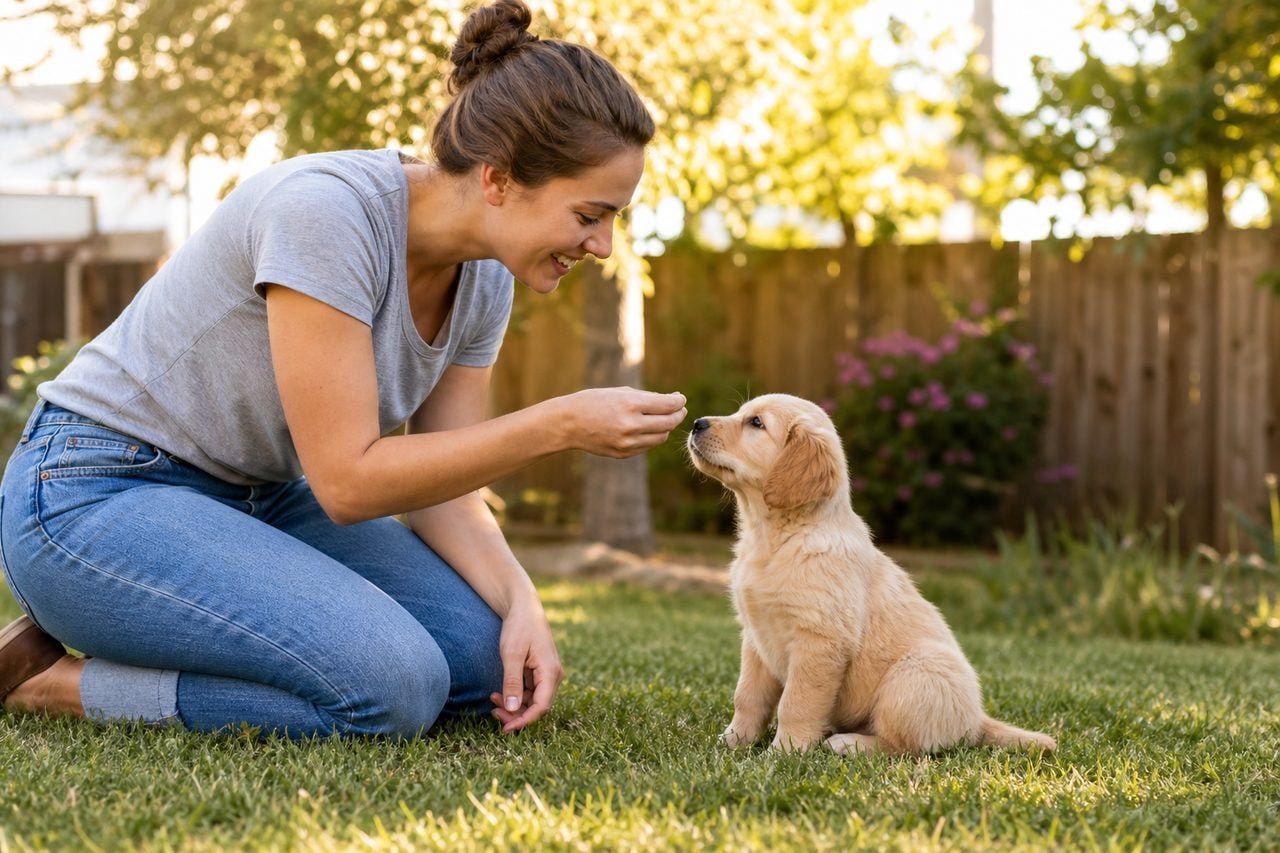
Socialization is the most important and most misunderstood part of raising a puppy in the Blue Water Area. Many owners hear the word and picture a puppy playing with other dogs at the beach, but real socialization is far broader: it is the deliberate process of teaching a young puppy that the ordinary features of its world are safe and normal. In a place shaped by Lake Huron, the St. Clair River, freighter traffic, seasonal beach crowds, and quiet rural farm roads, the list of things a Port Huron puppy needs to accept is long and specific.
- What socialization really means, and what it does not
- The Blue Water socialization checklist
- Timing the window against a Michigan calendar
- Socializing safely before the vaccine series is complete
- Reading your puppy: confidence versus fear
- Dog-to-dog and dog-to-people manners without bad experiences
- Turning early socialization into a lasting foundation
- Reviewed trainers
- FAQ
The stakes are high because the window is short. A puppy’s brain is primed to accept new experiences from roughly three to sixteen weeks of age. What the puppy meets, positively, during that stretch becomes its baseline for normal. What it never encounters, or encounters in a frightening way, can become a lifelong source of fear or reactivity. Socialization done well in those weeks is the difference between a dog that strolls calmly along the River Walk and one that lunges at every skateboard, stroller, and passing dog.
This guide covers what socialization actually means, why the Blue Water calendar makes timing tricky, a concrete checklist of experiences to prioritize, how to do it safely before vaccinations are complete, and how to read your puppy so exposure builds confidence rather than fear. The goal is a stable, resilient adult dog that is easy to live with anywhere in the county.
What socialization really means, and what it does not
Socialization is exposure plus a positive emotional association. It is not simply letting a puppy see the world; it is arranging for the puppy to encounter new things in a way that feels safe and often pleasant, so the puppy files them as normal. A puppy who watches a crowd from a comfortable distance while calmly eating treats is being socialized. A puppy who is dragged into the middle of that crowd and freezes is being sensitized, which is the opposite of the goal and can create lasting fear.
The distinction matters because well-meaning owners often overdo intensity. More is not always better; better is better. Ten calm, positive encounters spread over many days beat one overwhelming one crammed into a single outing. The best socialization keeps the puppy under its fear threshold, meaning the puppy notices the new thing but stays relaxed enough to eat, engage, and explore.
Socialization is also not just about other dogs. Dog-to-dog play is one small slice. Far more important is helping the puppy accept people of all kinds, novel surfaces, sounds, handling, objects, and environments. A puppy that only ever meets other puppies but never rides in a car calmly, tolerates nail trims, or copes with a vacuum has enormous gaps despite plenty of playtime.
A useful mental model is that you are building a database of safe. Each positive experience adds an entry, and the broader and more varied the database, the more a novel situation later in life resembles something the dog already knows and trusts. This is why generalization is the whole game: a puppy that has met five friendly bearded men in hats is far more likely to accept the sixth than a puppy that has met exactly one man ever. Variety within each category, not just checking the category once, is what produces a truly robust adult. Aim for many different examples of people, places, and things rather than a single token exposure to each.
The Blue Water socialization checklist
Aim to expose your puppy, gently and positively, to a wide variety of experiences before sixteen weeks. The exact items matter less than the breadth. Think in categories and check them off deliberately rather than hoping exposure happens on its own.
- People variety: men, women, children, people in hats and hoods, people with beards, people using canes or wheelchairs, delivery workers, and visitors of different appearances and voices.
- Sounds: the vacuum, doorbell, thunderstorms rolling off the lake, fireworks around summer holidays, freighter and train horns, snow blowers, and traffic.
- Surfaces: grass, sand at the Fort Gratiot beaches, wet river-walk pavement, metal grates, gravel on rural roads, hardwood, tile, and wobbly or novel footing.
- Environments: downtown sidewalks, a quiet stretch of the Wadhams-to-Avoca rail-trail, small-town main streets in St. Clair or Marine City, and the car itself as a normal, calm place.
- Handling: paws touched, ears and mouth examined, being held still, brushing, and mock nail trims, all paired with treats so a future vet or groomer visit is easy.
- Objects and situations: umbrellas, bicycles, strollers, garbage cans, farm equipment, and livestock at a safe distance for rural puppies.
Keep a simple written list and mark off categories through the weeks. Owners who track it consistently find and close the gaps; owners who wing it usually discover a hole only when the adult dog panics at something for the first time.
Timing the window against a Michigan calendar
The socialization window does not pause for winter, and this is where Blue Water puppy owners have to be strategic. A puppy whose critical weeks fall in July has an easy time: farmers markets, quiet morning beaches, and small-town sidewalks are all readily available. A puppy whose window falls in January faces the same biological deadline with far fewer easy outdoor opportunities, and owners who simply wait for spring miss the window entirely.
If you are raising a fall or winter puppy, you have to manufacture exposure. Invite a rotating cast of visitors to the house. Play recordings of storms, fireworks, and traffic at low volume paired with food. Carry the puppy on short errands to see people and hear sounds from your arms. Introduce novel surfaces and objects indoors. Take brief car rides to a plowed parking lot just to watch the world go by. The winter puppy can absolutely be well socialized, but only if the owner is deliberate about it.
Summer puppies have the opposite challenge: too much intensity too fast. Peak-season crowds at Lakeside Park, the beaches, and the downtown River Walk can overwhelm a young puppy. Choose off-peak hours, keep a comfortable distance from the busiest areas, and build up gradually. Do not use a packed July beach as a puppy’s first big outing.
Certain local events deserve special mention because they are intense and predictable. Summer brings fireworks around the holidays, boat and freighter traffic on the river, festival crowds downtown, and the general bustle of a waterfront town in its busy season. Sound sensitivity in particular is worth pre-empting: a puppy that has heard recorded fireworks and thunderstorms at low, comfortable volumes paired with food during its early weeks is far less likely to develop the noise phobia that ruins summers for so many dogs. Start those sound sessions quiet, keep the puppy relaxed and eating, and raise the volume only as the puppy stays comfortable. Building a positive or neutral response to loud noises before the first real fireworks display is one of the highest-value things a Blue Water owner can do.
Socializing safely before the vaccine series is complete
The genuine tension in puppy raising is that the socialization window closes around sixteen weeks, but the puppy vaccine series is not finished until later. Waiting for full protection means missing the most important developmental weeks. The modern consensus among behavior professionals is that the behavioral risks of under-socialization outweigh the disease risk when exposure is managed sensibly, but you should coordinate with your own veterinarian on the specifics for your puppy and area.
Practical ways to socialize while managing disease risk include carrying the puppy in higher-traffic areas rather than setting it on the ground, choosing cleaner and less dog-dense settings, inviting healthy vaccinated adult dogs to meet the puppy in controlled home settings rather than gambling at a public hotspot, and hosting people at your home so the puppy meets many humans without going anywhere. Avoid the highest-risk spots, such as areas heavily used by unknown dogs, until the series is further along.
Well-run puppy classes are designed around exactly this balance, typically requiring an initial vaccination and a clean, controlled environment so puppies can socialize with lower risk. That structure is one reason a good class is such an efficient way to socialize during the window.
Reading your puppy: confidence versus fear
Successful socialization depends on watching the puppy, not the plan. The single most important skill is recognizing when the puppy is comfortable versus when it is over threshold and scared. A comfortable puppy has loose body language, takes treats readily, explores, and recovers quickly from a startle. A frightened puppy tucks its tail, flattens its ears, freezes, refuses food it would normally take, tries to retreat, or trembles.
When you see fear signals, you have gone too far, too fast, or too close. The fix is not to push through it and definitely not to force the puppy toward the scary thing. Instead, increase distance, lower the intensity, and let the puppy observe from a place where it can relax and eat. Let the puppy choose to approach on its own timeline. Forcing a scared puppy into contact, called flooding, frequently makes fear worse and can create the exact reactivity you were trying to prevent. The safest default is always to give the puppy more distance and more time, and to let successful, low-pressure exposures accumulate.
Also respect the normal fear periods puppies pass through, when a previously confident puppy suddenly acts spooked by ordinary things. These are developmental phases; keep experiences positive and low-pressure during them and avoid forcing scary encounters. Pushing hard during a fear period can leave a lasting mark.
Dog-to-dog and dog-to-people manners without bad experiences
Good dog-dog socialization is about quality, not quantity. A few positive play sessions with healthy, appropriately matched dogs teach a puppy to read canine body language and to play with good manners. One bad experience, such as being bullied or frightened by an overbearing dog, can undo a lot of good work. This is why unmoderated free-for-alls and unpredictable public encounters are risky for a young puppy, and why a well-run class that supervises play is safer than gambling on strangers’ dogs.
Not every dog your puppy meets needs to be a playmate. In fact, a valuable lesson is that the puppy can calmly pass other dogs on the River Walk or a trail without demanding to greet them. A puppy that learns every dog means play often becomes a frustrated, lunging adolescent on leash. Reward calm attention on you around other dogs at least as much as you allow greetings.
With people, aim for lots of pleasant, low-pressure encounters. Let the puppy approach rather than having strangers loom over it, and ask people to be calm and gentle. Pair new people with treats and good things. A puppy that learns humans are reliably safe and pleasant grows into a confident, friendly adult that is welcome wherever you take it in the Blue Water Area.
Choose your puppy’s canine company just as carefully. The best early playmates are healthy, vaccinated dogs with good social skills, and calm, gentle older dogs often make ideal teachers because they set fair boundaries without frightening a youngster. A single overbearing or rough encounter can undo weeks of confidence-building, which is why unmoderated dog parks and random greetings with unknown dogs are risky bets during this sensitive stage. Quality supervised interactions with known, appropriate dogs beat a high volume of unpredictable ones every time, and it is completely fine to advocate for your puppy by calmly stepping away from a situation that looks like it is heading somewhere bad.
Turning early socialization into a lasting foundation
Socialization is not a box you check once and forget. The intensive window before sixteen weeks does the heavy lifting, but the work continues, in a lighter form, throughout the first year and beyond. Adolescent dogs, roughly five to eighteen months, can lose some of their earlier confidence or develop new sensitivities, so continuing to expose your dog to varied, positive experiences keeps the foundation strong. A dog that stops going new places after puppyhood can narrow its comfort zone over time.
Build ongoing exposure into normal life. Rotate your walking spots across the seasons: quiet trails and small-town sidewalks in the off-season, early-morning beaches and the River Walk in summer, farm-country roads for the rural crowd. Keep car rides frequent and calm. Keep handling and grooming routines going year-round so vet and groomer visits stay easy. Each of these maintains the resilience you built early, and each one is a small deposit that keeps the comfort zone from quietly shrinking, since a range of experience that goes unused tends to narrow over time.
The payoff is enormous and lasts a lifetime. Owners who invest in real socialization during the critical window, and who maintain it afterward, tend to spend far less time and money on behavior problems later. A confident, well-socialized dog is easier to train, easier to travel with, safer around people and other dogs, and simply more pleasant to share the Blue Water Area with, from a summer festival downtown to a quiet winter walk up the Lake Huron shore.
Reviewed Puppy Socialization Trainers in Port Huron
These reviewed Port Huron-area trainers from our directory handle puppy socialization. Each links to a full profile with specialties, certified credentials, reviews, and contact info:
- Recon K9 — 5.0★ (8 reviews)
- Cool Spring Farm Kennel, LLC — 4.9★ (67 reviews)
- Great Lakes K-9 Inc — 4.5★ (66 reviews)
See all Port Huron puppy socialization trainers →
Frequently Asked Questions
What is the difference between socialization and just playing with other dogs?
Playing with other dogs is one small slice of socialization. Real socialization is teaching a puppy that the whole ordinary world, people of all kinds, sounds, surfaces, handling, objects, and environments, is safe and normal. A puppy that only plays with other dogs but never rides calmly in a car, tolerates nail trims, or copes with a vacuum has big gaps despite plenty of playtime. Breadth matters more than dog-park time.
When is it too late to socialize my puppy?
The prime window runs from about three to sixteen weeks, so the most valuable work happens before four months. It is never truly too late to improve a dog’s comfort with the world, but it gets harder after the window closes, and fear that took root can require careful, patient counter-conditioning. If your puppy is inside the window now, prioritize positive exposure heavily. If the window has passed, work gradually and consider professional help for any fear issues.
How do I socialize a winter puppy when it is cold and dark out?
You manufacture exposure. Invite a rotating cast of visitors to your home, play recordings of storms, fireworks, and traffic at low volume paired with food, introduce novel surfaces and objects indoors, carry the puppy on short errands to see and hear the world, and take brief car rides to watch activity from a warm car. A winter puppy can be beautifully socialized, but only if the owner is deliberate rather than waiting for spring.
Can I take my puppy to the beach or River Walk before it is fully vaccinated?
Coordinate with your veterinarian, but the usual approach is risk-managed exposure rather than total isolation, because missing the socialization window causes real behavioral harm. Carry the puppy in busy areas instead of setting it down, choose cleaner and quieter settings and off-peak hours, and avoid the highest dog-traffic hotspots until the vaccine series is further along. The goal is positive experiences while sensibly limiting disease exposure.
My puppy seems scared of new things. What should I do?
Back off the intensity. Increase your distance from whatever worries the puppy, lower the difficulty, and let the puppy observe from a spot where it can relax and eat. Never force a scared puppy toward the scary thing, which can make fear worse. Let the puppy choose to approach on its own timeline, reward calm curiosity, and be especially gentle during the normal fear periods puppies pass through. Persistent fear is worth a professional’s help.
Should my puppy greet every dog and person we meet?
No. A valuable lesson is that your puppy can calmly pass other dogs and people without greeting them all. A puppy taught that every dog means play often becomes a frustrated, lunging adolescent on leash. Allow some good, well-matched greetings, but reward calm attention on you at least as much. With people, favor many gentle, low-pressure encounters where the puppy approaches rather than being loomed over.
Related: read our complete puppy socialization guide or the full Port Huron dog training overview.
Ready to find the right puppy socialization pro in Port Huron?