
Puppy Socialization in State College, PA
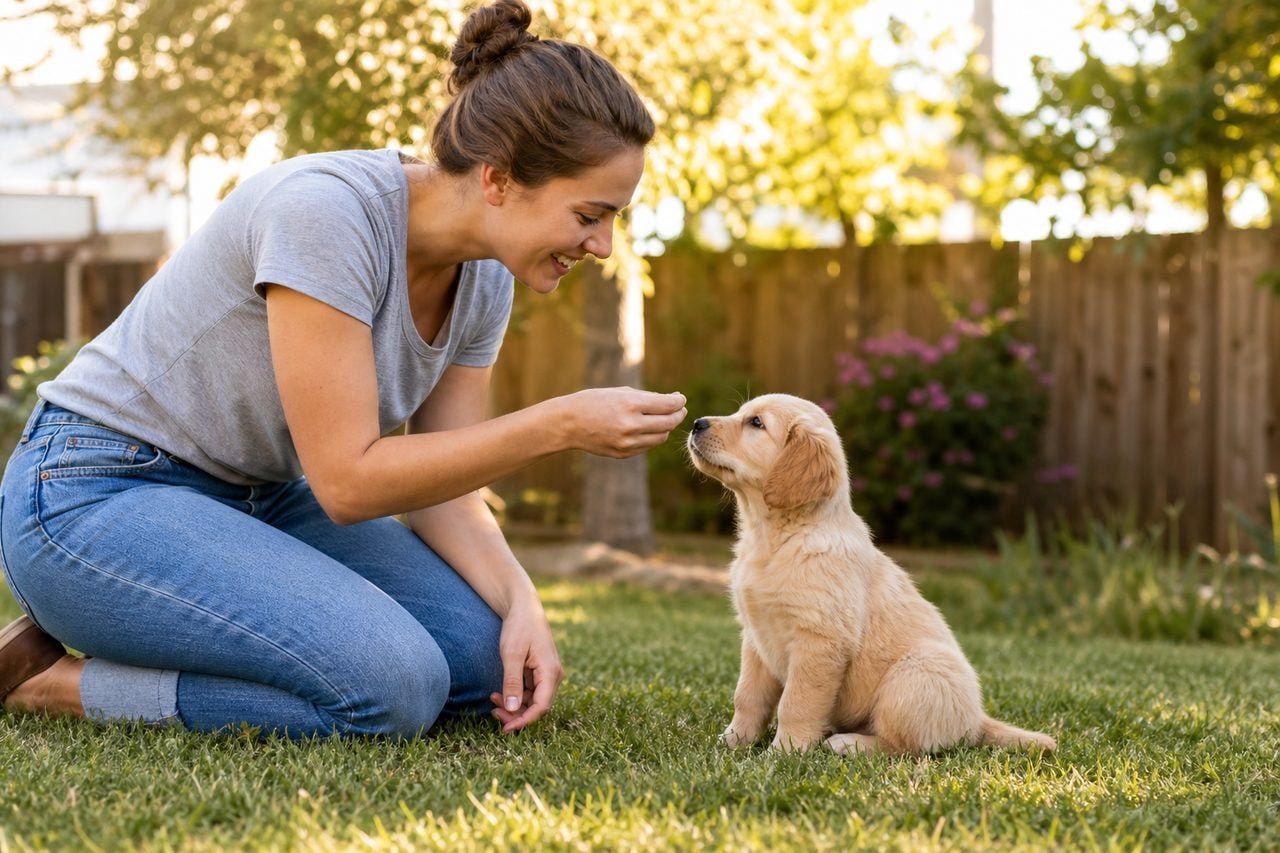
Puppy socialization — the careful, positive exposure of a young dog to the wider world — takes on a particular character in State College. Happy Valley swings between the calm of a small central-Pennsylvania town and the roar of a home football weekend, when tens of thousands stream toward Beaver Stadium and the borough fills with noise, tailgates, and dogs from all over. A puppy that grows up here has an unusual opportunity to become truly steady and unflappable, but only if that exposure is planned rather than left to chance. Done well, socialization turns Happy Valley’s biggest crowds into just another familiar backdrop; done poorly or skipped, those same crowds can leave a dog anxious for years.
The stakes are real because the socialization window is short. The weeks roughly between three and sixteen weeks of age are when a puppy most readily accepts new experiences as normal. Miss that window and the same sights and sounds — a crowd, a marching band, a stranger in a hood — can trigger fear instead of curiosity. In a community as seasonally intense and dog-dense as State College, a well-socialized dog thrives, while an under-socialized one can find ordinary daily life stressful. The challenge is that this window often closes before a puppy is fully vaccinated, so owners have to socialize thoughtfully rather than simply waiting for full protection.
Centre County also offers wonderfully varied settings for the work. A puppy can meet livestock and open farmland in Penns Valley around Centre Hall and Millheim, quiet Victorian streets and Spring Creek in Bellefonte’s Talleyrand Park, trailheads below Mount Nittany in Lemont, the historic village calm of Boalsburg, and the full sensory blast of downtown near campus. This guide explains how to use those settings safely, how to time socialization around vaccinations and the academic calendar, how to prepare specifically for game-day intensity, and how to read your puppy’s body language so every outing builds confidence rather than fear — and how to keep that confidence alive well into adulthood.
Understanding The Puppy Socialization Window
Socialization is not the same as training. Training teaches a puppy what to do; socialization teaches a puppy how to feel about the world. The most influential period runs roughly from three to sixteen weeks of age, when a puppy’s brain is primed to file new experiences as safe and ordinary. Positive encounters during this window shape a stable adult temperament; missed or frightening ones can leave lasting sensitivities.
For State College owners, a few principles guide the work:
- Quality over quantity: a handful of calm, positive experiences beats a flood of overwhelming ones.
- Variety matters: expose your puppy to different people, surfaces, sounds, and settings, not just other dogs.
- Let the puppy choose: allow approach at the puppy’s pace rather than forcing contact.
- Pair novelty with reward: treats and praise turn a new sight into a good memory.
Because the window closes before many puppies are fully vaccinated, timing requires judgment. Talk with your veterinarian about safe ways to socialize early — carried outings, controlled settings, puppy classes with vaccination requirements — so you don’t trade disease risk for behavioral risk or vice versa. Getting this balance right in the first months is one of the highest-leverage things a Happy Valley owner can do.
Safe Socialization Before Full Vaccination
The central dilemma of puppy socialization is timing: the behavioral window opens before the immune system is fully protected. State College owners don’t have to choose between the two, but they do need to socialize thoughtfully during those early weeks.
Lower-risk ways to expose a young puppy include:
- Carried outings: hold your puppy while walking a busy sidewalk or watching foot traffic so they absorb sights and sounds without contact with unknown-dog ground.
- Home introductions: invite calm, healthy, vaccinated adult dogs and a variety of people to your home.
- Controlled puppy classes: reputable classes that require vaccinations offer safe peer interaction on clean surfaces.
- Surface and sound exposure: practice on different floor textures indoors and play recordings of crowds, traffic, and thunder at low volume.
Avoid high-traffic dog areas — busy off-leash spots, spaces where many unknown dogs eliminate — until your veterinarian gives the go-ahead. The goal is to fill the early window with rich, positive, lower-risk experiences so your puppy is well on its way behaviorally by the time it can safely explore Centre County’s parks and trails without restriction.
Preparing Your Puppy For Game-Day Crowds
The signature socialization challenge in State College is the football weekend. When a home game turns the borough into a sea of tens of thousands, dogs encounter a sensory intensity most towns never produce: dense crowds, roaring noise, grills, music, and countless unfamiliar dogs near Beaver Stadium and downtown. A puppy prepared for that spectrum can handle almost anything.
Build up in stages across the fall:
- Start quiet: begin with light foot traffic on a calm street or park edge, well away from any crowd.
- Add layers slowly: progress to busier sidewalks, then a farmers market or campus-area bustle, watching your puppy’s comfort at each step.
- Reward calm: treats and praise for relaxed behavior around noise and movement build a positive association.
- Know when to leave: the moment your puppy shows stress signs, retreat to an easier setting — ending on a good note protects progress.
Treat tailgating with your dog as a long-term goal earned over a season of preparation, not a first outing. Many owners find that a puppy socialized gradually through the fall becomes remarkably steady, turning Happy Valley’s biggest crowds into just another familiar experience.
Socializing In Centre County’s Parks And Towns
One advantage of raising a puppy here is the sheer variety of settings within a short drive. Thoughtful socialization means deliberately sampling that range so your dog learns the world is wide and mostly friendly. Each corner of the county offers something different.
Consider rotating through varied environments as your puppy is ready:
- Bellefonte: Victorian streets and Talleyrand Park along Spring Creek offer gentle small-town bustle and water sights.
- Lemont & below Mount Nittany: quieter trailheads introduce natural sounds, uneven ground, and passing hikers.
- Penns Valley: farm country around Centre Hall and Millheim exposes a puppy to livestock, tractors, and open space from a safe distance.
- Boalsburg: a historic village setting with light foot traffic and community events for calm human exposure.
- State parks: areas like Bald Eagle State Park add new terrain and wildlife scents once your puppy is cleared for such outings.
Vary surfaces, people, and soundscapes rather than repeating the same walk. A puppy that has calmly experienced water, gravel, livestock, crowds, and quiet woods grows into an adaptable adult — exactly the kind of dog that handles the county’s seasonal swings with ease.
Reading Your Puppy’s Body Language
Effective socialization depends on reading your puppy accurately, because exposure only helps when it stays positive. Push a frightened puppy too far and you can create the very fear you hoped to prevent. Learning the signals lets State College owners keep every outing in the confidence-building zone.
Watch for these signs of stress and adjust immediately:
- Cowering or retreating: a puppy pulling away, tucking its tail, or trying to hide needs more distance from whatever worries it.
- Lip licking and yawning: out of context, these often signal unease rather than tiredness or hunger.
- Freezing: a suddenly still, stiff puppy is overwhelmed, not calm.
- Refusing treats: a puppy that won’t take food it normally loves is too stressed to learn.
By contrast, a loose body, wagging tail, and willingness to explore and eat signal a puppy that’s coping well. When you see stress, increase distance, lower intensity, or end the session on an easy win. This is especially important around unpredictable game-day crowds, where conditions can escalate fast. Responsive owners who let the puppy set the pace build trust and resilience far faster than those who force the issue.
Socialization Beyond Other Dogs
Many owners equate socialization with dog-to-dog play, but that’s only one slice. A well-rounded puppy needs positive experience with the full range of things it will encounter as an adult — people of all kinds, everyday objects, handling, and novel environments. In a diverse college town, that breadth is easy to arrange.
Aim to expose your puppy to:
- Varied people: children, older adults, people in hats, hoods, uniforms, and those using canes, strollers, or wheelchairs.
- Everyday sounds and objects: vacuums, umbrellas, bicycles, skateboards, and the beeps and hums of a normal household.
- Handling and grooming: gentle touching of paws, ears, and mouth so vet visits and winter paw-cleaning go smoothly.
- Car travel: short, positive rides so trips around the county don’t become a source of anxiety.
The transient, international makeup of the Penn State community actually helps here, offering natural exposure to many kinds of people. Fold these experiences into ordinary life — a treat when the mail carrier passes, calm handling during evening cuddles — and your puppy will accept the whole spectrum of daily life without needing a single formal outing to accomplish it.
Continuing Socialization Into Adulthood
The intensive socialization window may close around sixteen weeks, but the work doesn’t end there. Adolescent and adult dogs need ongoing positive exposure to maintain the confidence built early; skills can fade if a dog spends months only in the same quiet routine. In seasonal State College, this maintenance takes some planning.
Keep socialization alive with steady, lighter-touch practice:
- Rotate your outings: vary walking routes and destinations so your dog keeps meeting new sights rather than the same block daily.
- Bridge the winter gap: cold months can shrink a dog’s world, so use indoor-friendly outings and controlled visits to prevent regression by spring.
- Refresh before big events: a few gradual crowd exposures ahead of football season help a dog re-acclimate to game-day intensity.
- Watch adolescence: young adult dogs sometimes grow wary of things they once accepted, so gentle re-exposure keeps them steady.
Owners on the academic calendar should note how their own routines shift — a summer move or an exam-week crunch can quietly reduce a dog’s exposure for weeks. Building small, consistent social experiences into year-round life keeps a Happy Valley dog as confident at three years old as it was as a well-socialized puppy.
Reviewed Puppy Socialization Trainers in State College
These reviewed State College-area trainers from our directory handle puppy socialization. Each links to a full profile with specialties, certified credentials, reviews, and contact info:
- Digman Canine Academy — 5.0★ (93 reviews)
- Good Foundations Canine Training — 5.0★ (17 reviews)
- Aldy & LuLu’s Dog Gone Issues — 5.0★ (3 reviews)
- Manners N’ More Dog Traning — 4.2★ (9 reviews)
- Pet Lover’s Passion
See all State College puppy socialization trainers →
Frequently Asked Questions
What ages are most important for puppy socialization?
The most influential window runs roughly from three to sixteen weeks, when a puppy most readily accepts new experiences as normal. Positive exposure during this period shapes a stable adult temperament, so it’s worth prioritizing even before a puppy is fully vaccinated, using safe, controlled methods your veterinarian approves.
How can I socialize my puppy safely before vaccinations are complete?
Use lower-risk methods: carry your puppy on busy sidewalks to absorb sights and sounds, invite calm vaccinated dogs and varied people to your home, enroll in a class that requires vaccinations, and practice on different surfaces and sounds indoors. Avoid high-traffic dog areas until your veterinarian clears them.
How do I prepare my puppy for State College football crowds?
Build up gradually across the fall. Start with light foot traffic on a quiet street, progress to busier sidewalks and markets, and reward calm behavior around noise and movement. Treat tailgating as a season-long goal rather than a first outing, and always leave before your puppy becomes overwhelmed.
Where are good places to socialize a puppy in Centre County?
Rotate through varied settings as your puppy is ready: Bellefonte’s Talleyrand Park along Spring Creek, quiet trailheads near Lemont below Mount Nittany, Penns Valley farm country for distant livestock exposure, and historic Boalsburg. Vary surfaces, people, and sounds rather than repeating the same walk each time.
How do I know if my puppy is stressed during socialization?
Watch for cowering, tail-tucking, freezing, out-of-context lip licking or yawning, and refusing treats it normally loves. These signal your puppy needs more distance or a break. A loose body, wagging tail, and willingness to explore and eat show it’s coping well. Always end sessions on a positive note.
Does socialization stop after the puppy stage?
No. Although the intensive window closes around sixteen weeks, dogs need ongoing positive exposure to stay confident. Rotate walking routes, bridge the winter months with indoor-friendly outings, refresh crowd exposure before football season, and watch for adolescent wariness. Consistent lifelong practice keeps a dog steady.
Related: read our complete puppy socialization guide or the full State College dog training overview.
Ready to find the right puppy socialization pro in State College?