
Puppy Socialization in Valparaiso, IN
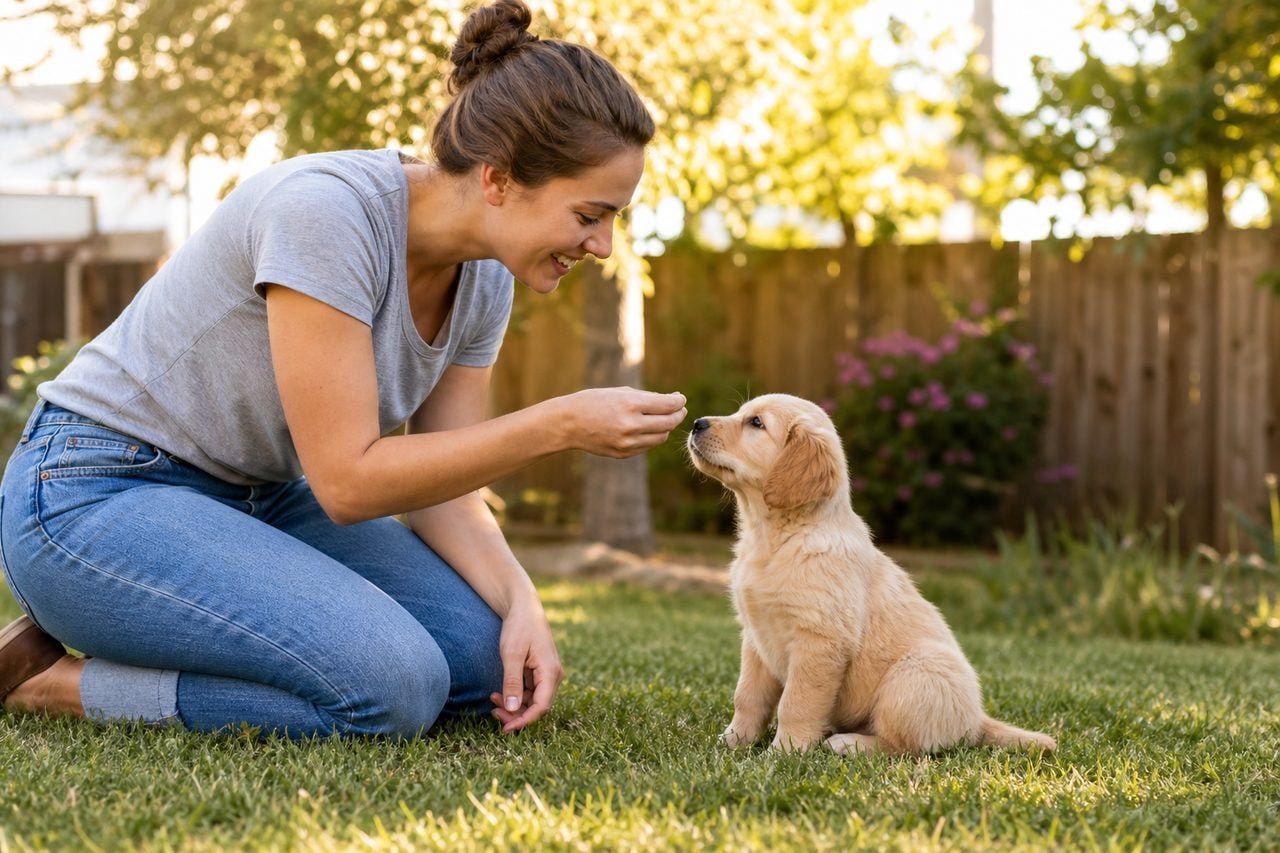
Socialization is the single most time-sensitive job in raising a puppy, and it is the one most easily missed. In the first few months of life, a puppy’s brain is unusually open to new experiences — forming lasting impressions about whether the world is safe or threatening. Positive, well-managed exposure during this window tends to produce a confident, adaptable adult dog. A puppy that misses it, or that has frightening experiences instead, is far more likely to grow into a fearful or reactive adult, and those patterns are much harder to undo later.
- What Socialization Actually Means
- The Critical Window and Why Timing Matters
- Building a Socialization Plan in the Region
- Reading Your Puppy: Confidence Versus Overwhelm
- Dog-to-Dog and People Socialization Done Safely
- Socializing Through a NW Indiana Winter
- Common Socialization Mistakes to Avoid
- Reviewed trainers
- FAQ
The Valparaiso and Northwest Indiana area gives owners an unusually rich menu to work with. The Region blends small-town downtowns, busy retail corridors, quiet residential streets, county parks, rail-trails, and the wide-open lakeshore of the Indiana Dunes. A household here might include someone commuting toward Chicago on the South Shore Line, kids coming and going, and the seasonal swing from summer beach crowds to silent, snowbound winters. Every one of those elements is raw material for socialization — if it is introduced thoughtfully rather than by accident.
This guide explains what socialization really means, why the timing matters so much, and how to build a practical exposure plan using everyday life in the Region. The theme throughout is quality over quantity: a handful of calm, positive encounters teaches far more than a single overwhelming one, and safety and good judgment matter as much as enthusiasm.
What Socialization Actually Means
Socialization is one of the most misused words in dog raising. Many owners hear it and picture a puppy playing with other puppies, and while dog-to-dog interaction is part of it, that is a small slice of the whole. True socialization is the deliberate, positive exposure of a puppy to the full range of sights, sounds, surfaces, people, animals, and situations it will encounter over a lifetime — introduced at a level the puppy can handle so that each experience builds confidence rather than fear.
That includes people of different ages, appearances, and movements; other dogs and non-dog animals; household noises like the vacuum and the doorbell; outdoor sounds like traffic, trains, and lawn equipment; varied surfaces underfoot from grass to metal grates to slick tile; and novel situations like car rides, vet handling, and grooming. It also includes being handled — paws touched, ears looked at, mouth examined — so that future vet and grooming visits are not a battle.
The critical distinction is that socialization is about emotional response, not just contact. A puppy dragged into a chaotic, frightening environment is being exposed, but it is learning the wrong lesson. The goal is for the puppy to notice something new, feel safe, and move on — ideally with a treat or some praise attached. Done this way, socialization is essentially teaching a puppy that novelty is normal and nothing to fear, which is the foundation of a stable temperament.
It also helps to understand what is at stake, because the payoff of good socialization is enormous and the cost of neglecting it is real. A well-socialized dog is easier and safer to live with in almost every way: it handles vet visits, grooming, houseguests, thunderstorms, and unfamiliar places without falling apart, and it is far less likely to develop the fear-based aggression and reactivity that are among the most common and most serious behavior problems trainers see. Many dogs surrendered to shelters end up there because of behavior issues that trace back, at least in part, to insufficient early socialization. Framed that way, the modest daily effort of introducing a puppy to the world on good terms is one of the highest-return investments an owner will ever make — it shapes not just how the dog behaves but how much of life it can comfortably be part of.
The Critical Window and Why Timing Matters
The sensitivity to new experiences that makes early socialization so powerful is not permanent. Behavioral development research consistently points to an early window, roughly spanning the first few months of a puppy’s life, during which the brain is primed to categorize experiences as safe. Exposures during this period tend to generalize — a puppy that meets many friendly, varied people early learns that people in general are fine. As the window narrows, the same puppy becomes naturally more cautious, and new things are more likely to be met with suspicion.
This is why the calendar matters so much. Every week of the early puppy period is valuable and cannot be recovered later at the same efficiency. It is entirely possible to socialize an older dog, and worthwhile, but it takes more time and more careful work than doing it during the window would have. For owners, the practical takeaway is urgency without panic: prioritize socialization now, but never at the expense of safety or the puppy’s emotional comfort.
There is a real tension to manage here. The socialization window overlaps with the period before a puppy has completed its vaccinations, so owners are told both to socialize early and to be careful about disease exposure. The resolution is not to hide the puppy away until it is fully vaccinated — that risks missing the window entirely. Instead, socialize smartly: choose lower-risk environments, carry a young puppy in busy public places, invite healthy vaccinated dogs to meet in controlled settings, and consult a veterinarian about the right balance. The aim is maximum safe exposure, not zero exposure.
Building a Socialization Plan in the Region
A socialization plan works best when it is written down and tracked, because it is surprisingly easy to over-expose a puppy to some things and completely miss others. Make a simple checklist across categories — people, dogs, other animals, sounds, surfaces, environments, handling — and aim to add a few new positive experiences each week. The Region makes this easy if you use it on purpose.
For calm, controlled environments, quieter stretches of the Prairie Duneland Trail or Erie Lackawanna Trail expose a puppy to passing cyclists, joggers, and strollers at a manageable distance. The open ground at Sunset Hill Farm County Park or Rogers-Lakewood Park in Valparaiso lets a puppy watch normal human activity without being crowded. A short walk down a downtown Valparaiso sidewalk on a weekday introduces traffic sounds, different pavements, and a variety of people without the crush of a weekend event.
For richer exposure, ramp up gradually. The edges of a farmers market, a hardware store that allows leashed dogs, or a pet-friendly patio add crowds, carts, and commotion. The Indiana Dunes lakeshore offers sand, water, wind, and open sky — but confirm pet rules for each park area first and pick off-peak times so a young puppy is not swamped by a summer beach crowd. The principle across all of it is graduated difficulty: start where the puppy can succeed, keep sessions positive and short, and increase intensity only as confidence grows. Pair novelty with treats and a calm handler, and end while the puppy is still happy rather than pushing until it is overwhelmed.
Reading Your Puppy: Confidence Versus Overwhelm
The most important socialization skill an owner can develop is reading the puppy in front of them. Socialization goes wrong not usually from too little exposure but from exposure at the wrong intensity — and the puppy is constantly signaling which it is getting. Learning to read those signals is what separates helpful socialization from experiences that create fear.
A comfortable puppy is loose and curious. It investigates, recovers quickly from surprises, takes treats readily, and returns to explore. An overwhelmed puppy looks different: it may freeze, tuck its tail, flatten its ears, pant or drool, refuse food it would normally take, try to retreat or hide, or become frantic. These are requests for more distance or a break, not stubbornness to push through. Forcing a frightened puppy to keep going — a common mistake with the best intentions — teaches it that the thing is genuinely dangerous and that its owner will not help.
The right response to an overwhelmed puppy is to increase distance, lower the intensity, and let it recover before trying again more gently. Never flood a puppy by, for example, letting a crowd of strangers reach over and grab at it in the name of getting it used to people. Good socialization lets the puppy approach on its own terms and rewards brave choices. When something does scare a puppy, calm reassurance and space are appropriate — the old worry that comfort reinforces fear does not hold up. What reinforces fear is repeated exposure that the puppy cannot handle, so the fix is always to make the experience easier, not to abandon it.
A practical concept that helps owners judge intensity is distance as a dial. Almost anything that worries a puppy becomes manageable at enough distance — a passing truck, a barking dog, a group of children. Rather than avoiding the scary thing entirely or forcing the puppy right up to it, work at whatever distance lets the puppy stay relaxed and interested, reward calm attention there, and only close the gap as the puppy grows comfortable. This turns a potentially frightening encounter into a series of small wins. It is also worth keeping a rough log of how the puppy responds to each new experience, so patterns become visible: if the puppy is consistently wary of, say, men in hats or people on bicycles, that is a signal to do more gentle, distance-based work in that specific category before it hardens into a lasting fear.
Dog-to-Dog and People Socialization Done Safely
Meeting other dogs and people is the part of socialization owners think of first, and it deserves care because bad early experiences here cause some of the most stubborn adult problems. The goal is not maximum interaction but good-quality interaction with the right partners.
For dog-to-dog work, quality beats quantity by a wide margin. A few calm, friendly, healthy adult dogs or well-matched puppies teach far more than a chaotic pack. Structured puppy classes are valuable precisely because interactions are supervised, dogs are health-screened, and a knowledgeable person can step in before play tips into fear or bullying. Be cautious with open dog parks for very young puppies — the mix of unknown vaccination status, mismatched sizes, and unsupervised rough play can produce exactly the frightening experience you are trying to avoid. One bad encounter can create a reactive dog for years.
For people, aim for variety introduced positively. Different ages, heights, and appearances; people in hats, uniforms, and winter coats; people using umbrellas, canes, or pushing strollers; children moving and being loud under supervision. Let the puppy choose to approach and reward it for confident greetings rather than allowing people to loom over or grab at it. Handling exposure belongs here too: gently touch paws, ears, and mouth, pair it with treats, and enlist a friend or your veterinarian’s office for mock exams. A puppy that learns early that human hands mean good things becomes a dog that tolerates nail trims, vet visits, and grooming without a fight.
Socializing Through a NW Indiana Winter
Puppies do not arrive on a convenient schedule, and many households in the Region bring one home in the fall or winter — right when a lake-effect winter can shut down easy outdoor socialization for weeks. This is a genuine challenge, because the critical window does not pause for the weather. Owners who resign themselves to a housebound winter risk missing crucial exposure, so a cold-season plan matters.
Much of socialization can happen indoors or in short bursts. Introduce household sounds systematically — the vacuum, the blender, dropped pans, the doorbell, footsteps on the stairs. Vary surfaces at home with mats, a baking sheet to walk across, and different flooring. Invite healthy vaccinated dogs and a rotating cast of people to visit so the puppy keeps meeting new dogs and humans without going out into the cold. Car rides count too; even a short drive with a treat at the end builds tolerance for travel.
For outdoor exposure, keep it brief and positive. Short trips to watch the world from a quiet spot, a few minutes on a plowed section of trail, or standing near a store entrance to see people come and go all add up. Sound exposure to winter-specific noises — snow blowers, plow trucks, salt crunching underfoot — is worth doing deliberately so they are not novel later. And do not overlook getting the puppy comfortable with the gear of the season: boots, a coat for a small breed, and having snow-caked paws wiped down. A little creativity keeps a winter puppy on track until spring opens the trails back up.
Common Socialization Mistakes to Avoid
Even motivated owners fall into a handful of predictable traps, and knowing them in advance is the easiest way to sidestep them. The most common mistake is doing nothing — keeping a puppy safely at home until it is fully vaccinated and inadvertently letting the critical window close. The fix is safe socialization, not zero socialization: carry the puppy, choose lower-risk settings, and invite healthy dogs over rather than skipping the effort entirely.
The opposite error is flooding — overwhelming a puppy in the name of toughening it up. Dropping a nervous puppy into a loud festival, a packed dog park, or a crowd of grabbing strangers does not build confidence; it manufactures fear. Related mistakes include ignoring a puppy’s stress signals and pushing on when it is clearly frightened, and forcing interactions the puppy is trying to avoid. Each of these teaches the wrong lesson while feeling like progress.
Other frequent slips are worth naming plainly:
- Treating socialization as only dog-to-dog play and neglecting people, sounds, surfaces, and handling.
- Front-loading everything into one big outing instead of spreading many small positive experiences over weeks.
- Skipping handling exercises, then being surprised when the first nail trim or vet exam turns into a wrestling match.
- Stopping too early — treating socialization as finished at a few months old rather than continuing to reinforce good associations well into adolescence, when many dogs go through a second, more cautious phase.
Avoiding these comes down to a simple mindset: go at the puppy’s pace, keep experiences positive, cover the full range of categories, and keep going longer than you think you need to. Handled that way, socialization is one of the highest-return investments an owner can make in a dog’s entire life.
Reviewed Puppy Socialization Trainers in Valparaiso
These reviewed Valparaiso-area trainers from our directory handle puppy socialization. Each links to a full profile with specialties, certified credentials, reviews, and contact info:
- Takacs In Home Dog Training — 5.0★ (165 reviews)
- Four Star Dogs — 5.0★ (23 reviews)
- Region K9 – Dog Training — 5.0★ (23 reviews)
- Crimson K9 Dog Training — 5.0★ (22 reviews)
- Life of Riley Dog Training — 5.0★ (15 reviews)
- chicagolandprotectiondogs dog training — 5.0★ (13 reviews)
- Kriegerhund K9 Services — 5.0★ (5 reviews)
- Dunes Dog Training Club — 5.0★ (5 reviews)
- Landheim Training And Boarding Center — 4.8★ (353 reviews)
- Stoney Run Canine Camp and Academy — 4.8★ (152 reviews)
See all Valparaiso puppy socialization trainers →
Frequently Asked Questions
What is the difference between socialization and training?
Training teaches a dog specific behaviors — sit, come, loose-leash walking — while socialization shapes how a dog feels about the world. Socialization is the positive exposure to people, animals, sounds, surfaces, and situations that builds a confident, stable temperament. Both matter, but they work on different things: training addresses what a dog does, socialization addresses how a dog reacts emotionally. A well-rounded puppy needs both, and the socialization side is especially time-sensitive because of the early developmental window.
Can I socialize my puppy before it is fully vaccinated?
Yes, and it is important that you do, because the socialization window overlaps with the period before vaccinations are complete. The key is doing it safely rather than avoiding it. Carry a young puppy in busier public areas, choose lower-risk environments, invite healthy vaccinated dogs to meet in controlled settings, and expose the puppy to plenty of sounds, surfaces, and people at home. Discuss the right balance with your veterinarian, since hiding a puppy away until it is fully vaccinated risks missing the most important developmental period.
Are dog parks good for socializing a puppy?
Open dog parks are generally not ideal for very young puppies. Unknown vaccination status, mismatched sizes, and unsupervised rough play can produce exactly the frightening experience you want to avoid, and a single bad encounter can create lasting reactivity. Structured puppy classes are a safer choice because interactions are supervised, dogs are health-screened, and someone can intervene before play tips into fear. As a dog matures and its social skills are solid, a well-run dog park can have a place, but early on quality controlled interactions are far better.
How do I know if my puppy is overwhelmed?
Watch the body language. An overwhelmed puppy may freeze, tuck its tail, flatten its ears, pant or drool, refuse treats it would normally take, try to hide or retreat, or become frantic. These are signals it needs more distance or a break, not stubbornness to push through. The right response is to increase distance and lower the intensity, then try again more gently once the puppy has recovered. Forcing a frightened puppy to continue teaches it the situation is genuinely dangerous, which is the opposite of what socialization should do.
How can I socialize my puppy during a NW Indiana winter?
A lake-effect winter does not have to stall socialization, because much of it can happen indoors or in short bursts. Introduce household and outdoor sounds systematically, vary surfaces at home, and invite healthy vaccinated dogs and a rotating cast of people to visit. Short car rides and brief, positive trips to watch the world from a quiet spot keep outdoor exposure going. Deliberately get the puppy used to winter-specific sounds and gear too — snow blowers, plow trucks, boots, and paw wiping — so they are not novel later.
Is it too late to socialize my dog if it is already an adult?
It is never too late, though it takes more time and care with an older dog than during the early window. Adult socialization focuses on building positive associations gradually, working below the threshold that triggers fear, and rewarding calm, confident responses. Progress is slower and some deeply ingrained fears may need professional help, but many adult dogs become noticeably more comfortable and adaptable with patient, consistent work. If a dog shows significant fear or reactivity, consulting an experienced trainer or behavior professional in the area is a sensible step.
Related: read our complete puppy socialization guide or the full Valparaiso dog training overview.
Ready to find the right puppy socialization pro in Valparaiso?