
Puppy Training in Akron, OH
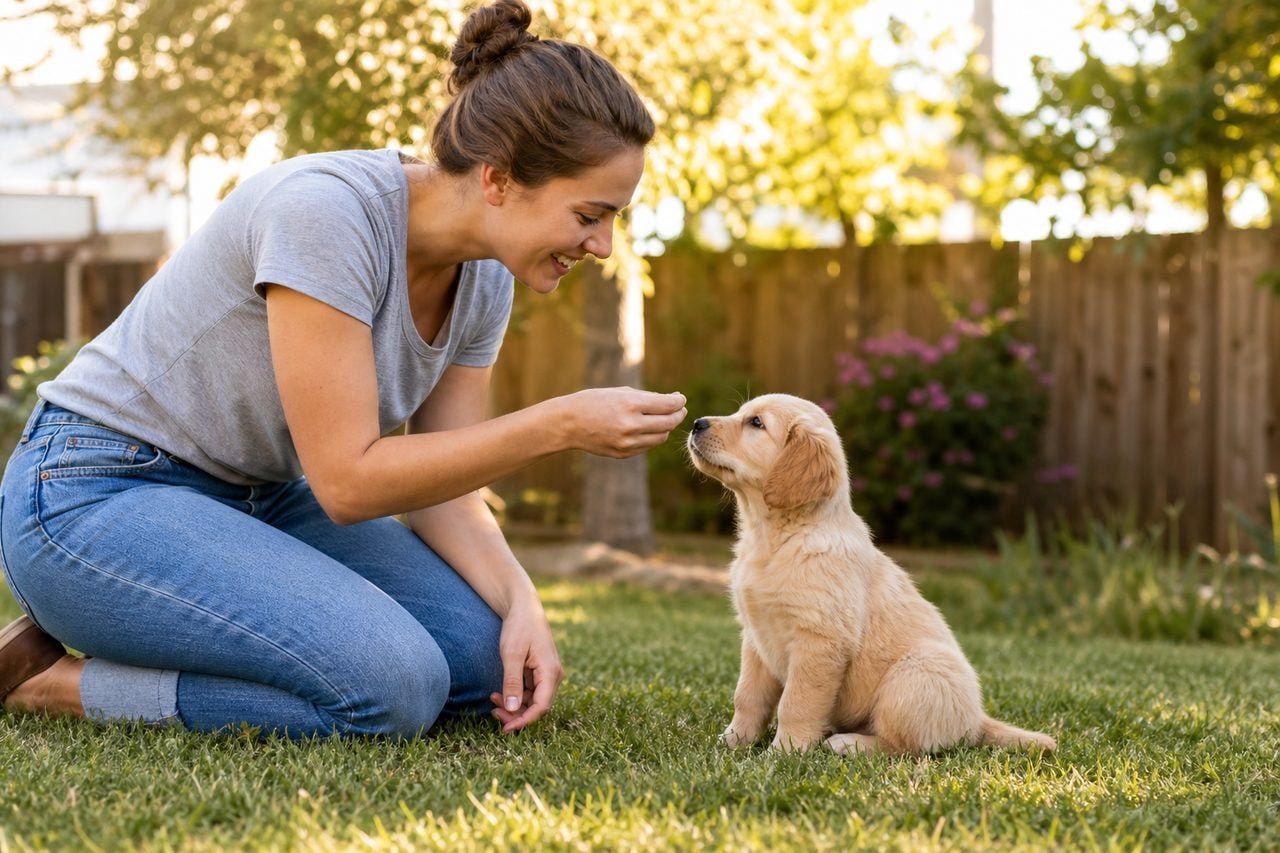
Bringing a puppy home in Akron is one of those moments that reorganizes your whole household, and the first few weeks set the tone for the next decade. Whether you live in a Highland Square apartment, a bungalow in Firestone Park, or a place with a real yard out in Copley or Bath, the early training window is short and it matters more than almost anything else you will do with your dog. Puppies do most of their critical social and behavioral learning before they are roughly sixteen weeks old, which means the clock starts the day you bring them home, not the day you finally find time for a class.
- Why the First 16 Weeks Decide Everything
- What Your First Week and First Month Actually Look Like
- Training Through Akron's Seasons
- DIY, Private Sessions, or Group Class: Choosing Your Format
- What Puppy Training Costs in Northeast Ohio
- Common Akron Owner Mistakes and How to Avoid Them
- Building a Realistic Long-Term Plan
- Reviewed trainers
- FAQ
The good news is that puppy training is not about being a professional dog handler or having endless free time. It is about consistency, good timing, and a plan that fits the way you actually live in the Rubber City. This guide walks through what puppy training really involves here in Summit County, how the seasons change your approach, what a realistic first few weeks looks like, how much you should expect to spend, and how to decide between training your puppy yourself, hiring a local trainer for private sessions, or enrolling in a group class. Everything below is written for Akron owners specifically, because training a puppy through a cold Northeast Ohio winter is a genuinely different project than training one in a mild climate.
Throughout, we reference local trainers generically rather than steering you to any one business, because the right fit depends on your puppy, your neighborhood, and your goals. Use this as your roadmap, then use the directory to find the people who can help you execute it.
Why the First 16 Weeks Decide Everything
Every conversation about puppy training in Akron should start with timing, because the single most common regret owners express is not starting soon enough. A puppy’s brain is wired for a specific developmental period, often called the critical socialization window, that runs from roughly three weeks to sixteen weeks of age. During this stretch, your puppy is forming lifelong impressions about what is safe and what is threatening. Experiences that are positive and varied during this window tend to produce a confident, adaptable adult dog. Experiences that are scary, overwhelming, or simply absent tend to produce a fearful or reactive adult, and undoing that later takes far more time and money than getting it right the first time.
This creates a real tension for Akron families, because most puppies do not finish their core vaccinations until around sixteen weeks, and the instinct is to keep an unvaccinated puppy locked away from the world. The modern consensus among veterinary behavior professionals is that the behavioral risk of under-socialization is generally greater than the disease risk of careful, controlled exposure. That does not mean taking a ten-week-old puppy to a crowded dog park on the Towpath Trail. It means thoughtful exposure: carrying your puppy through a quiet corner of a Summit Metro Park, inviting vaccinated adult dogs from friends over to your Wallhaven backyard, and letting your puppy experience different surfaces, sounds, and people in low-risk settings.
Within this window, you are working on several tracks at once. You are building bite inhibition so your puppy learns to control the pressure of its mouth. You are starting house training and crate comfort. You are introducing the idea that humans are a source of good things, which is the foundation of every cue you will ever teach. And you are banking social experiences with people of different ages and appearances, other friendly dogs, car rides, vacuum cleaners, and the general chaos of normal life. None of this requires formal sessions yet, but all of it benefits enormously from a knowledgeable local trainer who can tell you what is normal puppy behavior and what is an early warning sign.
The practical takeaway for Akron owners is simple: do not wait until your puppy is fully vaccinated to begin. Begin gentle, controlled training and socialization the week you bring them home, and line up either a class or a few private sessions to start as soon as your vet clears group settings, which is often around the time of the final vaccine round.
What Your First Week and First Month Actually Look Like
The first week home is mostly about safety, routine, and not overwhelming a baby animal that just left its littermates. Resist the urge to invite the whole neighborhood over. Instead, set up a small, puppy-proofed space, establish a feeding and potty schedule, and start associating the crate with calm and good things. In week one your training goals are modest and entirely achievable: your puppy learns where to sleep, starts to recognize its name, gets carried out to potty on a consistent schedule, and begins to understand that you are the reliable source of food, comfort, and play.
By the second and third weeks, you can layer in the first real cues. Most owners start with name recognition, a reliable response to a treat lure for sit, and the beginnings of coming when called inside the house. House training is the dominant project of the entire first month, and Akron’s climate makes this worth planning around. A puppy that arrives in January faces freezing yards and short daylight, so many local owners lean on a covered porch, a garage vestibule, or frequent short trips rather than expecting a tiny puppy to hold it through a long cold night. A puppy that arrives in May has it easier, but summer brings its own challenge: it is tempting to over-socialize too fast when the weather is gorgeous.
A realistic month-one progression looks roughly like this:
- Week 1: Settle in, crate comfort, potty schedule every one to two hours, name recognition, gentle handling of paws and ears.
- Week 2: First cues with food lures (sit, the start of down), short positive crate sessions, introduce a clicker or marker word if you plan to use one.
- Week 3: Recall games indoors, beginning leash awareness in the house and yard, controlled meetings with one calm vaccinated adult dog.
- Week 4: Extend potty intervals as bladder control improves, practice cues in slightly more distracting rooms, take very short carried outings to quiet outdoor spots.
The thread running through all of it is consistency. Puppies do not generalize well, so a sit that works in your kitchen does not automatically work in the Merriman Valley driveway. You teach in one place, then deliberately practice the same thing in new locations. Five short five-minute sessions sprinkled through the day beat one long thirty-minute session that exhausts and frustrates both of you.
Training Through Akron's Seasons
Few cities make weather as central to puppy raising as Akron does, and ignoring the seasons is a recipe for frustration. Winters here are long, gray, and genuinely cold, with snow and ice on the ground for months and bitter wind chills that make extended outdoor sessions unsafe for a small puppy. Summers are warm and humid with the occasional dangerous heat day. Spring and fall are the sweet spots, but they are short. A smart Akron owner plans the training calendar around all of this rather than fighting it.
In winter, the indoors becomes your training gym. House training requires extra patience because a puppy will not want to linger in a frozen Goodyear Heights backyard, so you reward fast and bring them right back in. Many owners keep an unfrozen patch shoveled clear specifically as the potty spot, which dramatically speeds up cold-weather house training. Socialization shifts indoors too: controlled visits with friends and their vaccinated dogs, exposure to household noise, and any indoor training facility you can access become more valuable when outdoor options shrink. A winter puppy can absolutely be raised well, but you have to bring the world to the puppy rather than the other way around.
Summer flips the script. Once your puppy is vaccinated and cleared, the Towpath Trail through the Cuyahoga Valley, Sand Run Metro Park, Gorge Metro Park, and the broader Summit Metro Parks system become superb places to practice calm walking, recall in mildly distracting environments, and confident exposure to bikes, joggers, and other dogs at a distance. The cautions are heat and pavement. Walk early in the morning or in the evening, keep sessions short on hot days, carry water, and remember that a puppy’s pads burn on hot asphalt. Bow Wow Beach dog park in Stow is a popular off-leash destination, but very young or under-vaccinated puppies should not be turned loose in a crowded dog park; wait until they are older, fully protected, and have a reliable recall.
Spring and fall are when you want to bank the bulk of your outdoor socialization and your group-class attendance if you can time it. The footing is good, the temperatures are forgiving, and the parks are busy enough to provide rich, varied experiences without the extremes. If you have any control over when you bring a puppy home, a late-spring or early-fall arrival gives you the easiest possible runway.
DIY, Private Sessions, or Group Class: Choosing Your Format
Akron owners generally have three paths, and the best choice depends on your puppy’s temperament, your schedule, and your confidence level. Most successful owners actually blend formats rather than picking just one.
Training it yourself is the lowest-cost path and works well for confident owners with a typical, resilient puppy and a flexible schedule. The risk is that you do not know what you do not know, and small timing errors compound. If you go this route, invest in good information, film your sessions so you can see your own mistakes, and at minimum book one or two private consults with a local trainer to course-correct early. The money you spend on a single early consult often saves you from months of trying to fix a problem you accidentally trained in.
Private in-home sessions with a local trainer are ideal for busy professionals, for puppies that are nervous or reactive, for multi-dog households, and for anyone dealing with a specific problem like resource guarding or severe house-training struggles. The trainer sees your actual environment, whether that is a Cuyahoga Falls townhouse or a Hudson property with a big yard, and tailors the plan to it. Private work is more expensive per hour but more efficient, and it is the right call when group settings would overwhelm a sensitive puppy.
Group puppy classes are where socialization and training overlap most powerfully. A well-run group class gives your puppy controlled exposure to other puppies and people while you learn the mechanics of teaching cues, all coached in real time. The trade-off is that the pace is set for the group, and a very fearful or very pushy puppy may not get enough individual attention. For most typical, healthy puppies, a structured group class plus daily home practice is the gold-standard combination.
A common and effective Akron approach is to start with one or two private sessions to nail the basics and address anything specific, then roll into a group class once the puppy is vaccinated for the socialization benefits, while practicing daily at home throughout. You do not have to choose one and only one.
What Puppy Training Costs in Northeast Ohio
Akron sits at or just below the national average for dog training, which is good news for owners. Within the region there is a real spread: trainers serving the wealthier northern suburbs like Hudson, Twinsburg, and Bath tend to price higher, while options on the south side around Barberton, Norton, and Green often run more affordable. Knowing the ranges helps you budget and spot anything that is wildly out of line in either direction.
Here are realistic Northeast Ohio estimates. These are ranges to plan around, not quotes, and actual pricing varies by trainer, credentials, and what is included:
- Group puppy classes: commonly run as multi-week packages, often in the range of roughly 150 to 250 dollars for a four-to-six-week course. This is usually the best value per dollar for a typical puppy.
- Private in-home sessions: often somewhere in the range of 75 to 150 dollars per session, with discounts when you buy a package of several sessions up front.
- Day training or board-and-train: the most intensive and most expensive option, where a trainer does the work for you. These programs can run from several hundred to a couple thousand dollars depending on length and intensity, and they are generally overkill for a normal puppy that just needs the basics.
- One-off consultations: a single assessment or problem-solving visit, useful even for DIY owners, typically falls in the private-session range.
When you compare prices, look past the headline number. A slightly more expensive trainer who keeps class sizes small, uses modern reward-based methods, and gives you written homework between sessions is usually a better value than a cheap class crammed with a dozen puppies and no follow-up. Beware anyone promising guaranteed results or fast fixes through harsh corrective tools; with puppies in particular, aversive methods carry a real risk of creating fear that costs you far more down the road. Budget for the early window, because money spent on a young puppy almost always returns more than money spent fixing an adolescent or adult dog.
Common Akron Owner Mistakes and How to Avoid Them
After watching countless local puppies grow up, the same handful of mistakes appear again and again, and nearly all of them are avoidable once you know to watch for them.
The first is waiting too long to start. Because the critical window closes around sixteen weeks, owners who decide to wait until the puppy is older and calmer have already missed the most important period. Start gentle training and socialization the first week home, vaccinations permitting for group settings.
The second is inconsistency across the household. When one person in a Tallmadge family lets the puppy on the couch and another scolds it for the same thing, or when the cue word for coming changes from person to person, the puppy receives mixed signals and learns slowly. Hold a family meeting, agree on the rules and the exact cue words, and write them on the fridge so everyone is aligned.
The third is skipping socialization in winter. It is genuinely harder to socialize a January puppy, so owners let it slide, and then they are surprised when a fearful adolescent emerges in spring. Winter puppies need indoor socialization plans, deliberate exposure to varied people and sounds, and controlled meetings with calm dogs, all arranged proactively rather than left to chance.
The fourth is over-relying on the dog park too early. Bow Wow Beach in Stow and similar spots are wonderful for the right dog at the right age, but turning a young, under-vaccinated, or under-socialized puppy loose into a crowd of unknown dogs can produce a frightening experience that sets back socialization rather than helping it. Build confidence and recall first, then graduate to off-leash play.
The fifth is reinforcing the wrong things accidentally. Picking up a puppy every time it whines, giving attention for jumping, or letting nipping continue because it seems cute all teach the puppy that those behaviors work. Reward calm, four-on-the-floor, and gentle mouths instead. If you find yourself confused about what you are reinforcing, that is exactly the moment to book a session with a local trainer who can watch you in action and catch the patterns you cannot see in yourself.
Building a Realistic Long-Term Plan
Puppy training is not a six-week project that ends when a class does. The early window is the foundation, but the structure you build on top of it continues through adolescence, which in dogs runs roughly from six months to two years and is when many owners hit their hardest patch. The confident, well-mannered adult Akron dog you are picturing is the product of consistent practice spread across the first two years, not a single course.
A sensible long-term arc looks like this. Months zero to four are the critical window: prioritize socialization, house training, crate comfort, bite inhibition, and the first cues. Months four to seven are about cementing the basics, beginning leash manners in earnest, and starting to proof cues in more distracting environments like the Metro Parks. Months seven to eighteen are adolescence, when previously reliable dogs suddenly seem to forget everything; this is normal, and the answer is patience plus a return to fundamentals, not punishment. Beyond eighteen months you are maintaining and refining, perhaps moving into more advanced work, off-leash reliability, or a dog sport if your dog enjoys it.
Set the milestones that actually matter to your life. For most Akron families those are a dog that reliably comes when called even with distractions, walks politely on a leash along neighborhood sidewalks and park trails, settles calmly at home and when visitors arrive, and can handle the realities of Northeast Ohio life from snowy walks to summer trips to the Cuyahoga Valley. Write these goals down, track progress, and revisit them every couple of months.
Finally, keep a relationship with a trainer even after the formal classes end. Adolescence almost always brings a surprise or two, and having someone local you already trust means you can get a quick course correction before a small issue becomes an entrenched habit. The directory makes it easy to find local trainers across Akron and the surrounding Summit County suburbs, so you can match the right professional to your puppy, your neighborhood, and the specific stage you are in.
Reviewed Puppy Training Trainers in Akron
These reviewed Akron-area trainers from our directory handle puppy training. Each links to a full profile with specialties, verified credentials, reviews, and contact info:
- The People’s Pup – Adventures and Training — 5.0★ (45 reviews)
- Focus Dog Training — 5.0★ (36 reviews)
- Jackie the Dog Trainer / SouthPaw Pet Care & Training — 5.0★ (27 reviews)
- AB Dog Training, LLC — 5.0★ (23 reviews)
- Hakuna Dogtata — 5.0★ (8 reviews)
- Ace Dog Training — 5.0★ (6 reviews)
- Sit Means Sit Dog Training Cleveland & Akron — 4.9★ (272 reviews)
- American Caniner Akron Dog Training Services — 4.9★ (152 reviews)
- The Dog Wizard Medina — 4.9★ (100 reviews)
- The Naughty Dog Training — 4.9★ (56 reviews)
See all Akron puppy training trainers →
Frequently Asked Questions
When should I start training my puppy in Akron?
Start the week you bring your puppy home. The critical socialization window closes around sixteen weeks of age, so the earliest weeks are the most valuable. You can begin gentle house training, crate comfort, name recognition, and basic cues immediately, and add group classes once your vet clears your puppy for group settings, which is often around the final vaccine round.
Can I socialize my puppy before it is fully vaccinated?
Yes, with care. The behavioral risk of under-socialization is generally considered greater than the disease risk of careful, controlled exposure. Avoid crowded dog parks and unknown dogs, but do invite vaccinated adult dogs over, carry your puppy through quiet areas, and expose it to varied people, surfaces, and sounds in low-risk settings until vaccinations are complete.
How much does puppy training cost in the Akron area?
Northeast Ohio sits at or just below the national average. Group puppy classes commonly run roughly 150 to 250 dollars for a multi-week course, private in-home sessions often fall around 75 to 150 dollars each with package discounts, and intensive board-and-train programs cost more. Trainers in northern suburbs like Hudson and Twinsburg tend to price higher than those on the south side around Barberton and Norton.
How do I house train a puppy through an Akron winter?
Cold yards make puppies reluctant to linger, so keep potty trips short, reward immediately, and bring them right back in. Many local owners shovel and maintain a clear patch as a dedicated potty spot, which speeds things up considerably. Stick to a frequent, consistent schedule, since young puppies cannot hold it long, and expect the process to take a bit more patience in winter than in milder seasons.
Should I do a group class or private training for my puppy?
It depends on your puppy and goals. Group classes are excellent for combining socialization with training for typical, healthy puppies. Private in-home sessions are better for nervous or reactive puppies, busy schedules, multi-dog homes, or specific problems. Many Akron owners blend both: a private session or two to nail the basics, then a group class for socialization, with daily practice at home throughout.
What is the most common puppy training mistake?
Waiting too long to start, followed closely by inconsistency across the household. Because the critical window closes around sixteen weeks, delayed starts miss the most important period. And when family members use different rules or cue words, puppies learn slowly. Agree on rules and exact cues as a household, and begin training the first week home.
Related: read our complete puppy training guide or the full Akron dog training overview.
Ready to find the right puppy training pro in Akron?