
Puppy Training in Chambersburg, PA
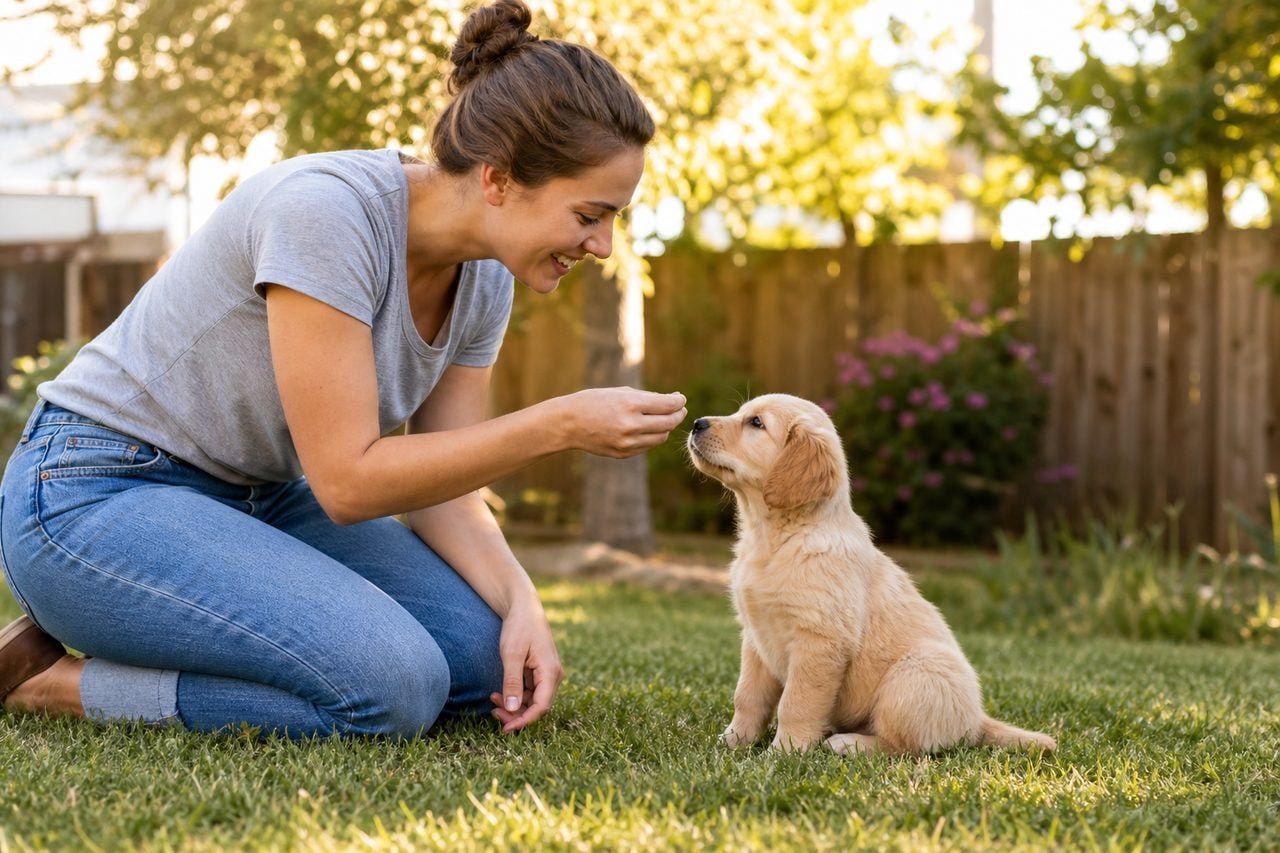
Bringing a new puppy home in Chambersburg means starting training against a very specific backdrop. Here in the Franklin County seat, tucked into the Cumberland Valley along I-81 between Harrisburg and the Mason-Dixon line, life mixes small-town sidewalks with wide-open farm country and the wooded ridges of South Mountain. A puppy raised near downtown Chambersburg hears delivery trucks, courthouse-square foot traffic, and the rumble of the interstate; one raised out toward Antrim Township grows up around tractors, livestock, and long gravel lanes. This is a town with deep roots — the only Northern community burned during the Civil War, and a short drive from Gettysburg — but for a new puppy, what matters is that good early training accounts for both sides of the valley.
- Why the First Sixteen Weeks Set the Course
- House-Training Through Cumberland Valley Seasons
- Core Cues Every Chambersburg Puppy Should Learn
- Socializing Safely Before Full Vaccination
- Leash Skills for Sidewalks, Trails, and Farm Lanes
- Choosing Between DIY, Group Classes, and Private Help
- Building a Realistic First-Year Training Plan
- Reviewed trainers
- FAQ
The first sixteen weeks matter more than any other stretch of your dog’s life. This is when a puppy’s brain is wired to accept — or fear — the everyday sights and sounds it will live with for the next decade. That is why Chambersburg families who invest a little structure early tend to raise steadier, friendlier adult dogs. Housebreaking, a reliable name response, gentle handling, and calm exposure to the Cumberland Valley’s mix of quiet and commotion all start now, long before a puppy is fully vaccinated or allowed at the dog park. Skip this groundwork and you will spend far more time later undoing fears that never had to form in the first place.
This guide walks you through what puppy training looks like across the Chambersburg region — from Guilford Township neighborhoods to the Waynesboro foothills near Renfrew Park and the university streets of Shippensburg, out to the farm lanes near Greencastle and the mountain townships toward Mercersburg. You will find realistic timelines, weather-aware routines for our milder-but-still-snowy winters, honest guidance on socializing safely before full vaccination, and pointers on choosing help that fits your household. The goal is a practical head start, not a rigid program, so you can shape a confident companion who fits your corner of Franklin County and grows into the dog you hoped to bring home.
Why the First Sixteen Weeks Set the Course
A puppy’s socialization window closes fast, generally tapering off around sixteen weeks. What happens during this period shapes how your dog reads the world for years. In a place as varied as the Cumberland Valley, that means deliberately introducing your puppy to the specific things it will actually encounter.
- Sounds of the valley: I-81 traffic near Chambersburg, farm equipment out toward Greencastle, church bells and train noise in Shippensburg.
- Surfaces: downtown sidewalks, gravel farm lanes, the leaf litter of Michaux State Forest trailheads, and slick winter ice.
- People and animals: children, folks in hats and hi-vis vests, other calm dogs, and — in rural Franklin County — horses and livestock behind fences.
Keep every new experience short, upbeat, and paired with a treat. You are not drilling obedience yet; you are teaching your puppy that novelty is safe. A puppy that learns this before sixteen weeks rarely becomes the adult that lunges at strangers or panics at a passing tractor. Miss the window and you can still make progress later, but it takes far more patience and repetition.
House-Training Through Cumberland Valley Seasons
Housebreaking runs on a schedule and a watchful eye. Take your puppy out after every nap, meal, and play session, plus first thing in the morning and last thing at night. Pick one consistent potty spot near the door and reward the instant your puppy finishes — not after coming back inside.
Franklin County weather adds wrinkles. Our winters are milder than northern Pennsylvania but still bring snow and ice, and a small puppy may balk at cold or refuse to squat in deep snow.
- Shovel a small potty patch down to grass or bare ground so your puppy has an easy target after a storm.
- Keep trips brief in cold or icy conditions; go out, potty, praise, and come back in.
- Watch for salt and ice-melt on Chambersburg sidewalks — wipe paws to prevent irritation.
- Expect summer humidity to mean more water and more frequent breaks.
Accidents are information, not failure. If they cluster at a certain time, tighten the schedule there. Most Chambersburg puppies are reliably house-trained within four to six months of consistent effort.
Core Cues Every Chambersburg Puppy Should Learn
Start with a short list of genuinely useful cues and practice them in tiny sessions — two or three minutes, several times a day. Puppies learn fast but tire fast, so quit while they are still winning.
- Name response: the foundation of everything; your puppy should snap its head toward you when you say its name.
- Sit: a default polite behavior for greetings and doorways.
- Come: practiced first indoors, then in a fenced yard — never off-leash near roads or the open fields around Antrim Township.
- Leave it: critical on valley trails where a puppy might grab something dangerous.
- Settle: lying calmly on a mat while life happens around it.
Reward-based methods work best. Mark the moment your puppy gets it right with a cheerful word or clicker, then treat. Keep the same cue words across the whole household so a puppy in a Guilford Township home hears one clear language. As cues become solid indoors, rehearse them in mildly distracting spots — a quiet park, the front yard, a friend’s porch — before expecting them downtown.
Socializing Safely Before Full Vaccination
Here is the tension every new owner faces: the socialization window closes around sixteen weeks, but your puppy is not fully vaccinated until later. The answer is not to keep your puppy locked away — it is to socialize smartly while limiting disease risk.
- Carry your puppy through busy spots like the downtown Chambersburg square so it sees and hears the world without paws on high-traffic ground.
- Invite calm, vaccinated adult dogs to your home for supervised meetings rather than visiting the dog park early.
- Host a puppy party — a few friends of different ages, hats, and voices — in your own living room.
- Avoid standing water and heavily used dog areas until your veterinarian clears full outings.
A well-run puppy class that requires proof of age-appropriate vaccination is one of the safest structured options, because the environment is controlled and the other puppies are screened. Ask your vet in Chambersburg what timing they recommend for your specific puppy before venturing to shared spaces like Caledonia State Park.
Leash Skills for Sidewalks, Trails, and Farm Lanes
Loose-leash walking is worth teaching early, while your puppy is small and easy to guide. The Chambersburg region offers three very different walking environments, and a puppy that handles all of them is a joy to own.
- Town sidewalks: practice in Guilford Township neighborhoods where curbs, mailboxes, and passing neighbors add gentle distraction.
- Nature trails: Michaux State Forest, Caledonia, and Mont Alto State Park test focus against squirrels, streams, and other hikers.
- Farm and gravel lanes: out toward Greencastle and Mercersburg, wide-open space tempts a puppy to pull toward livestock or wildlife.
Reward your puppy for walking with slack in the leash. The instant it forges ahead, stop moving; resume only when the leash softens. This teaches that pulling gets you nowhere and staying close keeps the walk going. Use a flat collar or a well-fitted harness — skip aversive tools on a growing puppy. Keep early walks short; a puppy’s growing joints and limited stamina mean quality over distance on the South Mountain trails.
Choosing Between DIY, Group Classes, and Private Help
Most Chambersburg families do well with a blend of approaches. The right mix depends on your puppy, your schedule, and how much structure you want.
- Do-it-yourself suits confident owners with time for daily short sessions. Free videos and a good book go a long way for the basics.
- Group puppy classes add supervised socialization and coaching — ideal because your puppy practices around other puppies in a controlled room.
- Private or in-home training is best for specific problems, busy families, or rural households near Mercersburg where driving to town classes is a hurdle.
When you evaluate a trainer, ask what methods they use, whether they favor reward-based techniques, and whether they require vaccination records for class dogs. Fees vary widely by format and length, so ask for ranges up front rather than assuming. A trainer who welcomes your questions and explains their reasoning is usually a good sign. Whatever route you choose, consistency at home matters more than any single class — the training that sticks is the training you reinforce daily.
Building a Realistic First-Year Training Plan
Think of your puppy’s first year in phases rather than as one long slog. A simple roadmap keeps expectations sane and progress steady across Franklin County’s seasons.
- Weeks 8–16: prioritize socialization, house-training, name response, and gentle handling. This is the highest-value window.
- Months 4–6: firm up sit, come, leave it, and loose-leash walking; begin short trips to low-key public spots.
- Months 6–12: proof cues around real distractions — the valley trails, town errands, visiting relatives — and navigate the adolescent phase when a puppy tests boundaries.
Adolescence surprises many owners; a once-obedient puppy suddenly seems to forget everything around six to ten months. This is normal. Stay calm, keep rewarding good choices, and do not abandon the basics. Track small wins — the first snow-day potty without a fuss, the first quiet walk past a barking neighbor dog. By your puppy’s first birthday, steady daily practice usually yields a settled young dog ready for the fuller Cumberland Valley life ahead, from creekside hikes to family gatherings.
Reviewed Puppy Training Trainers in Chambersburg
These reviewed Chambersburg-area trainers from our directory handle puppy training. Each links to a full profile with specialties, certified credentials, reviews, and contact info:
- MRK9INC.
- Good Dog Paws — 4.7★ (87 reviews)
- All 4 Paws Dog Training
See all Chambersburg puppy training trainers →
Frequently Asked Questions
When should I start training my new puppy in Chambersburg?
Start the day your puppy comes home, usually around eight weeks. The socialization window closes around sixteen weeks, so early gentle exposure to the sights and sounds of the Cumberland Valley — from I-81 traffic to farm equipment — is far more valuable than waiting. Housebreaking and name response can begin immediately.
How do I socialize my puppy before it is fully vaccinated?
Socialize smartly rather than skipping it. Carry your puppy through busy spots like the downtown square, invite calm vaccinated adult dogs to your home, and host small puppy gatherings indoors. Avoid standing water and heavily used dog areas until your Chambersburg veterinarian clears full outings, and consider a puppy class that screens for vaccination.
How long does house-training a puppy usually take?
Most Chambersburg puppies become reliable within four to six months of consistent effort. Take your puppy out after naps, meals, and play, reward outdoor success immediately, and keep a steady schedule. Franklin County winters can complicate things, so shovel a small potty patch after snow to give your puppy an easy target.
Are group classes or private training better for a puppy?
Both have a place. Group puppy classes add supervised socialization in a controlled room, which is valuable in the critical early weeks. Private or in-home training suits specific problems, busy families, or rural households near Mercersburg where driving to town is a hurdle. Many families blend the two along with daily practice at home.
What cues should I teach a puppy first?
Start with name response, sit, come, leave it, and settle. Name response is the foundation, and leave it is especially important on valley trails where a puppy might grab something dangerous. Practice in short two-to-three-minute sessions several times a day, using the same cue words across your whole household.
How much does puppy training cost in the Chambersburg area?
Costs vary widely by format — group classes, private sessions, and in-home programs are all priced differently, and length matters too. Rather than assume a figure, ask providers for a clear range up front. Doing the basics yourself with good resources is also a valid, low-cost path if you have time for daily short sessions.
Related: read our complete puppy training guide or the full Chambersburg dog training overview.
Ready to find the right puppy training pro in Chambersburg?