
Puppy Training in Johnstown, PA
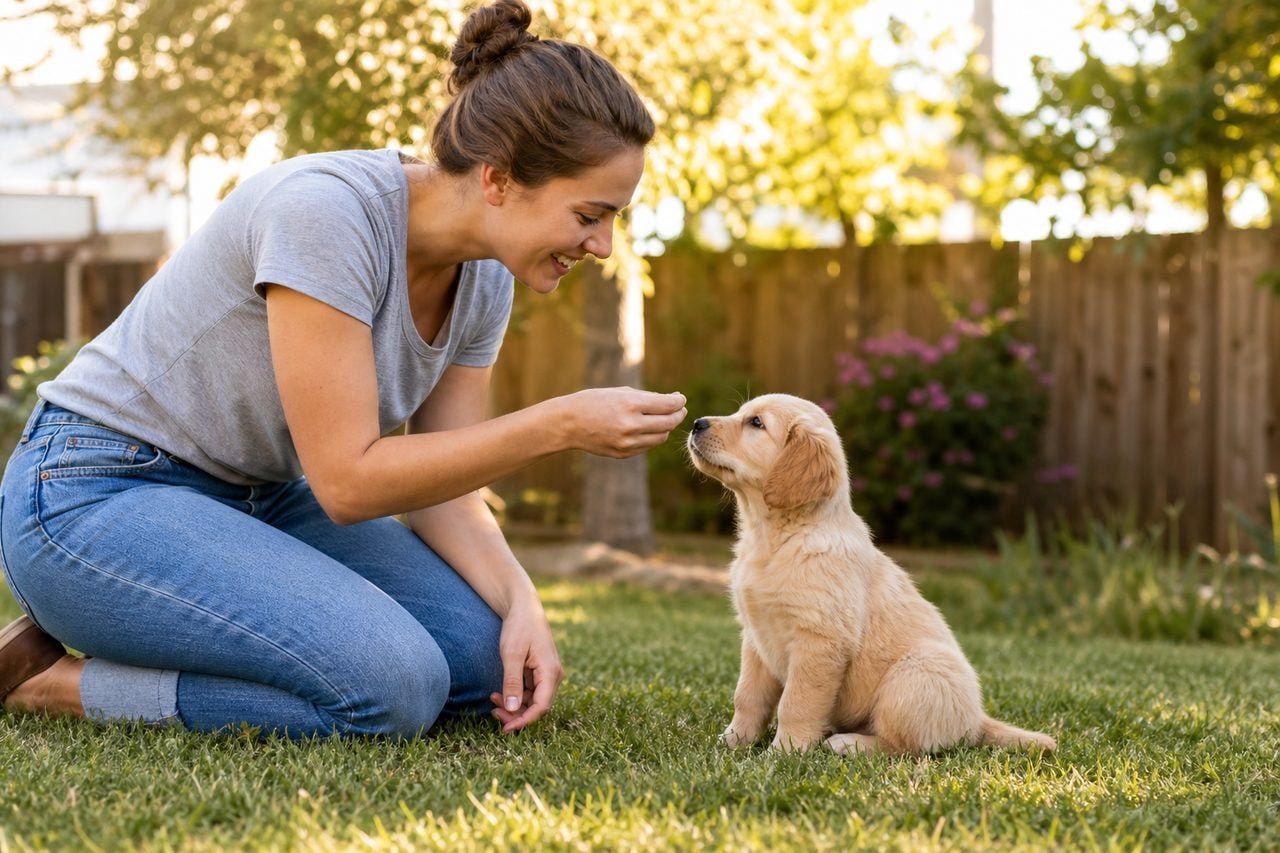
Bringing a puppy home in Johnstown means starting training against a backdrop unlike anywhere else in Pennsylvania. This is the city where the Stonycreek and Little Conemaugh rivers meet at the floor of the Conemaugh Valley, ringed by the steep Laurel Highlands ridges that the Johnstown Inclined Plane still climbs to Westmont. Those hills, the narrow river-bottom streets of Cambria City and Conemaugh, and the long, cold, snowy winters all shape how — and when — you teach a young dog the basics. A puppy raised here needs to be comfortable on icy sidewalks, steady around river traffic and railroad noise, and confident enough to handle the mix of tight downtown blocks and open ridge-top yards.
- Why Early Puppy Training Matters In The Conemaugh Valley
- Setting Up House Rules And A Routine At Home
- Foundation Cues Every Johnstown Puppy Should Know
- Socializing Safely Through A Laurel Highlands Winter
- Cold, Snow, And Steep Terrain: Winter-Proofing Training
- Choosing Between Group Classes And Private Training
- Building A Long-Term Training Plan Beyond Puppyhood
- Reviewed trainers
- FAQ
The good news is that Cambria County gives you room to work. Whether you live in a Westmont bungalow near the top of the incline, a Richland or Geistown subdivision east of the city, an Ebensburg farmhouse up on the Allegheny ridge, or one of the coal-patch boroughs like Nanty Glo, Portage, or South Fork, the same core principles apply. Early, consistent, reward-based training in the first few months builds a dog that fits your household and your neighborhood. What changes is the setting: the surfaces, the distractions, and the weather you plan around.
This guide walks through how to structure puppy training across the Johnstown region — from picking a training approach and setting up house rules, to socializing safely through a Laurel Highlands winter, to knowing when a local class or private trainer is worth the drive. Along the way it covers the foundation cues every young dog should learn, how to winter-proof your training against snow and steep terrain, and how to build a plan that carries your dog through the testing months of adolescence. GetDogSchool exists to help you find that fit; the aim here is to make you a sharper, better-prepared owner before your first session, so that whichever trainer or class you choose, you arrive knowing what to ask and what to expect.
Why Early Puppy Training Matters In The Conemaugh Valley
The first sixteen weeks of a puppy’s life are when the brain is most open to new experiences, and Johnstown’s terrain gives you plenty to work with. A dog that learns young to walk calmly down a steep Westmont side street, ride quietly in the car up to Ebensburg, and settle at home while trains rumble through the river valley will carry that confidence for life.
- Habituation window: Sights, sounds, and surfaces introduced before roughly four months tend to be accepted rather than feared — crucial in a town full of rail noise, river bridges, and hilly footing.
- Fewer problem behaviors later: Chewing, house-soiling, and leash pulling are far easier to prevent now than to fix in an adolescent dog.
- Winter readiness: A puppy taught early to potty on cue makes the long Laurel Highlands cold season manageable for both of you.
- Bond and communication: Consistent early sessions build the two-way language you will rely on for the next decade.
Starting now does not mean overwhelming a young dog. Short, positive, frequent sessions — a few minutes several times a day — beat long drills. The goal in these early weeks is a puppy who finds learning fun and finds you worth paying attention to.
Setting Up House Rules And A Routine At Home
Before you teach a single formal cue, decide as a household what the rules are and keep them identical from person to person. A puppy cannot learn that the couch is fine with one family member and forbidden with another. Consistency is the single biggest predictor of how fast a Johnstown puppy settles in.
- Pick a potty spot: Choose one door and one outdoor area. In a Cambria City row home with a small yard or a Richland subdivision lot, the same spot every time speeds housetraining dramatically.
- Crate as a safe den: Introduced gently, a crate helps with housetraining and gives your puppy a calm retreat when winter keeps everyone indoors.
- Feeding schedule: Regular meals mean predictable potty times — a real advantage when it is dark and freezing outside.
- Manage, don’t just correct: Use gates and tethers so the puppy rarely gets the chance to practice the wrong thing.
Write the routine down and post it where everyone sees it. A predictable day lowers a puppy’s stress, which in turn makes every training session that follows more productive.
Foundation Cues Every Johnstown Puppy Should Know
A handful of core cues cover most of daily life. Teach them in a quiet room first, then gradually add the distractions your neighborhood throws at you — passing dogs on a Westmont sidewalk, kids at a Geistown park, or the pull of a squirrel along the Path of the Flood Trail.
- Name recognition and attention: The dog should look at you when you say its name. This is the anchor for everything else.
- Sit and down: Useful for greetings and for settling at the vet or a Windber sidewalk cafe.
- Recall (come): Start on a long line, never off-leash near roads or rivers. A reliable recall is a safety essential in open ridge country.
- Loose-leash walking: Especially valuable on Johnstown’s steep grades, where a lunging puppy can pull you off balance on ice.
- Leave it and settle: Prevents your dog from grabbing hazards on the trail and teaches calm at home.
Reward generously with small, soft treats and praise. Keep sessions short and end on a win. Once a cue is solid indoors, practice it in progressively busier Johnstown settings so the behavior holds up in the real world.
Socializing Safely Through A Laurel Highlands Winter
Socialization means positive exposure to the world, and Johnstown’s climate makes timing tricky. Much of a puppy’s key socialization window falls during the region’s long, snowy winter, so you have to be deliberate about getting safe experiences in without freezing your dog or waiting until spring — by which point the window has narrowed.
- Short, warm outings: Brief car rides to see downtown Johnstown foot traffic or a quiet Ebensburg street from a bundled carry give exposure without cold stress.
- Surfaces and sounds indoors: Introduce slick floors, stairs, vacuums, and doorbells at home while it snows outside.
- Controlled dog meetings: Healthy, vaccinated adult dogs of friends are safer than a crowded dog park for a young puppy.
- Winter gear early: Get your puppy used to a coat or booties now so cold-weather walks are not a fight later.
Watch your puppy’s body language. The goal is calm curiosity, not being flooded. If the dog freezes, tucks, or tries to retreat, back off and make the next exposure easier. Quality of experience matters far more than quantity.
Cold, Snow, And Steep Terrain: Winter-Proofing Training
The Laurel Highlands deliver real winters, and Johnstown’s hills add footing you have to plan for. A little preparation keeps training on track through the cold months instead of stalling until the snow melts off the ridges.
- Protect the paws: Road salt and ice can crack pads. Rinse paws after walks and consider booties for longer outings on treated sidewalks.
- Keep sessions short in the cold: Puppies chill fast. Several two-minute sessions beat one long shivering one.
- Mind the hills and ice: Practice loose-leash walking on flat, cleared ground before tackling a steep Westmont or Southmont grade in winter.
- Indoor training days: Use a hallway or garage for recall games and cue practice when it is truly nasty out.
- Watch daylight: Short winter days mean many walks happen in the dark — add a reflective vest or light for safety near traffic.
Winter is not a reason to pause training; it is a reason to adapt it. Dogs that learn to work happily in cold, snowy conditions become dependable, all-weather companions — exactly what life in Cambria County calls for.
Choosing Between Group Classes And Private Training
At some point most Johnstown owners weigh a group puppy class against one-on-one private sessions. Both have a place, and the right choice depends on your puppy, your goals, and how far you are willing to travel across the valley.
- Group classes shine for: Socialization around other puppies, learning to focus amid distraction, and the accountability of a weekly schedule.
- Private training shines for: Specific issues, shy or reactive puppies who struggle in a crowd, and owners with tight or irregular schedules.
- Location and travel: If you are in Ebensburg, Cresson, or one of the coal-patch boroughs, factor in the drive to a Johnstown-area facility, especially in winter.
- Watch the methods: Look for reward-based, humane approaches. Ask how a trainer handles mistakes before you commit.
Many owners do both — a group class for social skills plus a private session or two to iron out a stubborn issue. Use GetDogSchool to compare nearby options, then pick the format that matches your dog’s temperament and your household’s reality.
Building A Long-Term Training Plan Beyond Puppyhood
Puppy training is the foundation, not the finish line. Adolescence — roughly six to eighteen months — often brings a wave of testing behavior right when owners assume the hard part is over. A plan that looks past the first few months keeps your Johnstown dog on track.
- Keep practicing core cues: Fold sit, recall, and loose-leash walking into daily life so they stay sharp through the teenage phase.
- Add real-world proofing: Practice on the Path of the Flood Trail, near the incline, or on a busy Geistown sidewalk to generalize behaviors.
- Grow the challenge slowly: Longer stays, distance recalls, and calmer greetings come with steady repetition, not overnight.
- Reassess seasonally: Adjust your routine as the Laurel Highlands shift from snowy winter to trail-friendly summer.
- Know when to get help: Persistent fear, reactivity, or aggression warrant a qualified professional, not more DIY.
A dog is a years-long project, and the payoff is a steady, confident companion who fits your life in the Conemaugh Valley. Set the foundation now, keep building through adolescence, and you will have a partner ready for anything Cambria County throws at you.
Reviewed Puppy Training Trainers in Johnstown
These reviewed Johnstown-area trainers from our directory handle puppy training. Each links to a full profile with specialties, certified credentials, reviews, and contact info:
- Walk By Faith Dog Training — 5.0★ (22 reviews)
- Optimum K9 Services — 4.5★ (8 reviews)
- Lead Me On Professional Dog Training, Daycare, Grooming & Resort — 4.4★ (69 reviews)
- That Dog Guy!
See all Johnstown puppy training trainers →
Frequently Asked Questions
What age should I start training my puppy in Johnstown?
Start the day your puppy comes home, usually around eight weeks. Early housetraining, name recognition, and gentle handling can begin immediately. Formal group classes often accept puppies once their initial vaccinations are underway — ask your chosen trainer about their age and vaccine requirements, which matter given the region’s shared outdoor spaces.
How do I socialize a puppy during a snowy Laurel Highlands winter?
Focus on safe, short, positive exposures. Bundle your puppy for brief car rides to see downtown Johnstown or Ebensburg foot traffic, introduce slick floors, stairs, and household sounds indoors, and arrange controlled meetings with healthy, vaccinated adult dogs. Get your puppy used to a winter coat early so cold walks are comfortable rather than a struggle.
Is a group class or private training better for my puppy?
It depends on your dog and goals. Group classes are excellent for socialization and learning to focus around distractions, while private sessions suit shy puppies, specific problems, or irregular schedules. Many Johnstown owners do both. Consider the winter drive from outlying areas like Ebensburg or the coal-patch boroughs when choosing a location.
How long does it take to house-train a Johnstown puppy?
Most puppies grasp the basics within a few weeks with consistency, though full reliability can take several months. Pick one potty door and spot, keep a regular feeding schedule, and reward success immediately. Cold, dark Laurel Highlands winters make a predictable routine especially valuable, since quick, purposeful outdoor trips work better than long ones.
How do I protect my puppy's paws in winter here?
Road salt and ice on treated Johnstown sidewalks can irritate or crack paw pads. Rinse and dry paws after walks, keep outings short in extreme cold, and consider booties for longer walks. Introduce booties gradually and paired with treats so your puppy accepts them rather than fighting them.
What are the most important cues to teach first?
Prioritize name recognition and attention, sit, down, a solid recall on a long line, loose-leash walking, and a settle. On Johnstown’s steep grades and near its rivers and rail lines, loose-leash walking and recall are safety essentials. Teach each cue indoors first, then add real-world distractions gradually.
Related: read our complete puppy training guide or the full Johnstown dog training overview.
Ready to find the right puppy training pro in Johnstown?