
Puppy Training in Muncie, IN
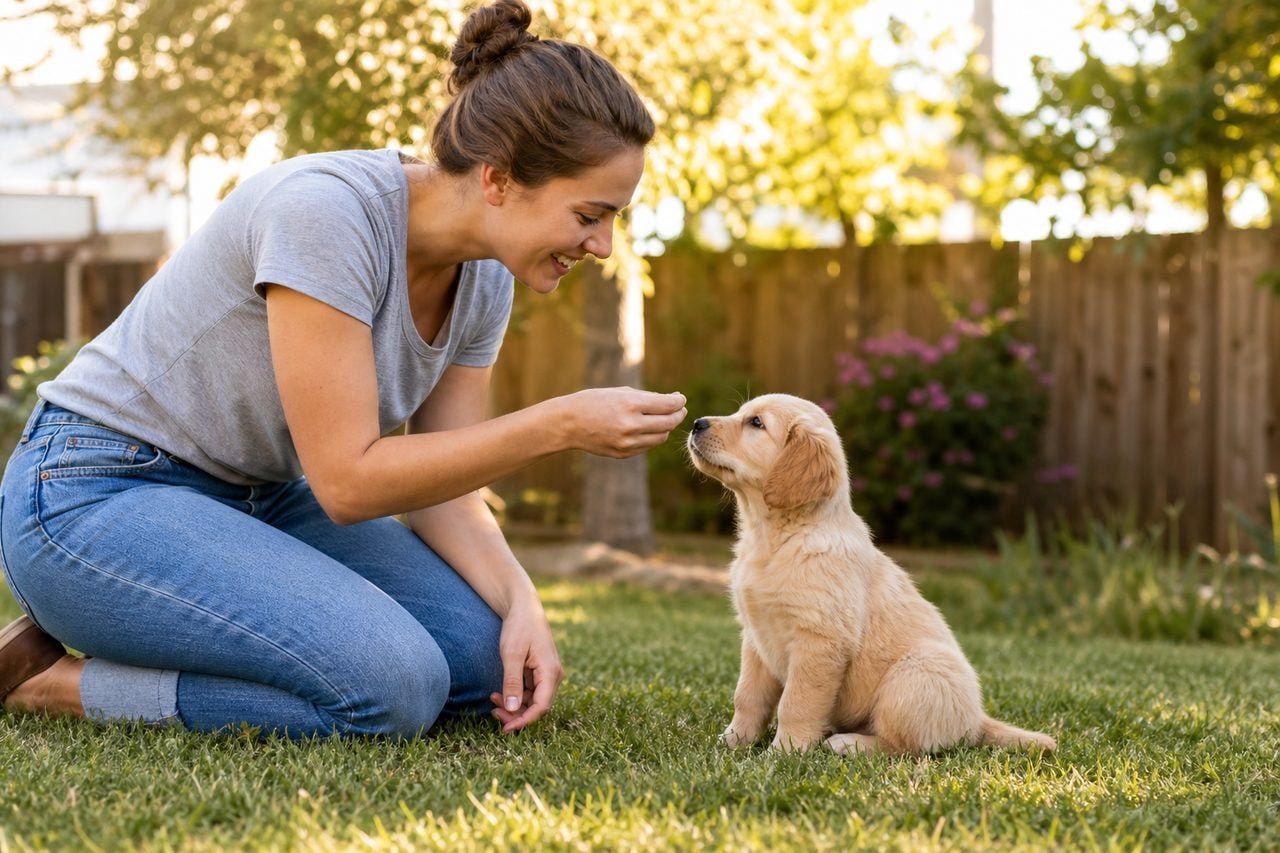
Bringing a puppy home in Muncie is exciting, but those first weeks set the tone for the next decade. Between potty accidents, needle-sharp teeth, and a little dog who wants to greet every student walking past your porch near Ball State, it is easy to feel overwhelmed. The good news is that Delaware County has a genuinely strong puppy-training community — anchored by long-running AKC obedience clubs and certified independent trainers — so you do not have to drive to Indianapolis to get quality help.
- When to Start Puppy Training in Muncie
- House Training and Crate Basics for Local Homes
- Bite Inhibition, Chewing, and Puppy Nipping
- Foundation Obedience: Sit, Down, Come, and Attention
- Group Puppy Classes vs. Private Lessons
- Using Muncie's Outdoor Spaces to Train
- Choosing the Right Puppy Trainer Near You
- Reviewed trainers
- FAQ
This guide walks you through what puppy training actually involves in the Muncie & Anderson area: when to start, what to prioritize first, how group classes differ from private lessons, and which local options fit different budgets and goals. Whether you are a first-time owner in a campus apartment or a family in Yorktown with a fenced yard, the fundamentals are the same — and the earlier you begin, the easier everything else becomes.
We keep the advice practical and local, pointing you toward real Muncie-area resources rather than generic internet tips, so you can build a calm, confident dog that fits into east-central Indiana life. Along the way we highlight the region’s obedience clubs and certified trainers, note which situations call for a group class versus a private lesson, and flag the small mistakes that trip up first-time owners — so you always know what to do next and where to turn for help.
When to Start Puppy Training in Muncie
The single most common mistake new owners make is waiting too long. Many people assume training begins at six months, but by then a puppy has already formed dozens of habits — some good, many not. The reality is that learning starts the moment your puppy comes home, usually around eight weeks of age. Every interaction is teaching something, whether you intend it to or not.
From eight to sixteen weeks, puppies move through a critical developmental window. Their brains are unusually receptive to new experiences, and gentle, positive exposure during this period pays dividends for life. This is why several Muncie-area trainers offer ˝puppy kindergarten˝ or early puppy classes built specifically for dogs who have not yet finished their full vaccine series — the classes balance early learning against health caution.
Practically, you can begin teaching your name game, gentle handling, crate comfort, and simple attention exercises the very first week. Formal group classes at places like the Muncie Obedience Training Club or with a certified trainer such as Deb Dolak at Over the Rainbow Dogs typically start once a puppy has had its initial vaccinations. If you are unsure about timing, call the trainer directly — they will tell you what vaccine milestones they require before your puppy joins a group setting.
The takeaway for east-central Indiana owners: do not wait. Start the easy foundational work at home immediately, and line up a class or trainer so you are ready to enroll the moment your puppy is cleared. The developmental window closes faster than most people expect.
One practical tip for Muncie owners: line up your class before you even bring your puppy home. Popular local courses fill up, and knowing your start date lets you plan the at-home foundation work around it. If your chosen trainer is between sessions, ask about a private starter lesson or a waitlist so you are not losing precious days of the developmental window while you wait for the next group to begin.
House Training and Crate Basics for Local Homes
House training is the first real test for most Muncie families, and it is where consistency matters more than cleverness. Puppies thrive on routine: take them out first thing in the morning, after every meal, after naps, after play, and right before bed. A young puppy simply cannot hold it for long, so the schedule does the heavy lifting — not willpower.
Indiana weather adds a wrinkle. In a cold, wet January, a puppy may rush through business outside just to get back indoors, then finish the job on your rug. Pick a consistent potty spot near the door, keep trips short and boring, and reward immediately — right there outside, not once you are back in the kitchen. That timing is what teaches the lesson.
The crate is your best ally, and it is not cruel when introduced kindly. Dogs are den animals, and a properly sized crate becomes a safe place to rest while preventing unsupervised accidents and chewing. Feed meals in the crate, toss treats inside, and build up alone-time gradually so it never becomes a punishment. For apartment renters near campus, the crate is doubly valuable — it protects your deposit and gives a busy puppy a clear off-switch.
If accidents persist past the puppy stage, resist the urge to scold after the fact; dogs do not connect a delayed correction to the earlier act. Instead, tighten the schedule, supervise more closely, and consider a check-in with a local trainer who can spot the small routine gap causing the problem.
Expect house training to take longer for smaller breeds and for puppies adopted during the coldest months, simply because outdoor trips are less pleasant and small bladders fill fast. Track accidents for a week and you will usually spot a pattern — a particular time of day, a certain room, or a stretch right after drinking. Adjusting the schedule around that pattern almost always resolves it faster than any product or gadget on the shelf.
Bite Inhibition, Chewing, and Puppy Nipping
Few things surprise new owners more than how sharp and persistent a puppy’s teeth are. Nipping is completely normal — it is how puppies explore the world and play with littermates — but it needs gentle redirection so it does not carry into adulthood. The goal is not to eliminate mouthing overnight but to teach your puppy that human skin is off-limits and that teeth belong on toys.
When your puppy bites too hard during play, a brief pause works better than punishment. Stop the fun, stand up, and give it a moment before re-engaging. This mirrors how littermates react and teaches bite inhibition — the ability to control jaw pressure — which is one of the most valuable safety skills a dog can learn. Always keep an appropriate chew toy within reach to redirect the mouth.
Teething intensifies chewing between roughly three and six months. Puppies will target furniture, shoes, and baseboards, so puppy-proofing your Muncie home or campus apartment is essential. Provide a rotation of durable chews, freeze a damp cloth for sore gums, and manage the environment with baby gates rather than expecting a teething puppy to make good choices on its own.
If the nipping feels frantic, over-aroused, or is escalating, it is worth bringing in help. Trainers like those at Over the Rainbow Dogs or Canine Companion Coaching in Muncie handle exactly this — they can watch your puppy in action and show you the small timing adjustments that turn painful play into calm, appropriate behavior.
It also helps to channel that mouthy energy productively. Puppies bite more when they are over-tired or under-stimulated, so a reliable nap schedule and a few minutes of sniffing or gentle training can dramatically reduce nipping. Think of appropriate chewing as a need to be met rather than just a behavior to be stopped — a well-exercised, well-rested puppy with the right outlets is a far gentler housemate than an under-stimulated one.
Foundation Obedience: Sit, Down, Come, and Attention
Once the basics of house training are underway, foundation obedience gives your puppy a shared language with you. The core skills — sit, down, come when called, and simply paying attention on cue — are the building blocks that everything else rests on. They are also the skills that make a puppy pleasant to live with rather than merely tolerated.
Keep sessions short and frequent. A puppy’s attention span is measured in minutes, so three or four two-minute sessions a day beat one long, frustrating drill. Use small, soft treats, reward generously in the early stages, and end while your puppy is still enthusiastic. Training should feel like a game, not a chore, for both of you.
The recall — coming when called — deserves special attention because it can genuinely save your dog’s life along a road or near the water at Prairie Creek Reservoir. Build it in low-distraction settings first, always make coming to you rewarding, and never call your puppy to you for something unpleasant like a bath or nail trim. Poisoning the recall is one of the most common and avoidable errors.
Group puppy classes shine here. Learning to respond around other dogs and people, in a room full of distractions, is a different skill than performing in your quiet living room. AKC clubs like the Muncie Obedience Training Club structure their puppy and beginner courses to build exactly this kind of real-world reliability, one small step at a time.
As your puppy masters a cue in one room, deliberately practice it elsewhere — the backyard, the driveway, a friend’s house. Dogs do not automatically generalize, so a sit learned only in the kitchen may seem to vanish on a walk. Spending a little time proofing each skill across locations is what turns a puppy that knows the words into a dog that actually responds when it counts, out in the real world.
Group Puppy Classes vs. Private Lessons
One of the first decisions Muncie owners face is whether to enroll in a group class or hire a trainer for private lessons. Both work — the right choice depends on your puppy, your goals, and your schedule. Understanding the trade-offs saves you money and frustration.
Group classes are the local strength of the Muncie and Anderson area. The AKC obedience clubs — the Muncie Obedience Training Club and the Anderson Obedience Training Club — run structured group courses that give your puppy something no living room can: controlled exposure to other dogs and people. Group settings tend to be more affordable, and the built-in socialization is a major bonus during the critical window. The trade-off is a fixed curriculum and less one-on-one time for issues unique to your dog.
Private lessons flip that equation. A trainer working solely with you can tailor everything to your puppy’s temperament, your home layout, and specific problems like resource guarding or intense nipping. Certified trainers such as Deb Dolak at Over the Rainbow Dogs offer private behavior work alongside classes, and facilities like Advanced Canine Techniques in Albany handle more involved behavior cases. Private sessions cost more per hour but move faster on targeted issues.
Many owners do both: a group class for socialization and foundation skills, plus a private session or two to troubleshoot a stubborn problem. There is no wrong answer — the best plan is the one you will actually stick with consistently over the coming months.
Whichever route you choose, budget for consistency over intensity. A single class or lesson is only as good as the daily practice that follows it, so pick the format that fits your real weekly schedule — not the one that sounds most ambitious on paper. A modest plan you complete beats a comprehensive one you abandon after three busy weeks, especially for students and shift workers juggling unpredictable hours.
Using Muncie's Outdoor Spaces to Train
East-central Indiana offers some genuinely good spaces for building a well-rounded puppy, and using them thoughtfully accelerates training. Once your puppy is fully vaccinated, gradually introducing new environments teaches confidence and generalizes the skills you have practiced at home.
The Cardinal Greenway, the rail-trail that runs through Muncie and Delaware County, is excellent for structured leash walks with a steady stream of mild distractions — joggers, cyclists, and other dogs at a distance. McCulloch Park in Muncie and Shadyside Park in Anderson offer open, manageable settings for practicing attention and loose-leash walking. For a bigger outing, Prairie Creek Reservoir near Muncie and the trails at Mounds State Park near Anderson add sights, sounds, and smells that build resilience.
The key is to train at your puppy’s pace. Start on the quiet edges of these spaces, keep sessions short, and reward calm attention rather than expecting perfect obedience amid heavy distraction. A long line gives your puppy freedom to explore while you keep control — useful for practicing recall in a large open area before you ever trust an off-leash situation.
Always keep your puppy leashed where required, clean up after them, and read the room: a busy weekend at Shadyside Park may be too much for a nervous ten-week-old, while a quiet weekday morning is perfect. Treat every outing as a low-pressure field trip, and your puppy will grow into a dog that handles the real world calmly.
Bring water, waste bags, and plenty of treats, and always watch the weather — Indiana summers can get hot enough that pavement and midday sun are hard on a young puppy, while winter footing near the reservoir can turn icy. Early mornings and mild evenings are usually the kindest times to train outdoors, and they tend to be quieter too, which is exactly the low-distraction setting a puppy still learning to focus needs.
Choosing the Right Puppy Trainer Near You
With several quality options in the Muncie and Anderson area, choosing a trainer comes down to fit — matching their approach, format, and specialty to what your puppy needs. A little homework up front prevents wasted time and money later.
Start by clarifying your goal. If you want socialization and solid manners, a group puppy class at the Muncie Obedience Training Club, Val-Jan Dog Training School, or Canine Companion Coaching is a natural fit. If you are dealing with a specific behavior concern, look toward certified independent trainers like Deb Dolak at Over the Rainbow Dogs or a behavior-focused program such as Advanced Canine Techniques in Albany. For obedience and dog sports down the road, clubs like Stonegate Farm’s K-9 in Anderson add rally, scent, and agility options.
When you contact a trainer, ask how they handle mistakes, what methods they use, and whether their schedule and location work for you. Reward-based, positive-reinforcement approaches are the modern standard for puppies and produce confident, willing dogs. Be cautious of anyone promising instant results or relying heavily on harsh corrections with a young puppy — that is rarely necessary and can backfire.
Finally, trust your read of the trainer as a communicator. You are learning as much as your dog is, so you want someone who explains clearly, answers questions patiently, and adjusts to your household. The Muncie area has enough good options that you can afford to find the right match rather than settling for the first name you find.
It is also worth asking whether you can observe a class or speak with current clients before you commit. A quick visit tells you a lot about how a trainer manages a room, keeps dogs under threshold, and communicates with owners. Because the Muncie and Anderson area has real depth of options, a little comparison shopping up front pays off in a program you and your puppy genuinely look forward to each week. The right start with the right trainer makes the entire first year smoother, and it sets your dog up to become the calm, well-mannered companion you pictured when you first brought them home to Muncie. Start early, stay consistent, and lean on the local experts — the payoff lasts for the life of your dog.
Reviewed Puppy Training Trainers in Muncie
These reviewed Muncie-area trainers from our directory handle puppy training. Each links to a full profile with specialties, certified credentials, reviews, and contact info:
- Over the Rainbow Dogs — 4.9★ (15 reviews)
- Muncie Obedience Training Club — 4.6★ (25 reviews)
- Anderson Kennel Club Inc — 3.3★ (8 reviews)
- Canine Companion Coaching
- Advanced Canine Techniques — 5.0★ (34 reviews)
- The V.I.P. K9 Facility — 5.0★ (3 reviews)
- Val-Jan Dog Training School — 5.0★ (1 review)
- sit-stay-play In-home pet sitting & more.inc — 4.8★ (45 reviews)
- Stonegate Farm’s K-9 — 4.2★ (5 reviews)
See all Muncie puppy training trainers →
Frequently Asked Questions
How old should my puppy be to start training in Muncie?
You can begin gentle training at home the moment your puppy arrives, usually around eight weeks. Formal group classes at local clubs and trainers typically start once your puppy has had its initial vaccinations, so call ahead to confirm each program’s vaccine requirements before enrolling.
Are group puppy classes or private lessons better?
Both work, and many owners combine them. Group classes are affordable and provide valuable socialization during the critical window, which is a real strength of the Muncie area’s obedience clubs. Private lessons cost more per hour but move faster on specific issues unique to your dog.
How long does puppy training take?
Basic foundation skills and house training progress over the first several weeks to a few months with consistent daily practice. Puppy training is really an ongoing process rather than a one-time event, and short, frequent sessions produce better results than occasional long ones.
Where can I socialize and walk my puppy around Muncie?
Once fully vaccinated, the Cardinal Greenway, McCulloch Park in Muncie, and Shadyside Park in Anderson are good local spots. For bigger outings, Prairie Creek Reservoir and Mounds State Park add helpful new sights and sounds. Start on the quiet edges and keep sessions short.
My puppy bites hard during play. Is that normal?
Yes, puppy nipping and mouthing are completely normal ways puppies explore and play. Redirect to a chew toy and pause play briefly when teeth get too sharp to teach bite inhibition. If the biting feels frantic or is escalating, a local trainer can show you targeted timing fixes.
Do I really need a crate for my puppy?
A crate is not required, but it is one of the most effective tools for house training and safe management, especially for apartment renters near campus. Introduced kindly with meals and treats, it becomes a safe resting place rather than a punishment and prevents unsupervised accidents and chewing.
Related: read our complete puppy training guide or the full Muncie dog training overview.
Ready to find the right puppy training pro in Muncie?