
Puppy Training in Pittsburgh, PA
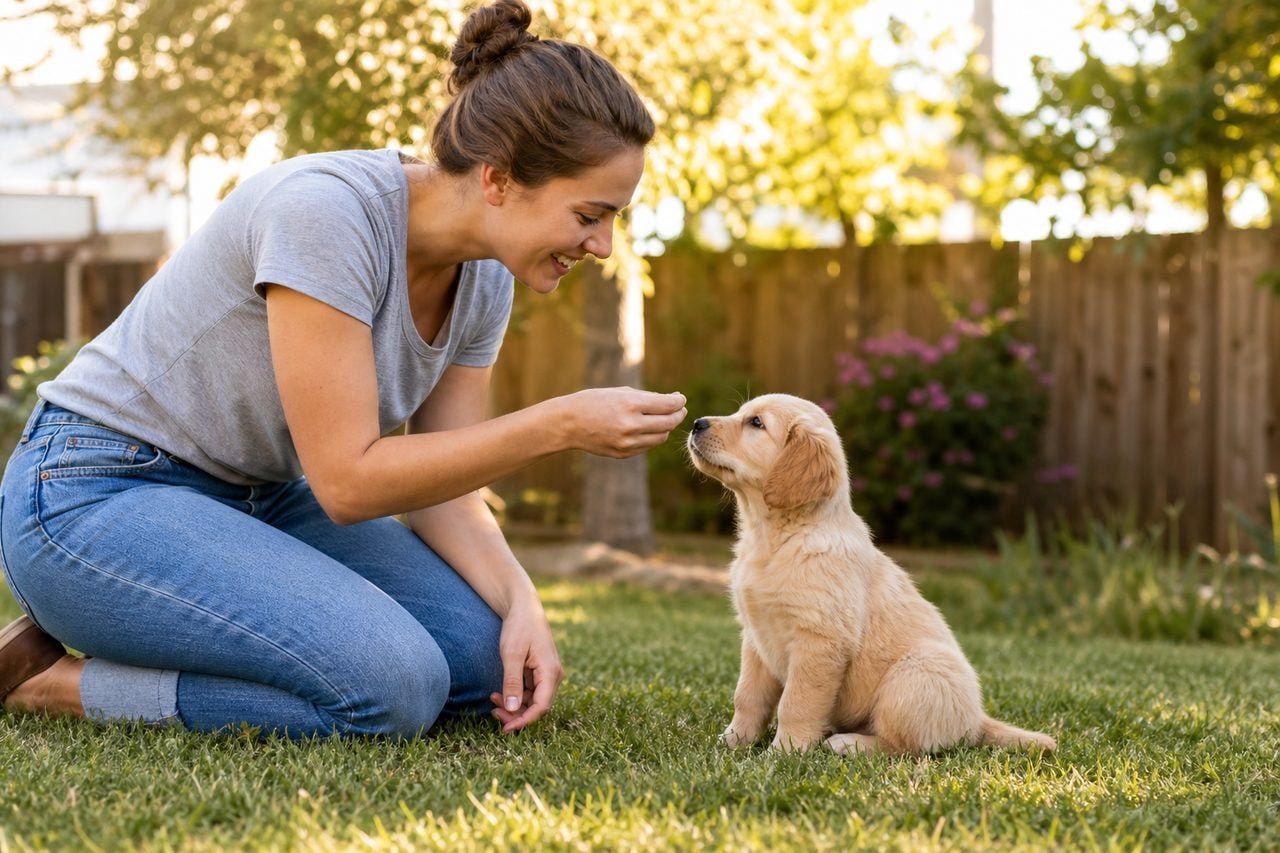
Bringing a puppy home in Pittsburgh means raising a dog for a city built on hills, stairs, and rivers. Within a few weeks of those first wobbly steps, your puppy will be asked to climb the public staircases that thread up Mount Washington and the South Side Slopes, ride in a car through the Fort Pitt and Squirrel Hill tunnels, and hold a steady sit on a narrow sidewalk while traffic crawls past on a one-way Downtown street. None of that comes naturally. Early, structured puppy training is what turns a nervous little dog into one that takes the Steel City’s terrain and noise in stride, and the habits you build in the first few months are the ones that last for years.
- Why The First Sixteen Weeks Matter Most
- House-Training Through A Pittsburgh Winter
- Crate Training And Settling In A City Home
- Leash Skills For Hills, Stairs, And Narrow Sidewalks
- Choosing A Class Format That Fits Your Neighborhood
- Region-By-Region: Where Pittsburgh Puppies Train
- Setting Realistic Goals For The First Year
- Reviewed trainers
- FAQ
Pittsburgh’s real four-season weather shapes the work, too. A puppy who arrives in January is house-training during cold, snowy stretches when nobody wants to stand in the yard at 2 a.m.; a summer puppy faces humid afternoons that cut outdoor sessions short. Good local trainers plan around this — short, frequent reps indoors during a polar snap, early-morning walks before July humidity peaks, and gradual exposure to the slick metal grates and salted sidewalks that show up every winter. Training that ignores the calendar tends to stall the moment the weather turns, so the smartest plans work with the seasons rather than against them.
Where you live matters as much as when your puppy arrives. A pup in a Lawrenceville row house faces different daily challenges than one on a quarter-acre lot in Cranberry Township or a quiet road in Butler County, and the right training approach reflects that. This guide covers what puppy training looks like across the region — from the dense neighborhoods of the Golden Triangle out through the South Hills, North Hills, eastern suburbs, the Mon and airport corridors, and into Washington and Butler counties. The goal is to help you find the right class or trainer for where you live and how your puppy is wired, and to set realistic expectations for those critical, fast-moving first months.
Why The First Sixteen Weeks Matter Most
A puppy’s brain is most open to new experiences from roughly eight to sixteen weeks old, and what happens in that window tends to stick for life. In Pittsburgh that means a deliberate plan to introduce your puppy to the things this city throws at every dog: the rumble of a bus on Forbes Avenue, the echo inside a tunnel, joggers on the Three Rivers Heritage Trail, and the metal expansion joints on the bridges crossing the Allegheny and Monongahela.
Practical priorities for these early weeks include:
- Surfaces: grass, brick, metal grates, wet pavement, and the wooden steps common in older homes in Lawrenceville and Bloomfield.
- Sounds: traffic, sirens, the river barges, and game-day crowd noise near the North Shore stadiums.
- Handling: paws, ears, and mouth, so winter paw-checks for road salt aren’t a fight.
A puppy that misses this window isn’t ruined, but it usually needs more patient, gradual work later. Starting early is simply easier on everyone.
House-Training Through A Pittsburgh Winter
House-training is hard enough; doing it while snow piles up on a Squirrel Hill side street is harder. Cold, dark mornings tempt owners to cut potty trips short, and puppies pick up on that hesitation fast. The fix is a tight routine and a plan for the weather, not willpower.
What works locally:
- Shovel a small potty patch near the door so your puppy isn’t belly-deep in snow and refusing to go.
- Keep trips short and frequent — after waking, eating, and play — rather than one long, miserable outing.
- Reward outdoors immediately, within a second or two, because a treat handed out back inside teaches the wrong lesson.
- Watch for salt and ice-melt; rinse paws after walks so irritation doesn’t make your puppy resist going out.
If you live in a high-rise Downtown or in a walk-up in Shadyside with no yard, plan the elevator or stair route in advance and consider a temporary indoor potty station for the coldest stretches. Consistency beats perfection — a few accidents during a January cold snap are normal.
Crate Training And Settling In A City Home
A crate gives a puppy a safe den and gives you a sane way to manage chewing, house-training, and rest. In Pittsburgh’s mix of row houses, suburban splits, and apartments, the crate also solves a noise problem: a settled puppy is far less likely to bark at every hallway footstep or passing car.
Build a positive association slowly. Feed meals inside, toss treats in for the puppy to discover, and never use the crate as punishment. Short stretches first — a few minutes while you’re in the room — then gradual extensions. A puppy that learns to nap on cue is a puppy that doesn’t fall apart when you leave for work.
This matters in dense neighborhoods like the Strip District or South Side, where thin walls mean a bored, barking puppy quickly becomes a neighbor problem. Pair crate work with enough physical and mental exercise — a sniff-walk in Frick Park, a short training game indoors — so the crate is a place to rest, not a place where energy gets bottled up.
Leash Skills For Hills, Stairs, And Narrow Sidewalks
Loose-leash walking is non-negotiable in a city where many sidewalks are barely wide enough for two people, let alone a lunging puppy. Add Pittsburgh’s famous hills and public staircases and you have terrain that demands a dog who follows your pace, not the other way around.
Start on flat, quiet ground — a calm street in Mount Lebanon or a low-traffic stretch of trail — before tackling anything steep. Teach your puppy that pulling stops forward motion: when the leash goes tight, you stop; when it loosens, you go. On stairs, slow everything down and reward each step so the puppy learns to descend carefully rather than bolt.
A few local cues:
- Use a properly fitted harness for steep descents to protect a growing puppy’s neck.
- Practice tunnel and bridge crossings at quiet times first, building up to busier hours.
- Mind the heat — summer pavement on a sun-baked South Hills street can burn paws; walk early or late.
Choosing A Class Format That Fits Your Neighborhood
Pittsburgh puppy owners can usually choose among group puppy classes, private in-home sessions, and hybrid programs, and the right pick depends on where you live and what you need.
Group classes are excellent for socialization and tend to be easiest to find in the city and the inner suburbs — areas like Shadyside, the South Hills, and the North Hills near Cranberry Township and Wexford. They expose your puppy to other dogs and to working calmly around distractions.
Private in-home training suits owners in spread-out areas — parts of Westmoreland, Washington, or Butler County — where driving to a weekly class is a haul, or puppies who need focused help with a specific issue. It also fits busy schedules.
Many families combine the two: private sessions to build foundations, then a group class for real-world practice. When comparing options, ask about class size, whether sessions are vaccine-appropriate for young puppies, and how the trainer handles a shy or over-excited dog. Cost varies with format and length, so weigh value over the cheapest sticker price.
Region-By-Region: Where Pittsburgh Puppies Train
Access to training varies across the metro, and knowing your area helps you plan.
- The City & the Three Rivers: dense neighborhoods mean great socialization but tight space — expect to drive to a class or use parks like Schenley and Frick for practice.
- The South Hills: Mount Lebanon, Bethel Park, and Upper St. Clair are well served, with South Park nearby for open-space practice.
- The North Hills: Wexford, Cranberry Township, and McCandless have growing options, and North Park offers room to work distractions.
- The Eastern Suburbs: Monroeville, Penn Hills, Plum, and Murrysville out toward Greensburg; Boyce Park is a useful proving ground.
- The Mon & Airport Corridors: McKeesport, Moon, Robinson, and Sewickley — a mix of in-home and group options.
- Washington & Butler Counties: more rural; private training and a willingness to travel often make the most sense.
Setting Realistic Goals For The First Year
Training a puppy is a marathon, and Pittsburgh’s seasons set a natural rhythm to it. A puppy that arrives in spring has easy weather for outdoor socialization through summer; a fall or winter puppy may do more indoor foundation work before the city opens up again.
Reasonable milestones for the first year include reliable house-training, a solid sit and recall in low-distraction settings, calm leash walking on quiet streets, comfort with handling, and the ability to settle alone at home. Bigger goals — rock-solid recall off-leash, calm behavior in crowds near the North Shore on game day — come later, with maturity and ongoing practice.
Expect setbacks during adolescence, often around six to twelve months, when a previously polite puppy seems to forget everything. That’s normal. Owners who keep sessions short, positive, and consistent — and who lean on a good local trainer when they hit a wall — come out the other side with a confident adult dog ready for everything the Steel City asks of it.
Reviewed Puppy Training Trainers in Pittsburgh
These reviewed Pittsburgh-area trainers from our directory handle puppy training. Each links to a full profile with specialties, certified credentials, reviews, and contact info:
- Sit Means Sit Dog Training Pittsburgh North — 5.0★ (130 reviews)
- North Pittsburgh Animal Behavior — 5.0★ (117 reviews)
- Two Dads Dog Training — 5.0★ (88 reviews)
- Success Just Clicks Dog Training — 5.0★ (77 reviews)
- H-D Interactions Dog Training Co. — 5.0★ (72 reviews)
- Paw & Order Dog Training Westmoreland — 5.0★ (66 reviews)
- Suburban K9 Dog Training — 5.0★ (53 reviews)
- Always Faithful Dog & Puppy Training Pittsburgh PA — 5.0★ (50 reviews)
- McWreath Dog Training – Washington, PA — 5.0★ (36 reviews)
- Champion Canine — 5.0★ (36 reviews)
See all Pittsburgh puppy training trainers →
Frequently Asked Questions
When should I start puppy training in Pittsburgh?
As early as you can — ideally the day your puppy comes home. The eight-to-sixteen-week window is the prime period for socialization and foundation skills. Many local group classes accept puppies once they’ve had their first round of vaccinations, so ask your veterinarian and trainer about timing.
How do I house-train a puppy during a snowy Pittsburgh winter?
Shovel a small, accessible potty patch near your door, keep trips short and frequent, and reward your puppy the instant it goes outside. Rinse salt and ice-melt off paws afterward so irritation doesn’t make your puppy reluctant to go out. A temporary indoor potty station can help during the coldest snaps.
Is group class or private training better for my puppy?
Group classes are great for socialization and are easy to find in the city and inner suburbs, while private in-home sessions suit busy schedules, spread-out areas like Butler or Washington County, or puppies needing focused help. Many owners combine both — private foundations plus a group class for real-world practice.
How do I teach my puppy to handle Pittsburgh’s hills and stairs?
Start on flat, quiet ground to build loose-leash walking first, then introduce stairs slowly, rewarding each step so your puppy learns to move carefully rather than bolt. A well-fitted harness helps protect a growing puppy on steep descents, and practicing at quiet times reduces overwhelm.
Will my puppy be okay in an apartment Downtown or in Shadyside?
Yes, with planning. Crate training and a consistent settle routine prevent barking that bothers neighbors in close quarters, and daily sniff-walks plus short indoor training games burn energy. Map out your elevator or stair potty route so trips outside stay quick and reliable.
What should puppy training cost in the Pittsburgh area?
Prices vary by format and length — group classes are generally the most affordable per session, while private in-home training costs more for the personalized attention. We don’t list fixed prices; compare class size, trainer experience, and what’s included rather than choosing on price alone.
Related: read our complete puppy training guide or the full Pittsburgh dog training overview.
Ready to find the right puppy training pro in Pittsburgh?