
Puppy Training in Pottsville, PA
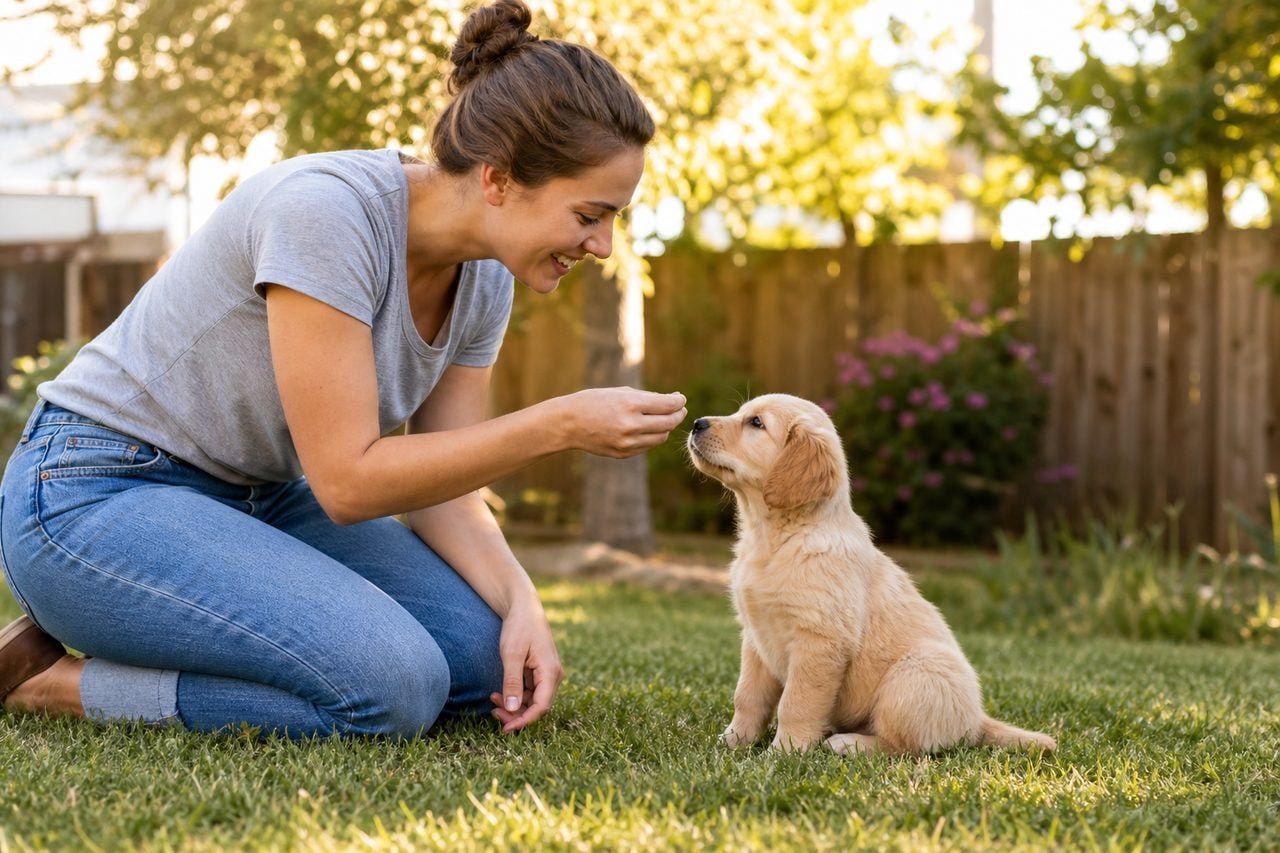
Bringing a puppy home in Pottsville means a few busy weeks where almost everything your dog learns will shape the adult it becomes. The early months are less about polished obedience and more about building a calm, confident dog that trusts you and understands how your household works. Owners across Schuylkill County, from the boroughs of Schuylkill Haven and Minersville to the rural townships up toward Frackville, all wrestle with the same first questions: where should the puppy sleep, how do you stop the chewing, and when is it safe to start meeting other dogs.
This guide walks through the foundations that matter most in the first four or five months, in the order you’ll actually need them. Nothing here requires special equipment or a big budget, just consistency and a bit of patience through some genuinely tiring weeks. Get these basics right and the rest of your dog’s life gets easier; skip them and you’ll spend years undoing habits that took days to form.
Why The First Months Set The Course
A puppy’s brain is wired to soak up experiences fastest between roughly three and sixteen weeks of age. Whatever it meets during that stretch, good and bad, gets filed away as normal. A puppy that hears the rumble of coal trucks on Route 61, walks past a barking dog outside the Yuengling brewery area, and rides calmly in the car to Garfield Square is quietly learning that the world is safe. A puppy kept isolated during those same weeks often grows into a dog that finds ordinary things frightening, and that fear is far harder to remove than it would have been to prevent.
That doesn’t mean you should flood a young puppy with everything at once. The goal is steady, positive exposure at a pace the puppy can handle. You want it curious, not overwhelmed. If a puppy freezes, tucks its tail, or tries to retreat, that’s a signal to back off and make the situation easier, not to push through. A single bad scare during these weeks can leave a lasting mark, so err on the side of gentle and gradual every time.
The same window applies to handling. Puppies that get their paws touched, ears looked at, and mouths gently opened during these weeks tend to tolerate vet visits and grooming far better as adults. A few seconds of this daily, paired with a treat, pays off for years. Pottsville winters mean plenty of paw wiping after salted sidewalks, so a dog that accepts foot handling early makes your life much easier come January.
It helps to think of these months as an investment account. Every calm, positive experience is a small deposit toward a stable adult temperament, and you can never make those deposits quite as cheaply again. The dog you’ll live with for the next decade is largely being built right now, in the ordinary moments of daily life, whether or not you’re being deliberate about it. Being deliberate is simply choosing to shape that outcome on purpose.
House Training Without The Frustration
House training runs on prevention, not correction. Young puppies simply cannot hold their bladders for long, and expecting otherwise sets everyone up to fail. A rough rule is that a puppy can wait about one hour per month of age, so a two-month-old needs a trip outside every couple of hours, plus right after waking, eating, drinking, and playing. Learning to anticipate those moments is most of the battle.
Pick one spot outside and take the puppy there on a leash, even in your own yard. The leash keeps the puppy focused rather than wandering off to explore. When it goes, reward immediately with a small treat and quiet praise, right there on the grass, not once you’re back inside. Timing is everything; the reward has to connect to the act while it’s happening, or the puppy learns that coming back indoors is what earns the treat. Supervise closely between trips, and if you can’t watch the puppy, that’s exactly what the crate or a small confined area is for.
Accidents will happen, and how you handle them matters. Never scold a puppy after the fact; it cannot link your reaction to something it did minutes ago, and punishment often teaches the dog to hide when it needs to go, which makes everything worse. If you catch the puppy mid-accident, a calm interruption and a quick trip outside is enough. Clean messes with an enzymatic cleaner so no scent lingers to draw the puppy back to the same spot.
Schuylkill County’s long stretch of cold, wet months can make outdoor trips miserable for both of you, and this is where many owners let the routine slip. Some set up a covered spot near the door or clear a path in the snow to keep things consistent through sleet and freezing rain. Consistency through winter is what separates a reliably trained dog from one that backslides every February. Expect the process to take weeks of steady effort, not days, and resist the urge to give the puppy too much unsupervised freedom too soon.
Crate Training As A Safe Den
A crate, used well, becomes a puppy’s favorite retreat rather than a punishment. Dogs are den animals by instinct, and a properly sized crate gives them a quiet place to settle when the household gets busy or overwhelming. It also doubles as your best house-training tool, since most puppies won’t soil where they sleep. The crate should be just big enough for the puppy to stand, turn around, and lie down; too much space lets it use one end as a bathroom, which defeats the purpose. Many crates come with a divider so you can expand the usable area as the puppy grows.
Introduce the crate slowly and make it rewarding. Toss treats inside, feed meals in there with the door open, and let the puppy come and go freely at first so it never feels trapped. Once it wanders in happily, start closing the door for a few seconds, then a minute, building up gradually while you stay nearby. A stuffed chew toy gives the puppy something to do and helps it associate the crate with good things rather than isolation.
Expect some protest at night in the first week. A crate placed in your bedroom, so the puppy can hear and smell you, usually settles faster than one banished to a far room. Whining that’s genuinely about needing to potty is different from protest whining; over a few nights you’ll learn to tell them apart, and most puppies need at least one overnight trip outside for the first few weeks. Try not to make a fuss during night potty breaks, keep them boring and businesslike so the puppy doesn’t learn that whining earns playtime.
Never use the crate as a place to send the puppy when you’re angry. It has to stay a positive space, otherwise the whole system falls apart and you lose one of your most useful tools. Used correctly, the crate keeps the puppy safe when you can’t supervise, prevents destructive chewing, gives the dog a place to decompress, and speeds house training all at once. Most dogs raised this way choose to nap in their crate voluntarily long after they no longer need to be confined.
Teaching The First Commands
Once house and crate basics are underway, you can start simple obedience. Keep sessions short, two or three minutes, several times a day. Puppies have tiny attention spans, and quitting while the puppy is still keen keeps training something it looks forward to. A hungry puppy before mealtime is usually the most willing student, so you can even use part of the daily food ration as training rewards.
Start with a name response and a marker. Say the puppy’s name, and the instant it looks at you, mark it with a cheerful word or a clicker and give a treat. This one skill, attention on cue, underpins everything else; a dog that will look at you on request is a dog you can work with anywhere. From there, luring works well: hold a treat over the puppy’s nose and move it slowly back over its head to get a natural sit, then reward the moment its rear hits the floor. Add the word “sit” only once the puppy is offering the motion reliably, so the word gets attached to the correct behavior.
Add “down,” “come,” and a gentle “leave it” over the following weeks, one at a time rather than all at once. “Come” deserves special care; always make coming to you rewarding and never call the puppy to you for something unpleasant like a bath or nail trim, or you’ll poison the cue. Practice recall in low-distraction spots first, like a fenced yard, before trying it anywhere with real distractions.
Focus on the mechanics as much as the commands. Reward within a second of the behavior, use a consistent word for each cue, and gradually reduce how often you treat as the behavior becomes solid so the dog doesn’t only work when it sees food. A local park or a quiet corner of a township road can come later, once the behavior is rock-solid at home. Building duration and distance too fast is the most common early mistake; go slower than feels necessary and the results hold up far better.
Managing Biting, Chewing, And Energy
Nearly every new owner in the area asks about the sharp little teeth. Puppy biting is normal; it’s how they explore and how they’d play with littermates. The fix isn’t punishment but redirection. When the puppy bites skin, calmly swap in a chew toy. If it keeps going, end the game briefly by standing up and turning away for a few seconds. Puppies quickly learn that teeth on skin makes the fun stop, which is exactly the lesson their littermates would have taught them. Yelping or hitting tends to backfire, often revving the puppy up further.
Chewing follows the same logic. A teething puppy will chew something, so your job is to make sure it’s an approved item, not the couch or your shoes. Keep tempting objects out of reach and have a rotation of textures the puppy is allowed to gnaw. Frozen chews and wet washcloths chilled in the freezer can soothe sore gums during the worst of teething, which typically peaks in the middle months. Puppy-proofing your home is far easier than teaching a young dog to ignore every interesting object within reach.
A surprising amount of “bad” puppy behavior is really just unmet energy. A bored, under-stimulated puppy finds its own entertainment, usually destructive. Short walks, sniffing time, food puzzles, and gentle play drain that energy in healthy ways. Be careful not to over-exercise a growing puppy on hard surfaces; long forced runs and repeated jumping can stress developing joints and growth plates. Let the puppy set the pace and stop before it’s exhausted.
Mental work, like practicing commands, learning to find hidden treats, or letting the puppy sniff along a slow walk, tires them out as much as physical exercise and is far safer for young bodies. A ten-minute sniffy amble often settles a puppy more than a hard run would. When a puppy is wound up and can’t seem to calm down, the answer is frequently rest rather than more activity, which brings us to the value of a predictable daily rhythm.
Building A Routine That Sticks
Puppies thrive on predictability. When meals, potty trips, naps, play, and training happen at roughly the same times each day, the puppy learns what to expect and settles faster. A chaotic schedule, by contrast, tends to produce an anxious, harder-to-train dog that never quite knows what’s coming next. Sketch out a rough daily rhythm in the first week and try to hold to it, even on weekends, at least until the basics are solid.
Sleep is a big and often overlooked piece. Young puppies need a lot of it, sometimes around eighteen hours a day, and an overtired puppy acts much like an overtired toddler: bitey, frantic, and unable to focus. If your puppy gets wild and mouthy in the evening, it may not need more activity; it may need enforced downtime in its crate. Many owners are amazed how much calmer their puppy becomes once they start protecting its nap schedule rather than entertaining it all day.
As the puppy matures, the routine flexes but the principle holds. Households in the county’s spread-out townships often build the day around commutes and school runs, and that’s fine, as long as someone can meet the puppy’s frequent needs during those first months. If you’re gone for long stretches, plan for a midday break, whether that’s you, a trusted neighbor, or a hired helper. A puppy left alone too long for its age won’t just have accidents; it can develop separation issues that are much harder to undo later.
Build alone-time tolerance deliberately from the start. Leave the puppy in its crate or a safe space for short, gradually lengthening periods even when you’re home, so being alone isn’t only ever associated with you disappearing for hours. Pair departures with a special chew and keep comings and goings low-key. A puppy that learns early that being alone is normal and temporary grows into a dog you can actually leave, which matters enormously over a fifteen-year relationship.
When To Bring In A Professional Trainer
Plenty of Pottsville owners handle the basics on their own, but a good trainer can save weeks of frustration and catch problems before they set in. If your puppy shows early fearfulness, unusual aggression, guarding of food or toys, or you’re simply feeling overwhelmed, that’s reason enough to reach out. Getting expert eyes on a young puppy is far easier and cheaper than fixing a stubborn habit in an adult dog, and early intervention often prevents a small quirk from becoming a serious problem.
Because Schuylkill County is a patchwork of small boroughs and rural townships, trainers here often cover a wide radius, traveling out from Pottsville toward Orwigsburg, Tamaqua, Pine Grove, and beyond. Some offer in-home sessions, which are ideal for house-training and settling issues that only show up at home, while others run group puppy classes that double as safe, supervised socialization with dogs of a similar age. Both formats have their place, and many owners use a combination.
Ask any trainer how they handle mistakes; you want methods built on rewards and clear communication, not fear or force. The dog training field is unregulated, so anyone can call themselves a trainer, which makes vetting important. A trainer who explains the why behind their methods, adjusts to your specific puppy, and welcomes your questions is usually a safe bet. Be cautious of anyone who promises guaranteed results or leans on intimidation and harsh corrections.
When you choose someone, a directory that lists local options lets you compare who serves your corner of the county and what each focuses on, whether that’s puppy foundations, socialization, or behavior work. Whether you go it alone or bring in help, the aim is the same: a confident, well-mannered dog that fits comfortably into your life. Start early, stay consistent, and keep the whole experience positive, and you’ll set your puppy up to become the kind of adult dog that’s a pleasure rather than a project.
Reviewed Puppy Training Trainers in Pottsville
These reviewed Pottsville-area trainers from our directory handle puppy training. Each links to a full profile with specialties, certified credentials, reviews, and contact info:
- Lead Your K9 — 4.7★ (33 reviews)
- Mountain Adventures K9 Academy — 4.6★ (22 reviews)
- Canine Learning Center
See all Pottsville puppy training trainers →
Frequently Asked Questions
When can I start training my Pottsville puppy?
You can start the day you bring your puppy home, usually around eight weeks. At that age training means gentle handling, name recognition, house and crate basics, and simple luring for a sit. Keep sessions to a couple of minutes and reward heavily. Formal skills build naturally from there over the following weeks, so there’s no reason to wait.
How long does house training usually take?
Most puppies grasp the routine within a few weeks, but reliable accident-free behavior often takes four to six months as the bladder matures. Consistency is the deciding factor. Take the puppy out frequently, reward every success outside, and never punish accidents. Cold Schuylkill County winters can slow progress, so keep the routine going even in bad weather.
Is crate training cruel?
No, when done correctly a crate mimics a den and gives the puppy a secure place to rest. Problems only arise when the crate is used for punishment or the puppy is confined far too long for its age. Introduce it slowly with treats and meals so the puppy chooses to go in. A well-crate-trained dog is often calmer and easier to house train.
Why does my puppy bite so much?
Mouthing is completely normal puppy behavior, part exploration and part teething. It is not aggression. Redirect the biting onto an approved chew toy, and briefly end play if teeth touch skin so the puppy learns that biting stops the fun. Most puppies grow out of the worst of it by around five months with consistent redirection.
How much exercise does a puppy need?
Less hard physical exercise than many owners assume. Growing joints and growth plates can be harmed by long forced runs or repeated jumping. Short walks, sniffing time, gentle play, and mental games like food puzzles are ideal. Mental stimulation tires a puppy as effectively as physical activity and is much safer for a developing body.
Should I take a class or train at home?
Both have value. Home training is best for house and crate work and issues that only appear in your own space, while a class offers structure and safe socialization with other puppies. Many local trainers travel across the county or offer in-home visits, so you can often combine the two. Choose whichever fits your schedule and your puppy’s temperament.
Related: read our complete puppy training guide or the full Pottsville dog training overview.
Ready to find the right puppy training pro in Pottsville?