
Puppy Training in Saginaw, MI
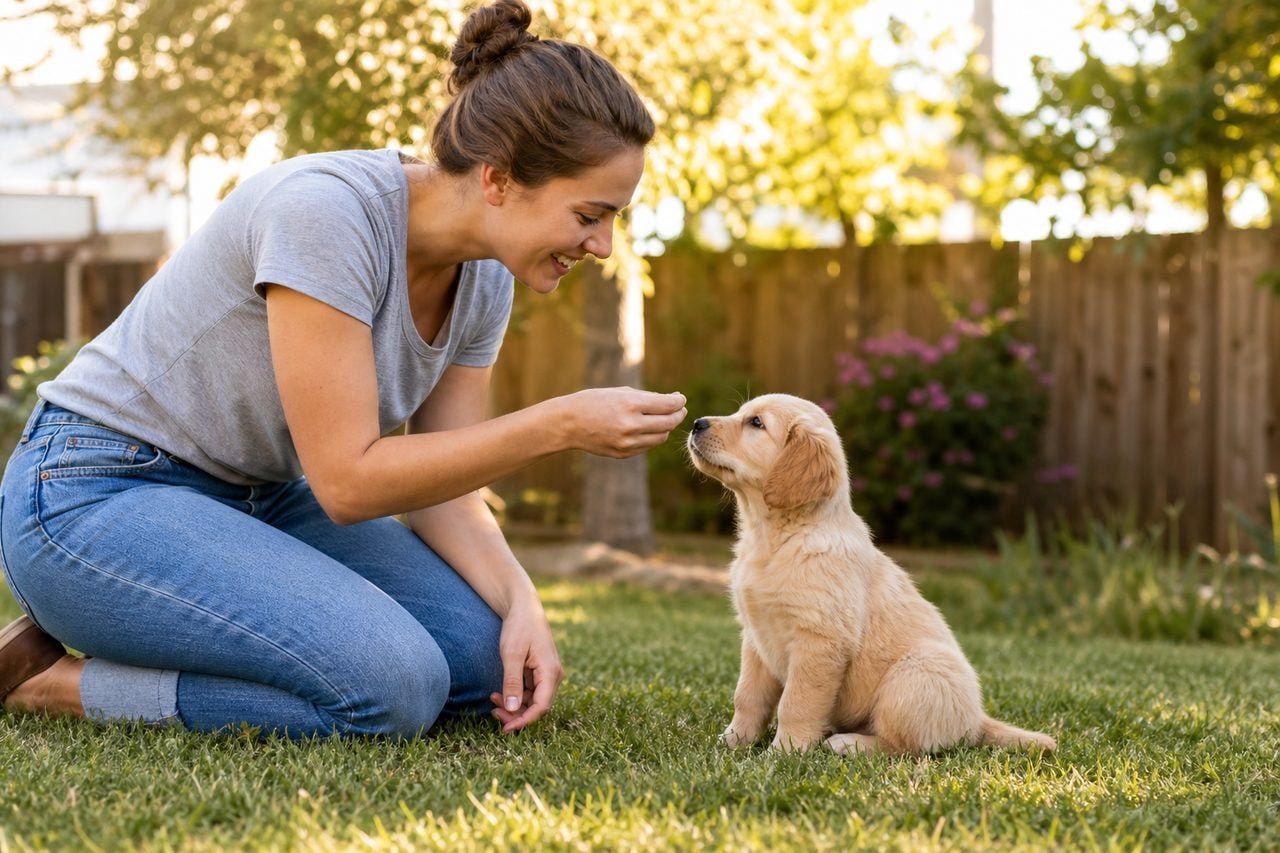
Bringing a puppy home in the Tri-Cities is one of the most exciting weeks a family can have, and it is also the week that quietly decides what kind of adult dog you will live with for the next decade. The habits a puppy forms in its first few months in Saginaw, Bay City, or Midland tend to stick, which is why early, patient training matters far more than most new owners expect. A puppy is not a small adult dog; it is a rapidly developing animal whose brain is wide open to learning and whose window for easy, low-stress socialization closes faster than people realize.
- The Critical Early Window: Why Timing Matters More Than Technique
- Housetraining and Crate Work Through a Michigan Winter
- Socialization in the Tri-Cities: Where and How
- The Core Skills Every Puppy Should Learn First
- Surviving Adolescence: The Part Nobody Warns You About
- Choosing a Puppy Class or Trainer in the Tri-Cities
- Building a Daily Routine That Does the Real Work
- Reviewed trainers
- FAQ
This guide walks Tri-Cities families through what good puppy training actually looks like, from the first night home through the awkward adolescent months. It covers housetraining, crate work, socialization along the Saginaw River and beyond, leash manners, and how to choose a local class that fits your dog and your schedule. The goal is not a perfectly obedient robot but a confident, resilient companion who can handle Frankenmuth crowds, a walk on the Saginaw Valley Rail Trail, and a quiet evening at home with equal ease.
Whether you adopted from a Saginaw County shelter, brought home a breeder puppy near Freeland, or found a rescue at a Bay City adoption event, the fundamentals are the same. Start early, keep sessions short, and prioritize good experiences over strict drills.
The Critical Early Window: Why Timing Matters More Than Technique
The single most important thing to understand about puppy training is that young puppies have a limited developmental window, roughly up through the fourth month, when new experiences are absorbed easily and with little fear. Experiences during this period shape how a dog reacts to the world for the rest of its life. A puppy that meets calm strangers, hears traffic on I-75, walks on different surfaces, and rides in the car during these weeks tends to grow into a stable adult. A puppy kept isolated “until all its shots are done” often becomes a fearful or reactive adult, which is far harder and more expensive to fix later.
This creates a real tension for Tri-Cities families, because puppies are not fully vaccinated during this exact window. The practical answer used by good local trainers is controlled socialization: choose clean, low-traffic environments, carry the puppy in higher-risk areas, and favor interactions with healthy, vaccinated adult dogs you know. You do not need a dog park to socialize a puppy, and in fact a busy park is often the wrong place to start.
- Prioritize quality over quantity — a handful of calm, positive experiences beats a chaotic day that overwhelms the puppy.
- Expose the puppy to sounds, surfaces, and sights, not just other dogs: umbrellas, wheelchairs, bicycles on the Rail Trail, the vacuum, thunderstorms rolling off Saginaw Bay.
- Let the puppy approach at its own pace; never force it toward something it finds scary.
Because this window is short, many Saginaw and Midland families enroll in a puppy class within a week or two of bringing the dog home rather than waiting. The early start is the point.
Housetraining and Crate Work Through a Michigan Winter
Housetraining is the first battle most new owners fight, and the Tri-Cities climate adds a wrinkle: nobody, puppy or human, wants to stand in the yard in a January wind blowing off Saginaw Bay. The temptation to cut potty trips short in the cold is exactly what stretches housetraining out for weeks longer than it needs to. The system that works is boringly consistent.
- Take the puppy out on a schedule: after waking, after eating, after play, and roughly every hour for very young puppies.
- Go to the same spot and wait; reward the instant the puppy finishes, outside, not back in the kitchen.
- Supervise or confine at all other times. An unwatched puppy loose in the house is a puddle waiting to happen.
- Clean accidents with an enzymatic cleaner so no scent marker remains to invite a repeat.
The crate is your ally here, not a punishment. Dogs are reluctant to soil where they sleep, so a properly sized crate teaches bladder control while keeping the puppy safe when you cannot watch it. Introduce it gradually with food and chews so the crate becomes a good place, feed meals inside it, and never use it as a time-out for bad behavior. During a Midland cold snap, a crate-trained puppy that can hold it for a few hours is a genuine quality-of-life upgrade for the whole household.
Expect setbacks. Regression after a good week is normal, especially during adolescence, and does not mean the training failed. Tighten the schedule back up and keep going.
Socialization in the Tri-Cities: Where and How
Good socialization is deliberate, not random. The Tri-Cities offer plenty of graded environments where a puppy can build confidence, and the trick is to match the challenge to the puppy’s current comfort level. Start quiet and controlled, then work up to busier settings as the puppy shows it can handle them.
- Quiet residential streets in your Saginaw or Bay City neighborhood are ideal first outings: new smells, a few cars, low pressure.
- The Saginaw Valley Rail Trail offers a wide, flat path where you can practice passing bikes, joggers, and other dogs at a distance you control.
- The Chippewa Nature Center near Midland gives a puppy varied surfaces, wildlife smells, and boardwalks that build sure-footedness.
- Bay City State Park and the Saginaw Bay shoreline introduce open space, water, wind, and the sound of waves.
- Frankenmuth, once your puppy is confident, is a controlled test of crowds, strollers, and outdoor dining smells; go on a weekday first, not a festival weekend.
In every setting, keep sessions short and end on a good note. A ten-minute positive outing that leaves the puppy curious is worth more than an hour that leaves it frazzled. Watch your dog’s body language: loose posture, a soft wagging tail, and willingness to take treats mean it is comfortable, while a tucked tail, pinned ears, or refusing food mean you have pushed too far and should create distance.
Skip the crowded dog park in the early months. One bad encounter with an overbearing adult dog can create a lasting fear, and you have very little control over who shows up. Structured puppy playgroups run by a local trainer are a far safer way to teach dog-to-dog manners.
The Core Skills Every Puppy Should Learn First
Formal obedience can wait; the skills that make daily life livable should come first. Focus on a short list of practical behaviors, taught with food, patience, and lots of repetition. Puppies have short attention spans, so keep sessions to just a few minutes and sprinkle them throughout the day rather than drilling for half an hour.
- Name recognition and attention: the puppy should look at you when you say its name. This underpins everything else.
- Recall (coming when called): start indoors, make coming to you the best thing that ever happens, and never call the puppy to do something it dislikes.
- Sit and settle: useful for greetings, mealtimes, and simply having an off switch at home.
- Loose-leash walking: reward the puppy for walking near you before pulling becomes a habit; a puppy that never learned to pull is far easier than an adult that must un-learn it.
- Handling and gentle restraint: touch ears, paws, and mouth daily so vet visits and nail trims are not a wrestling match.
Use rewards the puppy genuinely values and phase them gradually, but do not rush to eliminate treats. Positive, reward-based methods are the mainstream standard among reputable trainers for good reason: they build a dog that wants to work with you rather than one that merely fears mistakes. Avoid harsh corrections, prong collars, and “dominance” approaches on a young puppy; they carry real risk of creating fear and can backfire badly during adolescence.
Bite inhibition deserves special mention. Puppies explore with their mouths, and nipping is normal. Teach the puppy that teeth on skin end the fun by calmly stopping play, and redirect to an appropriate chew toy. This is far easier to shape at twelve weeks than at twelve months.
Surviving Adolescence: The Part Nobody Warns You About
Somewhere between five and eighteen months, the sweet, biddable puppy seems to forget everything it learned. This is adolescence, and it catches nearly every Tri-Cities family off guard. The dog tests boundaries, ignores cues it clearly knows, and may develop new fears or reactivity seemingly overnight. This is a normal developmental stage, not a training failure, and it is the single most common reason young dogs are surrendered to shelters. Understanding it helps you ride it out.
- Keep training up, not down. Adolescence is the worst time to stop practicing. Short, frequent sessions maintain the behaviors you built.
- Manage the environment. Use the crate, gates, and leashes to prevent the dog from practicing bad habits while its self-control is unreliable.
- Re-socialize thoughtfully. A “second fear period” is common; if your adolescent suddenly finds something scary, add distance and rebuild the association rather than flooding it.
- Increase exercise and enrichment. A bored adolescent invents its own entertainment, usually destructive. Sniffy walks on the Rail Trail, flirt poles, and food puzzles help.
Consistency from every family member matters most here. If one person allows counter-surfing and another does not, the dog simply learns to try. Get everyone in the Saginaw or Midland household on the same page about rules and rewards, and the adolescent phase becomes a season you pass through rather than a crisis.
Choosing a Puppy Class or Trainer in the Tri-Cities
The Tri-Cities have a reasonable supply of puppy-training options, from group classes to private in-home sessions, so you can afford to be selective. The right choice depends on your puppy’s temperament, your schedule, and how much individual attention you want. Group puppy classes are excellent for socialization and cost less; private sessions suit shy puppies, busy owners, or specific problems like severe nipping or house-soiling that need a tailored plan.
When you evaluate a local trainer or class, look for the following:
- Reward-based, modern methods. Ask directly what happens when a puppy gets something right and when it gets it wrong. You want to hear about food, praise, and management, not corrections and dominance.
- Small class sizes and an environment that is clean and not overwhelming for young puppies.
- A clear curriculum that covers socialization, handling, and the core life skills, not just tricks.
- Willingness to answer questions and coach the humans, since most of the real training happens at home between sessions.
- Convenient location and timing, whether that is near your Bay City home, central in Freeland for a Tri-City meet-in-the-middle, or in-home for a puppy too young to travel.
Many families do both: a group class for socialization plus a private session or two to troubleshoot. Whatever you choose, start sooner rather than later. The early weeks are the highest-leverage training time you will ever have, and no amount of skilled work at a year old fully replaces the foundation you can lay now. Browse the local listings, read what each provider actually offers, and pick the one whose approach and location fit your family.
Building a Daily Routine That Does the Real Work
The class or trainer you choose sets the direction, but the training that actually changes your puppy happens in the small moments of everyday life at home in Saginaw, Bay City, or Midland. Puppies learn constantly, whether or not you intend to teach them, so the households that succeed are the ones that fold training into the normal rhythm of the day rather than treating it as a separate chore. A structured routine also gives a young puppy the predictability it craves, which reduces anxiety and speeds up learning across the board.
A few habits make an outsized difference:
- Feed on a schedule. Regular meals make housetraining predictable, since what goes in on a schedule comes out on a schedule. Free-feeding sabotages potty training.
- Use meals as training currency. Hand-feeding part of a meal during short lessons builds engagement and stretches the food you already provide into learning fuel.
- Build in rest. Young puppies need a great deal of sleep, often far more than owners expect, and an overtired puppy behaves like an overtired toddler: nippy, frantic, and unable to learn. Enforce quiet downtime in the crate.
- Rotate enrichment. Chew toys, snuffle mats, frozen food-stuffed toys, and simple sniff-focused walks tire a puppy’s mind and prevent the boredom that fuels destructive habits.
Physical exercise matters too, but with a caution: growing puppies should not be pushed into long, repetitive, high-impact activity, since their joints are still developing. Short, varied outings, a gentle stroll on the Saginaw Valley Rail Trail, sniffing time near the Chippewa Nature Center, low-key play in the yard, serve a puppy far better than forced distance running. Mental enrichment and free, self-paced exploration are safer and more satisfying for a young dog than structured endurance work.
Consistency across the household is the quiet multiplier behind all of this. Puppies cannot read intentions; they read patterns. If everyone in the home rewards the same good behaviors, uses the same words, and holds the same boundaries, the puppy learns quickly and cleanly. If the rules shift from person to person, the puppy simply learns that anything might work if it tries hard enough. Get the family aligned early, keep the routine steady, and the formal training you invest in will take hold far faster and last far longer.
Reviewed Puppy Training Trainers in Saginaw
These reviewed Saginaw-area trainers from our directory handle puppy training. Each links to a full profile with specialties, certified credentials, reviews, and contact info:
- Paws & Beyond — 5.0★ (81 reviews)
- Kaybee’s K9 Training & Spa — 4.7★ (75 reviews)
- SHILOH K9 OBEDIENCE TRAINING & BOARDING CENTER, LLC — 3.8★ (166 reviews)
- Pawsonal Training — 5.0★ (102 reviews)
- Unleashed Dog Training — 5.0★ (58 reviews)
- Sit Stay Play Michigan — 5.0★ (46 reviews)
- K9 Optimal Training Solutions — 5.0★ (42 reviews)
- Tri Cities Dog Training Club of Saginaw Bay (TCDTC) — 5.0★ (16 reviews)
- Apache Acres — 5.0★ (10 reviews)
- Classic K9 — 5.0★ (1 review)
See all Saginaw puppy training trainers →
Frequently Asked Questions
When should I start training my puppy?
Immediately. Puppies begin learning the moment they come home, and the critical socialization window runs roughly through four months of age. Housetraining, gentle handling, name recognition, and calm exposure to the world should all start in the first week. Many Tri-Cities families enroll in a puppy class within a week or two of bringing the dog home rather than waiting, because the early window is short and cannot be recovered later.
Is it safe to socialize my puppy before it's fully vaccinated?
It is about managing risk, not avoiding the world. Fully isolating a puppy until every vaccine is done often trades a small disease risk for a large behavior risk, since fearfulness from under-socialization is common and hard to fix. Favor clean, low-traffic settings, carry the puppy in higher-risk areas, and let it meet healthy, vaccinated dogs you know. Talk to your veterinarian about your specific situation, and skip busy dog parks in the early months.
How long does housetraining usually take?
Most puppies are reliably housetrained within a few weeks to a couple of months, but it depends heavily on consistency and the puppy’s age and size. A strict schedule, constant supervision or crate confinement, immediate rewards for going outside, and enzymatic cleanup of accidents all speed it up. Michigan winters tempt owners to rush outdoor trips, which is the main thing that drags the process out. Expect occasional regression, especially during adolescence.
Should I use a crate, and is it cruel?
A properly introduced crate is not cruel; it is a safe den that helps with housetraining and keeps the puppy out of trouble when you cannot supervise. The key is to build a positive association gradually with food and chews, keep sessions reasonable, and never use the crate as punishment. Crate-trained dogs also travel and handle vet stays far more calmly, which is a lasting benefit well beyond puppyhood.
What's the difference between a group class and private puppy training?
Group classes are excellent for socialization, expose the puppy to other dogs and people in a controlled setting, and usually cost less. Private in-home sessions offer individualized attention and suit shy puppies, specific problems like severe nipping or house-soiling, or owners with tight schedules. Many Tri-Cities families do both: a group class for social skills plus a private session or two to troubleshoot particular issues. Match the choice to your puppy’s temperament and your goals.
My puppy suddenly stopped listening around six months. What happened?
That is almost certainly adolescence, a normal developmental stage where young dogs test boundaries and seem to forget their training. It is not a failure and it does not mean your dog is broken. The answer is to keep practicing in short sessions, manage the environment with crates and leashes so bad habits are not rehearsed, provide plenty of exercise and enrichment, and stay consistent across the whole household. It passes, and dogs that get steady guidance through it come out fine.
Related: read our complete puppy training guide or the full Saginaw dog training overview.
Ready to find the right puppy training pro in Saginaw?