
Puppy Training in Scranton, PA
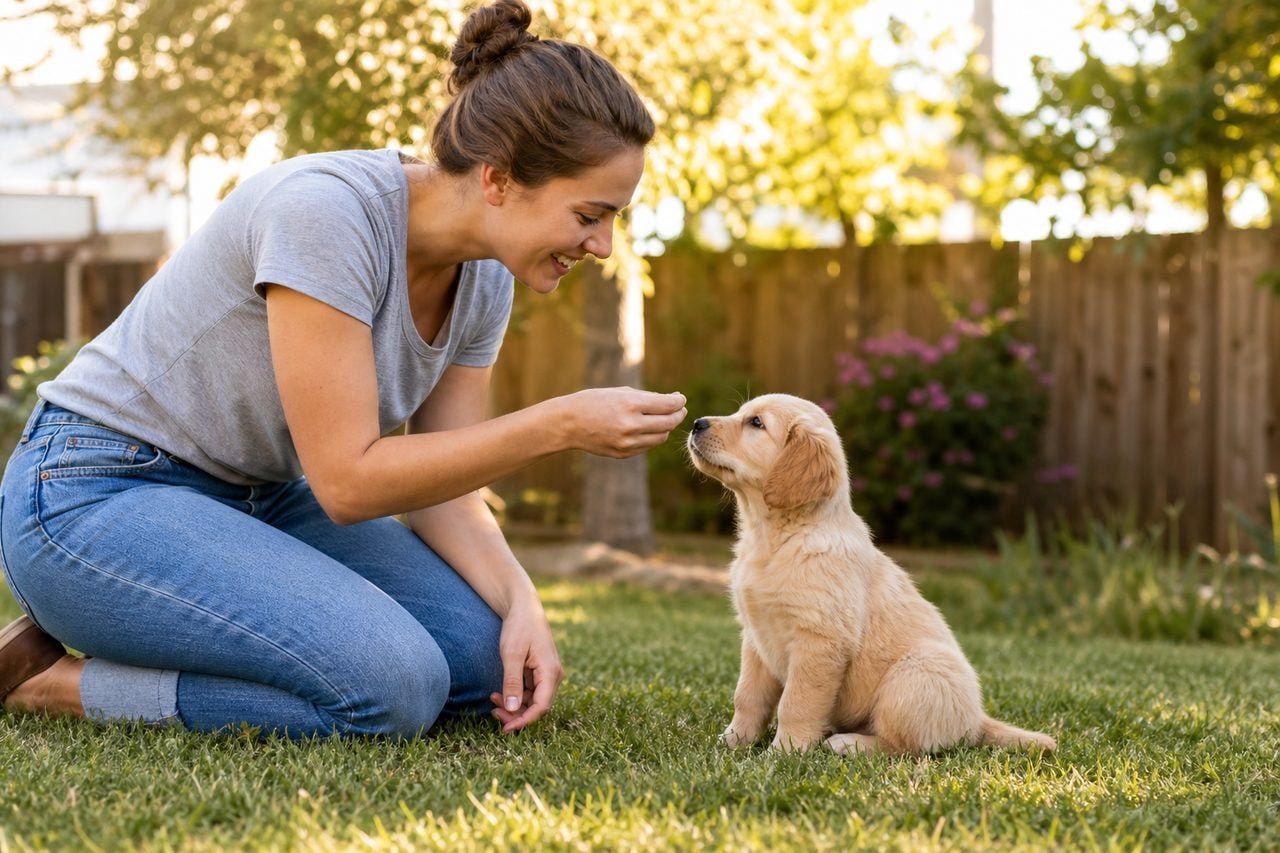
Bringing a puppy home in the Electric City means starting training against a backdrop few other regions share — the long, snowy NEPA winter that can bury Scranton and the Lackawanna Valley for months, followed by humid summers along the Susquehanna. A puppy that arrives in December will learn to potty in knee-deep snow before it ever feels grass, while a June puppy has to be conditioned to hot pavement and thunderstorms rolling over Montage Mountain. Those seasonal swings shape how you house-train, socialize, and build confidence in the crucial first months, and they are exactly why a generic training plan pulled off the internet often stalls out here in Lackawanna and Luzerne counties.
- Why Puppy Training Starts The Day You Get Home
- House-Training Through A NEPA Winter
- Crate Training And Building Alone-Time Skills
- Bite Inhibition, Chewing And Puppy Manners
- Leash Skills And Getting Out In The Valley
- Choosing A Puppy Trainer In Lackawanna And Luzerne Counties
- Puppy Training By NEPA Area
- Reviewed trainers
- FAQ
Early puppyhood is also the window where good habits are cheapest to build. From roughly eight to sixteen weeks, your puppy is soaking up first impressions of every surface, sound, and stranger — the rumble of a Steamtown excursion train, the crowds at Scranton’s downtown festivals, the icy sidewalks of Dunmore. Miss that window and you spend the next two years undoing fear instead of preventing it. This guide walks NEPA puppy owners through the fundamentals: house-training on a schedule that survives a Nay Aug snowstorm, crate work, bite-inhibition, leash basics, and how to choose a local trainer who understands the region’s climate and its neighborhoods.
Whether you are in the Abingtons, up the mid-valley toward Carbondale, across the river in Wilkes-Barre in the Wyoming Valley, or out on the Back Mountain near Dallas, the principles are the same — but the logistics differ. Distances between the coal-region towns, the elevation change up toward Mountain Top and Hazleton, and how quickly a given municipality plows after a storm all affect which puppy classes you can realistically get to each week. We have organized the practical advice by area so you can find puppy classes, safe walking routes, and weather-proof training spots close to home — because the best training plan is the one you can actually stick to when the snow is flying.
Why Puppy Training Starts The Day You Get Home
The single biggest mistake new puppy owners in Scranton make is waiting for a “training age.” Learning begins the moment your puppy crosses the threshold, and the first two weeks set the tone for everything that follows. Every interaction is teaching something — the question is only whether you are teaching what you intended.
- Set a routine immediately: feed, potty, play, and nap on a predictable clock. Puppies thrive on rhythm, and a consistent schedule accelerates house-training dramatically.
- Manage the environment: use baby gates and a crate so your puppy cannot rehearse bad habits like counter-surfing or chewing baseboards.
- Reward what you like: catch calm, quiet, four-on-the-floor behavior and pay for it with treats or praise before your puppy learns that jumping and barking get attention.
In NEPA’s winter months, plan for a slower house-training arc — a puppy reluctant to squat in fresh snow needs a shoveled, sheltered potty spot near the door. Establishing that path early saves weeks of accidents indoors.
House-Training Through A NEPA Winter
House-training is where Scranton weather earns its reputation. When the temperature drops and Clarks Summit driveways ice over, a small puppy may simply refuse to go outside — and a wet, cold experience can create a lasting aversion to potty trips. The fix is preparation, not pressure.
- Clear a dedicated spot: shovel a small, wind-sheltered area close to the door so your puppy is not wading through drifts.
- Go out with them: supervised trips let you reward the instant they finish, which teaches the where and the when far faster than sending them out alone.
- Keep a tight schedule: after every nap, meal, and play session, plus first thing in the morning and last thing at night.
- Use a marker word: a consistent cue like “go potty” helps a shivering puppy get down to business quickly in the cold.
Accidents will happen — clean them with an enzymatic cleaner so lingering odor does not invite repeats. Never punish after the fact; a puppy cannot connect a scolding to something it did minutes ago. Patience through the first NEPA winter pays off with a reliably trained adult dog.
Crate Training And Building Alone-Time Skills
A crate is not a cage — done right, it becomes your puppy’s den and your single most valuable house-training tool. For Scranton households where everyone commutes into downtown or over to the medical centers, teaching a puppy to settle alone prevents separation anxiety from taking root.
- Make it positive: feed meals in the crate and toss treats inside so your puppy chooses to enter on its own.
- Build duration gradually: start with seconds, then minutes, closing the door only once your puppy is comfortable.
- Size it correctly: just big enough to stand, turn, and lie down — too large and a puppy will potty in one corner and sleep in another.
- Never use it for punishment: the crate must always predict good things, or it loses its calming power.
Pair crate work with short, planned absences so your puppy learns that you always come back. A dog that naps calmly while you shovel the walk or run to Dickson City for groceries is a dog set up for a low-stress life. This skill is far easier to build at ten weeks than to repair at ten months.
Bite Inhibition, Chewing And Puppy Manners
Needle-sharp puppy teeth surprise every new owner. Nipping and chewing are normal — your puppy is exploring the world and, during teething, soothing sore gums. The goal is not to stop the behavior entirely but to redirect it and teach your puppy to control the pressure of its jaws.
- Redirect to toys: keep chew toys within reach and swap them in the instant teeth touch skin.
- Teach a soft mouth: if a nip hurts, let out a short yelp and pause play briefly so your puppy learns that hard bites end the fun.
- Rotate chews: a bored puppy chews furniture, so keep a variety and refresh the selection often.
- Provide an outlet: frozen toys feel great on teething gums during humid NEPA summers.
Manners like sitting to greet and keeping four paws down are best taught before your puppy grows into a strong adult. Practice greetings with calm visitors before exposing your pup to the excitement of a crowd on Scranton’s Public Square area events. Consistency from every family member is what makes these lessons stick.
Leash Skills And Getting Out In The Valley
Once vaccinations are complete, NEPA offers wonderful places to practice leash walking — the Lackawanna River Heritage Trail, the paths at Nay Aug Park, Kirby Park in Wilkes-Barre, and the quieter loops at Lackawanna State Park. But a puppy needs to learn loose-leash manners before those outings become enjoyable rather than a tug-of-war.
- Start indoors: let your puppy wear a well-fitted harness and drag the leash under supervision before you head out.
- Reward position: pay generously when your puppy walks near your side rather than pulling ahead.
- Stop when they pull: stand still until the leash slackens, teaching that pulling never gets them where they want to go.
- Mind the seasons: salt and ice-melt on Scranton sidewalks can irritate paws in winter, and hot asphalt burns pads in July — check surfaces before long walks.
Short, upbeat sessions beat long marches. A five-minute walk that ends on a good note builds more confidence than a mile of frustration. As your puppy matures, gradually add distractions — other dogs, traffic, trail crowds — so real-world walks stay calm.
Choosing A Puppy Trainer In Lackawanna And Luzerne Counties
Not every trainer is a fit for a young puppy. The best puppy programs emphasize positive reinforcement, keep class sizes small, and structure sessions around confidence-building rather than corrections. When you evaluate options across the Scranton–Wilkes-Barre metro, look past marketing and ask direct questions.
- Methods: ask whether they use reward-based training and how they handle mistakes — you want redirection, not intimidation.
- Vaccination policy: reputable puppy classes require proof of age-appropriate shots to keep every dog safe.
- Class size and structure: smaller groups mean more attention and safer socialization.
- Indoor space: in NEPA, a heated indoor facility means training continues through winter storms without interruption.
Ask about experience with your breed or mix, and whether they offer follow-up support between sessions. A good trainer coaches you as much as your dog, since the real work happens at home in Dunmore, Kingston, or wherever you live. Watch a class if you can — the dogs and owners should look relaxed and engaged, not stressed.
Puppy Training By NEPA Area
The Scranton–Wilkes-Barre metro spreads across two counties and dozens of communities, and where you live shapes which classes and practice spots are practical for you.
- Scranton & the Lackawanna Valley: central location with easy access to Nay Aug Park and the Heritage Trail for post-vaccination outings.
- The Mid-Valley & Carbondale: up-valley towns like Olyphant and Carbondale where a nearby indoor class saves a snowy commute.
- The Abingtons & Northern Suburbs: Clarks Summit and the Abingtons, close to Lackawanna State Park’s quieter trails.
- Wilkes-Barre & the Wyoming Valley: Kirby Park and the riverfront offer great walking once your pup is ready.
- Pittston, the Back Mountain & Mountain Top: spread-out communities where a short drive to Dallas or Mountain Top may reach the nearest class.
- Hazleton & Rural NEPA: higher elevation means longer winters, so indoor training options matter most here.
Wherever you are, prioritize a trainer you can reach reliably in bad weather — consistency beats a slightly better program you can only attend half the year.
Reviewed Puppy Training Trainers in Scranton
These reviewed Scranton-area trainers from our directory handle puppy training. Each links to a full profile with specialties, certified credentials, reviews, and contact info:
- Loose Leash Canine — 5.0★ (52 reviews)
- Mary’s Hand That Feeds School For Dogs — 5.0★ (51 reviews)
- AMPODOG Professional Dog Training — 5.0★ (33 reviews)
- Leroy and Company Dog Training — 5.0★ (21 reviews)
- Coal Dog’s – Dog Training — 5.0★ (18 reviews)
- Your Dog’s Place — 5.0★ (10 reviews)
- Turning Tails Dog Training — 5.0★ (5 reviews)
- Dunmore Barks
- Highland Canine Training – Scranton — 4.9★ (13 reviews)
- Simplistic Dog Training LLC — 4.8★ (77 reviews)
See all Scranton puppy training trainers →
Frequently Asked Questions
What age should I start training my puppy in Scranton?
Start the day you bring your puppy home. Basic routines, house-training, and gentle handling begin at eight to nine weeks. Formal puppy classes typically start once your puppy has its first rounds of vaccinations, usually around ten to twelve weeks. The early weeks are the most valuable learning window, so do not wait.
How do I house-train a puppy during a NEPA winter?
Clear a small, sheltered potty spot near your door so your puppy is not wading through snow, keep a tight schedule of trips after every nap and meal, go outside with them to reward success instantly, and use a consistent cue word. Expect house-training to take a bit longer in deep winter, and clean any accidents with an enzymatic cleaner.
How much does puppy training cost around Scranton and Wilkes-Barre?
Prices vary by format. Group puppy classes are generally the most affordable option, while private in-home sessions and multi-week board-and-train programs cost more. Ask each trainer for a full breakdown before committing, and confirm what follow-up support is included. Focus on value and method fit rather than the lowest price.
Is my puppy too young for group classes?
Reputable puppy classes are designed for young dogs and require proof of age-appropriate vaccinations to keep everyone safe. Most puppies can join a beginner class around ten to twelve weeks. If your puppy is not yet fully vaccinated, a trainer may recommend private sessions or carefully controlled socialization in the meantime.
How do I stop my puppy from biting?
Puppy nipping is normal, especially during teething. Redirect to a chew toy the instant teeth touch skin, briefly pause play if a nip hurts to teach bite inhibition, and keep a rotation of chews on hand. Frozen toys help soothe sore gums. Never punish physically, as that increases stress and can worsen mouthing.
How long does it take to train a puppy?
Basic house-training often takes a few weeks to a couple of months, while manners and reliable obedience develop over the first year. Puppyhood is about laying foundations, not finishing. Consistent daily practice at home matters far more than the number of classes you attend, and every dog progresses at its own pace.
Related: read our complete puppy training guide or the full Scranton dog training overview.
Ready to find the right puppy training pro in Scranton?