
Puppy Training in Valparaiso, IN
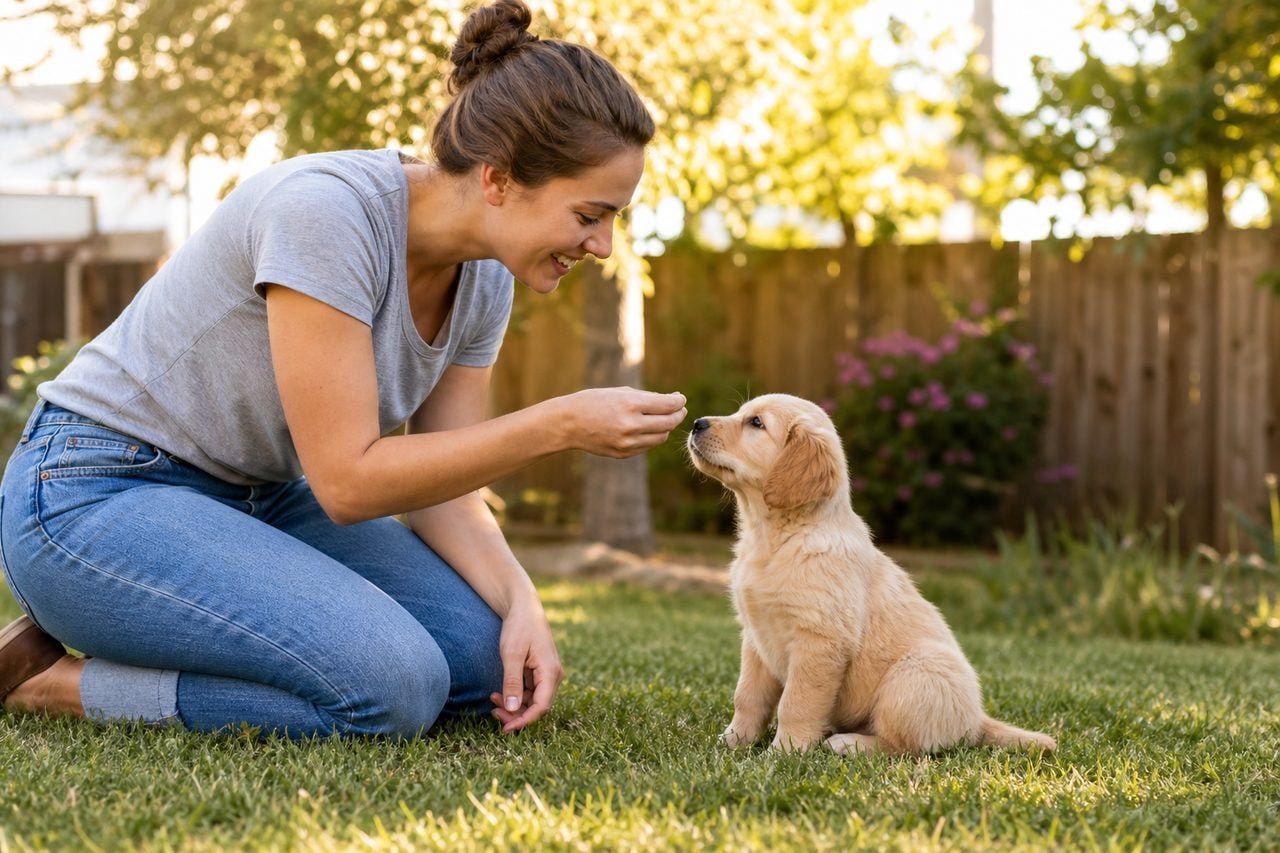
Bringing a puppy home in the Valparaiso area means starting a training relationship that will shape the next decade or more of life together. The first several months are the window when a young dog learns what the human world expects — how to greet people, where to go to the bathroom, how to walk on a leash past a jogger on the Prairie Duneland Trail, and how to settle quietly while the household gets on with its day. Get this stretch right and most of what follows is refinement rather than repair.
- Start the Day You Bring the Puppy Home
- House-Training That Actually Sticks
- The Crate as a Tool, Not a Cage
- First Manners: Name, Sit, Come, and Settle
- Leash Foundations and Making the Most of Local Trails
- Bite Inhibition, Chewing, and Puppy Impulse Control
- When to Bring in a Professional
- Reviewed trainers
- FAQ
Northwest Indiana — the collection of Porter, Lake, and LaPorte counties that locals simply call the Region — is a genuinely good place to raise a well-mannered dog. There is space to work: county parks, rail-trails, quiet residential streets, and the vast shoreline of the Indiana Dunes. There is also plenty of the mild controlled chaos a puppy needs to grow up steady, from farmers-market crowds in downtown Valpo to the commuter foot traffic of a household with someone catching the South Shore Line toward Chicago. The environment is an asset; the trick is using it on purpose.
This guide covers what actually matters in the first months of puppy training in the Valparaiso and NW Indiana area — house-training, crate work, early manners, leash foundations, and how to weather a lake-effect winter without losing progress. None of it requires perfection. It requires a plan, some patience, and a willingness to be more consistent than your puppy is stubborn.
Start the Day You Bring the Puppy Home
Training does not begin at eight weeks the way a class on a calendar begins. It begins the moment a puppy crosses the threshold, because every interaction is teaching something whether or not anyone intends it. A puppy that is carried everywhere learns to be carried. A puppy allowed to chew the couch on day one learns the couch is fair game. The good news is that the reverse is equally true: the habits you build deliberately in the first week become the defaults you never have to fight later.
Set the house up before the puppy arrives. Decide where the crate lives, which rooms are off-limits, and what the bathroom routine will be. Pick up anything at floor level you would mind losing — shoes, phone chargers, the kids’ toys. A puppy does not distinguish between a chew toy and a TV remote, so the environment has to do that work until training catches up.
Keep the first few days calm. It is tempting to invite the whole neighborhood over to meet the new arrival, but a puppy that just left its litter is processing an enormous amount of change. Let it explore a small area, learn where water and the crate are, and start to trust the people it now lives with. The parties can come later, once the foundation is in place. In these early days you are not drilling commands so much as establishing that this new place is safe, predictable, and worth paying attention to.
Consistency across the household is what makes any of this work. Puppies do not generalize well, so if one person says off and another allows the puppy onto the couch, the rule effectively does not exist. Before the puppy comes home, agree as a family on the core rules — where it sleeps, what furniture is allowed, what the greeting routine is, which words mean what — and write them down if that helps everyone stick to them. This matters especially in a busy Region household where people come and go on different schedules; a puppy raised by a committee of inconsistent humans learns far more slowly than one whose people all reinforce the same expectations. The single most powerful training tool in the first week is not a treat or a clicker but a shared plan that everyone follows.
House-Training That Actually Sticks
House-training is mostly a management problem, not an obedience problem. A young puppy has a small bladder and little ability to hold it, so the goal is to make success easy and accidents rare. The formula is simple and unglamorous: take the puppy out often, reward heavily the instant it goes in the right place, and supervise or confine the rest of the time so mistakes indoors almost never get the chance to happen.
Build a schedule around the predictable triggers — first thing in the morning, after every nap, after meals, after play, and before bed. For an eight-to-twelve-week-old puppy, that can mean a trip outside every hour or two while awake. Pick one spot in the yard and return to it; the scent left behind cues the next attempt. When the puppy finishes, reward on the spot with a small treat and quiet praise, not back inside a minute later when the connection is already lost.
The Region’s weather adds a wrinkle. During a lake-effect winter, a puppy that will not step off a frozen porch is a common Valparaiso complaint. Shovel a small clear patch in the yard so there is bare ground to use, keep outings short and businesslike when it is bitter, and consider booties or a warm-up routine for very small breeds. Do not let a cold snap push you toward giving up and letting the puppy default indoors — a few weeks of inconsistency can unravel months of progress. Crate use bridges the gap: a properly sized crate that the puppy will not soil buys you the overnight and errand-running hours between outdoor trips.
The Crate as a Tool, Not a Cage
A crate is one of the most useful pieces of equipment for raising a puppy, and it is routinely misunderstood. Used well, it is a den — a small, safe space where the puppy learns to relax, sleep, and be calm when the household is busy or asleep. Used badly, as a place to dump a puppy for eight hours out of frustration, it becomes something the dog dreads. The difference is entirely in how it is introduced.
Make the crate a good place from the start. Feed meals inside it. Toss treats in and let the puppy wander in and out with the door open. Give a stuffed chew that only appears at crate time. The goal is for the puppy to choose to go in, so that closing the door later is not a shock. Keep early sessions short and gradually extend them, pairing crate time with something to do so boredom does not turn into barking.
Crate skills pay off well beyond house-training. A dog that settles in a crate travels better, recovers from vet visits and surgeries more easily, and gives a busy Region household — the kind where someone leaves early for a Chicago commute and the dog needs to be safe and unsupervised for a stretch — a humane way to prevent destructive chewing before impulse control is fully developed. The crate is not a substitute for exercise and attention, but as one part of a balanced routine it removes an enormous amount of daily stress for everyone.
First Manners: Name, Sit, Come, and Settle
Puppies can start learning basic behaviors far earlier than many owners expect. The point at this age is not military precision; it is teaching the puppy that paying attention to a person is rewarding, and that certain words reliably predict certain outcomes. Short, upbeat sessions of a few minutes, several times a day, beat a single long drill that ends in a tired, distracted puppy.
Begin with the name and a marker. Say the puppy’s name; when it looks at you, mark the moment with a cheerful word or a clicker and give a treat. Repeat until the name reliably turns the head. From there, luring works well for the first behaviors:
- Sit — move a treat back over the puppy’s nose so its head goes up and its rear goes down, then reward.
- Come — practice indoors first, calling the puppy a short distance and rewarding generously every single time so the recall becomes the best word it knows.
- Settle — reward the puppy for lying calmly on a mat or bed, building the ability to relax on cue rather than only when exhausted.
Keep the emotional tone light and the reward rate high. A puppy that thinks training is a game will offer behaviors eagerly, and eager beats forced every time at this age. Practice in low-distraction settings first — the living room, then the backyard — before expecting the same responses at a busy park where the world is far more interesting than a piece of kibble.
A word on rewards is worth adding here, because owners often undersell how much they matter early on. In the first months, use rewards generously and do not worry about creating a dog that only works for treats — that concern belongs to a later stage. Right now the job is to build a strong, happy association between listening to a person and good things happening. Use small, soft, high-value treats the puppy can eat quickly, mark the exact instant the puppy does the right thing so it understands what earned the reward, and vary what you offer so that praise, play, and food all become currencies. As behaviors become reliable in easy settings, you gradually ask for a little more before rewarding and begin fading the food to intermittent, but that comes only after the foundation is solid. Rushing to withdraw rewards is one of the most common reasons early training stalls.
Leash Foundations and Making the Most of Local Trails
Loose-leash walking is one of the behaviors owners most wish they had started earlier, because a dog that learned to pull as a puppy is much harder to change at seventy pounds. Start indoors and in the yard, where distractions are low. Reward the puppy for being near your side, change direction when it forges ahead, and keep the leash a line of communication rather than a tug-of-war. The message you are teaching is that a loose leash keeps the walk moving and pulling makes it stop.
Once basic skills are solid and vaccinations are complete, the Region offers excellent places to practice at graduated difficulty. Quiet stretches of the Prairie Duneland Trail or the Erie Lackawanna Trail let a young dog walk in a straight line with occasional passing cyclists and joggers — useful, controlled distractions. Sunset Hill Farm County Park and Rogers-Lakewood Park in Valparaiso give open, lower-pressure ground for practicing recall on a long line. Coffee Creek Watershed Preserve in Chesterton and Deep River County Park in Hobart add new smells and terrain that build a confident, adaptable walker.
Two cautions worth naming. First, check leash rules before you go; local ordinances across the Valparaiso area vary by park and by property, and the Indiana Dunes National Park and State Park have their own pet regulations along the lakeshore, so confirm where dogs are allowed and where leashes are required rather than assuming. Second, do not overface a young puppy. A packed trailhead on a Dunes summer weekend can overwhelm a nervous eleven-week-old; pick quieter times and shorter outings until confidence is built.
Bite Inhibition, Chewing, and Puppy Impulse Control
Two behaviors alarm new owners more than almost anything else: needle-sharp puppy teeth on human skin, and a seemingly bottomless drive to chew. Both are normal, both are developmental, and both respond well to consistent handling — but neither should simply be ignored in the hope it passes.
Puppy mouthing is how a young dog explores and plays, and it is also how it learns bite inhibition, the ability to control the force of its jaws. When a puppy bites too hard during play, a calm interruption — a brief pause in the game, or redirecting onto an appropriate toy — teaches that hard mouths end the fun. Yelling or rough physical corrections tend to backfire, either winding the puppy up further or teaching it to be wary of hands. Consistency from everyone in the household matters here; if one person tolerates being gnawed on, the lesson never fully lands.
Chewing needs an outlet, not just a prohibition. Teething puppies chew because their mouths hurt and because chewing is satisfying, so the job is to supply legal targets — a rotation of durable chews and toys — and to manage the environment so illegal targets are simply out of reach. When the puppy reaches for a chair leg, redirect to a toy and reward the switch. Frozen chews can soothe sore teething gums during the worst weeks. Alongside chewing, build small doses of impulse control into daily life: waiting a beat before meals, sitting before the door opens, holding a settle while you make coffee. These little exercises compound into a dog that can think before it acts, which is the real goal of all early training.
When to Bring in a Professional
Plenty of puppy training can be done at home with good information and consistency. But a professional trainer or a structured puppy class earns its keep in two ways: it accelerates learning through expert feedback, and it provides the safe, supervised exposure to other dogs and people that is so important in the early months. For owners juggling a demanding job or a long commute, a class also builds accountability — a standing appointment that keeps training from slipping.
Look for a trainer who uses modern, reward-based methods and who can explain not just what to do but why. Ask about class size, whether puppies are grouped by age or temperament, and how they handle a puppy that is fearful or overexcited. A good fit matters more than a fancy facility. Many families in the Valparaiso and NW Indiana area do a blend: a group puppy class for socialization and foundation skills, plus a private session or two to address something specific like house-training setbacks or leash reactivity.
Certain signs warrant reaching out sooner rather than later. Persistent fear, a puppy that freezes or panics around normal sights and sounds, resource guarding of food or toys, or aggression that seems out of proportion are all worth a professional’s eyes early, while the behavior is still malleable. Early intervention is almost always easier and cheaper than waiting for a small problem to harden into an adult habit. Whether you train mostly at home or lean on a class, the principle is the same — start early, stay consistent, and use the Region’s parks, trails, and everyday bustle as the training ground they naturally are.
Reviewed Puppy Training Trainers in Valparaiso
These reviewed Valparaiso-area trainers from our directory handle puppy training. Each links to a full profile with specialties, certified credentials, reviews, and contact info:
- Takacs In Home Dog Training — 5.0★ (165 reviews)
- Four Star Dogs — 5.0★ (23 reviews)
- Region K9 – Dog Training — 5.0★ (23 reviews)
- Crimson K9 Dog Training — 5.0★ (22 reviews)
- Life of Riley Dog Training — 5.0★ (15 reviews)
- chicagolandprotectiondogs dog training — 5.0★ (13 reviews)
- Kriegerhund K9 Services — 5.0★ (5 reviews)
- Dunes Dog Training Club — 5.0★ (5 reviews)
- Landheim Training And Boarding Center — 4.8★ (353 reviews)
- Stoney Run Canine Camp and Academy — 4.8★ (152 reviews)
See all Valparaiso puppy training trainers →
Frequently Asked Questions
What age should I start training my puppy in Valparaiso?
Start the day you bring the puppy home. Even at eight weeks a puppy is learning constantly, so early house-training, crate introduction, and gentle name and recall games all begin immediately. Formal puppy classes in the area typically accept puppies once initial vaccinations are underway. Waiting until a dog is older simply means unlearning habits that could have been prevented, so the earliest weeks are the most valuable ones you have.
How long does house-training a puppy usually take?
Most puppies are reliably house-trained somewhere between four and six months of age, though it varies with the individual, the breed, and how consistent the household is. Very young or very small puppies need more frequent trips outside and take longer. Progress is rarely a straight line — expect occasional setbacks, especially during a harsh lake-effect winter when a puppy resists going out. Consistent scheduling, heavy rewards for going outside, and careful supervision indoors shorten the process considerably.
Is a crate cruel for a puppy?
Used properly, a crate is not cruel — it mimics a den and gives a puppy a safe place to rest. The key is introducing it positively with meals, treats, and chews so the puppy chooses to go in, and never using it as long-term confinement or punishment. A crate should be part of a balanced routine that includes plenty of exercise, attention, and time out with the family. Misuse, not the crate itself, is what causes problems.
Where can I safely walk and train my puppy around the Region?
Quiet stretches of the Prairie Duneland Trail and Erie Lackawanna Trail are good for leash practice, while Sunset Hill Farm County Park and Rogers-Lakewood Park in Valparaiso offer open space for recall work on a long line. Coffee Creek Watershed Preserve in Chesterton and Deep River County Park in Hobart add variety. Always confirm each location’s pet and leash rules first, since local ordinances across the Valparaiso area and the Indiana Dunes parks vary by property. Wait until vaccinations are complete before heavily trafficked public areas.
How do I stop my puppy from biting my hands?
Puppy mouthing is normal exploration and play, and it is also how a young dog learns to control its jaws. When the puppy bites too hard, calmly pause the game or redirect onto an appropriate chew toy, teaching that rough mouths end the fun. Avoid yelling or rough physical corrections, which tend to make things worse. Consistency from everyone in the household is essential — if one person allows it, the lesson never fully takes hold. Most puppies grow out of the sharpest mouthing with steady, patient handling.
Should I do a group class or private training for my puppy?
Both have value and many families use a combination. Group puppy classes provide structured socialization and foundation skills alongside other puppies, which is hard to replicate at home. Private sessions are better for targeting a specific issue like persistent house-training trouble or early leash reactivity, and for owners whose schedules do not fit a fixed class time. Look for a reward-based trainer who can explain their methods clearly, and prioritize a good temperament fit over a fancy facility. Confirm details and pricing with any provider before booking.
Related: read our complete puppy training guide or the full Valparaiso dog training overview.
Ready to find the right puppy training pro in Valparaiso?