
Puppy Training in Youngstown, OH
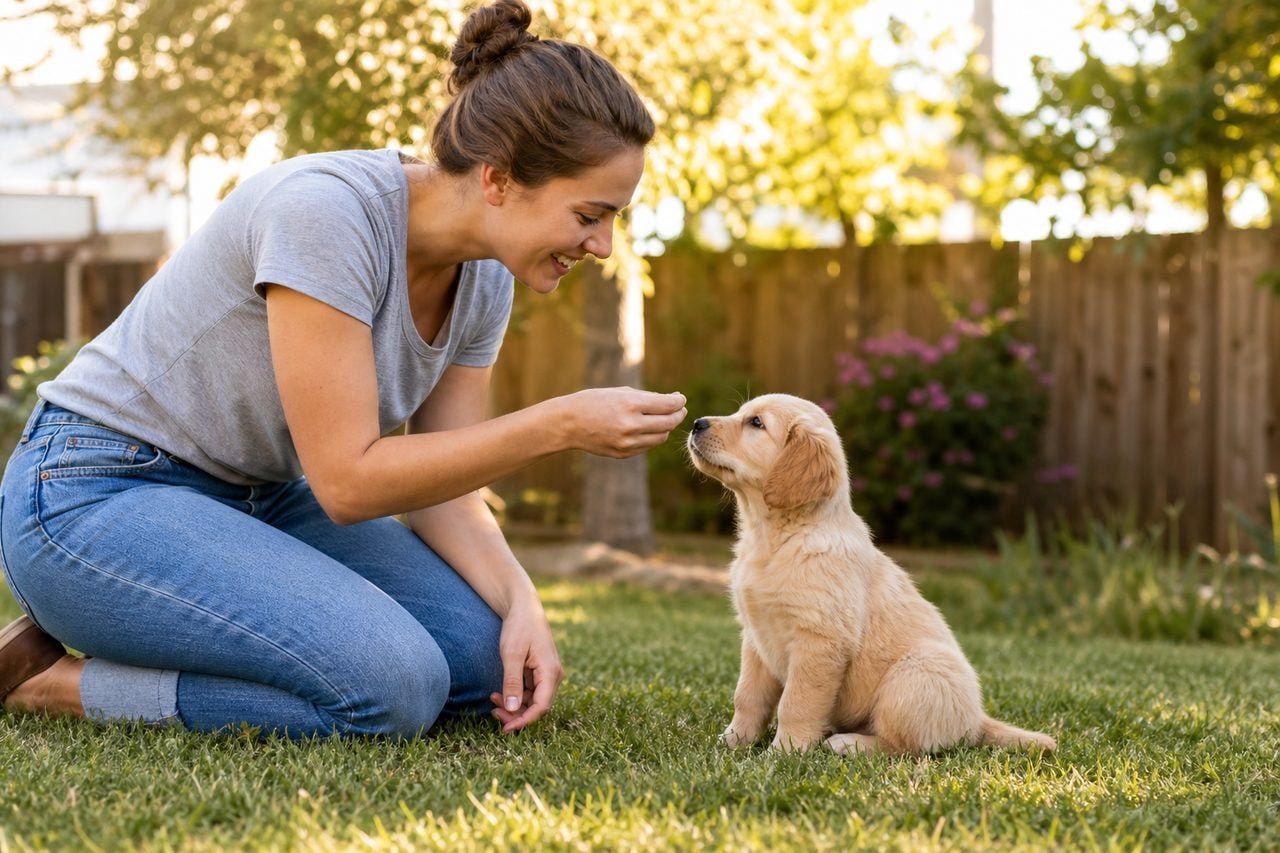
Bringing home a puppy in Youngstown means starting a project on a clock you cannot pause. Those first weeks in the Mahoning Valley set the temperament of the dog you will live with for the next ten or twelve years, and most of the learning that matters happens before a puppy is roughly sixteen weeks old. Whether your place is a downtown apartment near the YSU campus, a brick house in Boardman, a wooded lot out toward Poland, or a yard in one of the old mill neighborhoods in Struthers or Campbell, the early window is short and it rewards owners who start with a plan rather than figuring it out as they go.
The encouraging part is that good puppy training has very little to do with being a professional handler and everything to do with timing, repetition, and a routine that fits how you actually live in the Steel Valley. You do not need hours of free time. You need a handful of short daily sessions, a clear idea of what to work on first, and an honest read on how Northeast Ohio’s long, cold winters change the job. Raising a puppy through a snowy Youngstown January is a genuinely different undertaking than raising one somewhere mild, and the owners who plan for that get further, faster.
This guide is written for Youngstown families specifically. It covers why the early window matters so much, what a realistic first month looks like here, how the seasons reshape your approach, what training actually costs in the Mahoning Valley, and how to decide between doing it yourself, hiring a local trainer for private sessions, or joining a group class. Throughout, we point to local trainers in general terms rather than steering you to any single business, because the right match depends on your puppy, your neighborhood, and your goals. Use the directory to find the people who fit once you know what you are looking for.
The Sixteen-Week Window Nobody Gets Back
Every serious conversation about puppy training in Youngstown should open with timing, because the regret owners voice most often is simply that they waited too long. A puppy’s brain runs through a defined developmental stretch, usually called the critical socialization window, that spans roughly three to sixteen weeks of age. During this period your puppy is deciding, more or less permanently, what counts as safe and what counts as threatening. Rich, positive, varied experiences in this window tend to produce a steady, adaptable adult. Sparse or frightening ones tend to produce a fearful or reactive dog, and reversing that later costs far more time, money, and patience than getting it right the first time.
This puts Mahoning Valley owners in a familiar bind. Most puppies do not complete their core vaccine series until around sixteen weeks, and the gut instinct is to keep an unvaccinated puppy sealed off from the world until then. The current thinking among veterinary behavior professionals, though, is that the behavioral danger of under-socialization usually outweighs the disease risk of careful, controlled exposure. That does not mean hauling a ten-week-old to a packed event at Mill Creek Park. It means thoughtful, lower-risk exposure: carrying your puppy through a quiet stretch of the MetroParks, inviting a friend’s fully vaccinated, easygoing adult dog over to your Canfield backyard, and letting your puppy meet new surfaces, sounds, and people in settings you control.
Inside this window you are working several tracks at once. You are building bite inhibition so your puppy learns to soften its mouth. You are beginning house training and crate comfort. You are teaching the core idea that humans predict good things, which underlies every cue you will ever train. And you are banking social experiences with people of different ages and appearances, friendly dogs, car rides, the rumble of a furnace kicking on, and the ordinary noise of a household. None of this demands formal classes yet, but all of it benefits from a knowledgeable local trainer who can tell you what is normal puppy behavior and what is an early red flag worth addressing.
The practical lesson for Youngstown owners is blunt: do not wait for the final shot before you begin. Start gentle, controlled training and socialization the week the puppy comes home, and line up a class or a few private sessions to begin the moment your vet clears group settings, which often coincides with the last round of vaccines.
What Your First Week and First Month Really Look Like
The first week home is mostly about safety, routine, and not overwhelming a baby animal that just left its littermates. Skip the temptation to parade the puppy in front of every relative and neighbor. Instead, build a small, puppy-proofed space, lock in a feeding and potty schedule, and start pairing the crate with calm and good things. Your week-one goals are modest and completely doable: the puppy learns where it sleeps, begins responding to its name, gets carried out to potty on a tight schedule, and starts to understand that you are the dependable source of food, comfort, and play.
Through the second and third weeks you can begin layering in real cues. Most Youngstown owners start with name recognition, a reliable lure-based sit, and the first version of coming when called inside the house. House training dominates the entire first month, and the Valley’s climate is worth planning around directly. A puppy that lands in January faces a frozen yard and only a few hours of daylight, so many local owners rely on a covered porch, a garage entryway, or frequent short trips rather than expecting a tiny bladder to last through a long cold night. A puppy that arrives in May has an easier time outdoors, but warm weather brings its own trap: it is tempting to socialize too fast when every day is pleasant.
A realistic month-one progression for a Youngstown puppy looks roughly like this:
- Week 1: Settle in, crate comfort, potty trips every one to two hours, name recognition, gentle handling of paws, ears, and mouth.
- Week 2: First lure-based cues such as sit and the beginning of down, short positive crate sessions, introduce a clicker or marker word if you plan to use one.
- Week 3: Indoor recall games, early leash awareness in the house and yard, one calm meeting with a vaccinated adult dog.
- Week 4: Stretch potty intervals as bladder control grows, rehearse cues in slightly busier rooms, take very short carried outings to quiet spots.
The thread through all of it is consistency. Puppies generalize poorly, so a sit that works flawlessly in your kitchen will not automatically transfer to a sidewalk on Glenwood Avenue or a friend’s porch in Poland. You teach a behavior in one place, then deliberately rehearse it in new ones. Five short five-minute sessions scattered across the day beat a single thirty-minute marathon that frustrates and exhausts both of you.
Training Through a Mahoning Valley Winter
Youngstown winters are long, gray, and snowy, and they shape puppy raising more than newcomers expect. The lake-effect bands that roll across Northeast Ohio can dump several inches overnight, and stretches of single-digit cold are normal from December into February. For a small puppy with little body mass, that cold is not just uncomfortable, it is a genuine limit on how long you can practice outside. The owners who thrive in winter plan around it rather than fighting it.
House training is the first casualty of a Valley winter, because a puppy that refuses to potty in a snow-covered yard will hold it until it comes back inside and has an accident. The fix is to shovel and maintain a small, reliable potty spot close to the door so the puppy has bare ground or packed snow to use, keep outings short and rewarded heavily, and consider a covered or sheltered area for the worst weather. Many local owners teach a potty cue early specifically so winter trips can be quick and purposeful instead of a ten-minute shiver.
The bigger winter challenge is socialization and exercise. A puppy in its critical window still needs varied experiences even when it is too cold to linger outdoors, so you move the work inside and into the car. Short trips to a pet-friendly store, sitting in the car in a busy parking lot watching the world go by, inviting friends and their calm vaccinated dogs into a warm living room, and rotating new surfaces, sounds, and household objects all keep the socialization clock running without exposing a puppy to dangerous cold. Indoor mental work, scent games, lure puzzles, and short cue sessions also burn the energy that a snowed-in puppy would otherwise spend chewing your baseboards.
If your puppy arrives in the warmer months, the lesson flips. Mill Creek MetroParks, with Lanterman’s Mill and the trails around Lake Newport, is a wonderful resource, but it is also full of people, dogs, and wildlife that can overwhelm a young puppy. Use the quiet edges, go at off-peak hours, and keep early outings short and positive. The goal in any season is controlled, confidence-building exposure, not flooding a puppy with everything at once.
What Puppy Training Costs Around Youngstown
One of the first questions Mahoning Valley owners ask is what all of this will cost, and the honest answer is that Youngstown sits at or just below the national average, which makes it more affordable than a lot of metro areas. Within the region there is real variation, though. The southern suburbs of Boardman, Poland, and Canfield generally run higher than the old Steel Valley mill towns like Struthers, Campbell, and Girard, or the more rural pockets out in Trumbull County toward Warren and Niles. Knowing the spread helps you budget without overpaying or assuming the cheapest option is the right one.
Group puppy classes are typically the best value for most families. A multi-week group puppy course in the Youngstown area often falls somewhere in the range of roughly one hundred and twenty to two hundred dollars for a four-to-six-week series, with classes meeting once a week. That gets you structured instruction, a controlled environment to socialize with other puppies, and an instructor who can troubleshoot your specific issues in real time. For owners who want help but have a flexible schedule, this is usually the place to start.
Private, in-home sessions cost more per hour but solve different problems. Expect somewhere around sixty-five to over one hundred dollars per session depending on the trainer’s experience and how far they travel, with the southern suburbs trending toward the higher end. Private work is worth it when your puppy has a specific issue, when your schedule will not accommodate a fixed class time, or when you want training tailored to your exact home and routine. Some owners do a few private sessions early to build a foundation, then move into a group class for the socialization piece.
At the higher end sit board-and-train programs, where your puppy stays with a trainer for one to several weeks. These can run well into four figures, and while they can jump-start obedience, they are generally less ideal for very young puppies because the critical socialization work really needs to happen in your own life with your own family. Whatever you choose, treat price as one factor among several, and weigh it against method, experience, and whether the trainer’s approach actually fits your dog.
DIY, Private Sessions, or a Group Class
There is no single right path for every Youngstown puppy, and many owners blend approaches over the first few months. The decision comes down to your puppy’s temperament, your own experience and bandwidth, and what you most need help with. It helps to think of the three options as tools that each do something well rather than as competitors.
Doing it yourself is realistic for a confident first-time owner with a fairly easygoing puppy, especially if you are willing to read up, watch reputable instruction, and stay consistent. The trap with the DIY route is not the teaching of cues, which most people manage fine, but the socialization piece, which is easy to under-do, and the early reading of warning signs, which is hard without experience. If you go this way, at minimum plan a vet conversation about a socialization plan and consider one or two private sessions just to confirm you are on track.
Private sessions shine when you have a specific concern or a schedule that will not bend. A trainer coming into your Austintown living room can see exactly how your household operates, watch your puppy in its real environment, and tailor everything to your routine. This is the strongest option for puppies showing early fearfulness, resource guarding, or unusually intense biting, because those are situations where generic advice can backfire and personalized guidance matters most.
Group classes are the workhorse for the majority of owners because they bundle structured teaching with the one thing that is genuinely hard to replicate at home: controlled exposure to other puppies and unfamiliar people. A good puppy class in the Valley gives your dog repeated practice at staying calm and focused around distractions, which pays off for years. For most Youngstown families, the strongest plan is some combination, a couple of private sessions to build a foundation and catch problems early, followed by a group puppy class for the social experience. Use the directory to find local trainers whose method and format match the plan you have settled on.
Setting Up Your Home and Routine for Success
A lot of puppy training success is decided before any formal cue is taught, in how you set up your home and the rhythm of your days. Youngstown homes vary widely, from compact apartments near downtown and the university to larger lots in Canfield and Poland, and the setup looks a little different in each, but the principles hold. The goal is a space where good choices are easy and bad ones are hard, so your puppy succeeds far more often than it fails.
Start with management. Use baby gates, a crate, and an exercise pen to limit your puppy’s access to the house until it has earned more freedom. A puppy that cannot wander into the dining room cannot have an accident there or chew a table leg, which means you spend your energy rewarding good behavior instead of interrupting bad behavior. In smaller downtown apartments this is easy because the footprint is naturally contained; in a sprawling suburban house it takes more intentional fencing off of rooms.
Build a predictable daily routine, because predictability lowers a puppy’s stress and accelerates house training. Puppies thrive on a rhythm of sleep, potty, eat, play, train, and settle, repeated through the day. Tie potty trips to the natural triggers, after waking, after eating, after play, and the schedule starts to run itself. In a cold-weather city like Youngstown, this routine also helps you keep outdoor time short and efficient during winter, which keeps both of you happier.
Finally, get the whole household on the same page. The fastest way to confuse a puppy is to have one person allowing it on the couch while another shoos it off, or different family members using different words for the same cue. Agree on house rules, the exact cue words you will use, and who handles which parts of the routine. A puppy that gets consistent signals from everyone learns dramatically faster, and a quiet family meeting in week one prevents a surprising number of the problems that send owners looking for a trainer in month three.
Reviewed Puppy Training Trainers in Youngstown
These reviewed Youngstown-area trainers from our directory are the local options for puppy training. Each links to a full profile with specialties, certified credentials, reviews, and contact info:
- CIA Dog Training — 5.0★ (32 reviews)
- Ugly Dogge Bullies LLC — 5.0★ (22 reviews)
- McCrae9 Dog Training — 5.0★ (13 reviews)
- Sit Happens Dog Training — 5.0★ (6 reviews)
- B.O.N.E.S., a dog training company — 5.0★ (3 reviews)
- Dogsmartz Unleashed LLC — 4.8★ (180 reviews)
- The Northern Border, LLC — 4.8★ (98 reviews)
- Camelot Canine — 5.0★ (128 reviews)
- Athens Canine — 5.0★ (39 reviews)
- Enforcer Working Dogs — 5.0★ (23 reviews)
See all Youngstown puppy training trainers →
Frequently Asked Questions
When should I start training my puppy in Youngstown?
Start the week you bring your puppy home. The critical socialization window closes around sixteen weeks of age, so gentle house training, crate comfort, name recognition, and controlled socialization should all begin immediately, even before the final vaccines. Line up a group class or private sessions to begin as soon as your vet clears group settings, which often coincides with the last vaccine round.
How much does puppy training cost in the Youngstown area?
Costs here sit at or just below the national average. A four-to-six-week group puppy class typically runs roughly one hundred and twenty to two hundred dollars, while private in-home sessions usually fall around sixty-five to over one hundred dollars each. The southern suburbs of Boardman, Poland, and Canfield tend to run higher than the Steel Valley mill towns and rural Trumbull County. Board-and-train programs cost the most, often well into four figures.
How do I house train a puppy through a Youngstown winter?
Keep a small potty spot shoveled and clear close to the door so your puppy has bare ground or packed snow to use, keep outings short and heavily rewarded, and teach a potty cue early so winter trips are quick and purposeful. For the worst lake-effect days, a covered porch or sheltered area helps. Expect house training to take a little longer in deep winter and plan for frequent short trips rather than long ones.
Is it safe to socialize my puppy before all the vaccines are done?
Yes, with care. Veterinary behavior professionals generally consider under-socialization a bigger risk than carefully managed exposure. Avoid high-traffic spots like crowded areas of Mill Creek Park, and instead use controlled settings: carry your puppy through quiet places, invite vaccinated, calm adult dogs into your yard, and expose your puppy to new people, surfaces, and sounds in low-risk environments. Talk to your vet about a socialization plan that fits your puppy.
Should I choose a group class or private sessions for my puppy?
It depends on your goals. Group classes are the best value for most families and provide controlled socialization with other puppies, which is hard to replicate at home. Private sessions are better when you have a specific concern, a rigid schedule, or a puppy showing early fearfulness or intense biting. Many Youngstown owners do both: a couple of private sessions to build a foundation, then a group class for the social experience.
How much time per day does puppy training take?
Less than most people expect, if you do it right. Five short five-minute training sessions spread through the day are far more effective than one long session that tires out your puppy. Beyond formal training, house training and socialization happen continuously through your normal routine, so the real key is consistency and good timing rather than large blocks of dedicated time.
Related: read our complete puppy training guide or the full Youngstown dog training overview.
Ready to find the right puppy training pro in Youngstown?