
Dog Boot Camp in Murfreesboro, TN
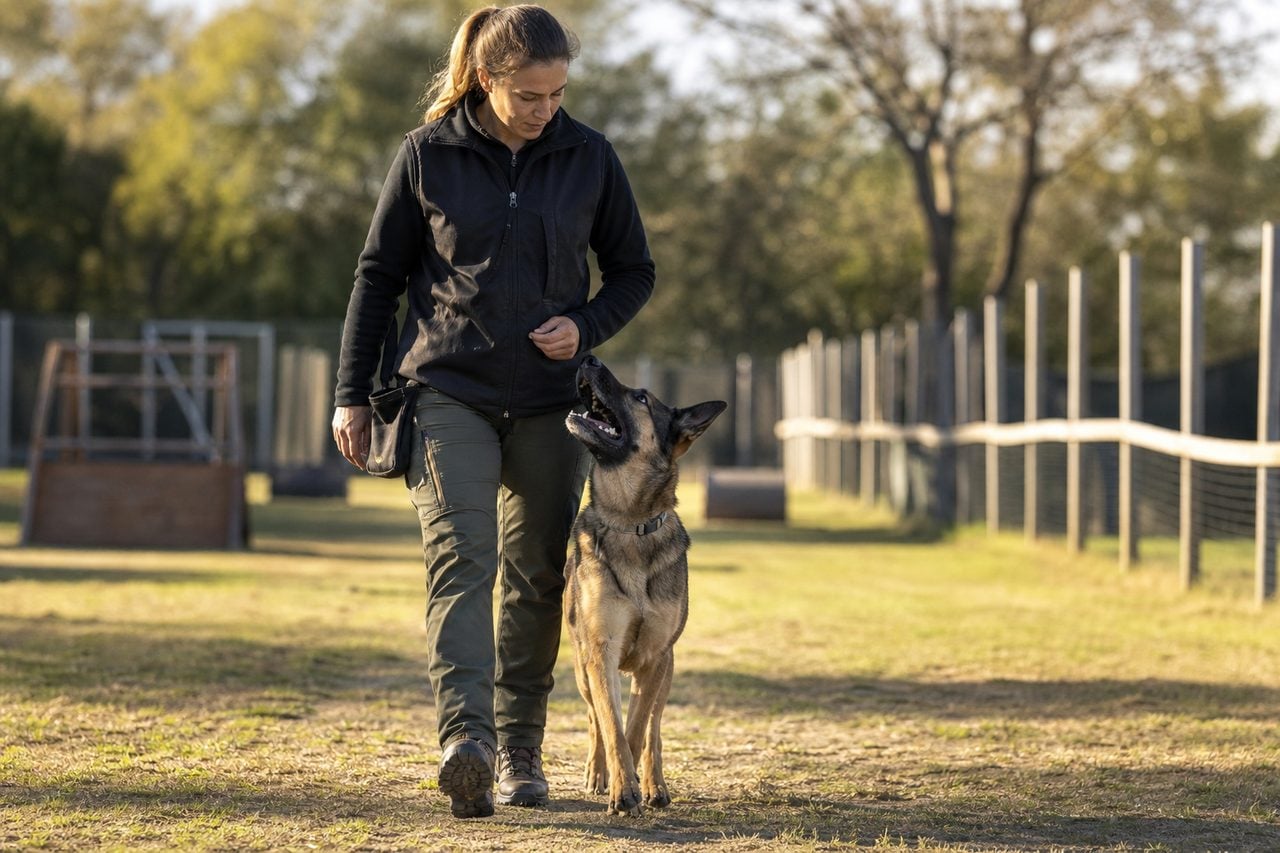
“Dog boot camp” is a marketing phrase rather than a technical one. In Murfreesboro it almost always means a residential program — your dog lives with the trainer for one to four weeks and works several times a day — and eleven trainers serving Rutherford County publish something in that shape. Occasionally it means something shorter and more intensive, and occasionally it means a day program with an energetic name. The word tells you very little on its own, which is why the first useful question is never “do you run a boot camp” but “what does a day look like”.
- What people mean when they call and ask for boot camp
- The intensity question, and what it should and should not mean
- What gets taught, and what gets proofed
- Costs, contracts and the things that are not in the headline price
- The alternatives that are often better
- Questions to ask before you book
- Reviewed trainers
- FAQ
What the phrase does signal is an expectation: that the dog goes away and comes back different. That expectation is half right and it is worth unpicking before you spend two to six thousand dollars, because the half that is wrong is the half that decides whether the money worked.
What people mean when they call and ask for boot camp
Trainers in this metro report a fairly consistent caller. It is usually an adolescent dog, eight to sixteen months, large enough that the pulling has become a physical problem. The household has tried a bit of everything, everyone uses slightly different words, and the dog has learned that instructions are negotiable. Often there has been an incident — a knocked-over child in the hallway, a bolt out of a front door in Blackman, a chase after something on a Lascassas property — and the call is being made in the week after it.
That dog is genuinely a good candidate for residential work, and the reason is not that it needs discipline. It is that it needs a very high number of clean repetitions in a short time, delivered consistently, and a household in crisis cannot produce that. A trainer running four short sessions a day for fourteen days delivers something in the region of fifty-six structured sessions. A busy family managing three a week delivers about six in the same period.
The second common caller is someone with a deadline — a baby, a move, a deployment, a new job with different hours. Rutherford County has a lot of those, between the commuter pull toward Nashville, the aviation and industrial employers around Smyrna, and a large veteran population. Residential work is the honest answer when the calendar is the constraint.
The intensity question, and what it should and should not mean
“Intensive” should describe frequency, not force. A program that runs a dog through four short, well-planned sessions a day in varied places is intensive in the useful sense. A program that is intensive because each session is long and confrontational is producing compliance under pressure, which tends to look excellent at the go-home lesson and to fall apart within a month at home.
The practical test is to ask what happens when a dog gets it wrong, and to listen to whether the answer is specific. Murfreesboro’s residential providers span the methodological range, from strictly reward-based operations to programs built around remote-collar conditioning, and there are competent trainers at both ends. What matters is that they can describe their process plainly. Evasiveness about consequences is the single most useful warning sign available to you.
Ask, too, about rest. Dogs consolidate learning while asleep, and a residential program that runs a dog from seven in the morning to eight at night with no downtime is not producing more learning, it is producing a tired dog. Good local programs build in genuine rest, turnout and decompression, and they will describe the whole day, not just the training parts.
Finally, ask what the program does in the Middle Tennessee summer. From late June a residential trainer working dogs outdoors in the middle of the day is either not doing it or is doing something risky; the sensible answer involves early mornings, evenings, indoor space and shaded ground.
What gets taught, and what gets proofed
A typical Rutherford County residential program is structured in two halves, whether or not the trainer describes it that way.
The first half teaches the behaviors in a controlled environment: name response, sit, down, place, heel or loose-leash walking, recall, and a stay that holds. This part is quick and it is where most of the visible progress happens. By day five most dogs look transformed, and the video updates that local programs send — photo and video updates during the stay are a standard feature here — are typically from this phase.
The second half is proofing, and it is what you are actually paying for. This is where the dog goes out of the training environment and performs the same behaviors in places that are hard: a parking lot, a shop aisle, a busy pavement, a park with other dogs. The better local programs are explicit that they take dogs into real-world environments during the stay, and Murfreesboro’s geography makes it easy — the Battlefield loops, the Stones River Greenway, the retail spine along Medical Center Parkway and the Square are all inside a twenty-five minute radius, and each is a different level of difficulty.
If a program’s description is all first-half and no second-half, you will get a dog that performs beautifully in the trainer’s field and unravels on the greenway. Ask specifically where the dog will be worked in week two.
Costs, contracts and the things that are not in the headline price
Local published prices run from short one-week blocks in the high hundreds, through the common two-week range of roughly $2,000 to $2,900, to three-week programs around $2,995 and four-week programs from $3,995 to about $5,800. Aggression and anxiety-focused residential work is priced separately and locally sits between roughly $1,100 and $4,350.
The things that vary and are not always in the headline:
The go-home lesson. Standard everywhere credible. Confirm its length — an hour is common, two is better.
Follow-up sessions. Anything from none to a published lifetime refresher guarantee giving you free tune-ups for the life of the dog. This is the biggest real difference between two programs at the same price.
Equipment. Some programs include the collar, lead and long line in the price; some sell them separately; a few require a specific tool you must buy. Ask.
Extended stays. What happens if the trainer thinks your dog needs another week? Is it pro-rated, discounted, mandatory?
Boarding overlap. Facilities that do both training and boarding sometimes charge a boarding rate for days either side of the program.
Get all of that in writing before you hand the dog over. It is a routine request and any reputable operator will accommodate it.
The alternatives that are often better
Residential work is not always the right purchase, and Murfreesboro has enough supply in the alternatives that it is worth checking.
Day training — the dog goes to the trainer for the day and comes home at night — is published by several local trainers, including as an option for returning clients working on advanced material. It gives you most of the repetition benefit, the dog sleeps at home, and it costs less. It suits anyone whose commute passes a trainer’s location, which in a county where thousands drive I-24 daily is a lot of people.
Private lessons, published by seven local trainers as in-home or one-to-one work, are the right answer when the dog already knows the behaviors and does not perform them for you. That is a handling problem, and sending the dog away does not fix a handling problem.
Group classes are the cheapest route and the only one that builds working-around-other-dogs skill directly. If your dog’s issue is that it cannot concentrate near another dog, a class is doing something a residential program largely is not.
A reasonable rule of thumb: if the dog does not know it, residential or day training is efficient. If the dog knows it and ignores you, lessons. If the dog cannot cope near other dogs, a class or dedicated reactivity work. Most local trainers will tell you which of those they think you need if you describe the situation honestly, and a trainer who talks you out of the more expensive product is usually the one to hire.
Questions to ask before you book
A short list, in the order that matters.
What does a day look like, hour by hour? Sessions, rest, turnout, feeding, sleeping arrangements.
How many dogs are in the program at once, and how many staff? This is the ratio that determines whether the daily structure is physically achievable.
Where will my dog be worked in week two? Named places, not “out and about”.
What is your approach, and what happens when the dog gets something wrong? A clear, plain answer either way.
What updates will I get? Photo and video updates during the stay are standard among the better local programs; ask how often.
What is included afterwards, and for how long?
Can I visit before I book, and can I see where the dogs sleep?
Have you worked with a dog like mine? Be specific about breed, size, age and the actual behavior. A trainer who says a case is outside what they do, and refers you on, has just told you something valuable about everything else they claim.
Dog Boot Camp in Murfreesboro: Local Options & Nearest Specialists
Right now there are no listed Murfreesboro trainers focused specifically on dog boot camp. Many general Murfreesboro dog trainers can help you get started, and the nearest specialists for this focus are below.
Nearest dog boot camp specialists — Nashville
For complex cases, some families travel to the larger pool of specialists in the Nashville area for an assessment or a board-and-train stay. Top-reviewed options:
- Suburban K9 Dog Training — 5.0★ (77 reviews)
See all Nashville dog boot camp trainers →
Frequently Asked Questions
Is boot camp the same as board-and-train?
In Murfreesboro, almost always yes — both describe a residential program where the dog lives with the trainer and works several times a day. Occasionally ‘boot camp’ is used for a shorter, more intensive block, and occasionally for a day program. The word itself tells you nothing useful. Ask for the hour-by-hour daily structure and the distinction disappears.
Does 'intensive' mean harsh?
It should mean frequent, not forceful. Four short well-planned sessions a day in varied environments is intensive in the useful sense. If intensity means long confrontational sessions, you tend to get compliance under pressure that looks excellent at handover and decays within a month. Ask what happens when the dog gets something wrong and listen for a specific, unevasive answer — local trainers span the methodological range and the good ones at both ends can describe their process plainly.
How much does it cost?
Locally published: one-week blocks in the high hundreds, two weeks roughly $2,000 to $2,900, three weeks around $2,995, four weeks $3,995 to about $5,800. Behavior-focused residential work for aggression or anxiety runs separately, between about $1,100 and $4,350. Confirm what is included afterwards — follow-ups and refresher policies vary far more than the headline prices do.
Will I get updates while my dog is away?
From the better local programs, yes — regular photo and video updates through the stay are a standard feature here, and several operators advertise it. Ask how often before you book. Bear in mind that the most impressive-looking footage usually comes from the first half of the program, when the behaviors are being taught in a controlled setting; the harder and more valuable work happens later, in busier places.
What if my dog needs longer than the program?
Ask before you book. Some programs extend at a pro-rated or discounted rate, some at full price, and a few build a possible extension into the contract. It is a reasonable and common situation, particularly with behavior cases, and it is much better settled in writing at the start than negotiated on day twelve.
Is there something cheaper that would work as well?
Possibly. Day training — the dog spends the day with the trainer and sleeps at home — is published by several Murfreesboro trainers and delivers much of the repetition benefit for less. If your dog already knows the behaviors and simply ignores you, private lessons address that better than any residential program can. And if the problem is that your dog cannot concentrate near other dogs, a group class is doing something residential work largely is not.
Related: read our complete dog boot camp guide or the full Murfreesboro dog training overview.
Ready to find the right dog boot camp pro in Murfreesboro?