
Dog Boot Camp in Nashville, TN
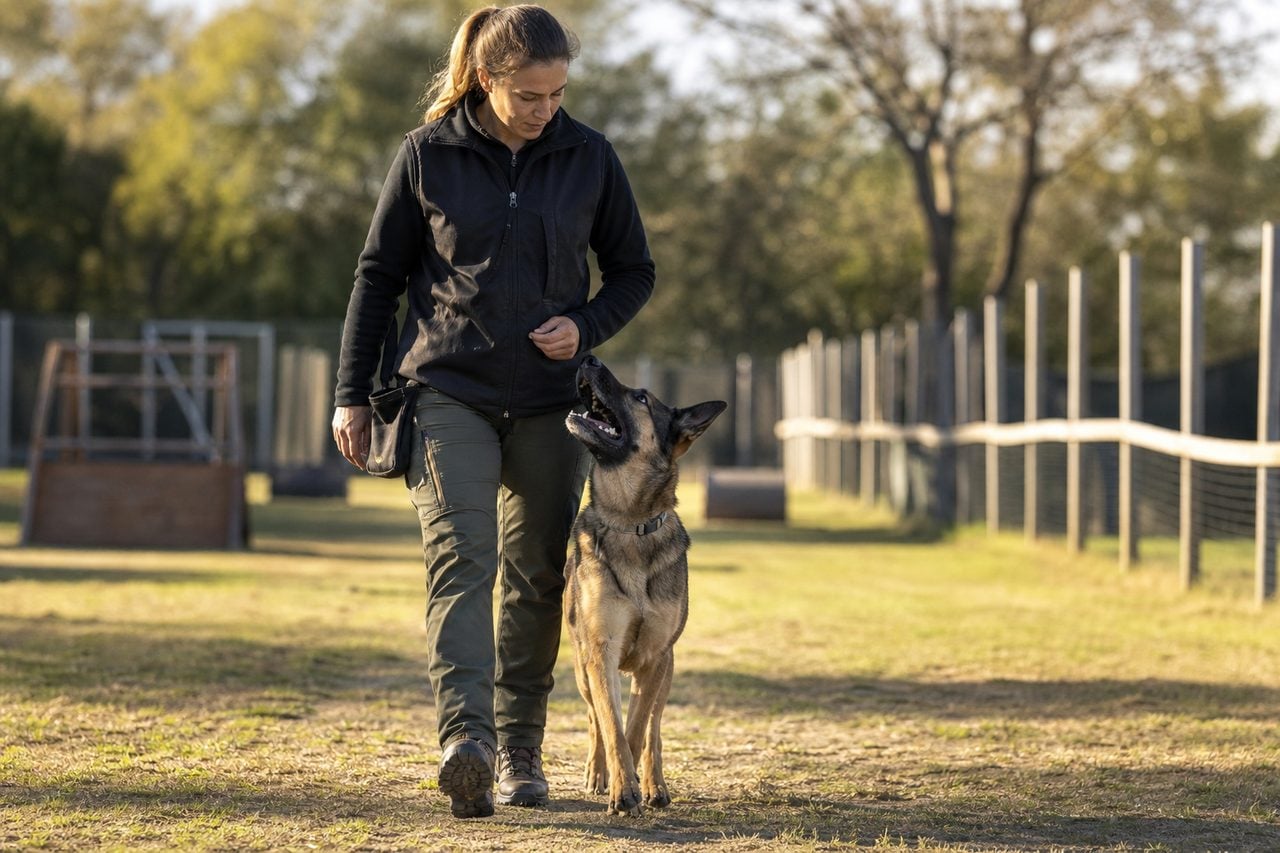
‘Boot camp’ is a marketing word, not a training method, and in Nashville it is attached to at least three different products. Some operators use it for a one- or two-week residential obedience block. Some use it for a day-school format where the dog comes in each morning and goes home each night. A few use it for an intensive multi-week program aimed at off-leash reliability or serious behavior work. The price difference between those is several thousand dollars, and the word tells you nothing about which one you are looking at.
The word also carries a connotation that is worth addressing head-on, because it drives a lot of the enquiries local trainers field: the implication that the dog will be broken down and rebuilt through discipline. That is not what any competent operation in this metro does, and the ones producing the durable results are not the harshest, they are the ones with the highest ratio of clean repetitions to confusion. What actually distinguishes an intensive program from weekly lessons is density — four or five short sessions a day in a controlled environment instead of one a week in a distracting one. This page is about reading past the label to what you are actually buying in Nashville, and what a well-run intensive week looks like from the inside.
Three products, one label
Residential boot camp. The dog lives at the facility or in the trainer’s home for a fixed block. This is the version most people picture, and locally it is priced from roughly $750 to $1,600 for a week and $2,800 to $4,200 for two to three. It suits households with nobody home in the day, and dogs whose problems need an environment where nothing rehearses by accident.
Day school or day training. The dog is dropped off in the morning, works several sessions during the day, and sleeps at home. Nashville has a genuine market for this because of the commuting pattern, and at least one local operator publishes structured day placements at $125 a day with a three-day minimum booking, while facility-based operators sell training add-ons to daycare in the region of $85 for a one-hour session or $350 for a five-pack. The advantage is that the dog sleeps in the environment it has to succeed in, so the transfer problem is much smaller. The disadvantage is that the environment gets to undo some of the work every evening.
Intensive multi-week programs. Four to five weeks, usually aimed at off-leash reliability or substantial behavior change, published locally at $3,500 to $5,500. These are not really boot camps in the colloquial sense; they are structured curricula with staged environmental difficulty, and the length is a function of how many clean repetitions the goal requires.
When an advert says boot camp, ask which of those three it is before you ask anything else. The answer determines whether the price is reasonable and whether the format even matches your problem.
What a well-run intensive day looks like
A dog cannot train productively for eight hours. What a good Nashville operation actually runs is four to six sessions of ten to twenty minutes, spread across the day, with structured rest between them — and the rest is not filler, it is when the learning consolidates. If a program describes all-day training, it is either describing something else or overselling.
The sessions themselves should escalate in environment rather than just in difficulty. Day one might be entirely indoors on a quiet floor. By mid-week the same behaviors are being asked for in a yard with distractions deliberately introduced. By the end, a good program is taking the dog off site — a parking lot, a hardware store forecourt, a greenway — because that is the only way to find out whether anything generalized. Ask any operator you are considering how many off-site sessions are in the program and where they go. In this metro the honest answers name real places, and the greenways and retail parking lots in Bellevue, Donelson and Rivergate come up constantly for exactly this reason.
The rest of the day is housing, and it should be boring on purpose. Crate or kennel rest, a structured outdoor break, controlled group time if the operation runs it and your dog is suited to it. What you do not want is a dog spending seven hours in unstructured play with a rotating cast of other dogs, because that teaches arousal, and arousal is what most of these dogs are being sent in to unlearn.
Heat, humidity and the Nashville training calendar
Middle Tennessee’s summer is a genuine operational constraint on intensive programs and it is worth planning around. Between roughly mid-June and early September, the middle of the day is too hot for sustained outdoor work with most dogs, and pavement temperatures make the urban environments — which is where the useful generalization happens — unusable for hours at a stretch. A well-run local program adapts by shifting outdoor sessions to early morning and evening and moving the midday block indoors. A poorly run one simply does less.
Ask directly. Is the kennel or house air-conditioned. What time do outdoor sessions happen in August. Does the off-site work still happen in high summer, and where. An operator who has thought about this will answer in specifics; one who has not will reassure you generally.
The corollary is that spring and autumn are the best windows for an intensive program in this metro, and the good operators book out in those months. If you have flexibility, aim for March through May or late September through November. If you do not, a January or February block is often easier than a July one — Nashville winters are mild enough that outdoor work continues, with the occasional ice day, and the facilities are less full.
One more seasonal note that matters for behavior cases: Middle Tennessee gets serious spring thunderstorms. If your dog has a noise problem, tell the operator before you book, because a storm on night three of a residential block in an unfamiliar kennel is a genuinely bad experience and some operations handle it far better than others.
The week after: where boot camps succeed or fail
The pattern local trainers describe most often is a dog that comes home transformed and is noticeably worse three weeks later. This is not the trainer having cheated. It is the entirely predictable result of an animal that learned a set of rules in one context returning to a context with different rules, and nobody having deliberately bridged the two.
What bridges it is boring and specific. Keep the structure for a fortnight — same crate routine, same feeding pattern, same rules about furniture and doorways — even if it feels excessive. Practice the trained behaviors daily in short sessions in your own home before you attempt them anywhere hard. Use the follow-up lessons early rather than saving them; the most common mistake is booking the first one a month out, by which point the household has quietly reverted and the lesson becomes remedial rather than consolidating.
Ask before booking how many follow-ups are included and what the window is. Locally, three included private follow-up lessons is the commonest offer with a residential block; some operators bundle weekly owner tutoring alongside the camp, and at least one sells unlimited lessons for the life of the dog for a one-off $3,000. Also establish what happens to the equipment. If the dog comes home on a remote collar, you need to know exactly how and when it is used, what the fading plan is, and who to call when it stops working — and you need that in writing rather than in a doorstep conversation.
What intensive formats do not fix
Intensity helps with behaviors that need repetition. It does not help with problems that are about a specific relationship or a specific place, and this is where the label misleads people most.
A dog that is anxious when left alone in a Gulch apartment cannot be improved by three weeks somewhere else. A dog that guards the sofa from one family member is having a problem with that person in that room. Two household dogs that fight at a doorway are having a problem at that doorway. In every one of those cases the dog can be returned in excellent obedience and the problem will be exactly where it was.
Genuine fear cases are the other category. A frightened dog in an unfamiliar kennel, separated from its people, is not in a learning state, and pushing an intensive curriculum at it can entrench the fear rather than shift it. Some behavior specialists in this metro do run residential work for fearful dogs, but the format is different — usually in-home, small numbers, and a much longer runway — and it will be described that way rather than as a boot camp.
The tell that you are being sold the wrong thing is a program that promises a fixed outcome for a fixed price without an assessment first. Nashville trainers who do this work properly assess the dog before quoting, and a paid assessment around $50, or a free introductory call, is the normal front end here rather than an upsell.
Comparing Nashville quotes on a like-for-like basis
Because the label means nothing, you have to normalize the quotes yourself. Five things make two programs comparable.
Nights versus days. A fourteen-day residential block and a fourteen-session day-school program are not the same product even at the same price. Residential gives you a controlled overnight environment; day school gives you far better transfer.
Sessions per day and length. Four to six short sessions is the working standard. Anyone quoting all-day training is describing housing.
Off-site work. How many sessions leave the property, and where do they go. This is the single best predictor of whether the training will survive contact with a Nashville pavement.
Included handover. Number of follow-up lessons, over what period, and whether a written maintenance plan comes with the dog.
Extras. Assessment fee, collection and drop-off, travel surcharge beyond a set radius — which several local trainers publish and which bites if you are in Bellevue, Antioch or Cheatham County — and whether equipment is included or charged. A $2,800 program with three follow-ups, four off-site sessions and no travel charge frequently beats a $4,200 one without them, and you will only see that if you ask.
Dog Boot Camp in Nashville: Local Options & Nearest Specialists
Local Nashville-area options for dog boot camp:
- Suburban K9 Dog Training — 5.0★ (77 reviews)
Nearest dog boot camp specialists — Knoxville
For complex cases, some families travel to the larger pool of specialists in the Knoxville area for an assessment or a board-and-train stay. Top-reviewed options:
- Balanced Paws K9 Training — 4.9★ (77 reviews)
See all Knoxville dog boot camp trainers →
Frequently Asked Questions
What is the difference between boot camp and board-and-train?
Usually nothing but the wording, which is exactly the problem. In Nashville the term is applied to one-week residential blocks, day-school formats where the dog sleeps at home, and four-to-five-week intensive programs — products separated by several thousand dollars. Ask which of the three an advert means before discussing anything else.
How much does a dog boot camp cost in Nashville?
Residential blocks are published from about $750 to $1,600 a week and $2,800 to $4,200 for two to three weeks. Intensive multi-week programs run $3,500 to $5,500. Day-school placements are published around $125 a day with a three-day minimum, and daycare training add-ons at roughly $85 an hour or $350 for a five-pack.
Is a boot camp harsh?
It should not be, and the term is a marketing legacy rather than a description of method. What distinguishes an intensive program is density — four to six short sessions a day in a controlled environment rather than one a week in a distracting one. Ask what specifically happens when the dog gets it wrong and what equipment is used; the answer tells you far more than the label.
When is the best time of year to book one in Nashville?
Spring and autumn. Middle Tennessee summers make sustained midday outdoor work unworkable and the off-site sessions are where the training generalizes. If summer is your only option, ask specifically whether the facility is air-conditioned and what time outdoor sessions run in August. Mild Nashville winters are often an easier booking than July.
Why did my dog regress after coming home?
Because the rules changed. The dog learned a structure in one context and returned to a different one without a deliberate bridge. Hold the routine for a fortnight, practice daily in short sessions at home before attempting anywhere difficult, and use the included follow-up lessons within the first two to three weeks rather than saving them for later.
Can a boot camp fix separation anxiety or dog-to-dog fighting at home?
No. Separation distress is a problem about your absence in your home, and household conflict is a problem in a specific relationship and a specific room. The dog can return in excellent obedience with both problems intact. Those need home-based behavior work, which is a separate service listed elsewhere on this site.
Related: read our complete dog boot camp guide or the full Nashville dog training overview.
Ready to find the right dog boot camp pro in Nashville?