
Dog Boot Camp in Cookeville, TN
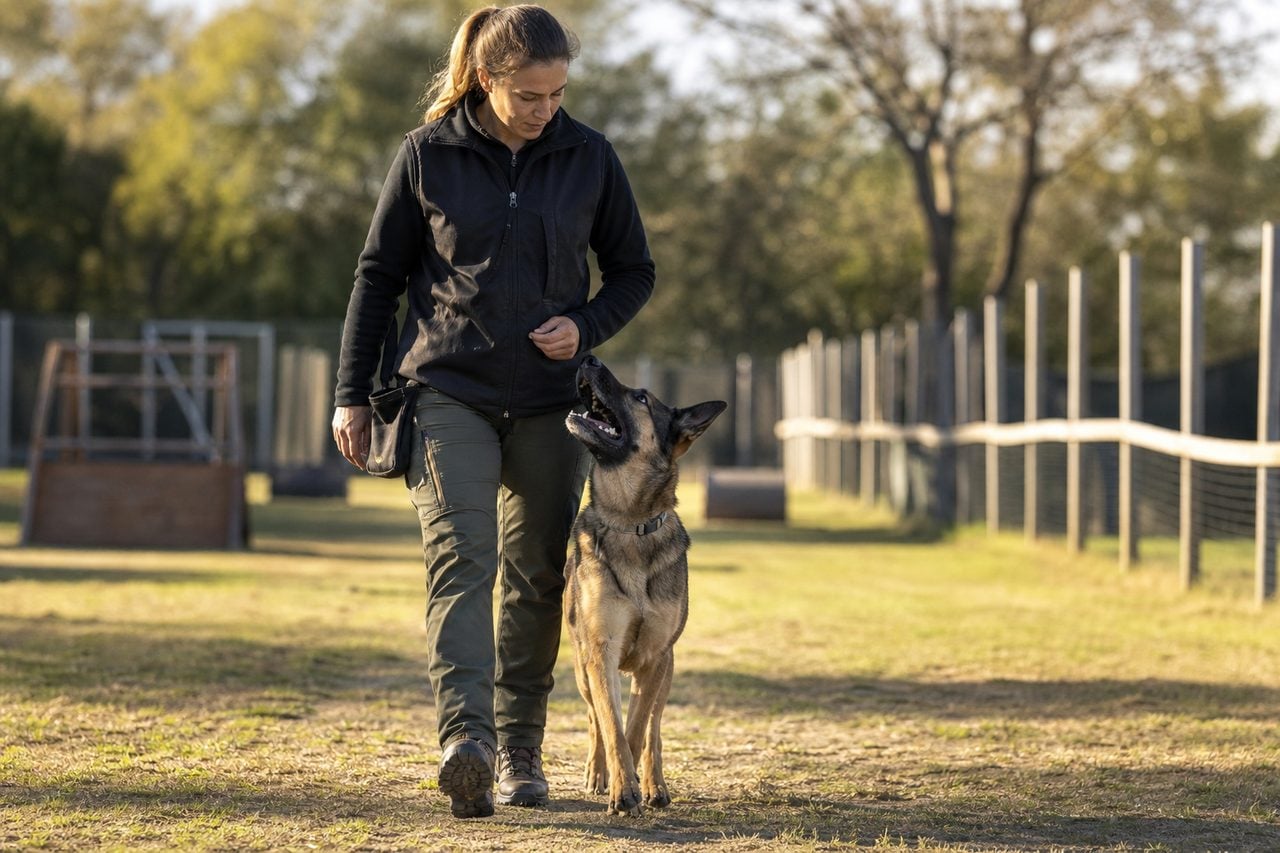
Search for a dog boot camp near Cookeville and you will find residential training programs, because in this market nobody actually trades under the phrase. That is worth knowing before you start ringing round: the businesses here describe what they sell as in-board training, board and train, or a complete obedience package, and the word most owners type into a search box is not the word the industry here uses. You are not looking for a different service. You are looking for the same service under its real name.
The word does carry a real expectation, though, and it is the expectation that gets people into trouble. Boot camp implies a short, intense, compulsion-heavy fix — send the dog away, something firm happens, the dog comes back obedient. Some of that is achievable and some of it is a misunderstanding of how the timescales work. This page is about what the phrase means in practice around Cookeville, what a fortnight can and cannot change, how to read the difference between a fast program and a rushed one, and where the honest limits are for the problems people most often want a boot camp to solve.
Why nobody here sells a boot camp
The vocabulary gap is not accidental. The businesses running residential programs in the Upper Cumberland describe their method in terms of motivational foundations, learning theory and staged difficulty — one local program explicitly structures the month as two weeks of word association and high-value reward, a third week introducing choice and accountability by adding distance and distraction, and a fourth spent out in the community proving the work. That is a curriculum, and boot camp is not a useful label for it.
There is a second reason, which is professional rather than semantic. Several of the trainers here hold nationally-recognized certifications whose ethical standards constrain method, and at least one publishes a science-based philosophy alongside its results. Businesses in that position do not market with a word that implies compulsion, even when their programs are genuinely demanding.
What this means for you as a buyer is practical. Do not filter on the word. Filter on the product: how long is the stay, what does the syllabus cover, where does the dog live, what happens at handover, and what is the follow-up. Those five answers will tell you far more than whether a website uses a military metaphor. And if a business in this area does market itself with the phrase, treat it as a marketing choice rather than as information about the method, and ask the five questions anyway.
What a fortnight can actually change
Two weeks is the shortest residential stay anyone here will recommend, and it is a real product rather than a token one — local short-stay programs are sold by the day with a minimum of about seven days advised, and one published two-week program covers a defined set of basic commands, manners and socialization with distraction work in multiple places.
In fourteen days a competent trainer can reliably install a set of new behaviors and get them working in the training environment: a reliable sit and down, a stay with some duration, a recall in a controlled space, walking on a lead without pulling, and settling on a mat. That is genuinely a lot, and for a dog whose problem is that nobody ever taught it anything, a fortnight can transform daily life.
What fourteen days cannot do is change how a dog feels. Fear, anxiety and aggression are emotional states, and the protocols that shift them are measured in months of graded exposure, not days of repetition. A frightened dog can be taught to comply in a fortnight and will still be frightened; what you get is a dog that performs correctly and is one bad surprise away from where it started. Any program that promises a two-week fix for reactivity or aggression is selling suppression, and suppression is the mechanism behind bites that owners describe as coming from nowhere.
The honest short-stay pitch, and the one local operators actually make, is targeted: name one or two specific problems, agree a plan at the assessment, and stay as long as that plan takes.
Fast versus rushed, and how to tell
A well-run intensive program and a rushed one look similar from the parking lot, and three questions separate them.
The first is what happens before the dog arrives. Every serious local residential program requires an assessment first — a private session, in person or virtual, at which goals and expectations are agreed and a plan is written — and several credit the fee against the program. A business that will take your dog on Monday having never seen it is not being efficient, it is not assessing.
The second is whether the syllabus is staged. The local programs worth the money publish a week-by-week shape, and the shape always moves in the same direction: teach the behavior in an easy context first, then make it harder deliberately. A program that starts with distraction and correction has skipped the teaching phase, which is why the results evaporate at home.
The third is what the last phase looks like. Two of the residential programs here finish with a period spent deliberately out in public — shops, parking lots, the paths at the big city park, pavements in town — because a behavior that has only ever been performed on the trainer’s premises has not been generalized. If the program ends where it started, you are buying performance in a room you will never visit again.
None of those three is about speed. All three are about sequence, and sequence is what distinguishes intensity from haste.
The problems people want a boot camp for
Four requests dominate, and they have different honest answers.
Pulling on the lead is the easiest and the most reliably fixed by a residential stay. It is a mechanical skill, it is trained in the environment it is used in, and it transfers well provided the handover teaches you the same mechanics. If this is your problem, a short intensive is a good purchase.
Not coming when called is the classic Upper Cumberland request and the answer is more nuanced. Recall can absolutely be built residentially — local programs include off-lead recalls and stays as standard content — but recall on unfenced acreage against deer, livestock and a treeline is a different proposition from recall in a training field, and it needs ongoing work at your address on a long line. A residential program gives you the foundation, not the finished article.
Jumping on visitors is a household behavior and only half of it lives in the dog. Expect a strong result at the facility and a real requirement to manage arrivals at home for a while.
Aggression is where the word boot camp does the most damage, because it implies exactly the wrong approach. It is handled here, seriously and residentially, but as a case-by-case protocol at extra cost and with individual handling — one local operator publishes an aggression add-on starting around $400 on top of a residential package for precisely that reason. It is not a two-week intensive and nobody local sells it as one.
Cost, and what the day rate hides
The published local numbers are straightforward. Short intensive stays run about $85 to $125 per day. Full residential obedience programs of four to five weeks run about $1,800 to $3,250. Puppy foundation residentials run about $725 for two weeks, $1,200 for twelve days and $1,425 for four weeks. Day-training programs, where the dog attends on set weekdays and sleeps at home, run about $725 for two weeks up to about $2,250 for a six-week complete obedience program — a useful comparison, because it is the same syllabus without the residency and it costs less.
The day rate hides three things. Equipment: several local packages include the training equipment and send it home, others suggest and charge for it. Follow-up: the range here runs from one handover session to a published year of free follow-ups to unlimited support for the life of the dog, and that is the single biggest value difference in the market. And scope: an aggression protocol, a service-dog skills add-on or a good-citizen preparation package are priced on top of the base program, at published rates of roughly $200 to $400 in this area.
Divide by weeks and everything looks similar. Read what is included and it does not. A cheaper program with a year of follow-up is usually the better buy than a dearer one that ends at the door, and in a market this small you can simply ask both.
When to spend the money somewhere else
Three situations come up often enough here to be worth naming, where an intensive residential stay is the wrong purchase even though it is the one people ask for.
The first is a household that has never been taught anything. If the dog is untrained because nobody knew how to teach it, and everyone is home in the evenings and lives in or near town, a group course at roughly $100 to $165 for a five-to-seven-week block will produce a better long-term result for a tenth of the price, because it trains the handler. The dog was never the bottleneck.
The second is a problem that only happens in your house. Separation distress, guarding a particular chair, barking at the drive, and demand behavior aimed at one person are all rehearsed in a context the trainer’s premises cannot reproduce. In-home private work — roughly $70 to $85 an hour locally, within about a twenty-mile radius — is the correct spend.
The third is a dog that is frightened rather than untrained. A fearful dog sent away for an intensive is a fearful dog in an unfamiliar place with an unfamiliar handler, and the honest local answer is an assessment first. One practice here offers an in-home behavior consultation of ninety minutes to two hours at about $240, including a written report to your own veterinary surgeon, which is the right first step when pain, medication or a genuine anxiety disorder might be part of the picture.
A good local trainer will tell you all of this unprompted. That is a reason to ring one before you book anything.
Dog Boot Camp in Cookeville: Local Options & Nearest Specialists
Right now there are no listed Cookeville trainers focused specifically on dog boot camp. Many general Cookeville dog trainers can help you get started, and the nearest specialists for this focus are below.
Nearest dog boot camp specialists — Nashville
For complex cases, some families travel to the larger pool of specialists in the Nashville area for an assessment or a board-and-train stay. Top-reviewed options:
- Suburban K9 Dog Training — 5.0★ (77 reviews)
See all Nashville dog boot camp trainers →
Frequently Asked Questions
Is there a dog boot camp in Cookeville?
Not under that name. Several Upper Cumberland businesses run exactly the service people mean — residential training where the dog stays with the trainer for two to five weeks — but they trade as in-board training, board and train, or complete obedience packages. Search and ask using those terms and you will find the whole local market. Do not read the absence of the phrase as an absence of intensive programs; read it as the local trade describing its own method more precisely than the search box does.
How long does a dog boot camp take?
Locally, two weeks at the short end and four to five weeks for a complete obedience program, with by-the-day short stays generally recommended at a minimum of about a week. The length is driven by the syllabus rather than by tradition: the local programs that publish their structure spend the first fortnight teaching behaviors in easy conditions, the third week adding distance and distraction, and the last week proving the work out in public. Cutting that short does not compress it, it removes the last stage — which is the stage that makes the training work anywhere other than the trainer’s premises.
Can two weeks fix my dog's aggression?
No, and any program that says otherwise is selling suppression. Aggression is an emotional response and shifting it takes months of graded protocol work, usually with veterinary input. What a fortnight can do is teach reliable management behaviors and give a professional enough contact to assess the case properly. Serious local operators take aggression cases residentially but price them individually — one publishes an add-on starting around $400 on top of the base program — and will tell you honestly if the case is outside their scope.
Do boot-camp style programs use harsh methods?
Not as a rule here, and the local marketing vocabulary reflects that. The residential programs in this area publish motivational, staged curricula and several of the trainers hold nationally-recognized certifications with ethical standards attached. Method is still a fair question to ask directly — ask what happens when the dog gets it wrong, and ask what equipment is used and why. A trainer who answers both plainly, whatever the answer, is giving you what you need to decide. One who is evasive about either is the problem, regardless of the label on the program.
What is the difference between a boot camp and day training?
Residency, and about a thousand dollars. Day training programs here run on set weekdays — you drop the dog off in the morning and collect it in the evening — and cover the same syllabus as the residential equivalent, with published local prices from about $725 for a two-week puppy foundation to about $2,250 for a six-week complete obedience program. It suits a household within easy driving distance that wants professional repetitions without sending the dog away. It suits Livingston and Sparta households less well, because it multiplies the commute rather than removing it.
Will the training hold once the dog is home?
It holds if the handover happens and the household follows through, and it fails in the second or third week home if they do not. That is the consistent local answer and it is not a disclaimer — it is the reason the better programs here build in a graduation session for the whole family, send the training equipment home, and publish follow-up terms that range from one lesson to a full year of free check-ins. When you compare programs, weight the follow-up more heavily than the day rate. It is the part that determines whether you own the result in six months.
Related: read our complete dog boot camp guide or the full Cookeville dog training overview.
Ready to find the right dog boot camp pro in Cookeville?