
Board & Train in Akron, OH
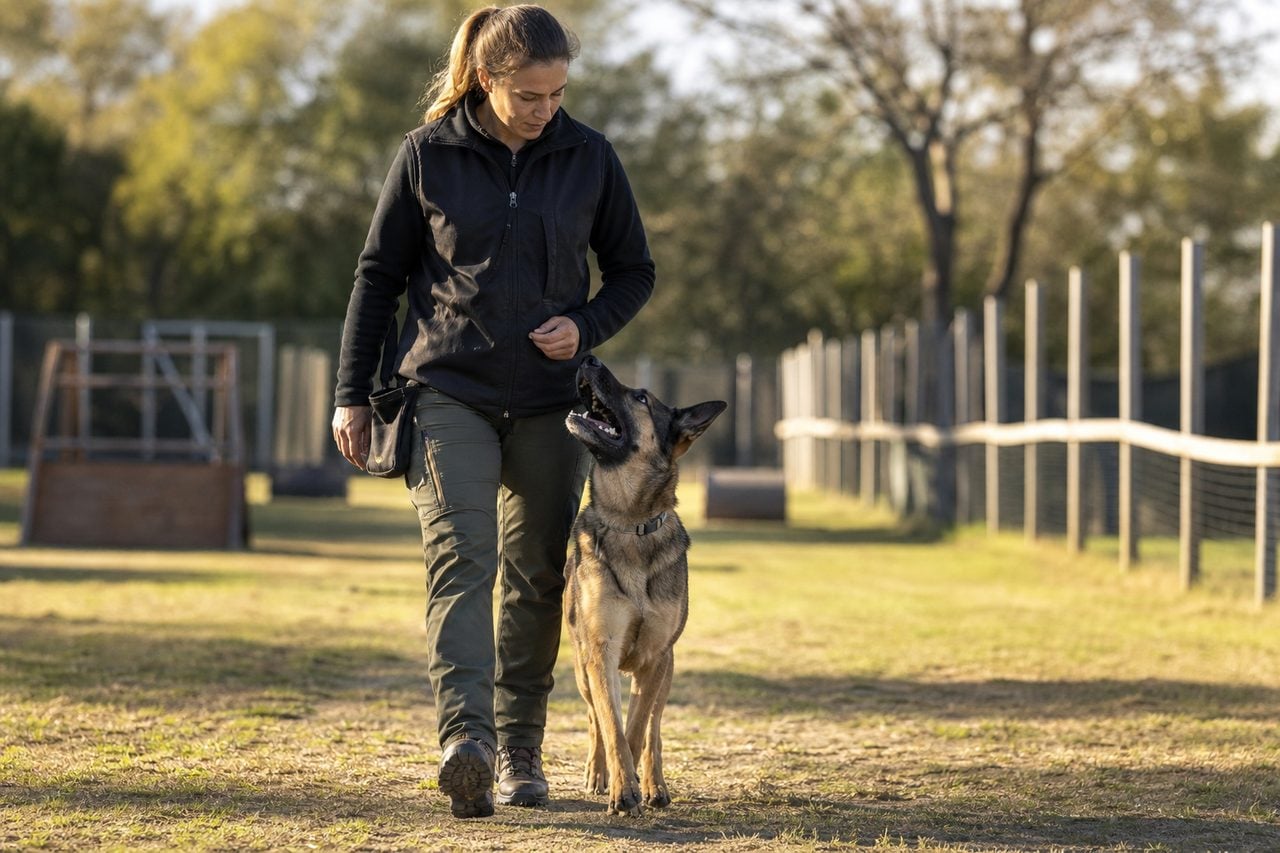
Board-and-train has become one of the most requested dog training options in the Akron area, and it is easy to understand why. Between long shifts, the commute up to the office parks in Fairlawn, and weekends that fill up fast with kids’ sports and family obligations, a lot of Summit County owners simply do not have the daily hours that traditional weekly classes demand. A board-and-train program flips the model: instead of you carrying the bulk of the daily repetition, your dog moves in with a trainer for a stretch of time and gets professional handling every single day until the foundation is built.
The phrase itself describes exactly what happens. Your dog boards overnight at the trainer’s facility or home, and during that stay receives structured training sessions woven through the day. It is the most immersive format available short of hiring a live-in handler, and for the right dog and the right family in the Rubber City it can compress weeks of slow progress into a focused block. But it is also the most expensive and the most misunderstood format, so this guide walks through what a real Akron board-and-train looks like, what it should cost, and how to make sure the results actually survive the trip home.
This page does not name or recommend any single business. The verified local trainers shown alongside it are vetted separately. The goal here is to make you a sharper buyer so that whichever NE Ohio provider you choose, you know what good looks like.
What a board-and-train program actually is
A board-and-train is a residential program where your dog lives with a professional trainer for a defined period, typically two to four weeks, and works on obedience and behavior every day. Think of it as the difference between taking one piano lesson a week versus moving into the conservatory for a month. The compounding of daily, consistent reps under someone who reads canine body language fluently is what makes the format powerful.
During the stay, a good Akron trainer is not just drilling sit and down in a vacuum. The dog is being conditioned to listen in real environments: around other dogs at the facility, on walks through quiet residential streets in places like West Akron or Wallhaven, and near the everyday noise and distraction of life. The behaviors are layered in deliberately. Foundation work like name recognition, attention, and a reliable marker (a clicker or a word like “yes”) usually come first, then position commands, then duration and distance, then the hard part, which is proofing those behaviors against distraction.
Crucially, board-and-train is distinct from boarding plus a few token lessons. A real program has a written curriculum, daily session logs, and measurable goals. If a provider cannot tell you what your dog will be working on in week one versus week three, that is a red flag. The structure is the product. You are paying for a trainer’s time, their facility, the overnight care, and the expertise to know when to push and when to back off, all bundled into one residential package.
It is also worth being clear about what board-and-train is not. It is not a magic reset button that erases your relationship with the dog and hands you back a robot. The dog comes home with new skills, but those skills live inside a partnership that you now have to maintain. That is why the handoff, covered later on this page, matters as much as the training itself.
A realistic week-by-week look at the program
Programs vary, but most reputable Akron board-and-trains follow a recognizable arc. Knowing it helps you ask the right questions and spot a provider who is winging it.
- Days one to three (decompression and assessment): A good trainer does not start hammering commands the moment your dog arrives. The dog is in a new place, away from family, and stressed. The first few days are about letting the dog settle, observing temperament, learning what motivates it (food, toys, praise), and identifying any quirks or sensitivities. Pushing too hard too soon backfires.
- Week one (foundation): Marker training, engagement and attention, the start of core positions like sit, down, and place (settling on a bed or mat), plus crate routines and house manners. The dog learns the language of the training system before anything complex is asked.
- Week two (building reliability): Commands get added to and existing ones get duration and distance. Recall (coming when called) starts in earnest. Leash work tightens up. The trainer begins introducing mild distractions, perhaps another dog at a distance or a busier part of the property.
- Week three (proofing and generalization): This is where the value is. The dog practices everything it knows in harder contexts: in the car, in a parking lot, or on a quiet stretch of a Summit Metro Park trail like Sand Run, around people and other dogs. Behaviors that only worked in the calm of the facility now have to hold up in the real world.
- Final days (polish and prep for handoff): The trainer cleans up timing, sharpens responses, and shoots video of the dog working. They prepare the transfer plan and schedule your go-home lessons.
A two-week program compresses this and usually targets a tighter list of goals, which is fine for a dog that mainly needs manners and obedience. Deeper behavioral issues realistically need three to four weeks or more, and even then the work continues at home. Ask the provider to map your specific dog’s likely goals onto a timeline like this before you book. If the answer is vague, keep looking.
Daily life inside the program matters too. Reputable Akron facilities balance training sessions with rest, enrichment, potty breaks, and decompression time. A dog cannot train productively for eight hours straight any more than a person can. Sessions tend to be short and frequent, often several focused blocks of ten to twenty minutes spread across the day, with the rest of the time spent on structured rest and supervised play.
Board-and-train versus other formats
Owners often confuse board-and-train with day-camp boot camps or private lessons, and choosing the wrong format wastes money. The defining feature of board-and-train is the overnight residential stay. Your dog is not home in the evenings; it lives with the trainer for the duration.
Compare that to a day-camp or boot-camp model, where the dog comes in for intensive daytime sessions and goes home each night. That format keeps the dog in your house, which means you are still managing evenings and nights, but it is usually cheaper and lets you stay more involved day to day. Private lessons, on the other hand, put all the training labor on you, with a coach guiding once a week. They are the most affordable and the most relationship-building, but they demand the most owner discipline and time.
Board-and-train sits at the top of the cost and intensity ladder. It is the right call when: you genuinely lack the time to do daily homework; your dog has issues that benefit from professional handling many times a day; you want a fast foundation; or you are dealing with something that needs a controlled environment to address safely. It is the wrong call when your real issue is that you and the dog just need to practice together, because in that case the dog will perform beautifully for the trainer and then test you the moment it gets home.
For Akron owners weighing the options, a useful filter is honesty about your own schedule and follow-through. If you know you will not do twenty minutes of homework a night, paying for the residential format and a strong handoff may be money well spent. If you are organized and motivated but just need expert direction, a cheaper format will likely serve you better.
The owner handoff is where it lives or dies
This is the single most important section on the page, and it is the part most owners underestimate. A dog that performs flawlessly for the trainer can fall apart in a week back home if the transfer is handled badly. Dogs do not generalize the way people assume. A behavior learned with one handler in one place does not automatically transfer to a new handler in a new place. Bridging that gap is the trainer’s job, and yours.
A quality Akron board-and-train builds in go-home lessons, also called transfer or turnover sessions. These are private sessions where the trainer teaches you to handle your own dog: how to give commands, how to time rewards, how to correct gently and consistently, and how to hold the standard the dog learned at the facility. Expect at least two to three of these, with some providers offering more or spreading them over the following weeks. If a program offers zero handoff lessons, treat the price as buying a dog you do not yet know how to drive.
Good providers also give you written materials: the commands and the exact words and hand signals used, the daily routine to maintain, the feeding and reward protocol, and a realistic practice schedule for the first thirty days. Many shoot video of the dog working so you have a reference for what good looks like. The best ones offer follow-up support, whether a check-in call, a few weeks of email or text access, or a discounted refresher session if something slips.
Your part of the bargain is non-negotiable. The first two to four weeks at home are when the new behaviors either cement or erode. Plan to enforce the same rules the trainer used, practice short sessions daily, and resist the urge to let things slide just this once, because dogs read inconsistency instantly. Treat the homecoming like the second half of the program, not the finish line. When you ask providers about their process, push hard on follow-up: what support exists after pickup, for how long, and at what cost. The answer separates a real partner from a drop-off service.
How to vet an Akron board-and-train provider
Because your dog will live unsupervised in someone else’s care, vetting matters more here than in any other format. Use this as a checklist when you tour or call.
- See the facility in person. Insist on touring where your dog will sleep, train, and rest. It should be clean, climate-controlled, secure, and calm. Be wary of anyone who refuses an in-person look or only shows curated photos.
- Ask about their methods. Have them explain, in plain English, how they train and how they handle mistakes. You want a provider whose approach you are comfortable with, who can describe a clear, humane system rather than vague promises. Trust your gut if something feels harsh or evasive.
- Get the curriculum and the timeline. A real program can tell you what your dog will work on each week and what the realistic goals are for your specific dog.
- Confirm the handoff. How many go-home lessons are included? What written materials and video do you get? What follow-up support is there, and for how long?
- Check care logistics. Who is on-site overnight? What is the emergency and veterinary plan? How many dogs are in the program at once, and what is the trainer-to-dog ratio? What vaccination and health requirements do they have, which protect every dog there?
- Ask for references and read reviews. Talk to past clients if you can, and look for patterns in reviews, both good and bad. One angry review is noise; a pattern is signal.
- Be honest about realistic outcomes. A trustworthy provider will tell you what they can and cannot fix in the time booked, and will not promise to cure deep behavioral problems in two weeks.
The overarching principle: you are handing over your dog and a meaningful amount of money, so a professional should welcome scrutiny. Pressure, evasiveness, or guarantees that sound too good are reasons to walk away and look at the next name on your verified list.
What board-and-train costs in the Akron area
Pricing is the question everyone wants answered, so here are realistic Northeast Ohio estimates. These are ballpark figures, not quotes, and the right number depends on the program length, the trainer’s experience, the facility, and what your dog needs.
- Two-week program: roughly 1,500 to 3,000 dollars in the Akron market. This typically covers manners, core obedience, and house behavior for a dog without major issues.
- Three-week program: roughly 2,500 to 4,500 dollars. The extra week buys real proofing and the ability to take on tougher cases.
- Four weeks or longer: 4,000 dollars and up, often used for serious behavioral work, reactivity, or dogs that need a slower, more thorough build.
A few things drive the spread. Northeast Ohio sits at or just below the national average for dog training overall, which works in your favor compared to coastal metros. Within the region, though, the more affluent northern suburbs, places like Hudson, Bath, and Fairlawn, tend to price higher than Akron’s south side. Board-and-train operations in particular often cluster on the south side and in the more rural edges around Barberton, Norton, Green, and New Franklin, where larger lots and lower overhead make running a residential kennel more affordable. That can translate into better value for the same quality of work.
When you compare quotes, make sure you are comparing the same thing. A cheaper program with no handoff lessons and no follow-up is not actually cheaper once you factor in the risk of the training not sticking. Ask what is included: the go-home sessions, written materials, video, follow-up support, and any refresher policy. A slightly higher price that includes a strong transfer and a few weeks of support is usually the better buy. Also confirm the deposit and refund terms before you commit, since residential programs typically require a deposit to hold a spot.
Finally, weigh the cost against the alternative. Board-and-train is expensive in a single lump, but for a busy Summit County household that would otherwise let a problem drag on for months, the concentrated result can be worth it, provided you commit to the homework that keeps it alive.
Reviewed Board & Train Trainers in Akron
These reviewed Akron-area trainers from our directory handle board & train. Each links to a full profile with specialties, verified credentials, reviews, and contact info:
- Atlas Canine — 5.0★ (49 reviews)
- Zero To Hero Dog Training — 5.0★ (49 reviews)
- Focus Dog Training — 5.0★ (36 reviews)
- Jackie the Dog Trainer / SouthPaw Pet Care & Training — 5.0★ (27 reviews)
- Hakuna Dogtata — 5.0★ (8 reviews)
- Paige’s Pups — 5.0★ (6 reviews)
- Ace Dog Training — 5.0★ (6 reviews)
- Woofin Good Time LLC — 5.0★ (1 reviews)
- Supreme Class K9 — 5.0★ (1 reviews)
- Sit Means Sit Dog Training Cleveland & Akron — 4.9★ (272 reviews)
See all Akron board & train trainers →
Frequently Asked Questions
How long does a board-and-train program usually last?
Most Akron-area programs run two to four weeks. Two weeks suits a dog that mainly needs manners and core obedience; three to four weeks is more realistic for proofing behaviors against distraction or addressing deeper behavioral issues. Even after pickup, the training continues at home for several weeks as you maintain what the dog learned.
Will my dog forget everything once it comes home?
Not if the handoff is done right. Dogs do not automatically transfer behaviors to a new handler and a new place, which is exactly why go-home lessons exist. A good program teaches you to handle your own dog and gives you written materials and follow-up support. The first few weeks at home are when the training cements or erodes, so your consistency matters as much as the trainer’s work.
How is board-and-train different from a dog boot camp?
The defining difference is the overnight stay. In board-and-train your dog lives at the trainer’s facility for the whole program. A boot camp or day-camp model is intensive but the dog typically goes home each night, which keeps you more involved and usually costs less. Board-and-train is the more immersive and more expensive format.
What does board-and-train cost in Northeast Ohio?
Expect roughly 1,500 to 3,000 dollars for two weeks, 2,500 to 4,500 for three weeks, and 4,000 or more for four weeks or specialized behavioral work. These are estimates, not quotes. Northeast Ohio sits at or just below the national average, and south-side and more rural Akron operations often price below the affluent northern suburbs.
Is board-and-train safe for my dog?
It can be, but you must vet the provider. Tour the facility in person, confirm it is clean, secure, and climate-controlled, ask who is on-site overnight and what the veterinary emergency plan is, and check vaccination requirements. Ask about the trainer-to-dog ratio and how methods handle mistakes. A professional will welcome these questions; evasiveness is a reason to look elsewhere.
Can a board-and-train fix aggression or serious behavior problems?
It can help manage and improve many issues, but be skeptical of anyone promising to cure deep behavioral problems in two weeks. Serious cases usually need longer programs, ongoing work at home, and sometimes a referral to a veterinary behaviorist. An honest provider will tell you what is realistic for your specific dog in the time booked rather than overpromising.
Related: read our complete board & train guide or the full Akron dog training overview.
Ready to find the right board & train pro in Akron?