
Puppy Training in Toledo, OH
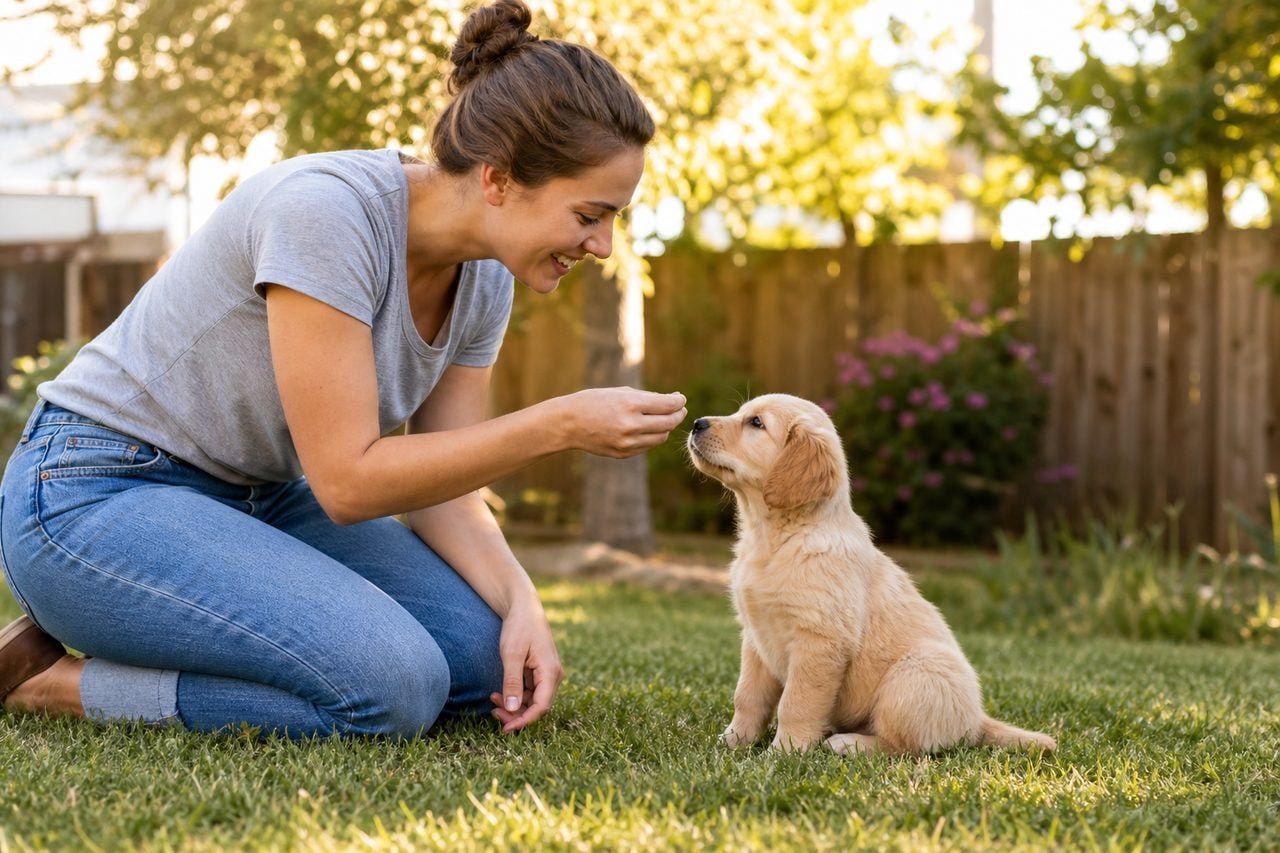
Bringing a puppy home in the Glass City is a little different than it is almost anywhere else in Ohio. Toledo sits at the top of the state on the Maumee River, right where the water spills into Lake Erie and the Michigan line is close enough to drive to in fifteen minutes. That geography shapes everything about raising a young dog here: the lake-effect winters arrive early and hang on, the summers turn humid and heavy, and the flat river-valley terrain means there is no shortage of open space to work in once the weather cooperates. A puppy raised in Point Place near the lake learns very different footing than one raised on the brick streets of the Old West End, and a good training plan accounts for both.
- The First Two Weeks: Setting a Foundation Before Formal Training
- Working Around Toledo's Weather: A Year-Round Training Calendar
- Where to Train: Toledo Neighborhoods and Metroparks for Puppies
- Core Skills Every Toledo Puppy Should Learn First
- Choosing Between DIY, Group Classes, and Private Trainers in NW Ohio
- What Puppy Training Costs in the Toledo Area
- Building a Sustainable Training Routine That Survives a Toledo Year
- Reviewed trainers
- FAQ
This guide walks Toledo families through the first several months with a new puppy: what to prioritize before the vaccine series finishes, how the local climate forces you to rethink your schedule, where the city’s Metroparks and neighborhoods fit into a socialization and training plan, and what it realistically costs to get help from local trainers. None of this is theoretical. It is built around the specific rhythms of Lucas County life, from snowy January potty breaks to the long, light evenings of a NW Ohio summer.
You do not need to be a professional to raise a confident, well-mannered dog. You do need a plan that respects how puppies actually learn, and one that fits the place you live. Toledo gives you tools other cities do not, and a few obstacles too. Here is how to use the first and work around the second.
The First Two Weeks: Setting a Foundation Before Formal Training
The day you bring a puppy home in Toledo is not the day training starts in any formal sense, but it is the day every habit begins forming whether you intend it or not. The most useful thing a new owner can do in the first fourteen days is decide what the household rules will be and then keep every person in the home consistent about them. If the puppy is not allowed on the couch, that rule cannot bend on a cold February evening just because everyone is curled up watching the Mud Hens highlights. Puppies do not understand exceptions; they understand patterns. The pattern you set in week one is the one you will be living with in month six.
House-training is the dominant project of these early weeks, and Toledo’s climate makes it harder than the average city’s. A puppy that comes home in late autumn or winter will face snow, ice, and bitter wind on the very potty trips you most need to be calm and successful. The trick is to make the outdoor spot close to the door, keep trips short and businesslike, and reward heavily the instant the puppy finishes. Many Toledo owners set up a shoveled, predictable path to a small patch of yard so the dog is not wading through drifts to relieve itself. Crate training pairs naturally with this, giving the puppy a den it will instinctively keep clean and giving you a safe place to contain it during the long stretches when going outside every twenty minutes is not realistic.
Sleep and downtime matter more than most first-time owners expect. An eight-to-twelve-week-old puppy needs something close to eighteen hours of rest a day, and an overtired puppy looks exactly like a wild, biting, impossible puppy. Building a quiet routine where the puppy naps in its crate between bursts of play prevents most of the frantic evening behavior that drives new owners to the internet at midnight.
Finally, start handling the puppy gently and often. Touch the paws, look in the ears, hold the collar, open the mouth. NW Ohio’s seasonal swings mean your dog will need paw checks for road salt all winter and tick checks all summer, and a dog that learned early that handling is normal will tolerate vet visits, grooming, and at-home care for the rest of its life.
Working Around Toledo's Weather: A Year-Round Training Calendar
No honest guide to raising a puppy in Toledo can skip the weather, because the calendar dictates a huge amount of what is practical month to month. The flat land of the western Lake Erie basin offers nothing to block the wind, and lake-effect snow can dump on the north side of the city while the south side stays comparatively clear. A training plan that ignores this will stall out every winter and overheat every July.
Winter is the season of indoor work. From roughly December through March, expect days when the windchill makes a long outdoor session genuinely unsafe for a small puppy. This is the time to lean into everything that can be taught inside: name recognition, sit, down, place, loose-leash basics in a hallway, impulse-control games, and crate comfort. Short, frequent outdoor potty trips are non-negotiable, but real training moves indoors. Many local trainers and facilities run indoor group classes specifically because Toledo winters demand a heated space, and these classes double as controlled socialization when outdoor exposure is limited.
Spring and fall are the golden windows. The terrain dries out, temperatures land in a comfortable range, and the Metroparks come alive. This is when outdoor leash work, recall practice in safer open areas, and real-world exposure should ramp up hard. If your puppy hit its critical socialization period during a deep-freeze winter, spring is your make-up window, and you should treat it with urgency.
Summer brings its own hazard: humidity. Toledo summers get sticky, and pavement downtown or in suburban lots like those around Sylvania can scorch puppy paws by midafternoon. The fix is timing. Schedule outdoor training and walks for the early morning or the long light of late evening, carry water, and learn the back-of-the-hand pavement test before any midday outing. Build your puppy’s whole first year around these seasonal realities and you will never feel like the weather is fighting your progress.
Where to Train: Toledo Neighborhoods and Metroparks for Puppies
Toledo gives puppy owners an unusually rich set of environments, and exposing a young dog to variety is one of the highest-return things you can do. The key, especially before a puppy is fully vaccinated, is matching the location to the dog’s stage. Carry a young, under-vaccinated puppy into novel environments for sights and sounds; save ground-level exploration of high-traffic dog areas for after the vet clears it.
The Metroparks Toledo system is the crown jewel for outdoor work, and each park offers something distinct:
- Wildwood Preserve Metropark — wide, well-maintained trails and open meadows on the city’s west side, ideal for a puppy’s first calm leash walks once cleared. Remember that Metroparks require dogs to be leashed on trails, which actually makes them excellent for practicing controlled walking.
- Oak Openings Preserve Metropark — one of the most ecologically unusual places in the Midwest, with rare sand dunes and oak savanna. The varied footing of sand, soil, and boardwalk gives a developing puppy a tremendous range of surfaces to build confidence on.
- Side Cut Metropark — along the Maumee in Maumee, with river views and historic canal features that expose a puppy to water sounds, anglers, and bridges.
- Glass City Metropark — the downtown riverfront park, perfect for urban exposure: skyline backdrop, event crowds, and the sounds of a working city.
- Swan Creek Preserve — quieter wooded trails for a puppy that needs lower-stimulation practice.
Beyond the parks, the neighborhoods themselves are training grounds. A walk through the brick-paved Old West End exposes a puppy to historic Victorian streetscapes and varied foot traffic. The downtown Warehouse District offers concrete, glass, delivery trucks, and the bustle a country-raised dog never sees. Quieter residential areas like Old Orchard or the suburban grids of Perrysburg and Ottawa Hills give you calmer settings to build duration and focus. Rotating through three or four of these environments a week, in short manageable sessions, produces a dog that is unbothered by almost anything Toledo throws at it.
Core Skills Every Toledo Puppy Should Learn First
It is tempting to chase impressive tricks, but the skills that actually make life with a Toledo dog easier are unglamorous and foundational. Prioritize these before anything fancy, and teach them in low-distraction settings before testing them in the real world.
Name and attention come first. A puppy that orients to its name and offers eye contact has given you the lever you need for everything else. Practice this in the kitchen before you ever expect it on a busy Glass City Metropark path. Recall — coming when called — is arguably the most important safety skill a dog will ever learn, and it must be built carefully, never poisoned by calling the dog only to do something it dislikes. Given how many open spaces and water features the area offers, a reliable recall is the difference between freedom and a dog permanently stuck on leash.
Loose-leash walking deserves real attention here because so much of Toledo life happens on leash. Metroparks require it, neighborhood sidewalks demand it, and winter ice makes a lunging dog genuinely dangerous to walk. Start in the house, graduate to the driveway, then to a quiet street, and only then to a stimulating environment. Sit, down, and a solid stay or place give you the off-switch that makes a dog welcome in cafes, on patios, and in the homes of friends.
Just as important is what trainers call impulse control: waiting at thresholds, not bolting out doors, leaving food on the floor, and settling on cue. These behaviors prevent the everyday chaos that erodes the human-dog relationship. A puppy that can settle calmly while you eat dinner or work from home is a puppy you will actually enjoy living with through a long indoor Toledo winter.
Bite inhibition and gentle mouth manners round out the early curriculum. Puppies explore with their mouths, and the goal is not to eliminate mouthing overnight but to teach the dog to control the pressure of its jaws. This is best worked on early, while the puppy is small and the stakes are low.
Choosing Between DIY, Group Classes, and Private Trainers in NW Ohio
Once you have decided to get help, the next question is what kind. Toledo and its surrounding suburbs offer the full spectrum, and the right choice depends on your dog, your goals, your schedule, and your budget. There is no single correct answer, but there are sensible matches.
Do-it-yourself training works for owners who have the time, consistency, and patience to follow a structured plan. It is the cheapest route and, done well, can produce an excellent dog. The risk is drift: without accountability, most people stall, miss the critical socialization window, or accidentally reinforce the wrong things. If you go this route, give yourself structure and deadlines, and do not hesitate to bring in a professional the moment you feel stuck.
Group puppy classes are the workhorse option and a particularly good fit for Toledo because they solve the winter problem. A heated indoor class gives your puppy controlled exposure to other dogs and people during months when outdoor socialization is hard, plus professional coaching and a weekly accountability checkpoint. They tend to be the best value for the money. The tradeoff is that the curriculum moves at the group’s pace and is not tailored to your dog’s specific quirks.
Private, in-home training is the premium option and the right call for puppies with specific challenges, owners with unusual schedules, or families who want a plan built precisely around their household and neighborhood. A trainer who comes to your Point Place home or meets you at a nearby Metropark can address real-world problems in the exact context they happen. It costs more per hour, but it can be the fastest path to results.
Many local trainers blend these formats, and a common smart progression is a few private sessions to establish foundations followed by a group class for socialization and proofing. Whatever you choose, look for trainers who use modern, reward-based methods, who are transparent about their approach, and who are comfortable explaining why they do what they do.
What Puppy Training Costs in the Toledo Area
Cost is one of the first questions every new owner asks, and the honest answer is that Northwest Ohio sits at or just below the national average, which makes Toledo a relatively affordable place to invest in a well-trained dog. That said, prices vary meaningfully across the metro, and a few patterns hold true. These are realistic estimate ranges, not quotes, and any individual trainer may fall outside them.
- Group puppy classes typically run as multi-week packages, often in the range of roughly 150 to 300 dollars for a four-to-six-week course. This is usually the best value and a sensible starting point for most families.
- Private in-home sessions generally land somewhere around 75 to 150 dollars per hour, depending on the trainer’s experience and credentials, with package discounts common.
- Board-and-train programs, where the dog stays with a trainer for an intensive stretch, are the most expensive option and can run well into four figures for multi-week stays. They suit owners short on time who want fast, structured results.
Geography inside the metro matters. The affluent west-side suburbs such as Sylvania and Ottawa Hills tend to carry higher prices than the east side, Oregon, or the outlying townships toward Swanton, Whitehouse, and Waterville. Bowling Green, with its university-town economics, sits in its own bracket. If budget is tight, it is often worth driving a few extra miles to a trainer based outside the priciest zip codes.
When weighing cost, think in terms of value rather than the lowest sticker price. A slightly more expensive trainer who actually resolves a problem in three sessions is cheaper than a bargain option that drags on for months. And remember that the cheapest, highest-return investment of all is your own consistency between sessions; no trainer can substitute for the daily practice that happens at home.
Building a Sustainable Training Routine That Survives a Toledo Year
The owners who end up with genuinely well-trained dogs are rarely the ones who train hardest in any single week. They are the ones who built a routine durable enough to survive a full Toledo year, with its dark winters, busy springs, and humid summers. Sustainability beats intensity every time.
The core principle is short and frequent. Three or four five-minute sessions sprinkled through the day will out-teach a single exhausting half-hour, and they fit far more naturally into real life. A few reps of sit-stays while the coffee brews, a recall game in the hallway before dinner, a minute of loose-leash practice on the way to the mailbox during a January cold snap: this is what actually adds up. Puppies have short attention spans, and ending each session while the dog still wants more keeps training something it looks forward to.
Adapt the routine to the season rather than fighting it. In winter, fold training into the indoor hours you are already spending together and use group classes to cover socialization. In spring and fall, get out to the Metroparks and the neighborhoods aggressively while the weather is on your side. In summer, shift to the cool edges of the day. The goal is a plan you never feel tempted to abandon because it asks the impossible of you in bad weather.
Track progress honestly and adjust. Keep a simple note of what your puppy can do reliably, where it still struggles, and which environments still overwhelm it. Puppies progress unevenly, and a skill that looks solid in your living room may fall apart at Glass City Metropark on an event day. That is not failure; it is information. Re-proof the skill in easier conditions and build back up.
Finally, do not go it entirely alone if you start to struggle. Toledo has a real community of dog owners and a roster of local trainers who can get you unstuck. Reaching out early, before a small issue calcifies into a stubborn habit, is the single best decision a new owner can make. A puppy raised with patience, consistency, and a plan that respects the place you live grows into the kind of dog that makes every cold walk and humid morning worth it.
Reviewed Puppy Training Trainers in Toledo
These reviewed Toledo-area trainers from our directory handle puppy training. Each links to a full profile with specialties, verified credentials, reviews, and contact info:
- Ready, Set…Train! — 5.0★ (46 reviews)
- P2K9 Training — 5.0★ (36 reviews)
- Alpha K9 Connections — 5.0★ (23 reviews)
- Clever Canine Companion LLC — 5.0★ (9 reviews)
- Tranquil Tails Training Academy, LLC — 5.0★ (5 reviews)
- Let’s Train! Dog Training — 4.8★ (157 reviews)
- Toledo Kennel Club — 4.7★ (48 reviews)
- Glass City K9 LLC — 4.6★ (163 reviews)
- Toledo’s PET Bull Project — 4.4★ (188 reviews)
- Sit Means Sit Dog Training Toledo — 4.1★ (19 reviews)
See all Toledo puppy training trainers →
Frequently Asked Questions
When should I start training my new puppy in Toledo?
Training starts the moment your puppy comes home, even though formal classes usually begin a bit later. From day one you are shaping habits around house-training, sleep, handling, and household rules. Foundational skills like name recognition and crate comfort can begin at eight to nine weeks, and many Toledo puppy classes accept dogs once they have started their vaccine series. Because the area’s critical socialization window often overlaps with harsh winter weather, it is wise to begin early and lean on indoor classes so you do not lose that irreplaceable developmental period.
How does Toledo's weather affect puppy training?
Significantly. Lake-effect winters bring early snow, ice, and biting wind off Lake Erie, which makes long outdoor sessions unsafe for a small puppy and pushes most real training indoors from roughly December through March. Humid summers create the opposite problem, with hot pavement that can burn paws midday. The practical approach is to do indoor skill work and indoor group classes in winter, ramp up outdoor exposure hard in spring and fall, and shift summer walks to the early morning or late evening when it is cooler.
Where can I take my puppy for training and socialization in Toledo?
The Metroparks Toledo system is excellent, including Wildwood Preserve, Oak Openings with its rare sand dunes and varied footing, Side Cut along the Maumee, Glass City Metropark downtown, and quieter Swan Creek. Keep in mind dogs must be leashed on Metroparks trails. Neighborhoods add valuable variety too: the brick streets of the Old West End, the bustle of the downtown Warehouse District, and calmer residential areas like Old Orchard or suburban Perrysburg. Before your puppy is fully vaccinated, favor carrying it for novel sights and sounds rather than letting it explore high-traffic ground.
How much does puppy training cost in the Toledo area?
Northwest Ohio sits at or just below the national average. As realistic estimates, group puppy classes often run about 150 to 300 dollars for a multi-week course, private in-home sessions around 75 to 150 dollars per hour with package discounts common, and intensive board-and-train programs well into four figures. Prices tend to run higher in west-side suburbs like Sylvania and Ottawa Hills than on the east side, in Oregon, or in outlying townships. These are estimates only; ask individual local trainers for current pricing.
Should I choose group classes or private training for my puppy?
It depends on your dog and goals. Group classes are the best value and especially useful in Toledo because heated indoor classes provide controlled socialization through the long winter. Private in-home training costs more but is tailored to your household, neighborhood, and your puppy’s specific challenges, and it tends to produce faster results for particular problems. Many owners do both: a few private sessions to build foundations, then a group class for socialization and proofing. Local trainers can help you decide which fits your situation.
What should my puppy learn first?
Prioritize foundational, real-world skills over tricks. Start with name recognition and attention, then build a reliable recall, loose-leash walking, and basic position cues like sit, down, and a settle or place command. Impulse-control behaviors such as waiting at doors and leaving food alone prevent everyday chaos, and gentle mouth manners should be addressed early while the puppy is small. Loose-leash walking deserves special focus in Toledo because Metroparks require leashes and winter ice makes a pulling dog genuinely hard to handle.
Related: read our complete puppy training guide or the full Toledo dog training overview.
Ready to find the right puppy training pro in Toledo?