
Board & Train in Canton, OH
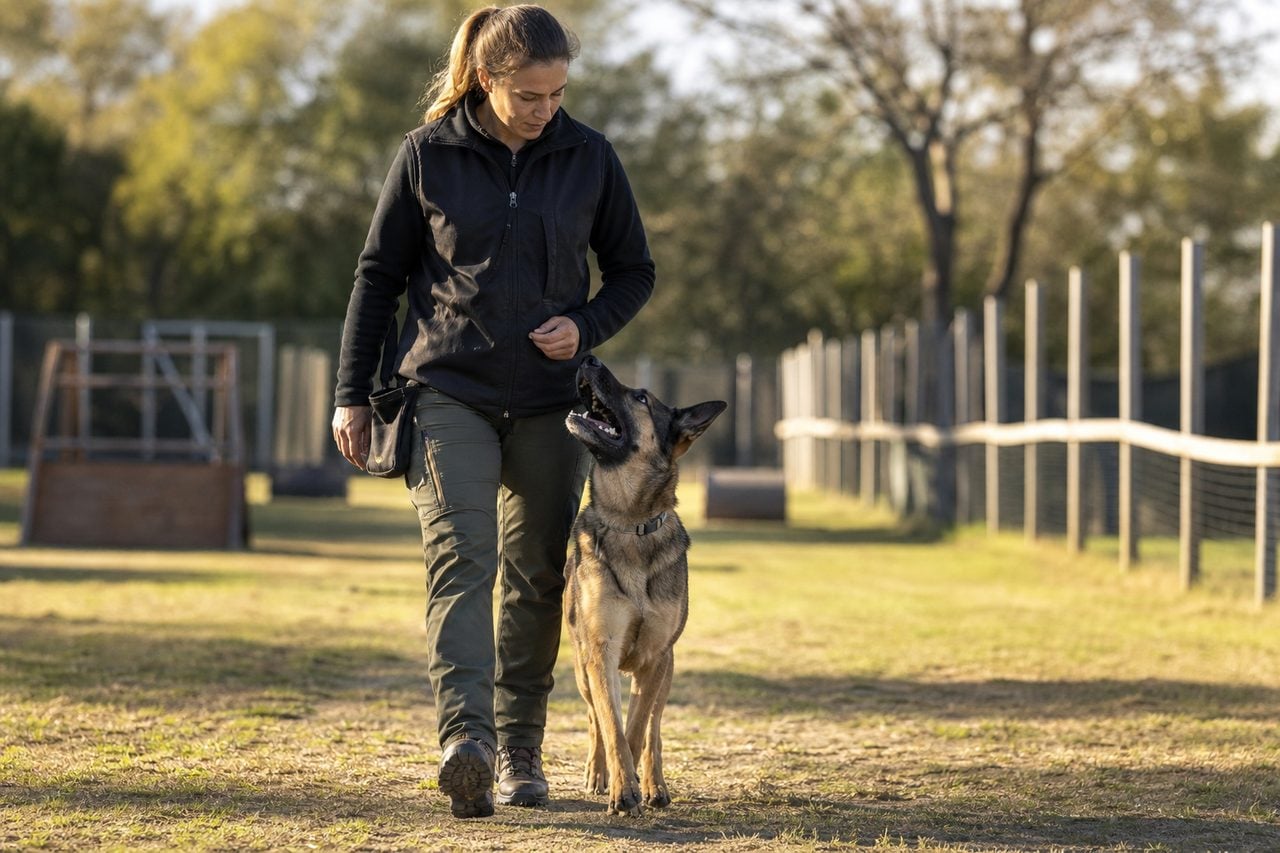
Board-and-train has become one of the most requested services among dog owners across Stark County, and it is easy to understand why. Life in the Hall of Fame City moves fast. Between commuting to jobs in downtown Canton, North Canton, or the Jackson Township corridor, raising kids, and trying to claw back a few hours of weekend time, a lot of families simply do not have the bandwidth to run a daily training program for a dog that pulls on leash, bolts out the door, or cannot settle when guests arrive. A residential program promises a tempting shortcut: hand the dog over to a professional for a couple of weeks, and get back an animal that already knows the skills.
That promise is real, but it is also widely misunderstood. Board-and-train is not a magic reset button, and it is not the same thing as a dog boot camp, even though the two terms get used interchangeably all over local Facebook groups and Google searches. A true board-and-train means your dog lives at the trainer’s facility or home overnight for the duration of the program, gets worked daily by that professional, and then comes home through a structured handoff so you can keep the behavior going. The overnight residential piece and the handoff are the two features that define it.
This guide walks Canton-area owners through what board-and-train actually involves, what it costs around Stark County, how the rural townships south and east of the city change the math, and how to tell a quality program from one that will hand you back a dog that looks trained for about three days. Throughout, we reference local trainers in general terms only. The goal is to help you ask the right questions, not to push any single facility.
What Board-and-Train Actually Means
At its core, board-and-train is a residential program. Your dog leaves home and lives where the trainer works, whether that is a dedicated kennel facility out toward Hartville, a converted property in one of the rural townships, or a trainer’s own home in a quieter part of North Canton. For the length of the stay, the dog is in the trainer’s care around the clock. That continuous access is the whole point: instead of a 50-minute lesson once a week, the dog gets multiple short training sessions every day, woven into feeding, potty breaks, crate time, and rest. Repetition compresses, and skills that might take three months of weekly classes can take root in two or three weeks.
The most important distinction is the overnight residential component combined with the handoff. A program where you drop your dog off in the morning and pick it up at night is a day program or a day camp, not board-and-train. The residential model lets the trainer control the dog’s entire environment, which matters enormously for behaviors tied to context. A dog that never gets to rehearse counter-surfing or fence-fighting for two solid weeks starts to forget the habit, and the trainer can replace it with something better before the dog ever comes home to the old triggers.
The handoff is the second non-negotiable. A good board-and-train ends with one or more sessions where the trainer transfers the skills to you. You learn the exact cues, the timing, the leash mechanics, and the daily routine that keeps the behavior alive. Without that, you are paying for a dog that listens beautifully to someone else. The reputable Canton-area trainers treat the handoff as the most important part of the whole program, not an afterthought tacked onto pickup day.
Board-and-Train Versus Dog Boot Camp
This is the single most common source of confusion, so it is worth being precise. A dog boot camp is built around an intensive curriculum, often delivered as a day camp where the dog comes home each night, paired with serious owner homework. A board-and-train is built around overnight residential care with the trainer doing the heavy lifting and a handoff at the end. Both can produce excellent results. They suit very different households.
Board-and-train fits the owner who is short on time, who travels, or who is dealing with a behavior they genuinely cannot manage themselves right now, such as a strong dog that has learned to drag a handler down the icy sidewalks Canton sees from December through February. You outsource the daily work. The tradeoff is cost and the reality that you still have to do the handoff work, or the results fade. Boot camp fits the owner who wants to be hands-on, learn the mechanics, and stay involved every day, but who needs a structured, accelerated framework to follow. You keep the dog home, you do the reps, and the trainer coaches.
There is also a relationship dimension. Some owners worry that sending a dog away for two weeks damages the bond. In practice a well-run residential program does not, because the dog comes home and immediately starts working with you during the handoff. But if being separated from your dog for that long feels wrong, a boot-camp or day-camp format keeps you together every night and may be the better emotional fit. Neither is superior. The right choice depends on your schedule, your budget, and how much of the training you want to do with your own hands.
What It Costs Around Stark County
Pricing in the Canton area tends to land at or just below the national average, which is a genuine advantage for local owners. As a broad guide, a two-week board-and-train in and around Stark County commonly runs somewhere in the range of $1,500 to $3,000, and a three-week program can climb toward $3,500 to $4,500 for more involved cases. Programs targeting basic manners and obedience sit at the lower end. Programs addressing reactivity, serious leash aggression, or off-leash reliability sit higher because they take more days and more skill.
Geography inside the county shifts these numbers. The north side, including Jackson Township and North Canton, generally runs higher, reflecting higher overhead and property costs in those areas. Programs based out toward the east side, Alliance, Louisville, or the rural southern townships near Navarre and Canal Fulton, often come in a little cheaper. Part of that is simple economics: kennel and board-and-train room is easier to come by in the rural townships, where a trainer can keep dogs comfortably without paying premium suburban rent. That extra space frequently translates into more turnout, calmer dogs, and a lower nightly rate.
When you compare quotes, make sure you are comparing the same thing. Ask what the daily session count is, how many handoff lessons are included, whether follow-up support is part of the price, and what happens if the dog needs an extra week. A $1,600 program with no follow-up can end up more expensive than a $2,400 program that includes three handoff sessions and a month of phone support, because the cheaper one often means you are hiring a second trainer to fix the fade. Price per outcome matters more than price per week.
When Board-and-Train Is the Right Call
Board-and-train shines in a handful of specific situations. The first is the time-crunched household. If you genuinely cannot commit to two or three daily training sessions for several weeks, a residential program does that work for you. This is common among Canton families juggling shift work at the local hospitals, manufacturing schedules tied to the area’s industrial roots, and long commutes up I-77 toward Akron. Outsourcing the daily reps is not a cop-out; it is a realistic answer to a real constraint.
The second is a behavior that has outpaced the owner’s current ability to manage it safely. A large adolescent dog that has learned it can pull a handler off balance, especially on snow and ice, is a safety issue, not just an annoyance. So is a dog that has started guarding furniture or food in a home with kids. A skilled residential trainer can interrupt the rehearsal of that behavior in a controlled environment, which is hard to do when the dog practices it every day at home. The clean break a residential stay provides can be exactly what an entrenched habit needs.
The third is foundational off-leash work for owners who want to enjoy the area’s outdoor spaces. Canton sits near genuinely good dog-friendly terrain, from the Towpath Trail to the open areas around Sippo Lake and Quail Hollow State Park. Owners who dream of reliable recall on the trail often find that a residential program builds the foundation faster than they could alone, because off-leash reliability demands an enormous number of clean repetitions in varied settings. That said, board-and-train is the start of off-leash work, not the finish. The handoff and your own follow-through turn a trained dog into a trail companion.
How to Vet a Local Program
Because anyone can call themselves a dog trainer, vetting matters more than marketing. Start by asking to see where the dogs actually live. A facility that welcomes a visit, shows you clean kennels, safe turnout areas, and a sensible daily schedule has nothing to hide. A trainer who only meets you at a coffee shop and will not show you the overnight space is a red flag. You are entrusting them with your dog around the clock, so you deserve to see the around-the-clock conditions.
Next, ask about methods in plain language. A good trainer can explain how they teach a behavior, how they handle mistakes, and how they decide when to push and when to back off, without hiding behind jargon. Be cautious of anyone who guarantees a specific outcome by a specific date, who refuses to let you observe a session, or who cannot describe what the handoff looks like. Ask how many dogs they have in residence at once, too. A single trainer juggling a dozen boarders cannot give each one the session volume that justifies the price.
Finally, weigh the follow-up. The fade after board-and-train is the number one complaint owners have, and it is almost always a handoff and follow-through problem rather than a training problem. Programs that build in multiple handoff lessons, a written go-home plan, and a window of phone or text support are worth more than their sticker price suggests. Ask specifically: what does week one back home look like, and who do I call when my dog tests me on day three? A trainer who has a clear answer has thought about the part that actually determines whether your money was well spent.
Making the Transition Home Stick
The two or three weeks your dog spends in a program are only half the story. The transition home is where good results either consolidate or unravel, and it deserves as much attention as choosing the program in the first place. Expect your dog to test the new rules when it gets back to familiar territory. The couch, the kitchen counter, the front door, and the backyard fence are all places where old habits were rehearsed, and a smart dog will probe to see whether the new rules apply at home too. They do, but only if you enforce them with the same calm consistency the trainer used.
Plan the first week deliberately. Keep the routine tight, practice the cues you learned in short daily sessions, and resist the urge to immediately reward the homecoming with total freedom. Many owners undo two weeks of work in 48 hours by letting an excited dog back onto the furniture and out the door uncontrolled because it feels mean to keep the structure going. Structure is not mean; it is the bridge between the trained dog you picked up and the trained dog you live with for the next decade. The handoff lessons exist precisely to give you the mechanics for this week.
Canton’s seasons add a practical wrinkle worth planning around. If your dog comes home in the depths of a Stark County winter, the icy sidewalks and short daylight hours make it harder to practice leash work and recall outdoors. Build indoor practice into the routine, use the garage or a hallway for short sessions, and lean on the trainer’s follow-up support to troubleshoot. Conversely, a dog that finishes a program in spring or fall can immediately start generalizing skills on the Towpath Trail or around Petros Lake, which cements the work in exactly the environments you wanted to enjoy in the first place. Either way, the dog you brought home is a starting point, and the consistency you bring over the following weeks is what makes the investment pay off.
Reviewed Board & Train Trainers in Canton
These reviewed Canton-area trainers from our directory handle board & train. Each links to a full profile with specialties, verified credentials, reviews, and contact info:
- Milligan Valley K9 Academy — 5.0★ (100 reviews)
- dog gone worth it — 5.0★ (1 reviews)
- Ridgeside K9 Ohio — 4.9★ (138 reviews)
- WAGS & Wiggles Dog Training — 4.8★ (27 reviews)
- Hi-Point Kennels — 4.6★ (48 reviews)
- Lucky Dog K9 Academy — 4.4★ (14 reviews)
See all Canton board & train trainers →
Frequently Asked Questions
How long does a typical board-and-train program last in the Canton area?
Most residential programs run two to three weeks. Basic manners and obedience usually fit in two weeks, while reactivity, leash aggression, or off-leash reliability often need three weeks or more because they require far more clean repetitions in varied settings. Some trainers offer a single-week refresher for dogs that already have a foundation.
How much should I budget for board-and-train in Stark County?
Expect roughly $1,500 to $3,000 for a two-week program and $3,500 to $4,500 for a more involved three-week program. North-side areas like Jackson Township and North Canton tend to run higher, while programs based in the rural townships toward the east and south often cost a little less because kennel space is more affordable there.
What is the difference between board-and-train and a dog boot camp?
Board-and-train is residential: your dog lives at the trainer’s facility overnight, the trainer does the daily work, and the program ends with a handoff to you. A dog boot camp is an intensive curriculum, often a day camp where the dog comes home each night, paired with serious owner homework. Board-and-train suits time-crunched owners; boot camp suits hands-on owners who want to do the daily reps themselves.
Will my dog forget everything once it comes home?
Not if you do the handoff work. The fade some owners experience is almost always a follow-through problem, not a training problem. Expect your dog to test the rules at home, keep the routine tight during the first week, practice the cues daily, and lean on the trainer’s follow-up support. Programs that include multiple handoff lessons and a written go-home plan make the results far more durable.
Can board-and-train fix serious aggression or reactivity?
It can make real progress on many reactivity and leash-aggression cases, because a residential setting lets the trainer interrupt the rehearsal of the behavior in a controlled environment. However, serious aggression, especially anything rooted in fear or anxiety, sometimes needs a behavior consultant or a veterinary behaviorist in addition to training. Ask any program whether the case is within their scope before you commit.
Should I visit the facility before booking?
Yes. A reputable program will welcome a visit so you can see where the dogs actually live, the turnout areas, and the daily schedule. A trainer who will only meet off-site and will not show you the overnight space is a warning sign. You are leaving your dog in their care around the clock, so you have every right to inspect the around-the-clock conditions first.
Related: read our complete board & train guide or the full Canton dog training overview.
Ready to find the right board & train pro in Canton?