
Dog Boot Camp in Lorain, OH
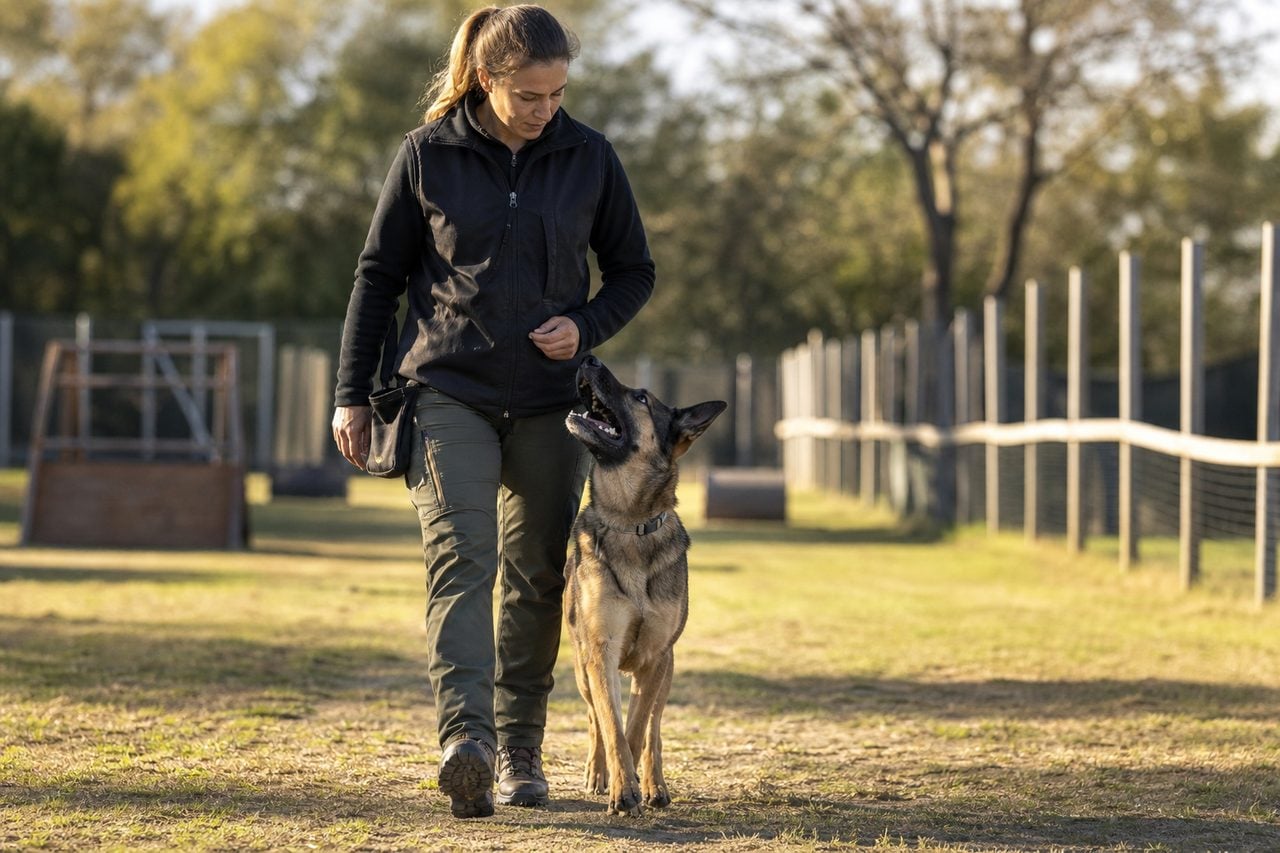
Lorain winters are no joke. Sitting right on the Lake Erie shore at the mouth of the Black River, the city catches the full force of lake-effect snow that can bury a neighborhood while the next town over stays clear. For dog owners, that means months where structured outdoor training is hard and a young dog’s bad habits have plenty of time to calcify indoors. By the time spring opens up the trails at Black River Reservation and the lakefront at Lakeview Park, a lot of local owners are staring at a dog that’s gone from puppy-cute to genuinely difficult, and they want results fast. That’s where the phrase “dog boot camp” enters the conversation.
- Boot camp vs. board and train: the real difference
- What 'intensive' actually delivers
- A realistic results timeline
- Who boot camp is right for (and who should skip it)
- Making the results last: the post-camp month
- Why the calendar drives the boot-camp decision in Lorain
- Questions to ask before booking a boot camp near Lorain
- Reviewed trainers
- FAQ
“Boot camp” is a marketing term as much as a method, and it gets used loosely. People often assume it means the same thing as board and train. It can overlap, but the spirit is different, and understanding that difference will save you money and disappointment. A boot camp, in the way most trainers use the word, is about intensity and speed: a compressed, high-frequency program designed to produce visible behavior change in the shortest honest timeframe. This article focuses specifically on the boot-camp model, what “intensive” really delivers, the realistic results timeline, and how to keep those fast gains from evaporating, all framed for life in Lorain and the surrounding Lorain County towns.
Boot camp vs. board and train: the real difference
The two terms get used interchangeably, but they emphasize different things, and choosing the right one starts with knowing which you actually need.
Board and train describes the logistics: your dog lives at the facility while training happens. The defining feature is where the dog stays.
Boot camp describes the intensity: a high-frequency, results-driven push aimed at fast, measurable change. The defining feature is how concentrated the work is. A boot camp can be residential (your dog stays over), or it can be a day-program format, drop off in the morning, pick up in the evening, every day for one to three weeks, which is appealing for Lorain owners who’d rather not have the dog away overnight.
The practical takeaway: if your priority is convenience and weeks of someone else doing the daily reps, you’re shopping for board and train. If your priority is speed, fixing a specific, pressing problem in the tightest honest window, you’re shopping for a boot camp. Many programs blend both. What matters is that you ask the trainer to describe their format concretely rather than assuming the label tells you everything.
What 'intensive' actually delivers
The boot-camp advantage is repetition density. A dog in a well-run intensive might get four to six focused training sessions a day, in a deliberately controlled environment, with a professional managing every detail of timing and reinforcement. Compare that to the typical at-home reality, one rushed session squeezed in after a long commute, inconsistent rules from different family members, and weekends that get away from everyone. The boot camp removes the variables that slow learning.
This is why intensives produce such visible early results on certain problems. Leash pulling, jumping, door-dashing, ignoring recall, crate refusal, these respond well to dense, consistent practice and clear consequences. A dog can go from chaotic to noticeably manageable in a week or two of true intensive work.
But intensity has limits, and an honest trainer will name them. You cannot rush an emotional process. A fearful or genuinely anxious dog needs time for its nervous system to change, and cramming more sessions into a day doesn’t accelerate that, it can backfire. Boot camp is built for behavior and obedience, the things that improve with reps. It’s a blunt tool for deep emotional issues. If a program advertises a two-week “boot camp cure” for aggression or separation anxiety, be very cautious.
A realistic results timeline
Here’s what honest expectations look like across a typical one-to-three-week intensive.
Week 1: rapid visible change on simple behaviors. Owners are often surprised how fast a dog stops jumping or starts walking on a loose leash when the work is dense and consistent. This early win is real, but it’s the easy part, the dog is performing for a skilled handler in a controlled setting.
Week 2: reliability under distraction. The behaviors get tested with mild then moderate distractions. This is where durable obedience is built, and it’s less flashy than week one but more important.
Week 3 (if the program runs that long): generalization. The dog practices in varied, realistic settings so behaviors hold outside the training bubble. For a Lorain dog, that ideally means proofing around the kind of chaos it’ll face for real, foot traffic, other dogs, the geese and gulls along the lakefront.
The hard truth: the most fragile period is the first month after the dog comes home. Intensive gains are real but new, and new habits are easily overwritten by old household patterns. Fast results and lasting results are not the same thing. A boot camp buys you the first; you earn the second.
Who boot camp is right for (and who should skip it)
Good candidates:
- Owners with a specific, well-defined obedience or manners problem they want resolved quickly, before a move, a baby, a deadline, or simply before another Lorain winter of indoor frustration.
- Dogs that are fundamentally stable but undertrained, lots of energy, no foundation, pulling and jumping because nobody taught them otherwise.
- People who genuinely cannot do consistent daily work themselves right now and want a professional to install the foundation fast.
Poor candidates:
- Dogs whose primary issue is fear, anxiety, or fear-based aggression. These need time and behavior modification, not compression. An intensive can even add stress.
- Owners looking for a hands-off permanent fix. Boot camp is the opposite of hands-off after pickup, it demands committed follow-through.
- Very young puppies, where the better investment is foundational socialization and a slower-paced program, not an intensive.
If your dog falls in the second group, a different format, private behavior sessions over a longer period, will serve you better even though it feels slower.
Making the results last: the post-camp month
The make-or-break window is the four weeks after your dog comes home. Treat it like the most important phase of the whole program, because it is.
- Get a transfer lesson, ideally more than one. The dog learned to respond to the trainer’s timing and mechanics. You need coaching to reproduce them. A program without this is selling you half a result.
- Keep the structure tight at first. Maintain the crate routine, the place command, the structured feeding and walking the trainer set up. Don’t celebrate by going back to free-for-all the day the dog gets home.
- Build distraction gradually. Practice in your quiet backyard before the busy Lakeview Park parking lot. Set the dog up to win, then raise difficulty.
- Get the whole household on the same rules. A boot camp dog falls apart fast when one family member enforces and another sneaks table scraps and lets the jumping slide.
- Plan a follow-up check-in. A session two to four weeks post-pickup catches drift before it becomes regression.
Done right, the dense early work plus a disciplined first month gives you a dog that’s genuinely changed, not just briefly impressive.
Why the calendar drives the boot-camp decision in Lorain
Boot camp is fundamentally about timing, and in Lorain the calendar pushes that decision harder than in most places. The lake-effect winters create a predictable cycle: months of limited outdoor training, a dog cooped up and reinforcing bad habits indoors, and then a spring thaw that suddenly opens the trails and lakefront and exposes just how far things have slipped.
That cycle is exactly why intensives are popular here. A lot of local owners hit early spring with a dog that’s gone feral over the winter and a strong urge to fix it before summer, before the family wants to actually use Lakeview Park beach, walk the Black River trail, or have people over without the dog mauling every guest at the door. A boot camp’s whole pitch, compressed time, fast change, fits that “I need this handled before the season” urgency.
There’s a smart way to use the calendar to your advantage. Timing an intensive for late winter into early spring means your dog finishes the program right as the weather opens up, so you can immediately practice the new skills in the real environments that matter, busy trailheads, the lakefront, foot traffic, instead of trying to proof a freshly trained dog in a snowbound backyard. Generalization is where boot-camp gains either lock in or leak away, and you want the season working with you for that phase, not against you. If you’re considering an intensive, think about when as carefully as whether, the right timing can make the difference between results that hold and results that melt with the snow.
Questions to ask before booking a boot camp near Lorain
Before you commit, get clear answers to these:
- Is this residential or day-program format? Day programs let your dog sleep at home, which some dogs and owners strongly prefer.
- How many training sessions per day will my dog actually get? Intensity is the entire point, so this number matters.
- How many dogs are in the program at the same time? More dogs can mean less individual attention.
- What specific problems is this format good and not good for? A trainer who admits boot camp isn’t right for fear or anxiety cases is being honest with you.
- What’s included after pickup? Transfer lessons, a written plan, and follow-up support are essential, not extras.
- Can I see video of dogs partway through a program? Real footage of in-progress dogs tells you more than a highlight reel.
The right boot camp is upfront about both what intensity can deliver fast and what it can’t deliver at all. That honesty is the single best predictor of whether the money you spend turns into a dog you can actually live with.
Reviewed Dog Boot Camp Trainers in Lorain
These reviewed Lorain-area trainers from our directory handle dog boot camp. Each links to a full profile with specialties, verified credentials, reviews, and contact info:
- The Dog Wizard Westlake — 5.0★ (86 reviews)
- Dignified K9 Grooming, Training & Boarding — 5.0★ (17 reviews)
- Elite K911 — 4.8★ (191 reviews)
- Sit Means Sit Dog Training – Cleveland Westside — 4.7★ (74 reviews)
See all Lorain dog boot camp trainers →
Frequently Asked Questions
Is a dog boot camp the same as board and train?
They overlap but emphasize different things. Board and train describes the logistics (your dog stays at the facility). Boot camp describes the intensity (a compressed, high-frequency push for fast results). A boot camp can be residential or a day-program format where the dog goes home each night.
How fast will I see results?
On simple obedience and manners problems like pulling, jumping, and door-dashing, you can see visible change in the first week of true intensive work. Reliability under distraction takes the second week, and generalizing to real environments takes longer. Fast results and lasting results are not the same thing.
Can a boot camp fix my dog's aggression or anxiety?
Be cautious of programs claiming to cure aggression or anxiety in one to two weeks. Those are emotional issues that require time and behavior modification, not compression. Intensives are built for behavior and obedience that improve with repetition. A fearful dog can even find an intensive stressful.
What kind of dog is a good fit for boot camp?
A fundamentally stable but undertrained dog with lots of energy and a specific, well-defined obedience problem you want resolved quickly. Poor fits include dogs whose main issue is fear or anxiety, very young puppies, and owners hoping for a permanent hands-off fix.
What happens after my dog comes home from boot camp?
The first month is make-or-break. Get at least one transfer lesson so the dog responds to you, keep the structure tight at first, build distractions gradually, get the whole household on the same rules, and schedule a follow-up two to four weeks out to catch any drift before it becomes regression.
Should I choose a day program or a residential boot camp?
Day programs let your dog sleep at home and may suit dogs that stress in kennels, plus owners who don’t want their dog away overnight. Residential formats maximize the controlled environment around the clock. Ask the trainer to explain their format concretely rather than assuming the label tells you everything.
Related: read our complete dog boot camp guide or the full Lorain dog training overview.
Ready to find the right dog boot camp pro in Lorain?