
Puppy Socialization in South Bend, IN
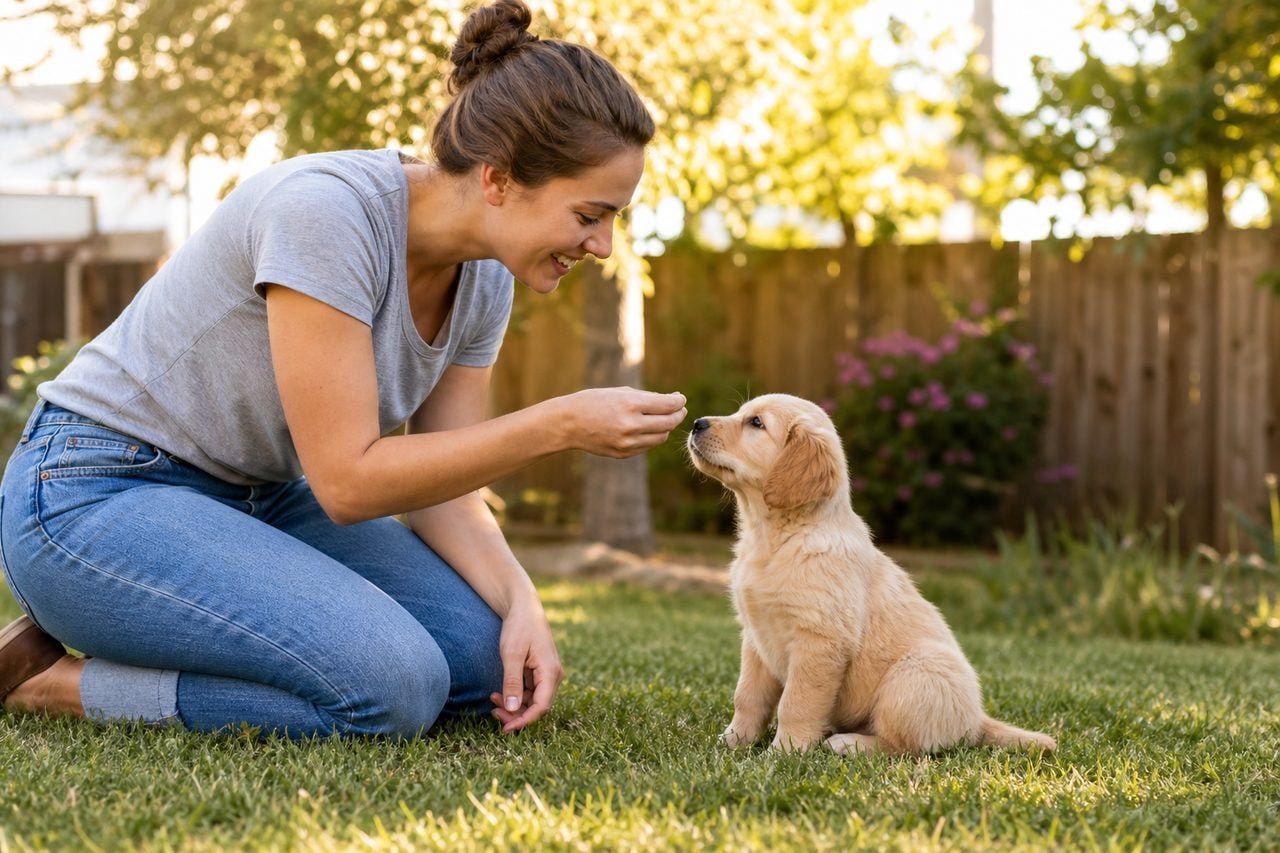
Socialization is the most important gift you can give a young dog, and it is also the most commonly misunderstood. It is not simply letting your puppy play with other dogs. True socialization means teaching a puppy that the enormous, noisy, unpredictable human world is safe and normal — from the roar of a Notre Dame football Saturday to the clip-clop of an Amish buggy on a Goshen back road, from the hiss of RV-factory air tools in Elkhart to the deep quiet of a snowbound Michiana morning.
- What Socialization Actually Means
- The Critical Window and Why Timing Is Everything
- A Socialization Checklist for Michiana Puppies
- Reading Your Puppy: Confidence, Fear, and Not Flooding
- Using Local Settings as a Socialization Curriculum
- Socializing Through a Michiana Winter
- Puppy Classes and Professional Socialization Support
- Reviewed trainers
- FAQ
The South Bend and Elkhart area gives puppy owners an unusually rich palette of experiences to work with, along with a few genuine challenges — long winters that tempt owners to keep puppies inside, and a critical socialization window that closes long before most people realize. This guide explains what to expose your puppy to, how to do it without overwhelming them, and how to use the region’s parks, trails, and towns as a natural socialization curriculum.
The stakes are real. Under-socialized dogs are the ones who bark and lunge on leash, who cannot cope with visitors, who tremble at thunderstorms and fireworks. A well-socialized dog, by contrast, moves through the world with an easy confidence that makes everything — vet visits, travel, guests, trail outings — simpler for the rest of its life. Getting this right in the first few months is one of the highest-return efforts a new owner will ever make, and it costs mostly attention and intention rather than money.
What Socialization Actually Means
The word gets thrown around loosely, so it helps to be precise. Socialization is the process of exposing a young animal to the sights, sounds, surfaces, people, animals, and situations it will encounter in life, in a way that builds positive or at least neutral associations. The goal is a dog that finds novelty unremarkable rather than threatening.
Crucially, socialization is about far more than dog-to-dog play. In fact, an overemphasis on dog parks and puppy playdates, at the expense of everything else, produces dogs that are wonderful with other dogs but panic at a vacuum cleaner or a man in a hat. A well-rounded plan covers people of all descriptions, other animals, environments, handling, sounds, and surfaces — with dog play as just one piece.
Quality matters more than quantity. One calm, positive encounter with a friendly stranger who lets the puppy approach on its own terms is worth more than being passed around a crowd of people who all reach over the puppy’s head. The aim is not to flood the puppy with as much as possible, but to build a bank of good experiences, each one confirming that the world is safe.
And socialization is not a one-time checklist. The foundation is laid in the first few months, but a dog that never leaves the backyard after its first birthday can lose ground. Think of it as ongoing maintenance: keep exposing your dog to varied, positive experiences throughout its life to preserve the confidence you built early.
It also helps to distinguish socialization from mere exercise. A dog that runs itself ragged in the yard every day may still be poorly socialized if it never meets new people, hears new sounds, or navigates new places. Physical tiredness and emotional confidence are different things. The dog that copes calmly with a crowded sidewalk or a thunderstorm is the one whose owner treated the wider world as something to be learned, not just a backyard to be burned off in.
The Critical Window and Why Timing Is Everything
Puppies pass through a sensitive period, roughly three to sixteen weeks of age, during which their brains are unusually primed to accept new things as normal. Experiences during this window carry outsized, often permanent weight. After it closes, dogs can still learn and adapt, but new things are more likely to be met with caution or fear, and reshaping fear is far harder than preventing it.
Since most puppies come home around eight weeks, owners often have only about eight weeks of prime window left — and they frequently spend it waiting. The common instinct is to keep the puppy home until vaccinations are complete, which can push serious socialization past the point where it does the most good. This is the central dilemma, and it deserves a thoughtful answer rather than an all-or-nothing one.
The consensus among veterinary behavior professionals is that the risks of under-socialization generally outweigh the controlled infectious-disease risk, provided you socialize sensibly. Behavioral problems rooted in poor early socialization are, sadly, a leading reason dogs are surrendered, so the stakes are high on that side of the ledger too.
The practical answer is to socialize during the window but manage risk: favor clean, controlled environments and known healthy dogs over unknown dogs and heavily-trafficked ground until your vet gives the all-clear. Carrying a puppy through a new environment, for instance, lets it absorb sights and sounds with minimal disease exposure. Talk to your veterinarian about the right balance for your individual puppy — but do not simply wait out the whole window.
There is a second, later window worth knowing about as well. As puppies move into adolescence, many go through one or more fear periods — short stretches where a previously bold dog suddenly reacts warily to things it used to ignore. These are normal developmental stages, not a failure of your earlier work. The right response is the same as always: keep exposure gentle and positive, avoid forcing the dog toward anything that frightens it, and let the phase pass. Owners who panic and either flood or over-protect during a fear period can accidentally cement a lasting anxiety that would otherwise have faded on its own.
A Socialization Checklist for Michiana Puppies
A structured checklist keeps you from accidentally overlooking whole categories. Aim to introduce a variety of positive experiences across these areas, always at the puppy’s pace, and always paired with something good like treats, praise, or play.
- People of all kinds: children, older adults, people with beards, hats, sunglasses, hoods, umbrellas, wheelchairs, and canes. On a college campus town, your puppy will meet an enormous variety of people — use that.
- Sounds: traffic, sirens, doorbells, vacuum cleaners, thunderstorms, and fireworks. Elkhart and Goshen RV and manufacturing noise, and the general clatter of daily life, all count. Recordings played at low volume can safely introduce scary sounds indoors.
- Surfaces and footing: grass, gravel, metal grates, wet pavement, wooden trail bridges, tile, and — important here — snow and ice.
- Other animals: calm, vaccinated dogs; cats if that is part of your life; and, distinctively local, horses and buggies in Amish country around Goshen, Middlebury, Nappanee, and New Paris.
- Environments: quiet trails, busier parks, parking lots, the car, and outdoor patios where dogs are welcome.
- Handling: gentle touching of paws, ears, mouth, and tail so grooming and vet exams are stress-free later.
Keep a written log. When you can see at a glance that you have covered people and sounds but neglected surfaces and handling, you can rebalance before the window closes. Progress on paper is progress you can trust.
Reading Your Puppy: Confidence, Fear, and Not Flooding
The fastest way to undermine socialization is to overwhelm the puppy. Exposure that frightens does not build confidence — it builds fear. Learning to read your puppy’s body language is therefore not optional; it is the skill that makes all the difference between socialization and traumatization.
Watch for signs of stress: a tucked tail, flattened ears, lip licking, yawning out of context, freezing, trying to retreat, or refusing treats it would normally take eagerly. A puppy showing these signals is telling you it is over threshold, and pushing further at that moment teaches the opposite of what you intend. The right response is to increase distance, lower the intensity, and let the puppy observe from a place where it feels safe.
This is why forcing is counterproductive. Dragging a hesitant puppy toward the thing that scares it, or letting strangers crowd and grab it, backfires. Instead, let the puppy choose to approach. Give it the option to watch a skateboarder or a buggy from twenty feet away, reward the calm looking, and let curiosity do the rest. Confidence built on choice is durable; confidence forced on a puppy is brittle.
Some puppies are naturally bold and some are naturally cautious, and both are normal. A bold puppy needs help learning impulse control and calm; a cautious puppy needs patience, distance, and never being flooded. There is also often a secondary fear period later in adolescence, when a previously confident young dog suddenly finds ordinary things alarming again. Do not panic or force it — simply return to gentle, positive exposure and it usually passes.
A useful mental model is the idea of working under threshold. Every dog has a distance or intensity at which it can notice something new while still staying relaxed enough to eat, think, and engage with you. That is the zone where learning happens. Push past it — too close, too loud, too much — and the puppy tips into stress, where it learns only that the thing is scary. Good socialization is largely the art of finding that threshold for each new experience and working just inside it, then letting the puppy’s own curiosity gradually close the gap. Reward calm attention to the novel thing, keep sessions short, and always leave the puppy wanting a little more rather than desperate to escape.
Using Local Settings as a Socialization Curriculum
The South Bend and Elkhart region is, in effect, a ready-made socialization curriculum if you use it deliberately. The trick is to sequence experiences from easy to hard, matching each outing to your puppy’s current confidence.
Start quiet. The Pumpkinvine Nature Trail near Goshen, the wooded paths at Rum Village Nature Center, or the calmer stretches of Ferrettie/Baugo Creek County Park let a puppy experience the outdoors without a crowd. These are ideal first outings once your vet approves, and the Amish-country trails offer the bonus of horses and buggies — a genuinely useful and very local exposure for a young dog, always experienced from a comfortable distance at first.
Build up to moderate activity. The East Bank Trail and Riverside Trail along the St. Joseph River bring joggers, cyclists, and strollers into the picture at a manageable trickle. Potawatomi Park, Ox Bow County Park in Elkhart, and Bonneyville Mill County Park near Bristol add more variety of people and sights. Wellfield Botanic Gardens in Elkhart, where permitted, offers a calm but populated setting.
Save the busiest environments — a bustling downtown sidewalk, an outdoor market, the fringes of a game-day crowd — for a puppy that has proven it can stay relaxed in the moderate settings. Never make a puppy’s first big outing the most overwhelming one. And a note on dog parks: they are best approached with caution for young puppies. An off-leash free-for-all with unknown adult dogs can create a bad experience that sets socialization back, so many trainers recommend structured puppy classes or playdates with known, appropriate dogs instead. As always, check each park’s posted rules, since requirements vary by local ordinances across the South Bend area rather than any single state law.
Socializing Through a Michiana Winter
Winter is where many socialization plans quietly stall. When a puppy comes home in late fall, the tempting path is to hunker down until spring — but that can mean sleeping through the entire critical window. A puppy that does its early months during a Michiana winter needs an intentional cold-weather plan, because the calendar does not pause for the weather.
The cold itself is a socialization opportunity. Introduce snow and ice as novel surfaces, keeping sessions short so the puppy stays comfortable and forms a positive association rather than a chilled, unhappy one. Small or thin-coated puppies may need a coat and limited time out; watch for shivering and lifted paws, and head in before the puppy is miserable. The goal is that snow becomes normal, not frightening.
Move socialization indoors when the weather is severe. Dog-friendly stores where puppies are welcome let you work on people, surfaces, carts, and sounds in a heated space — always confirming a business allows dogs first. At home, invite a rotating cast of visitors so the puppy meets new people even when outings are limited, and use sound recordings to introduce storms and fireworks at low volume long before the summer season arrives.
Indoor enrichment also prevents the winter energy build-up that leads to problem behavior. Food puzzles, scent games, short training sessions, and safe indoor play keep a puppy mentally engaged when outdoor time is scarce. A puppy that stays engaged and keeps meeting the world all winter emerges in spring confident and well-adjusted, rather than months behind its warm-weather peers.
Puppy Classes and Professional Socialization Support
A well-run puppy class is one of the best socialization tools available, because it delivers controlled dog-to-dog interaction and people exposure in a supervised setting during the exact window it matters most. Good classes are designed with disease risk in mind, typically requiring an initial round of vaccinations and taking place in clean, controlled spaces rather than public dog areas.
What separates a great class from a mediocre one is management. Look for small groups, careful matching of play partners by size and temperament, and instructors who interrupt play before it tips into overwhelm or bullying. Free-for-all play where a bold puppy steamrolls a timid one does harm, not good. The instructor should be actively teaching you to read body language and to advocate for your puppy, not just letting the puppies loose.
Beyond group classes, private sessions can help if your puppy is showing early signs of fear or if your schedule makes group timing impossible. A trainer can build a tailored desensitization plan for a specific trigger — say, a puppy already wary of strangers or startled by loud noises — and coach you through it before the pattern hardens.
When choosing among trainers across South Bend, Mishawaka, Granger, Elkhart, and Goshen, prioritize those who use reward-based, force-free methods and who clearly understand the science of the socialization window. Ask how they prevent puppies from being overwhelmed and how they handle a fearful puppy in class. The right professional makes socialization systematic and safe; the wrong approach can undo it. Above all, remember that most socialization happens in daily life with you — a class supplements that work, it does not replace it.
Reviewed Puppy Socialization Trainers in South Bend
These reviewed South Bend-area trainers from our directory handle puppy socialization. Each links to a full profile with specialties, certified credentials, reviews, and contact info:
- Jamie’s Dog Training & Behavior Modification LLC — 5.0★ (37 reviews)
- Trustee Training Services — 5.0★ (26 reviews)
- Canine Body and Mind — 5.0★ (19 reviews)
- THE ART OF PROFESSIONAL DOG TRAINING,LLC — 5.0★ (7 reviews)
- All About Dogs Training & Pet Sitting — 5.0★ (1 review)
- Dog Training Elite Michiana — 4.9★ (71 reviews)
- Top Notch Dog Training LLC — 4.9★ (49 reviews)
- Top Hat & Tails Canine Training — 4.9★ (15 reviews)
- Kasten’s Dog Training Inc — 4.8★ (127 reviews)
- Windsong Kennel LLC — 4.8★ (11 reviews)
See all South Bend puppy socialization trainers →
Frequently Asked Questions
What is the difference between socialization and obedience training?
Socialization is about emotional development — teaching your puppy that the world’s people, animals, sounds, and situations are safe and normal. Obedience training is about teaching specific behaviors like sit, stay, and coming when called. Both matter, but they serve different purposes. A dog can be beautifully obedient yet terrified of strangers if it was never socialized. The critical window makes early socialization especially time-sensitive, while obedience can be built steadily over a dog’s life.
Can I socialize my puppy before it is fully vaccinated?
Yes, with sensible precautions. The critical window closes around sixteen weeks, so waiting for full vaccination can mean missing the best opportunity. Favor clean, controlled settings and known healthy dogs over unknown dogs and heavily-trafficked ground, carry your puppy through new environments to limit ground exposure, and enroll in a puppy class that requires initial vaccinations. Discuss the right balance with your veterinarian, since it depends on your puppy’s schedule and local risk factors.
Are dog parks good for socializing a puppy?
For young puppies, dog parks carry real risk. Off-leash groups of unknown adult dogs can overwhelm or frighten a puppy, and a single bad experience during the sensitive window can create lasting fear. Disease exposure is also a concern before vaccinations are complete. Structured puppy classes and playdates with known, appropriate dogs are safer ways to build positive dog-to-dog experiences. Older, confident dogs may enjoy dog parks, but they are not the right first step for socialization.
How do I socialize a puppy during a South Bend winter?
Make winter intentional rather than a pause. Introduce snow and ice as novel surfaces in short, positive sessions, and dress small or thin-coated puppies for the cold. Shift much of your socialization indoors: visit dog-friendly stores where welcome, invite a rotating group of visitors home, and use low-volume sound recordings to prepare for storms and fireworks. Indoor enrichment keeps a puppy engaged so it stays on track through the months when outdoor time is limited.
How can I tell if my puppy is overwhelmed?
Watch body language. A tucked tail, flattened ears, lip licking, yawning out of context, freezing, trying to retreat, or suddenly refusing treats it would normally take are all signs your puppy is over threshold. When you see these, increase distance from whatever is causing stress and let the puppy observe from a place where it feels safe. Never force a frightened puppy toward the thing it fears — that builds fear rather than confidence.
My puppy meets horses and buggies in Amish country — is that useful?
It can be genuinely valuable exposure. Around Goshen, Middlebury, Nappanee, and New Paris, horses and buggies are a normal part of the landscape, and a puppy that learns early to stay calm around them gains a distinctly local piece of confidence. Introduce it from a comfortable distance at first, reward calm watching, and let your puppy approach the novelty on its own terms rather than being crowded toward it. The Pumpkinvine Nature Trail is one calm setting where such encounters may occur.
Related: read our complete puppy socialization guide or the full South Bend dog training overview.
Ready to find the right puppy socialization pro in South Bend?