
Dog Boot Camp in South Bend, IN
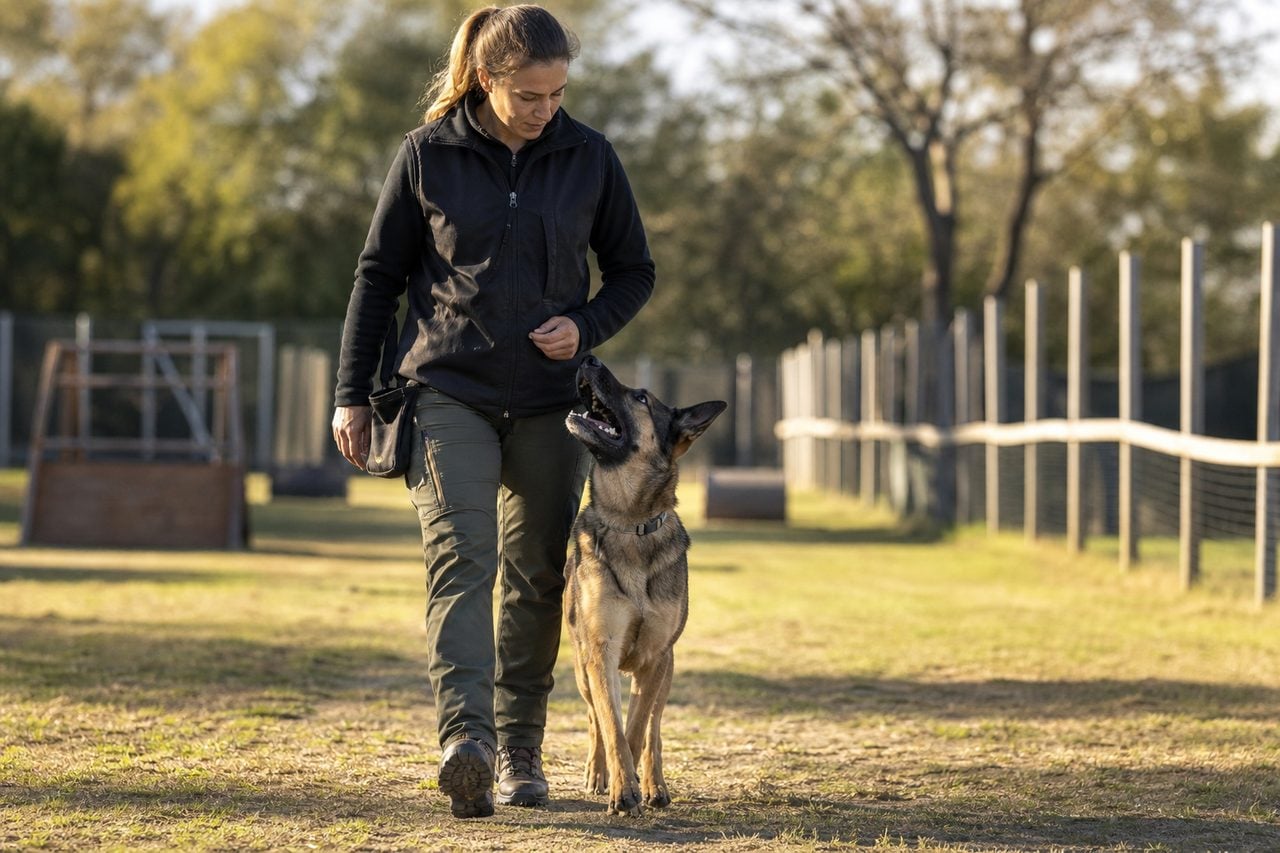
Dog boot camp is the informal name for an intensive obedience program — a short, concentrated stretch of daily training designed to move a dog from unruly to reliably responsive faster than weekly group classes can. In the South Bend and Elkhart area, families use the term loosely: some mean an in-kennel board-and-train, others mean a run of day-training sessions, and still others mean an owner-focused crash course over consecutive days. Whatever the format, the shared idea is intensity: many repetitions, tight structure, and rapid habit-building.
- What Dog Boot Camp Really Is
- The Main Formats: In-Kennel, Day Camp, and Owner Intensives
- A Realistic Look at the Daily Structure
- Is an Intensive Right for Your Dog and Situation?
- Evaluating Programs Around South Bend and Elkhart
- Keeping the Gains: Life After Boot Camp
- Boot Camp Versus Group Classes and Private Lessons
- Reviewed trainers
- FAQ
The appeal is obvious across Michiana households juggling work, Notre Dame game-day schedules, and family life. A dog that drags you down the sidewalk, ignores its name, and mobs guests at the door is exhausting to live with, and slow-drip training can feel like it never quite sticks. An intensive program promises to break the cycle by getting enough quality repetitions in a compressed window that the new behaviors become the dog’s default.
This guide explains what a boot-camp-style program can and cannot deliver, how the main formats differ, what a realistic daily structure looks like, and how to keep the gains after the intensive phase ends. It invents no business names, quotes no prices as fact, and cites no laws or statistics — just practical, locally grounded guidance you can use when evaluating any South Bend area program.
What Dog Boot Camp Really Is
Boot camp is a marketing term, not a technical one, so the first job when shopping is to find out exactly what a given program means by it. The concept borrows from the idea of concentrated training: rather than one lesson a week where most of the actual practice falls to a busy owner, an intensive front-loads the repetitions into daily work, which accelerates how quickly a behavior becomes automatic.
What boot camp is not is a personality transplant or a permanent fix that requires nothing further. Dogs do not stay trained by magic; they stay trained through maintained habits and consistent expectations. A good intensive gives you a dog that reliably knows the mechanics of core obedience and a set of habits to preserve them — not a finished product you can put on a shelf.
The name also, unfortunately, gets attached occasionally to harsh, correction-heavy operations that lean on intimidation to suppress behavior quickly. Speed alone is not a virtue. A fast result achieved through fear can produce a shut-down dog or fallout that surfaces weeks later. The programs worth your money achieve intensity through structure and volume of good repetitions, not through force.
The typical goals
Most intensive obedience programs target the behaviors that make daily life livable: walking politely on a leash instead of pulling, coming when called, holding a down or place command while the household is busy, greeting people without jumping, waiting at doors and thresholds, and settling calmly indoors. These are the skills that turn a chaotic dog into a companion you can take places, and they are achievable for most healthy, stable dogs in a well-run program.
The Main Formats: In-Kennel, Day Camp, and Owner Intensives
Understanding the format is the most important shopping decision, because it determines who does the work and how the results transfer. There are three broad models across the Michiana area.
In-kennel intensive (board and train)
The dog lives at the trainer’s facility or home for the duration and receives multiple training blocks per day. This is the most hands-off option for the owner and the fastest for building a foundation, because the trainer controls every variable. The trade-off is cost and the critical importance of the transfer lessons afterward — if you do not learn to reproduce the results, they fade.
Day training or day camp
The dog comes to the trainer during the day — think of it as a training-focused daycare — and goes home each night. You get professional daily repetitions without your dog living away from home, and you can be coached at pickups. This suits owners who want intensity but prefer their dog home each evening, and it can be gentler on dogs that do not do well boarding overnight.
Owner-focused intensive
Here the owner is the student. Over consecutive days or a compressed schedule, the trainer coaches you and your dog together through the full obedience foundation. This builds your handling skill directly, which is the best guarantee of lasting results, but it demands your time and effort during the program. For committed owners, it often produces the most durable outcome because the human half of the team is trained too.
None of these is universally best. Match the format to your dog’s temperament, your schedule, and how much you want to be personally involved. And whatever the format, confirm that owner coaching is built in — the transfer of skill to the human is where intensives succeed or fail.
A Realistic Look at the Daily Structure
Understanding what a day inside an intensive looks like helps set expectations and evaluate whether a program is doing real work. A well-run intensive does not train a dog for eight straight hours — dogs learn best in short, frequent sessions with rest and enrichment between them, because attention and impulse control are finite and fatigue undermines learning.
A typical day might include several focused training blocks of ten to twenty minutes each, spread across the day, targeting different skills. Between blocks, the dog rests, gets exercised, and receives enrichment like sniff walks or food puzzles that keep the mind engaged without overloading it. Structure extends beyond formal sessions: the trainer reinforces calm behavior, polite thresholds, and impulse control throughout the day, so the dog is effectively learning during downtime too.
Progression matters within the intensive. Skills are introduced in a low-distraction setting, then gradually proofed against harder conditions — more distance, more duration, more distraction. A dog that can hold a stay in a quiet room is not the same as one that can hold it while another dog walks past, and a good program deliberately builds that ladder rather than skipping to the hard version.
Signs of a thoughtful program
- Short, frequent sessions rather than marathon drilling.
- Rest and enrichment built into the day, not just training.
- Clear progression from easy conditions to distractions.
- Documentation of what your dog worked on and how it responded.
- Attention to the dog’s emotional state, not just command compliance.
Beware the opposite picture: a program that boasts about training a dog for hours on end, or that runs a large group of dogs through repetitive drilling with little rest, is not doing higher-quality work — it is more likely producing a fatigued, stressed dog that learns poorly and may sour on training altogether. Volume of good repetitions matters, but so does the quality and freshness of each one. When you tour a facility, ask specifically how the day is broken up and how the trainer decides when a dog has had enough for one session. A thoughtful answer — one that talks about reading the individual dog’s focus and stopping while it is still succeeding — tells you more about the program’s competence than any list of behaviors on a brochure.
Is an Intensive Right for Your Dog and Situation?
Intensive obedience programs suit some dogs and situations far better than others. The clearest fit is a healthy, temperamentally stable dog whose problems are ordinary manners issues — pulling, jumping, ignoring recall, general adolescent chaos — and an owner who wants to shortcut the slow accumulation of weekly-class homework. For that combination, an intensive can be genuinely transformative.
Adolescent dogs, again, are prime candidates. So are newly adopted adult dogs that arrived without any foundation, and dogs in households where inconsistent rules among family members have left the dog confused about what is expected. An intensive resets the baseline and, crucially, gives the whole household a common framework to maintain.
Some situations call for caution. Dogs with significant fear, anxiety, or aggression are not simply obedience problems — they are emotional and behavioral cases, and an intensive obedience camp may not address the underlying state, or may add stress. Those dogs are better served by a program built around behavior modification, and the most serious cases warrant a consultation with a behavior specialist first. Similarly, very young puppies need socialization and gentle foundation work, not boot-camp intensity.
The owner side of the equation
Be honest about your follow-through. An intensive compresses the learning, but it cannot compress the maintenance. If you will not keep the structure alive after the program — enforcing the same rules, practicing the skills, holding the standards — the fastest, best intensive in Michiana will erode within weeks. The programs that produce lasting change are the ones where the owner treats the intensive as the beginning of a new routine, not the end of a problem.
Evaluating Programs Around South Bend and Elkhart
Because boot camp means different things to different trainers, evaluation comes down to specific questions rather than the label on the sign. Location within Michiana is a practical factor: a program near your home in South Bend, Mishawaka, Granger, Elkhart, or Goshen keeps drop-offs, pickups, and follow-up coaching convenient, and convenience directly affects whether you keep up the maintenance work.
Ask the trainer to describe their methods in concrete terms and explain what happens when a dog makes a mistake. You want to hear an approach that builds understanding and reinforces good choices, with any corrections applied fairly and clearly — not intimidation. Ask what tools they use and why, and how any tool like a remote or prong collar is conditioned and faded rather than simply applied. A trainer who explains their reasoning patiently is showing you competence.
Questions worth asking every program
- What exactly does your boot camp include — how many training sessions per day, and what format?
- What specific behaviors will my dog reliably perform at the end, and under what conditions?
- How much owner coaching or transfer instruction is included?
- What is your experience with dogs like mine — same breed, same issues, same age?
- Can I see the training space and observe how you work?
- What support do you offer after the program ends?
Watch for two red flags above all: guarantees of specific results, which no honest trainer offers because living animals vary, and reluctance to let you observe or ask about handling. Transparency and realistic promises are the marks of a professional worth hiring.
Keeping the Gains: Life After Boot Camp
The end of the intensive is the start of the real work, and this is the part owners most often underestimate. A dog leaves a good program with fresh, well-practiced habits, but habits are maintained by repetition and consistency. Drop the structure and the dog drifts back toward its old defaults — not out of stubbornness, but because behavior follows whatever is reinforced day to day.
Build a simple maintenance routine into ordinary life. Short daily practice — a few minutes of the skills your dog learned, woven into walks, mealtimes, and greetings — is far more effective than occasional long sessions. Ask for the place command before you hand over dinner, require a sit before the door opens, practice recall in a fenced yard. These micro-reps keep the behaviors alive without adding real time to your day.
Generalize the skills to the specific settings of your life around Michiana. Proof loose-leash walking on a quiet Granger or Bristol street before a busy sidewalk, rehearse recall in a securely enclosed space before trusting it anywhere open, and practice calm settling during a game-day gathering when the house is full. Every new context you deliberately practice makes the behavior more reliable across the board.
When to return for a tune-up
Even well-maintained dogs benefit from the occasional refresher, especially after a disruption like a move, a new baby, or a long stretch of relaxed rules. Many trainers offer follow-up sessions or ongoing support precisely for this reason. Treating training as an occasional tune-up rather than a one-time event is how the households happiest with boot camp keep their results for the life of the dog — and it costs far less than starting over.
Boot Camp Versus Group Classes and Private Lessons
An intensive is only one of several ways to train a dog, and it is worth understanding the alternatives so you choose the format that genuinely fits rather than defaulting to whatever a nearby facility markets hardest. The three main options across the South Bend and Elkhart area — group classes, private lessons, and intensives — each solve different problems, and the right pick depends on your dog, your schedule, and your goals.
Group classes
Weekly group classes are the most economical option and offer something an intensive cannot: controlled practice around the distraction of other dogs and people, which is genuinely valuable for a social, stable dog that mainly needs polite manners and proofing. The trade-off is pace and the burden of homework — the class shows you what to work on, but the actual training happens in your living room the other six days, so results depend heavily on owner follow-through. Group classes also are not the right setting for a reactive or fearful dog that cannot yet cope near other dogs.
Private lessons
Private lessons put a trainer one-on-one with you and your dog, usually weekly or biweekly. This format is flexible, tailored to your specific issues, and builds your handling skill directly, which makes results durable. It moves more slowly than an intensive because the repetitions between sessions are on you, but it is often the best value for an owner who is motivated to do the work and wants to learn alongside their dog.
Where the intensive wins
An intensive earns its higher cost when time is the binding constraint — when you need faster foundation-building than weekly homework will realistically deliver, or when the household has struggled to be consistent on its own. It concentrates the repetitions into professional daily work, then hands the results back to you. For many Michiana families, the smartest approach is a hybrid: an intensive to build the foundation quickly, followed by occasional private lessons or a group class to proof the skills and keep them sharp. Matching the format to your honest situation, rather than to a sales pitch, is the single best predictor of a happy outcome.
Reviewed Dog Boot Camp Trainers in South Bend
These reviewed South Bend-area trainers from our directory handle dog boot camp. Each links to a full profile with specialties, certified credentials, reviews, and contact info:
- Oak Ridge Dog Training and Boarding — 5.0★ (2 reviews)
- All About Dogs Training & Pet Sitting — 5.0★ (1 review)
- Top Notch Dog Training LLC — 4.9★ (49 reviews)
- Kasten’s Dog Training Inc — 4.8★ (127 reviews)
- Windsong Kennel LLC — 4.8★ (11 reviews)
See all South Bend dog boot camp trainers →
Frequently Asked Questions
How is dog boot camp different from a board and train program?
They overlap heavily — boot camp is an informal term for an intensive obedience program, and many trainers use it to describe an in-kennel board and train. But boot camp can also mean day training, where the dog goes home each night, or an owner-focused intensive over consecutive days. Because the term is not standardized, ask any South Bend area program exactly what format they mean, how many training sessions per day are included, and whether your dog lives on site.
How long does a dog boot camp usually last?
Intensive programs vary from a few consecutive days for an owner-focused crash course to two to six weeks for an in-kennel intensive. Length should be driven by the goal and the individual dog, not a fixed package. Basic manners on a stable dog can come together quickly, while off-leash reliability and any behavior work take longer and require ongoing follow-through at home. Ask the trainer to describe specifically what your dog should be able to do by the end and under what conditions.
Will an intensive program fix my dog’s aggression or anxiety?
Not reliably, and this is an important distinction. Aggression and anxiety are emotional and behavioral issues, not simple obedience gaps, and a standard obedience boot camp may not address the underlying state — and in some cases the intensity adds stress. Those dogs are better served by a program built specifically around behavior modification, and the most serious cases warrant a consultation with a behavior specialist first. Be honest with any trainer about what you are seeing so they can steer you to the right format.
Are boot camp programs harsh or based on punishment?
Some are, and that is exactly what to screen for. The label sometimes gets attached to correction-heavy operations that suppress behavior quickly through intimidation, which can create a shut-down dog or fallout that appears weeks later. Responsible intensives achieve speed through structure and a high volume of well-timed, rewarded repetitions, not force. Ask any program to explain what happens when a dog makes a mistake, insist on observing how they work, and walk away from anyone who relies on intimidation.
Do I need to do anything after my dog finishes boot camp?
Yes — this is where results are kept or lost. A dog leaves a good program with fresh habits, but habits are maintained by consistency. Build short daily practice into ordinary life: ask for a place command before dinner, a sit before the door opens, and recall in a fenced yard. Then generalize the skills to real settings around Michiana. Owners who keep the structure alive retain the gains; those who expect a permanent fix that needs no follow-up usually watch the behavior fade within weeks.
What should a fair boot camp program include besides the training itself?
Look for a pre-enrollment evaluation of your dog rather than a blind booking, clear written goals with an honest assessment of what is achievable in the time, regular progress updates during the program, structured owner coaching or transfer lessons so the results work in your hands, and some window of post-program support for questions and tune-ups. A program that includes only the dog’s training and no owner instruction is missing the piece that makes the results last.
Related: read our complete dog boot camp guide or the full South Bend dog training overview.
Ready to find the right dog boot camp pro in South Bend?