
In-Home Dog Training in Lafayette, IN
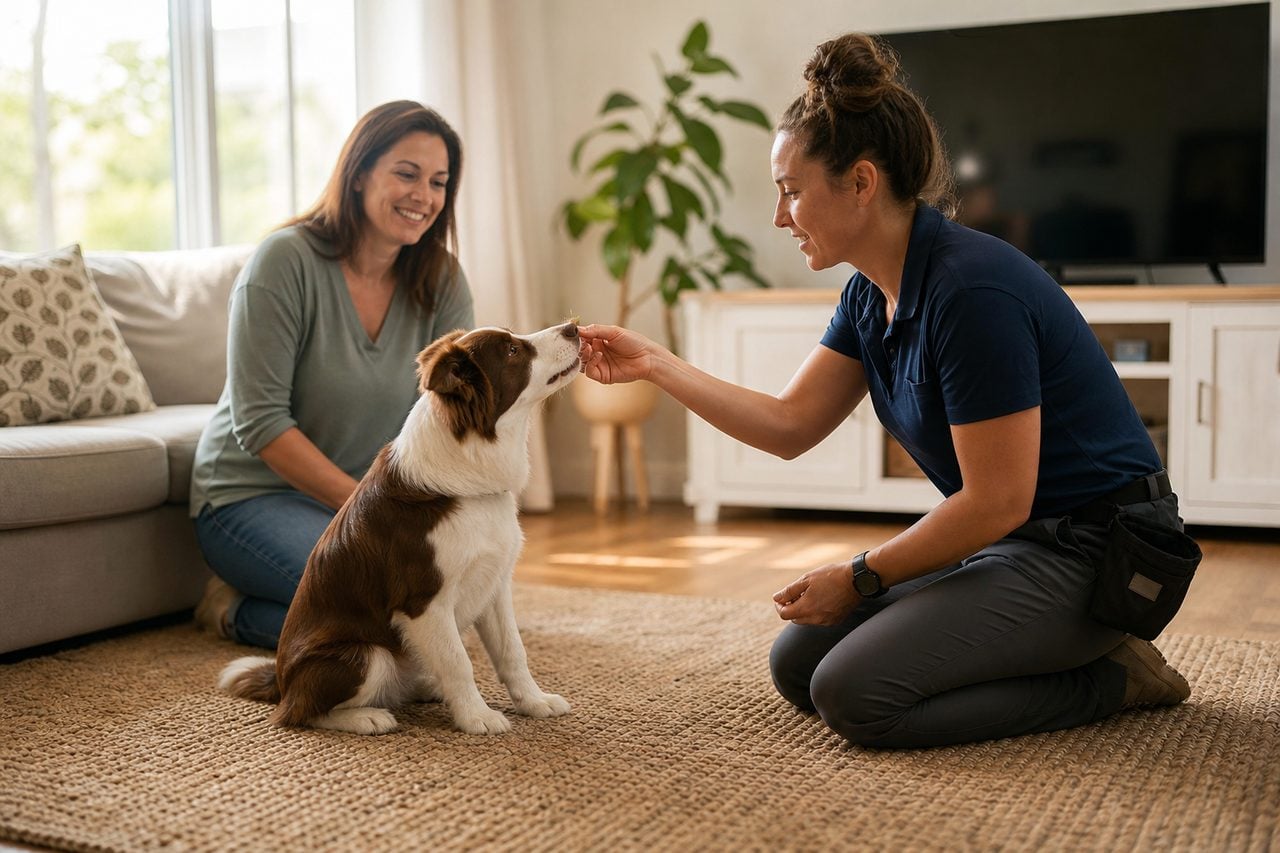
In-home dog training brings a professional trainer directly to your house or apartment somewhere across Greater Lafayette, whether that means a quiet street in West Lafayette near the Purdue campus, an older neighborhood off Columbia Street in downtown Lafayette, or a property out toward Battle Ground, Monticello, or Delphi. Instead of loading the dog into the car and driving to a group class, the lessons happen where your dog already lives, eats, sleeps, and misbehaves. For a lot of Tippecanoe County families, that difference is the whole point.
- What In-Home Dog Training Actually Involves
- Why Training in the Dog's Own Environment Works
- Problems In-Home Training Handles Best
- How Trainers Cover the Greater Lafayette Region
- Training Methods and What to Look For
- Puppies, Rescues, and Newly Adopted Dogs at Home
- Preparing Your Home and Getting Lasting Results
- Reviewed trainers
- FAQ
Dogs are deeply context-driven learners. A dog that sits politely in a training facility will often ignore the same cue at its own front door, because the front door is where the doorbell rings, the mail carrier arrives, and the excitement lives. In-home training tackles those real-world triggers in the exact spot they happen, which is why so many owners across the Lafayette area choose private, at-home sessions for problems like door-dashing, leash reactivity on neighborhood walks, house-training setbacks, and general household manners.
This guide explains how in-home training works in the Greater Lafayette region, what it is well suited for, how to choose a trainer who travels your part of Tippecanoe County, and how to get the most out of every session so the results actually stick after the trainer drives away.
What In-Home Dog Training Actually Involves
In-home dog training is private, one-on-one instruction delivered at your residence. A trainer comes to you on a scheduled basis, works directly with your dog and your household, and builds a plan around the specific behaviors you want to change. Unlike a drop-in group class where one instructor manages six or eight dogs at once, an in-home session is entirely focused on your animal and your environment.
Most programs start with an initial consultation. During that first visit the trainer observes your dog in its normal setting, asks detailed questions about the dog’s history, diet, exercise, daily routine, and the behaviors that prompted the call. They watch how the dog moves through the house, how it greets visitors, and how it responds to you. That assessment shapes the training plan far more accurately than any phone conversation could, because the trainer sees the real triggers rather than a description of them.
From there, sessions typically follow a coaching model. The trainer demonstrates a technique, then hands the leash to you and coaches you through it, because the person who lives with the dog is the one who has to maintain the behavior. A good in-home trainer is teaching two students at once: the dog and the owner. Between visits, you practice assigned exercises, and each new session builds on the last while introducing more difficulty and more real-life distraction.
Common formats in the Lafayette area include single-session consultations for one specific issue, multi-week packages that address a full behavior plan, and follow-up or maintenance visits for owners who want periodic tune-ups. Some trainers also offer phone or video support between in-person visits so you are never stuck when a question comes up mid-week. The right format depends on your goals, your dog, and how much time you can commit to daily practice, and a good trainer will recommend a structure rather than pushing you into a fixed package before understanding your situation.
Why Training in the Dog's Own Environment Works
The single biggest advantage of in-home training is context. Dogs do not generalize the way people assume they do. A dog that learns to ignore other dogs in a sterile classroom has learned to ignore other dogs in that classroom, not necessarily on the Wabash Heritage Trail or on a busy sidewalk in West Lafayette. When training happens at home and in the surrounding neighborhood, the dog learns the behavior in the exact place it needs to perform it, which dramatically shortens the gap between the lesson and real life.
Home training also lets the trainer see the whole picture. Behavior problems are frequently tangled up with the environment: a crate placed in a high-traffic hallway, food left within counter-surfing reach, a fenced yard where the dog rehearses fence-line barking every afternoon, or a household where different family members give different cues. A trainer standing in your living room can spot these contributing factors immediately and adjust the setup, something that is simply invisible from a training center across town.
There is a comfort factor as well. Anxious, fearful, or reactive dogs often shut down in unfamiliar, high-stimulation settings, which means they learn slowly or not at all in a group class. At home, on familiar ground, those dogs stay under their stress threshold long enough to actually take in new information. The same is true for very young puppies who are not fully vaccinated yet and should not be sharing floor space with unknown dogs, and for senior dogs who find car rides and crowded rooms genuinely stressful.
Finally, in-home training fits real schedules. Between Purdue’s academic calendar, shift work, and family logistics, getting to a fixed weekly class at a fixed time across town is not always realistic. A trainer who comes to you removes the commute and the parking and makes consistency far easier to sustain, and consistency is what actually produces trained dogs.
Problems In-Home Training Handles Best
In-home private training is well suited to behaviors that are tied to a specific location or household routine. The most common reasons Greater Lafayette owners book at-home sessions include:
- Household manners: jumping on guests, counter-surfing, stealing food, bolting through open doors, and general failure to settle indoors.
- House-training and crate issues: potty accidents, incomplete house-training in adult dogs, crate anxiety, and problems that only show up in the home environment.
- Leash manners and neighborhood reactivity: pulling, lunging, and barking at other dogs, people, cyclists, or cars on the exact routes you actually walk.
- Separation-related behavior: distress, destruction, or vocalizing when left alone, which by definition happens at home and is hard to address anywhere else.
- Resource guarding and multi-dog household tension: conflict over food, toys, or space between dogs that live together.
- Foundation obedience: reliable sit, down, stay, recall, place, and loose-leash walking taught first at home, then generalized outward.
- New-dog and puppy integration: setting up routines, preventing bad habits before they form, and helping a newly adopted dog settle into the household.
In-home training is also a strong fit for owners who simply prefer individualized attention and a curriculum built entirely around their goals, rather than a standardized group syllabus. That said, group classes have their own value, particularly for social exposure and for practicing obedience around controlled distractions, so some owners do both: private in-home work to fix the core issues, then a group setting later to proof the behaviors around other dogs.
How Trainers Cover the Greater Lafayette Region
Greater Lafayette sits at the center of Tippecanoe County, roughly an hour northwest of Indianapolis on I-65, with the Wabash River separating Lafayette from West Lafayette. Because the population is spread across two cities plus a wide ring of smaller communities, many area trainers who offer in-home service travel a substantial radius rather than staying inside one zip code.
It is common for a private trainer to cover Lafayette and West Lafayette as their core service area and then extend outward to surrounding towns such as Battle Ground, Delphi, Monticello, Frankfort, Crawfordsville, Rossville, Brookston, and Roachdale, along with the rural properties in between. Some trainers charge a travel fee or set a mileage limit for the outer edges of that range, so it is always worth confirming coverage up front if you live beyond the city limits.
When you contact a trainer, ask directly whether your address is inside their normal travel zone, whether there is a trip charge for your location, and how far in advance you need to book. A trainer based in West Lafayette may batch appointments by geography to keep drive times reasonable, which can affect scheduling flexibility. Owners in the outlying communities toward Monticello or Crawfordsville sometimes find it easiest to book slightly longer, less frequent sessions with more homework in between, rather than short weekly visits, to make the trainer’s travel worthwhile.
Weather is worth a mention too. Indiana winters and summer storms can complicate outdoor portions of a lesson, so trainers often build indoor components into the plan and reserve neighborhood walking exercises for cooperative days. A flexible trainer will have a plan for both.
Training Methods and What to Look For
Indiana does not license or regulate dog trainers, so the title ‘dog trainer’ carries no automatic standard behind it. That makes the vetting process entirely your responsibility, and it is worth doing carefully before you let someone work with your dog in your home.
Most reputable modern trainers rely primarily on reward-based, positive-reinforcement methods: they mark and reward the behavior you want so the dog chooses to repeat it, and they manage the environment to prevent rehearsal of unwanted behavior. Ask any prospective trainer to explain their approach in plain language. You want to understand what happens when your dog gets it right and what happens when it gets it wrong, and you want an answer you are comfortable with before, not after, you have paid for a package.
Signs of a professional worth hiring include:
- A clear, structured assessment before quoting a plan, rather than a one-size-fits-all package.
- The ability to explain the ‘why’ behind each technique in terms you understand.
- Voluntary credentials or continuing education from recognized professional dog-training organizations, which signal ongoing investment in the craft even though none are legally required.
- A focus on teaching you, the owner, not just performing with the dog while you watch.
- Realistic timelines and honesty about what training can and cannot fix. Be cautious of anyone guaranteeing to permanently eliminate a complex behavior in a single visit.
- Willingness to refer out. Serious aggression, severe anxiety, or sudden behavior changes may warrant a veterinary check, and a good trainer will say so. Purdue’s College of Veterinary Medicine in West Lafayette is a notable regional resource, and a responsible trainer will encourage a medical rule-out when a behavior problem might have a physical cause.
Ask for references or reviews from local clients, confirm what happens if you need to reschedule, and make sure the personality fit works. You will be inviting this person into your home repeatedly, so mutual comfort matters.
Puppies, Rescues, and Newly Adopted Dogs at Home
In-home training has a particular advantage for the two groups of dogs that arrive with a blank slate or a complicated past: puppies and newly adopted or rescue dogs. For both, the home environment is where the most important early learning happens, and having a trainer work with the dog on its own turf accelerates a smooth start.
With puppies, the priority is prevention rather than correction. A trainer visiting your Greater Lafayette home can help you set up the space before problems take root: choosing the right spot for the crate, establishing a house-training rhythm tied to your daily schedule, teaching gentle mouthing limits, and building a foundation of name recognition, handling tolerance, and calm settling. Because young puppies are not fully vaccinated and should avoid unknown dogs, in-home work lets them learn safely during the critical early weeks when group settings carry more risk. Structured, positive exposure to household sounds, surfaces, and visitors during this window pays off for the rest of the dog’s life.
Rescue and newly adopted dogs bring a different challenge. Many arrive with unknown histories, undeveloped house manners, or worries about specific triggers, and they often need a decompression period before formal training even begins. A trainer working in your home can read the dog’s stress signals in real time, help you establish predictable routines that build the dog’s sense of safety, and address issues like house-training gaps, leash worry, or wariness of strangers exactly where they surface. This on-site coaching helps a new dog bond with the household and settle into Tippecanoe County life without the added stress of an unfamiliar facility. For adopters, the first few weeks set the tone for years, and getting expert guidance at home during that period is one of the highest-value uses of in-home training there is.
Preparing Your Home and Getting Lasting Results
A little preparation makes every in-home session more productive. Before the trainer arrives, think about what you actually want your dog to be able to do, and be specific: ‘greet guests with four paws on the floor’ is a trainable goal, while ‘be better behaved’ is not. Have your dog’s favorite treats on hand, know where its food, leash, crate, and toys are, and clear a workable space in the room where the behavior usually happens. It also helps to jot down the moments during a normal day when the behavior goes wrong, so the trainer can target the real pattern rather than a generic version of it.
Decide in advance who in the household will participate. Consistency across everyone the dog lives with is one of the strongest predictors of success, so if the kids, a partner, or a roommate all interact with the dog, they should ideally sit in on at least some of the training and use the same cues and rules. A dog that gets one message from you and a different one from someone else in the house will take much longer to learn.
The real work happens between visits. In-home training is a coaching relationship, and the daily practice you do on your own is what converts a lesson into a habit. Short, frequent practice sessions of just a few minutes, folded into normal routines like mealtime and walks, beat occasional marathon sessions. Keep a simple log of what you practiced and what improved so you can report back and the trainer can adjust the plan.
Expect progress to be uneven. Dogs have off days, and some behaviors get slightly worse before they get better as old patterns are replaced. Trust the process, stay consistent, and lean on your trainer’s between-session support when you hit a snag. When the program ends, keep reinforcing the behaviors periodically so they do not fade, and consider an occasional maintenance visit to keep everything sharp. The households that get lasting results are the ones that treat the trainer’s departure as the beginning of ongoing practice, not the end of the work. A dog’s training is never truly finished; it is maintained, and the small daily habits you build during the program are what carry the results forward long after the last scheduled visit on your calendar.
Reviewed In-Home Dog Training Trainers in Lafayette
These reviewed Lafayette-area trainers from our directory handle in-home dog training. Each links to a full profile with specialties, certified credentials, reviews, and contact info:
- Whetstone Canines — 5.0★ (11 reviews)
- Pals and Paws Academy
- Kerrigan Tresslar Dog Training
See all Lafayette in-home dog training trainers →
Frequently Asked Questions
How much does in-home dog training cost in the Lafayette area?
Pricing varies widely depending on the trainer’s experience, the length and number of sessions, and whether you buy a single consultation or a multi-week package. Trainers who travel to the outer parts of Tippecanoe County or the surrounding towns may also add a travel or mileage fee. The best approach is to request a clear written quote after your initial assessment so you know exactly what is included, how many visits you get, and what between-session support comes with the program.
Is in-home training better than group classes?
Neither is universally better; they solve different problems. In-home training excels at issues tied to your specific environment and routine, such as door-dashing, house-training, separation-related behavior, and neighborhood leash reactivity, and it gives your dog undivided attention on familiar ground. Group classes are excellent for social exposure and for practicing obedience around controlled distractions and other dogs. Many owners use private in-home sessions to fix core issues first, then a group setting later to proof the behaviors around distractions.
What areas around Greater Lafayette do in-home trainers cover?
Most private trainers treat Lafayette and West Lafayette as their core service area and travel outward to surrounding communities such as Battle Ground, Delphi, Monticello, Frankfort, Crawfordsville, Rossville, Brookston, and Roachdale, along with the rural properties in between. Coverage and any travel fees depend on the individual trainer, so confirm that your address is within their normal radius when you first make contact.
At what age can my puppy start in-home training?
Puppies can begin learning as soon as they come home, often around eight weeks, and in-home training is especially well suited to this age because young puppies are not yet fully vaccinated and should avoid sharing floor space with unknown dogs. Early sessions focus on house-training, crate comfort, gentle handling, name recognition, and preventing bad habits before they form. Starting early is far easier than correcting entrenched behavior later.
Can in-home training fix aggression or serious anxiety?
Some cases can be improved substantially with a structured plan, but serious aggression and severe anxiety are complex and should be approached carefully. A responsible trainer will assess the situation honestly, use management strategies to keep everyone safe, and recommend a veterinary evaluation when a behavior might have a medical cause. Purdue’s College of Veterinary Medicine in West Lafayette is a notable regional resource, and ruling out an underlying health issue is often an important first step before intensive behavior work.
How long does it take to see results?
It depends on the behavior, the dog’s history, and how consistently the household practices between sessions. Simple manners can improve within a session or two, while deeply rehearsed habits or emotionally driven behaviors like reactivity take longer and progress unevenly. The single biggest factor is the daily practice you do on your own; short, frequent practice folded into normal routines produces faster, more durable results than the in-person sessions alone.
Related: read our complete in-home dog training guide or the full Lafayette dog training overview.
Ready to find the right in-home dog training pro in Lafayette?