
Puppy Training in Evansville, IN
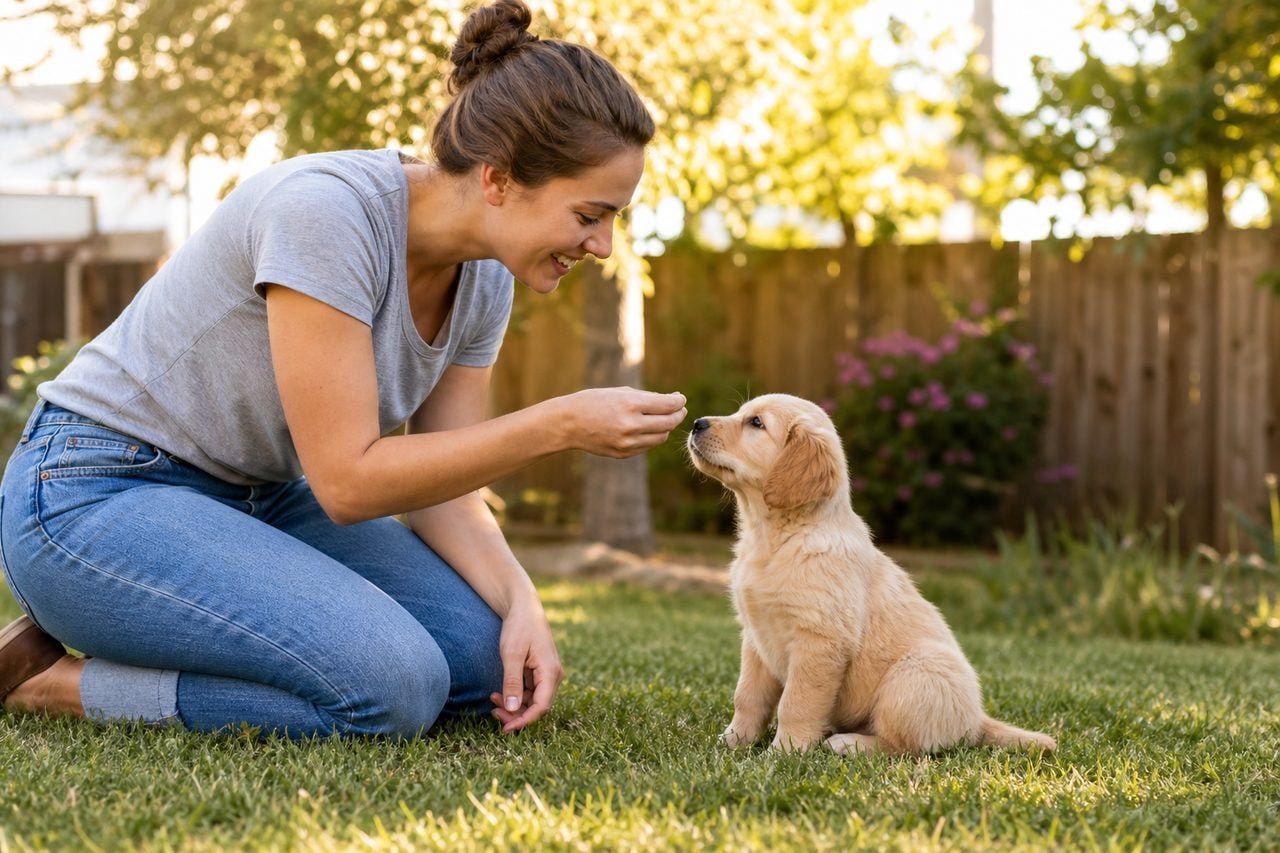
Bringing a new puppy home in the Evansville area is an exciting milestone, whether the household sits in a quiet Vanderburgh County neighborhood, a student apartment near the University of Southern Indiana, or a river-view property out toward Newburgh. Those first weeks set the tone for years of life together, and the choices made early on shape how confident, calm, and well-mannered a dog becomes as an adult.
Evansville sits at the heart of the Tri-State, where Indiana, Kentucky, and Illinois meet along a bend of the Ohio River. That setting gives local puppy owners a distinctive mix of advantages and challenges: humid summers that demand careful timing for outdoor sessions, plentiful parks and greenways for practicing skills, and a wide range of living situations from downtown lofts to acreage in Warrick and Gibson counties.
This guide walks through what effective puppy training looks like in southwestern Indiana, how to structure the critical early period, and how to make the most of the region’s parks, trails, and community resources. The goal is a practical roadmap owners can follow at home while deciding whether to bring in professional help.
Why the First Sixteen Weeks Matter Most
The window between roughly eight and sixteen weeks of age is the single most influential period in a puppy’s development. During this time the brain is unusually receptive to new experiences, and the associations a puppy forms, both good and bad, tend to stick. A puppy that meets friendly people, hears everyday noises, and explores varied surfaces during these weeks is far more likely to grow into a stable, adaptable adult.
This is also why training and socialization should begin the day a puppy comes home, not after it has finished its full vaccination series. Waiting until sixteen weeks to start means missing most of the prime learning window. The practical solution many Evansville owners use is to focus on controlled, lower-risk experiences first, such as carrying the puppy through a quiet part of a neighborhood or inviting healthy, vaccinated adult dogs to visit at home, while saving high-traffic dog areas for later.
Early training does not mean drilling formal commands for hours. At this age, short and frequent sessions of two to five minutes work best. A puppy’s attention span is limited, and ending a session while the puppy is still eager keeps training something it looks forward to. Focus on building a positive relationship with learning itself, since a puppy that enjoys working with its owner will pick up specific behaviors far more readily later on.
Owners should also remember that everything is training, whether intentional or not. A puppy that gets attention for jumping learns to jump; one that is calmly ignored until it settles learns that calm earns attention. Being deliberate about what gets rewarded, from the very first day, prevents many of the problem behaviors that show up in adolescence.
House Training in a Tri-State Climate
House training is the most urgent priority for most new puppy owners, and southwestern Indiana’s weather adds a few wrinkles worth planning around. The reliable path to a house-trained puppy is a consistent schedule, close supervision, and generous reward for eliminating in the right spot. Take the puppy out first thing in the morning, after meals, after naps, after play, and before bed, and reward immediately outdoors rather than waiting until back inside.
Evansville’s hot, humid summers can make midday outdoor trips uncomfortable and even risky for a young puppy. Pavement and concrete can heat up enough to hurt paw pads, so early-morning and evening trips are safer, and a shaded patch of grass is preferable to a sun-baked sidewalk. In winter, cold snaps and wet conditions can make a puppy reluctant to go outside, so keeping trips brief and rewards high helps maintain the routine even when the weather is unpleasant.
Crate training pairs naturally with house training. A properly sized crate, just large enough for the puppy to stand, turn, and lie down, taps into a dog’s natural reluctance to soil its sleeping area and gives the puppy a safe den to rest in. This is especially valuable for renters near the University of Evansville or USI, where a crate-trained puppy is far less likely to damage a unit or disturb neighbors.
Accidents are part of the process and should never be punished after the fact, since a puppy cannot connect a scolding to something it did minutes earlier. Instead, clean thoroughly with an enzymatic cleaner to remove odor cues, and treat an accident as a sign to supervise more closely and take the puppy out more often. Most puppies gain reliable control gradually over the first several months as their bladder capacity grows.
Foundation Skills Every Evansville Puppy Should Learn
Beyond house training, a handful of foundation behaviors make daily life smoother and set up more advanced training later. Name recognition comes first: a puppy that reliably turns toward its owner when it hears its name has the attention needed for everything else. Say the name once in a happy tone, and reward the moment the puppy looks, building a strong reflex that pays off in busy environments.
A solid recall, coming when called, is arguably the most important skill for safety. Practice indoors first, then in a fenced yard, then in progressively more distracting settings. Along the Ohio River and near open water at places like Scales Lake Park in Boonville, a dependable recall can prevent a puppy from bolting toward hazards. Never call a puppy to you and then do something unpleasant, such as ending playtime or giving a bath, or the recall will weaken.
Loose-leash walking deserves early attention because it is much harder to fix once a dog has spent months pulling. The Pigeon Creek Greenway and other paved paths make ideal practice grounds once a puppy is old enough, offering long, flat stretches where an owner can reward the puppy for walking with a loose leash and stop moving whenever the leash goes tight.
Other high-value basics include sit, down, a reliable settle on a mat, and gentle handling tolerance so that vet visits and grooming go smoothly. Teaching a puppy to accept having its paws, ears, and mouth touched pays dividends throughout its life. Keep each of these behaviors on a positive, reward-based footing, and layer in mild distractions only after the puppy performs reliably in a quiet room.
Using Local Parks and Greenways for Training Practice
One of the advantages of raising a puppy in the Evansville area is easy access to varied outdoor spaces for practicing skills once a puppy has enough vaccine protection. The Pigeon Creek Greenway offers long paved stretches ideal for leash work and calm exposure to cyclists, joggers, and other walkers from a comfortable distance. Garvin Park and Burdette Park provide open green space where a puppy can practice attention and recall on a long line.
Wesselman Woods Nature Preserve and the grounds around Angel Mounds add a different kind of exposure, with natural sounds, uneven terrain, and new scents that build a puppy’s confidence. Owners should always confirm and follow the posted rules and leash requirements at each specific location, since these vary by site and by managing agency, and keep a young puppy under close control regardless.
The point of these outings early on is not to socialize nose-to-nose with every dog encountered, which can be risky before full vaccination and overwhelming for a young puppy. It is controlled exposure: letting the puppy observe the wider world at a distance it can handle, rewarding calm behavior, and slowly building tolerance to novelty. A puppy that learns the world is interesting but not threatening becomes a far easier adult dog.
Timing matters in this climate. Summer humidity in the Tri-State can be intense, so morning sessions before the heat builds are kinder on a young dog, and access to shade and water is essential. During the milder shoulder seasons of spring and fall, longer outings become comfortable, which is often the best time to expand a puppy’s world.
Managing Adolescence Before It Arrives
Many owners are caught off guard when their sweet, cooperative puppy hits adolescence, typically somewhere between five and eighteen months depending on breed and size. During this stage a dog may seem to forget everything it learned, test boundaries, and become more distractible or reactive. This is a normal developmental phase, not a failure of training, and the owners who weather it best are the ones who prepared during puppyhood.
The best insurance against a rough adolescence is a deep foundation. Behaviors that were practiced hundreds of times in many settings hold up better under the pressure of teenage impulsiveness than ones drilled only briefly in the kitchen. Continuing to train through adolescence, rather than assuming the job is done, keeps skills sharp and gives an energetic young dog a constructive outlet.
Physical and mental exercise become especially important during this period. A bored adolescent dog will find its own entertainment, often through chewing, digging, or barking. Structured walks along the greenways, puzzle feeders, training games, and appropriate chew items channel that energy productively. For active households near the parks in Warrick County, an adolescent dog can be a wonderful hiking or jogging companion once its joints have matured enough for sustained activity.
Consistency across everyone in the household matters more than ever. If one person allows the dog on the couch and another does not, or if rules relax when the dog is being pushy, an adolescent dog will exploit the inconsistency. Agreeing on clear, uniform expectations, and calmly enforcing them, helps a young dog settle into adulthood as a reliable companion.
Choosing Between Home Training and Professional Help
Plenty of Evansville-area owners successfully raise a well-mannered puppy on their own, especially with the wealth of reputable guidance available today. Home training works best for owners who can commit to short daily sessions, stay consistent, and troubleshoot minor issues as they arise. A first-time owner, a busy family juggling school and work, or anyone facing a specific challenge like intense biting or early signs of fearfulness often benefits from professional support.
Professional help in the region generally comes in a few forms: group puppy classes, private in-home lessons, and structured day-training or board-and-train programs. Group classes offer socialization and coaching at a lower cost, while private lessons provide tailored attention for specific problems or for owners who prefer working in their own environment. The right choice depends on the puppy’s temperament, the owner’s goals, and the household’s schedule.
When evaluating a trainer, look for someone who uses reward-based, modern methods and who is transparent about their approach. Ask how they handle mistakes, whether owners are coached directly, and what happens if progress stalls. A good trainer teaches the owner as much as the dog, since the owner is the one who will maintain the training long after the sessions end.
Cost, schedule, and location all factor into the decision. Owners farther out in Posey, Gibson, or Warrick counties may weigh travel time against the convenience of in-home service. Whatever the format, the aim is the same: a confident, well-socialized puppy and an owner who feels equipped to guide it. Comparing a few local options and asking about methods before committing helps ensure a good fit.
Reviewed Puppy Training Trainers in Evansville
These reviewed Evansville-area trainers from our directory handle puppy training. Each links to a full profile with specialties, certified credentials, reviews, and contact info:
- Midwest Canine Training Academy — 5.0★ (3 reviews)
- The Training Retreat by Barks and Recreation — 4.8★ (30 reviews)
- Evansville Obedience Club — 4.7★ (41 reviews)
- Canine Aquatic Center — 5.0★ (20 reviews)
- District K9 — 5.0★ (20 reviews)
- Training With Grace — 5.0★ (2 reviews)
- Doggie Do Right — 4.8★ (130 reviews)
- Opie’s Doggie Playcare and Salon — 4.8★ (80 reviews)
- Tri-State K9 University — 4.7★ (107 reviews)
- Barks & Recreation Evansville — 4.5★ (55 reviews)
See all Evansville puppy training trainers →
Frequently Asked Questions
When should puppy training start in the Evansville area?
Training should begin the day a puppy comes home, typically around eight weeks of age. The period up to about sixteen weeks is the most influential for learning and socialization. Early sessions should be short, positive, and focused on house training, name recognition, and gentle handling rather than formal obedience drills. Waiting until a puppy is older means missing the prime developmental window.
Is it safe to take my puppy to Evansville parks before it is fully vaccinated?
Before a puppy completes its vaccine series, it is wise to limit contact with unknown dogs and heavily trafficked dog areas. That said, controlled exposure is valuable: carrying a puppy through a calm part of a greenway, or letting it observe from a distance, builds confidence with lower risk. Confirm each location’s rules and consult your veterinarian about timing for higher-contact outings.
How does Evansville's summer heat affect puppy training?
The Tri-State’s hot, humid summers make midday outdoor sessions uncomfortable and potentially unsafe for young puppies. Pavement can burn paw pads, and heat stress builds quickly in small dogs. Schedule outdoor training and potty trips for early morning or evening, keep sessions brief, provide shade and water, and move much of the training indoors during peak heat.
How long does it take to house train a puppy?
Most puppies gain reliable house-training control gradually over the first several months as their bladder capacity grows, though timelines vary by individual and breed. Consistency is the biggest factor: a predictable schedule, close supervision, generous outdoor rewards, and crate use speed the process. Accidents should be cleaned thoroughly and treated as a cue to supervise more, never as a reason to punish after the fact.
Do I need professional training, or can I do it myself?
Many owners raise a well-mannered puppy at home with consistent daily practice. Professional help is especially useful for first-time owners, busy households, or specific challenges like intense biting or early fearfulness. Options in the region include group classes, private in-home lessons, and structured programs. The right choice depends on the puppy’s temperament, your schedule, and your goals.
What should I look for in an Evansville puppy trainer?
Look for a trainer who uses reward-based, modern methods and explains their approach clearly. A quality trainer coaches the owner as well as the dog, is transparent about how they handle setbacks, and tailors the plan to your puppy. Ask about methods, class sizes, and what happens if progress stalls before committing, and confirm pricing and location details up front.
Related: read our complete puppy training guide or the full Evansville dog training overview.
Ready to find the right puppy training pro in Evansville?