
Board & Train in Evansville, IN
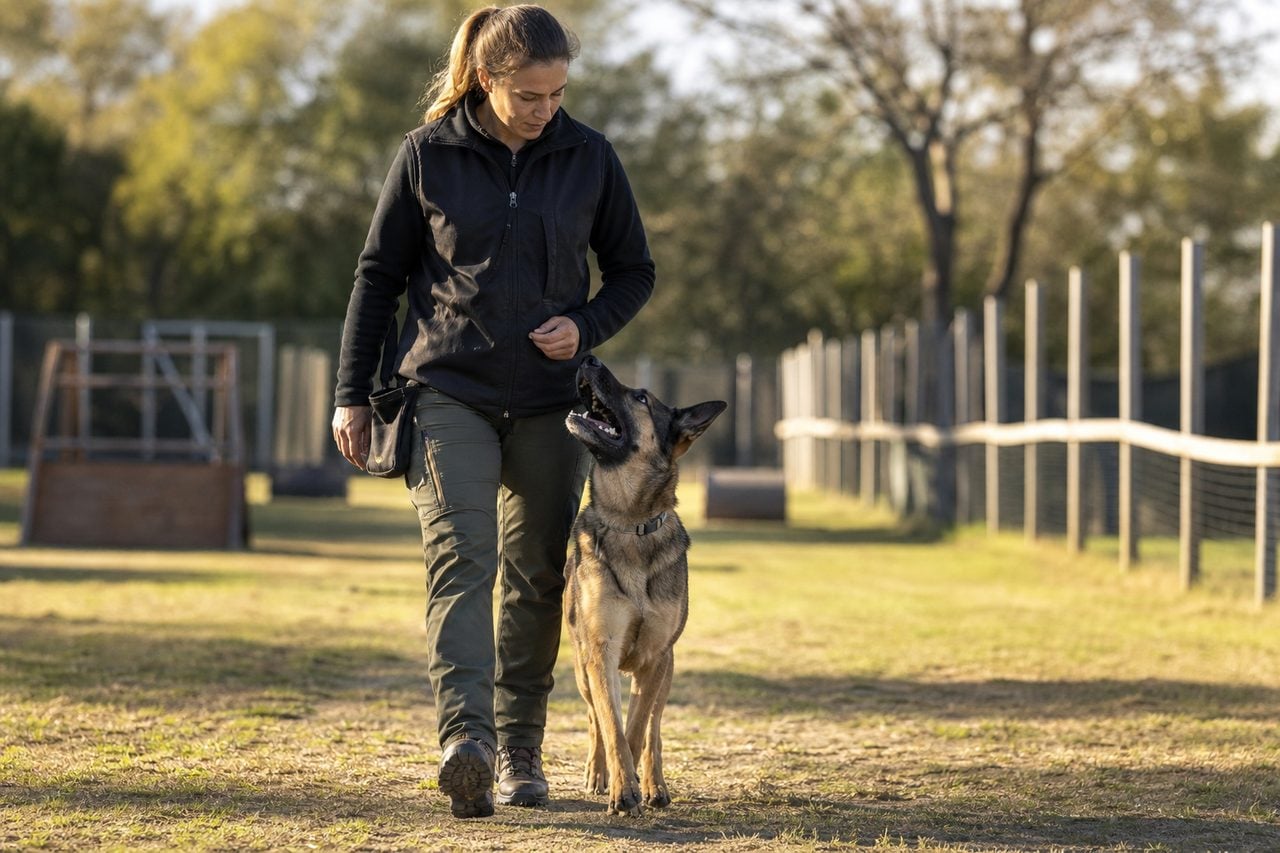
Board-and-train programs promise something that appeals to a lot of busy Evansville households: you drop the dog off, a professional trainer works with it daily for a set number of weeks, and you pick up a noticeably more manageable dog at the end. For families juggling work near Downtown, USI, or the industrial corridor along the Ohio River, that hands-off structure can be the difference between finally addressing a behavior problem and letting it slide for another year.
But board-and-train is also one of the most misunderstood services in the dog-training world. The label covers everything from calm, positive-reinforcement obedience stays to high-pressure programs that lean heavily on aversive tools. The results depend enormously on the individual facility, the trainer’s methods, and how the transfer back to your home is handled. A dog that behaves perfectly in a kennel in Newburgh or Boonville can regress within days if the owner never learns how to maintain the training.
This guide explains how in-kennel board-and-train works, what it can and cannot fix, what questions to ask before you hand over your dog anywhere in Vanderburgh County or the wider Tri-State, and how to judge whether it is the right fit for your household and your dog.
What a board-and-train program actually is
In a board-and-train program, your dog lives at a trainer’s facility or home for a defined period, typically ranging from two to six weeks, while the trainer works with the dog on a daily schedule. Instead of you attending weekly group classes and doing the homework yourself, the professional does the repetitive daily conditioning. The idea is that consistent, skilled handling several times a day compresses weeks of progress into a shorter calendar window.
Most programs focus on foundational obedience: reliable sit, down, place (settling on a mat or bed), recall, loose-leash walking, and impulse control around distractions. Some also address specific nuisance behaviors such as jumping on guests, counter-surfing, door-dashing, or crate anxiety. More specialized programs handle off-leash reliability or early-stage reactivity.
What varies most between facilities is the training philosophy. Some Evansville-area trainers run entirely reward-based programs using food, play, and marker training. Others use a balanced approach that adds correction tools such as prong collars or e-collars once a foundation is built. A smaller number lean heavily on compulsion. None of these labels tell you the quality of the individual trainer, which is why observing the facility and asking pointed questions matters far more than the method name on the website.
The one universal truth: the dog is not the only one being trained. A good program builds in owner instruction so the skills survive the trip home to your neighborhood in Haubstadt, Chandler, or the east side.
What board-and-train can realistically fix
Board-and-train is genuinely effective for building obedience skills and reshaping clear-cut nuisance behaviors. If your dog pulls like a freight train on the Pigeon Creek Greenway, ignores its name at Garvin Park, bolts out the front door, or turns dinner guests into a wrestling match, a well-run program can make substantial headway. These are behaviors that respond well to consistent daily repetition and clear structure, which is exactly what a full-time trainer can deliver.
It also helps dogs that need to learn how to exist calmly in the world: settling on a place cot instead of pacing, tolerating a crate, walking past distractions without losing their mind. Puppies past the critical socialization window and adolescent dogs (roughly six months to two years) often benefit the most, because that age group has the energy and drive to learn quickly but the poor impulse control that drives owners to seek help.
Where expectations need tempering is with deep-rooted, emotionally driven problems. Genuine fear, separation anxiety, resource guarding with a bite history, and true aggression are not obedience deficits. A dog can learn a rock-solid down-stay and still be terrified of strangers or willing to bite when guarded food is approached. Programs that claim to cure serious aggression in three weeks should be viewed with heavy skepticism.
Think of board-and-train as an accelerator for teachable skills and manners, not a cure for the dog’s underlying emotional state. For the harder emotional cases, a qualified behavior professional (covered in the behaviorist guide) is the more appropriate path, sometimes alongside training rather than instead of it.
The transfer home is where programs succeed or fail
The single most important and most overlooked part of any board-and-train is what happens after your dog comes home. A dog that performs flawlessly at the trainer’s facility in Princeton or Mount Vernon has learned to respond to that person, in that environment, with that timing and body language. Your home, your family, and your inconsistency are a completely different context. Dogs do not generalize well without help.
Reputable programs plan for this from the start. Look for facilities that include one or more go-home sessions where the trainer coaches you and your family directly, teaching you the exact cues, marker words, timing, and handling the dog now knows. The best ones offer follow-up sessions in the weeks after pickup, sometimes in your own home or a public place like a store parking lot or a park, so the dog practices with you in real settings.
Ask specifically: How many owner lessons are included? Is there follow-up support, and for how long? Will they send video updates during the stay so you can see the methods being used? A program with no owner-transfer component is selling you a temporary result. Within a few weeks of sloppy handling, the dog drifts back toward old habits, and you have paid for something that did not last.
Treat the handoff lessons as mandatory, not optional. Bring every family member who interacts with the dog. Consistency across the household is what converts a three-week program into a permanent change.
How to vet a board-and-train facility in the Evansville area
Because dog training is unregulated in Indiana, anyone can advertise as a professional trainer regardless of experience or method. That puts the burden of due diligence on you. Before you leave your dog anywhere in the Tri-State for weeks at a time, do the legwork.
Insist on touring the facility in person. Ask to see where the dogs sleep, where they are exercised, and how many dogs are on-site relative to staff. Clean, secure, climate-controlled housing matters, especially given how hot and humid Southern Indiana summers get. A trainer who is reluctant to show you the kennel area is a red flag.
Ask direct questions and expect clear answers:
- What methods and tools do you use, and how do you decide when to use them?
- What is your experience with dogs like mine (breed, age, and specific issue)?
- Can I see video of a dog during its stay, and can you connect me with past clients?
- What happens if my dog does not respond, or gets sick or injured?
- How do you handle a dog that shows aggression during the program?
Watch how the trainer talks about dogs. Guarantees of perfect results, dismissiveness about your concerns, or a one-size-fits-all pitch regardless of your dog’s issue are all warning signs. Also confirm vaccination requirements, which any responsible boarding operation will enforce, and ask about insurance. A confident, experienced professional will welcome scrutiny rather than resent it.
Cost, duration, and setting expectations
Board-and-train is usually the most expensive training option because you are paying for weeks of daily professional labor plus room and board. Pricing varies widely across the region depending on program length, the trainer’s reputation, and how much post-program support is included, so get a written breakdown rather than relying on a rough phone quote. Compare what is actually bundled: a lower headline price with no follow-up sessions may cost more in the long run than a higher price that includes real transfer coaching.
Program length should match the goal. A two-week stay can install solid basic manners and address one or two nuisance behaviors. Off-leash reliability, layered distraction work, or more stubborn issues generally need three to six weeks. Be wary of anyone promising to transform a severely challenging dog in a single short window; complex behavior takes time regardless of who is doing the work.
Set realistic milestones. Even after a great program, expect a short adjustment period at home while the dog settles and you find your rhythm with the new cues. The first week back is about you learning to hold the standard the trainer set. If you keep up the practice, most of what was built will stick and even improve. If you let it slide, it fades. Budget your time and consistency as seriously as you budget the money.
Alternatives worth considering first
Board-and-train is not the only path, and for many Evansville households it is not the first thing to try. Private in-home lessons let a trainer work with your dog in the exact environment where the problems happen, and they train you at the same time, which sidesteps the transfer problem entirely. This can be a better fit if the issue is tied to your specific home or routine, or if you want to stay closely involved.
Group obedience classes are the most affordable option and add the benefit of controlled socialization and distraction, which is valuable for dogs that struggle around other dogs and people. The trade-off is that you do all the daily work yourself between sessions, so results depend on your consistency.
Day-training or day-school splits the difference: your dog attends during the day, a trainer works with it, and it comes home each evening, keeping you involved while offloading the heavy daily repetition. This can be a strong middle ground for owners who want professional handling without a multi-week separation.
Choose board-and-train when you genuinely lack the time or confidence to do the daily conditioning yourself, when the dog needs a full environment reset, or when you want to compress progress into a short window. If your schedule and patience allow hands-on involvement, a lesson-based approach is often more durable because you build the handling skills alongside the dog. Match the format to your life, not just to the marketing.
Reviewed Board & Train Trainers in Evansville
These reviewed Evansville-area trainers from our directory handle board & train. Each links to a full profile with specialties, certified credentials, reviews, and contact info:
- Midwest Canine Training Academy — 5.0★ (3 reviews)
- The Training Retreat by Barks and Recreation — 4.8★ (30 reviews)
- K-9 Detection Services,LLC — 4.5★ (42 reviews)
See all Evansville board & train trainers →
Frequently Asked Questions
How long does a board-and-train program usually last?
Most programs in the Evansville area run two to six weeks. Two weeks can install basic obedience and address a nuisance behavior or two, while off-leash reliability, distraction-proofing, and tougher issues typically need three to six weeks. The right length depends on your specific goals and your dog’s temperament, so discuss a realistic timeline with the trainer rather than picking the shortest option to save money.
Will my dog forget the training once it comes home?
It can, if the handoff is skipped. Dogs do not automatically transfer skills learned at a facility to your home and family. That is why the owner-training sessions at pickup are essential. If you learn the exact cues and timing the dog now knows and stay consistent, the training holds and often improves. If handling gets sloppy, the dog drifts back toward old habits within weeks. Choose a program that includes real transfer coaching and follow-up.
Can board-and-train fix aggression or separation anxiety?
Be cautious with any program claiming to cure these quickly. Obedience training and manners respond well to board-and-train, but genuine aggression, deep fear, resource guarding with a bite history, and separation anxiety are emotionally driven problems, not obedience gaps. A dog can learn perfect commands and still feel the same underlying fear. These cases usually call for a qualified behavior professional, sometimes alongside training. See the dog behaviorist guide for how to approach serious behavior cases.
How do I know if a facility is reputable?
Tour it in person and see where dogs sleep and exercise. Ask about methods and tools, the trainer’s experience with dogs like yours, video updates during the stay, references from past clients, and how they handle illness, injury, or a dog that does not respond. Confirm vaccination requirements and insurance. Watch for red flags: reluctance to show the kennel, guaranteed results, and dismissiveness. Because training is unregulated in Indiana, this vetting is entirely on you.
Is board-and-train worth the cost compared to classes?
It depends on your situation. Board-and-train is the priciest option because you pay for weeks of daily professional handling plus boarding, but it compresses progress and removes the daily workload from you. Group classes cost far less and add socialization, but require you to do all the practice. If you lack the time or confidence to train consistently yourself, board-and-train can be worth it, provided it includes strong owner-transfer coaching. Otherwise, lessons or day-training may deliver more durable results.
What should I bring or prepare before drop-off?
Most facilities require proof of current vaccinations, so line that up with your vet ahead of time. Bring the food your dog is used to unless the trainer specifies otherwise, along with any medications and clear instructions. Provide honest details about your dog’s history, triggers, and any bite incidents; withholding this puts staff and other dogs at risk and undermines the program. Finally, block time on your calendar for the go-home lessons and follow-up, because your participation is what makes the results last.
Related: read our complete board & train guide or the full Evansville dog training overview.
Ready to find the right board & train pro in Evansville?