
Off-Leash Dog Training in Evansville, IN
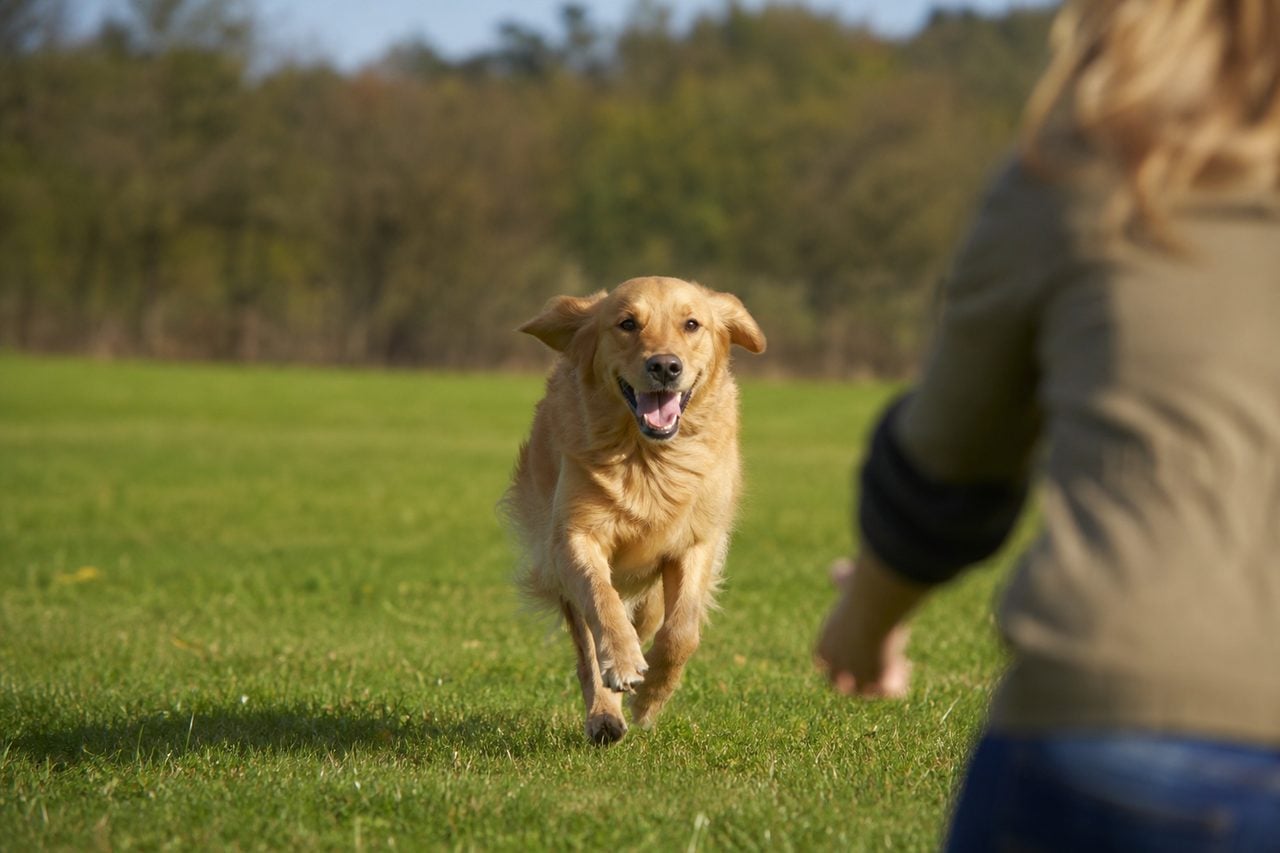
The dream of off-leash freedom is a powerful one: a dog that trots along a trail, explores, and comes flying back the instant you call, no matter what distraction crosses its path. For owners around Evansville with access to trails, parks, and open natural areas, reliable off-leash behavior can transform how you spend time with your dog. But off-leash reliability is earned, not granted, and getting there safely takes a thoughtful, foundation-first approach.
- Foundation First: Why Recall Comes Before Everything
- Building a Reliable Recall Step by Step
- Where E-Collar Work Fits, and Where It Does Not
- Practicing on Quiet Local Trails
- Leash Rules and Local Ordinances
- Safety, Common Pitfalls, and Realistic Expectations
- Getting Professional Guidance
- Reviewed trainers
- FAQ
At the heart of true off-leash freedom is one skill above all others: a rock-solid recall, meaning your dog comes back reliably even under heavy distraction. Everything else, including any discussion of tools like electronic collars, sits on top of that foundation. A dog without a dependable recall has no business being off leash near roads, wildlife, or other people, no matter what equipment is involved.
This guide covers how to build a reliable recall from the ground up, where and how e-collar work fits and, importantly, where it does not, how to practice responsibly on quiet local trails, and the legal and safety realities of off-leash activity in the Evansville area. It also explains where owners can turn for professional guidance on the more advanced end of this work.
Foundation First: Why Recall Comes Before Everything
Off-leash training is not about a magic tool or a single command. It is about building a relationship and a behavior so strong that your dog chooses to come back to you over chasing a squirrel, greeting a stranger, or bolting toward a road. That kind of reliability is built in layers, starting in the easiest possible environment and adding difficulty only as the dog succeeds.
A recall built on a genuine foundation means the word to come back has been paired with wonderful outcomes hundreds of times, in progressively harder settings, until responding becomes almost automatic. Owners who skip this foundation and rely on tools to force compliance tend to end up with dogs that come back only when they feel like it, or only when they sense the tool is present. That is not reliability, and it is not safe.
The foundation also includes attention and engagement. A dog that checks in with you naturally, that finds you interesting and rewarding to be near, is far more likely to stay close and respond off leash. Before you ever think about removing the leash in an open area, your dog should have a recall you would confidently bet on in a securely fenced or long-line setting under mild distraction. The rest of this process is about slowly and safely raising that bar.
Building a Reliable Recall Step by Step
A dependable recall is trained methodically, and the sequence matters. Rushing to hard environments before the easy ones are solid is the most common way owners undermine their own progress. The following progression builds a recall that holds up when it counts.
- Start indoors with zero distractions. Say your recall word once, and when your dog comes, reward it generously with something it truly loves. Make coming back the best thing that happens all day.
- Use a recall word you protect. Choose a specific word and only use it when you can ensure the dog comes and gets rewarded. Never poison it by calling when you cannot follow through or by using it to summon the dog for something unpleasant.
- Add mild distractions gradually, still indoors or in the yard, then move to a securely fenced area.
- Graduate to a long line, a ten to thirty foot leash that gives the dog freedom while keeping you connected. This is the crucial bridge between on-leash control and true off-leash work, and many dogs spend a long time here.
- Increase distractions systematically: other people, other dogs at a distance, wildlife scents, more interesting locations, one variable at a time.
- Reward heavily throughout, and keep the payoff high even as the dog gets good. A recall that stops paying off eventually stops working.
Throughout this process, set your dog up to succeed. If a recall fails, it usually means you raised difficulty too fast, so drop back to an easier level and rebuild. Never punish a dog for coming back slowly or for hesitating, because that teaches it that returning to you is risky. The long line is your safety net and your honesty check: as long as your dog might not come back, it stays on the line.
Where E-Collar Work Fits, and Where It Does Not
Electronic collars, sometimes called e-collars or remote collars, are among the most debated tools in dog training. Used by a knowledgeable professional as part of a carefully built program, low-level e-collar work can play a role in proofing an already-trained recall for some dogs in some situations. Used carelessly, or as a substitute for foundation training, they can cause real harm, including fear, anxiety, and a worsening of the very problems an owner hoped to solve. The distinction is everything.
The single most important principle is foundation first. An e-collar is not a shortcut and cannot install a recall a dog does not already understand. The behavior must be taught thoroughly with positive methods and reliable on a long line before any tool is layered in. Introducing a collar to a dog that does not yet know what is being asked simply produces confusion and fear.
There are also dogs for whom e-collar work is not appropriate at all. It is generally a poor and potentially damaging choice for fearful, anxious, or aggressive dogs, because adding an aversive experience to an already stressed animal can intensify fear-based behavior and aggression. These dogs need a different approach entirely, focused on building confidence and changing emotion, not on pressure.
Guiding principles for e-collar consideration
- Foundation first, always: a recall must be taught and reliable on a long line before any tool is considered.
- Not for fearful, anxious, or aggressive dogs, for whom aversive tools can make things significantly worse.
- Professional guidance is essential: correct introduction, conditioning, and level-setting require experienced hands, and getting it wrong causes harm.
- It is a proofing aid at most, never a replacement for the relationship and training underneath it.
Because the potential for harm is real, any owner considering e-collar work should do so only under the guidance of a qualified professional who can assess whether it is appropriate for their individual dog and teach correct, humane use. This is not a do-it-yourself tool learned from a video.
Practicing on Quiet Local Trails
Once your dog has a strong long-line recall and you are ready to test freedom, the environment you choose makes an enormous difference. The goal is to practice in low-distraction, low-risk settings before ever attempting anything near roads or crowds, and to keep a long line attached until your dog has proven itself repeatedly.
Quiet, open natural areas around the Evansville region can offer good practice grounds during off-peak times, when few other people or dogs are around. Trails and open spaces at places like Wesselman Woods Nature Preserve, Burdette Park, and the areas around Scales Lake near Boonville, along with quieter stretches away from busy trailheads, provide room to work. Choosing early mornings or weekdays reduces the number of distractions and the chance of an uncontrolled encounter.
A responsible practice routine looks like this:
- Keep a long line attached during the transition period, so you always have a way to prevent a failure from becoming a bolt.
- Start in the quietest possible conditions and add difficulty gradually, just as you did in earlier training.
- Practice recalls frequently and randomly, rewarding well, so coming back stays a habit rather than something that only happens at the end of an outing.
- Read the environment: avoid areas near roads, be mindful of wildlife your dog might chase, and respect other trail users, some of whom may be uncomfortable around loose dogs.
- Never let your dog off a long line in an area where a failed recall could put it in danger or violate local rules.
Remember that other people share these spaces, including those with reactive dogs, small children, or a fear of dogs. Keeping your dog under genuine control and recalling it away from others is basic trail etiquette as well as a safety practice.
Leash Rules and Local Ordinances
It is important to be clear about the legal landscape, because off-leash freedom does not mean freedom from the rules. Indiana does not have a single statewide leash law that applies everywhere. Instead, leashing and animal control requirements are set at the local level, and they vary from place to place across the Evansville area, including within the City of Evansville and Vanderburgh County, and in surrounding communities like Newburgh, Boonville, Mount Vernon, Princeton, and beyond.
What this means in practice is that it is the owner’s responsibility to know and follow the local ordinances across the Evansville area that apply wherever they happen to be. Many parks and public spaces have their own posted rules about whether dogs must be leashed, and those rules apply regardless of how well trained your dog is. A reliable recall does not exempt you from a local leash requirement, and being able to control your dog off leash is a skill for appropriate settings, not a license to ignore posted rules.
Before letting your dog off leash anywhere, check the posted signage and the rules for that specific location, and default to leashing wherever you are unsure. Respecting these rules protects your dog, protects other people and animals, and protects the continued welcome of dogs in shared spaces. Responsible off-leash practice and rule-following go hand in hand.
Safety, Common Pitfalls, and Realistic Expectations
Off-leash reliability is a high standard, and it is worth being honest about the risks and the common ways owners get into trouble. The consequences of an off-leash failure can be severe, including a dog running into traffic, chasing wildlife, or frightening another person or dog, so the safety bar should be correspondingly high.
Common pitfalls to avoid include:
- Going off leash too soon, before the recall is genuinely proven under distraction on a long line.
- Only calling the dog when the fun is ending, which teaches it that coming back means the good times stop; mix in recalls that are followed by a reward and a return to play.
- Poisoning the recall word by using it inconsistently or in negative contexts, until the word loses its meaning.
- Repeating a cue over and over when the dog does not respond, which teaches it that the word is optional.
- Relying on a tool to paper over a missing foundation, which produces a dog that behaves only when it senses the tool.
It also helps to accept that some dogs, and some breeds with very strong chase or scent drives, may never be fully reliable off leash in every environment, and that is not a failure. For those dogs, a long line offers a safe middle ground that provides freedom to explore while preventing disaster. Matching your expectations to your individual dog is part of responsible ownership. A realistic, safety-conscious approach beats an ambitious one that puts the dog at risk.
Getting Professional Guidance
Building a truly reliable off-leash recall, and especially deciding whether and how to incorporate any advanced tools, benefits enormously from professional guidance. A skilled professional can assess your individual dog, build a foundation program suited to its temperament and drives, coach your timing and mechanics, and help you progress safely from long line to freedom without the guesswork.
This is particularly true for e-collar work, which should never be attempted without experienced hands-on instruction. A qualified professional can honestly assess whether the tool is appropriate for your dog at all, given that it is not suitable for fearful, anxious, or aggressive dogs, and can teach correct, humane, low-level use if it is. Getting this wrong causes real harm, which is exactly why professional involvement is not optional for that part of the work.
Solid foundation recall training is well within reach of qualified local trainers around Evansville. For more specialized off-leash and remote-collar work, the pool of professionals with deep expertise in a mid-sized market can be limited. For the most specialized cases some owners choose to travel to the larger Indianapolis market, roughly two and a half to three hours northeast via I-69, where more specialists are available, while others arrange remote or telehealth consultations to guide their training program from a distance. Whichever route you take, keep the priorities in order: foundation first, safety always, and tools only under professional guidance and only when appropriate for your dog.
Off-Leash Dog Training in Evansville: Local Options & Nearest Specialists
Right now there are no listed Evansville trainers focused specifically on off-leash dog training. Many general Evansville dog trainers can help you get started, and the nearest specialists for this focus are below.
Nearest off-leash dog training specialists — Indianapolis
For complex cases, some families travel to the larger pool of specialists in the Indianapolis area for an assessment or a board-and-train stay. Top-reviewed options:
- Off-Leash K9 Training Indianapolis — 5.0★ (454 reviews)
- Canine Retreat — 4.9★ (10 reviews)
See all Indianapolis off-leash dog training trainers →
Frequently Asked Questions
How do I know when my dog is ready to be off leash?
Your dog is ready to begin testing off-leash freedom only when it has a rock-solid recall that holds up under real distraction on a long line, in the kind of environment where you want to give it freedom. If there is any meaningful chance your dog will ignore the recall when something interesting appears, it is not ready, and the long line stays on. Build reliability gradually, add distractions one at a time, and let the dog’s proven track record, not your hopes, make the call.
Are e-collars a good way to train recall?
An e-collar cannot install a recall a dog does not already know; it is at most a proofing aid layered on top of a foundation built with positive methods and long-line work. Used by an experienced professional on an appropriate dog, low-level work can have a place, but it is easy to cause fear and harm if misused. It is not suitable for fearful, anxious, or aggressive dogs, and it should never be a do-it-yourself substitute for foundation training. Seek professional guidance before considering one.
Is there a statewide leash law in Indiana?
No. Indiana does not have a single statewide leash law that applies everywhere. Leashing and animal control requirements are set locally and vary across the Evansville area, including within the City of Evansville, Vanderburgh County, and surrounding communities. It is the owner’s responsibility to know and follow the local ordinances and posted park rules wherever they are. When in doubt, keep your dog leashed and check the signage for that specific location.
Where can I practice off-leash recall near Evansville?
Choose quiet, open natural areas during off-peak times, and keep a long line attached during the transition to true freedom. Spaces like Wesselman Woods Nature Preserve, Burdette Park, and the areas around Scales Lake near Boonville can work well when few others are around, especially early mornings and weekdays. Always check and follow the posted rules and local ordinances for that specific location, avoid areas near roads, and be considerate of other trail users.
What is a long line and why does it matter?
A long line is a light leash, typically ten to thirty feet, that lets your dog move and explore while keeping you physically connected. It is the essential bridge between on-leash control and off-leash freedom, giving your dog room to practice recall under distraction while guaranteeing you can prevent a failure from becoming a dangerous bolt. Many dogs spend weeks or months on a long line, and for some dogs it remains the safest permanent option.
My dog only comes back sometimes. What am I doing wrong?
Inconsistent recall usually means the foundation was rushed or the recall word has lost value. Common causes include going off leash too soon, only calling the dog when the fun ends, repeating the cue until it becomes optional, or not rewarding well enough. Go back to easier environments, protect and reload your recall word with high-value rewards, and rebuild on a long line before adding difficulty again. If you are stuck, a qualified professional can pinpoint the gap quickly.
Related: read our complete off-leash dog training guide or the full Evansville dog training overview.
Ready to find the right off-leash dog training pro in Evansville?