
Off-Leash Dog Training in Lafayette, IN
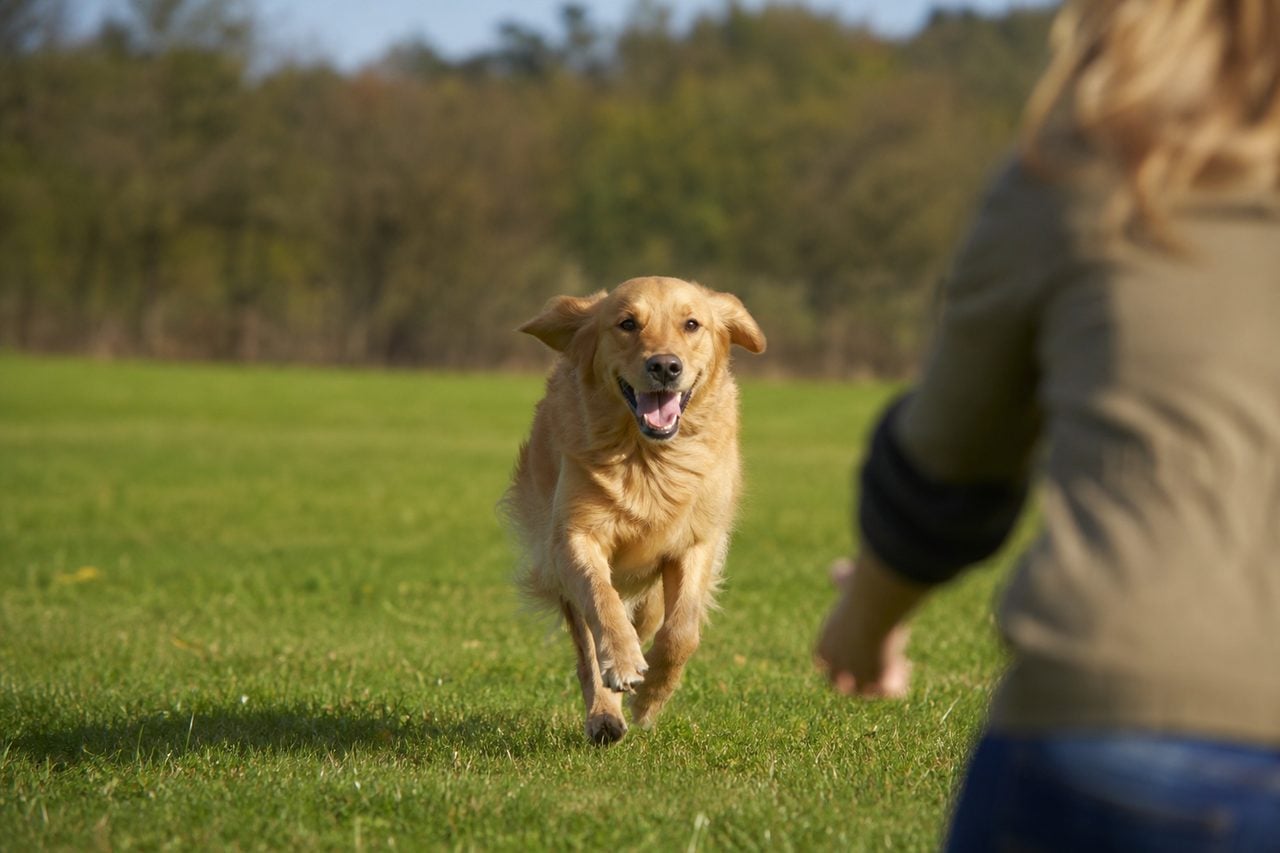
The dream of a dog that stays close, checks in, and comes back instantly no matter what is happening is what draws many Greater Lafayette owners to off-leash training. Picture a quiet morning on a wide trail, your dog exploring the scents ahead, then spinning around and trotting back to you the moment you call. That kind of freedom is achievable, but it is earned through methodical foundation work, not a quick fix, and it rests entirely on one skill: a genuinely reliable recall.
- What Reliable Off-Leash Behavior Actually Means
- Foundation First: Why Recall Comes Before Freedom
- Building a Bombproof Recall Step by Step
- The E-Collar Question: When It Is and Is Not Appropriate
- Practicing on Quiet Local Trails
- Leash Rules Around Lafayette: Know Before You Go
- When to Seek Professional Guidance
- Reviewed trainers
- FAQ
Off-leash reliability is less about a magic command and more about a relationship and a training history deep enough to compete with the distractions of the real world, squirrels, other dogs, joggers, wildlife, and interesting smells. This guide explains what reliable off-leash behavior actually requires, how to build a strong recall step by step, and how to think honestly about tools like the e-collar, which is appropriate only in specific circumstances and never as a shortcut past the foundation.
It also covers where to practice safely around Lafayette and West Lafayette, and an important legal note: Indiana has no statewide leash law, so what governs your dog off-leash are the local ordinances across the Lafayette area and the posted rules of each park or trail. Knowing and following those is part of doing this responsibly.
What Reliable Off-Leash Behavior Actually Means
Before deciding whether off-leash freedom is right for your dog, it helps to define what reliable really means. A dog that comes when called in your quiet backyard is not the same as a dog that comes when called with a rabbit bolting across a trail. Off-leash reliability is measured under distraction, distance, and duration, the three D’s, not in easy conditions.
A genuinely off-leash-ready dog will typically:
- Come promptly and directly when called, even mid-activity and around significant distractions.
- Check in with you voluntarily and stay within a reasonable range without constant reminders.
- Respond to a stop or wait cue if it starts heading toward danger, such as a road or another dog.
- Ignore or disengage from tempting distractions on cue.
It is also worth being honest that not every dog and not every environment is a good candidate for off-leash work. Dogs with strong predatory drive, significant reactivity, or fear-based behavior may never be safely reliable off-leash in stimulating environments, and that is okay. Similarly, off-leash freedom belongs only in appropriate, legal, and safe places, never near traffic or in areas where a leash is required. Setting realistic expectations for your individual dog protects both your dog and everyone around you.
Breed tendencies and individual temperament both play a role here, though neither is destiny. Dogs bred to work closely with people, such as many herding and retrieving types, often take naturally to staying in range and checking in, while dogs bred to range independently or to hunt by scent or sight may find the environment far more compelling than any handler. This does not mean an independent dog cannot learn a good recall; it means the training may take longer, the proofing must be more thorough, and the choice of where to allow freedom should be more conservative. The honest question to keep asking is not whether your dog usually comes back, but whether it would come back in the single moment that matters most, with a rabbit breaking cover or another dog appearing over a rise. If you cannot answer yes with confidence, the long line stays on, and there is no shame in that.
Foundation First: Why Recall Comes Before Freedom
The most important principle in off-leash training is that freedom is the reward for a proven recall, not a way to teach it. Letting a dog off-leash before it has a solid, tested recall is how dogs learn that ignoring you pays off, because the environment is more rewarding than coming back. Every time a dog blows off a recall and gets to keep sniffing or chasing, the behavior of ignoring you gets stronger. Undoing that is far harder than building it correctly from the start.
Foundation work happens on leash and long line first, in gradually more challenging settings, until the recall is genuinely reliable before any real off-leash freedom is granted. The key tool for this bridge stage is a long line, a fifteen to thirty foot leash that lets the dog range and feel free while you retain a safety connection. The long line is what lets you practice recall at distance and around distractions without ever losing control or letting a failed recall be rehearsed.
Alongside recall, a few supporting skills make off-leash life safer:
- A rock-solid name response or attention cue, so you can get the dog’s focus before it commits to a distraction.
- A stop, wait, or down at a distance, so you can pause the dog if something dangerous appears.
- Voluntary check-ins, rewarded generously, so staying connected to you becomes the dog’s default habit.
Build these on leash, proof them on a long line, and only then, in safe and legal areas, begin testing true off-leash freedom. Patience here is what makes the freedom safe and lasting.
Building a Bombproof Recall Step by Step
A reliable recall is built in layers, each one adding difficulty only after the previous layer is solid. Rushing the progression is the single most common reason recalls fail in the field.
Step 1: Charge the recall word in an easy environment. Pick a distinct cue, such as here or come, that has no baggage. In a quiet, distraction-free room, say the word and immediately reward with something excellent. Repeat until the word reliably lights your dog up. The recall cue should always predict something wonderful, never a punishment or the end of fun.
Step 2: Add short distance. Call your dog from a few feet away, reward big when it comes, and gradually increase the distance across easy sessions. Make coming back a party: enthusiastic praise, high-value food, sometimes a favorite toy.
Step 3: Move to the yard and add mild distractions. Practice in the backyard, then with gentle distractions present. Keep success rates high; if the dog fails, you have added difficulty too fast, so back up a step.
Step 4: Go to the long line in new places. Take the recall to quiet parks and trails on a long line. Now you are proofing against real-world smells, space, and mild distractions while keeping a safety connection. Reward heavily for every successful recall.
Step 5: Proof against the three D’s. Systematically increase distance, duration, and distraction, one variable at a time. Practice recalls away from other dogs at a distance, away from interesting scents, and in progressively busier settings, always on the long line until performance is consistently excellent.
Throughout, protect the recall word. Never call your dog to do something it dislikes, and never repeat the cue endlessly if it is ignored; instead, make the recall easier and set the dog up to succeed. Occasionally call your dog, reward, and release it back to play, so recall does not always mean fun is over. A recall that reliably predicts great things and freedom is one a dog wants to answer.
A few extra habits keep a recall strong over the long run. Vary your rewards so the dog never quite knows what wonderful thing is coming, sometimes a jackpot of several treats, sometimes a tug game, sometimes an enthusiastic release back to sniffing. This unpredictability keeps the behavior fresh and resistant to fading. Avoid the common trap of only calling your dog when it is time to leave the park or put the leash on; a dog that learns recall reliably ends the fun will start to hesitate. Instead, weave many low-stakes recalls into every outing where the reward is simply a treat and then permission to keep exploring. And guard against poisoning the cue: if you find yourself frustrated, resist the urge to call the dog in an angry tone or to scold it when it finally arrives, because a dog that associates the recall word with your irritation learns to avoid it. If your recall word ever gets tarnished, it is often easier to teach a brand-new word from scratch than to repair the old one.
The E-Collar Question: When It Is and Is Not Appropriate
Electronic collars, also called e-collars or remote training collars, are among the most debated tools in dog training, and for good reason. Used incorrectly, they can cause fear, anxiety, and even worsen behavior problems; used skillfully by a knowledgeable professional on the right dog, some trainers incorporate low-level e-collar work as part of off-leash reliability. The honest position for owners is one of caution, foundation-first thinking, and professional guidance.
The most important points:
- Foundation comes first, always. An e-collar is not a replacement for teaching the recall. The dog must already understand and reliably perform the recall on a long line before any collar work is even considered. The tool is sometimes used to reinforce a known behavior, never to install one through pressure.
- It is not appropriate for every dog. E-collar work is generally not suitable for fearful, anxious, or aggressive dogs, where added pressure can deepen the underlying emotional problem and make behavior worse. For these dogs, the risks clearly outweigh any benefit.
- Professional guidance is essential. Correct e-collar use involves careful conditioning, precise timing, and finding the individual dog’s lowest perceptible level. This is not something to learn from a video and apply to your own dog. If you are considering it, work with a qualified, reputable professional who conditions the tool properly and prioritizes the dog’s welfare.
- Plenty of dogs never need one. Many dogs achieve excellent off-leash reliability entirely through reward-based recall training and long-line proofing. The e-collar is one possible tool for specific situations, not a required step.
If a trainer proposes jumping straight to an e-collar without first building and proofing a reward-based recall, or applies it to a fearful or reactive dog, treat that as a red flag. Responsible off-leash training is foundation-first, welfare-focused, and honest about what a given dog needs.
Practicing on Quiet Local Trails
Once your dog has a proofed recall on a long line, you will want appropriate places to test and generalize the skill. Greater Lafayette offers several quiet natural areas that suit early off-leash practice, always in legal, safe locations and in line with posted rules.
- Prophetstown State Park (Battle Ground) — large open spaces and trails where you can practice recall at distance with good sightlines, giving you time to spot and manage approaching people, dogs, or wildlife.
- Celery Bog Nature Area (West Lafayette) — natural trails and open areas useful for proofing recall around the mild distractions of a natural setting during quieter hours.
- Wabash Heritage Trail — long, linear stretches along the Wabash River with clear lines of sight, useful for long-line work and distance recalls at off-peak times.
- Cattail Trail — quieter connecting green space suitable for lower-distraction practice.
Practical guidance for trail practice: go at off-peak times, keep sightlines long so you can anticipate distractions, and stay on the long line until your dog’s recall is consistently excellent in that environment. Bring high-value rewards and reinforce every good recall generously. Be considerate of other trail users and wildlife, leash up when others approach, and clean up after your dog. Crucially, check and follow the posted rules and local ordinances for each specific area, because a place that allows a leashed dog may still require a leash even when it is empty.
Leash Rules Around Lafayette: Know Before You Go
A common misconception is that Indiana has a statewide leash law that dictates when dogs must be leashed. It does not. There is no single statewide statute that governs leashing across Indiana. What actually applies to you and your dog are the local ordinances across the Lafayette area, meaning the rules set by individual municipalities and the county, along with the specific posted regulations of each park, trail, and natural area you visit.
Because these rules are set locally and vary from place to place, responsible off-leash practice means doing your homework before you go:
- Check the posted signage at each park or trail; many natural areas and state properties require dogs to be leashed at all times, regardless of how quiet they are.
- Confirm the local ordinance for the specific municipality or area you are in, since Lafayette, West Lafayette, and unincorporated Tippecanoe County may differ.
- Assume a leash is required unless a location explicitly permits off-leash use, and never rely on an area simply being empty.
Beyond the legal requirement, leashing where required is a matter of basic courtesy and safety. An off-leash dog, however friendly, can frighten other trail users, startle wildlife, or provoke a reactive dog on leash. Even a dog with a great recall can be caught off guard by a sudden distraction near a road. The safest and most respected off-leash owners are the ones who reserve off-leash freedom for clearly appropriate, legal locations and leash up readily everywhere else. Knowing the local rules is not a formality; it is part of the responsibility that comes with off-leash training.
When to Seek Professional Guidance
Many owners can build a solid recall and enjoy safe off-leash time through patient, reward-based training and long-line proofing. But off-leash work also intersects with safety in ways that sometimes call for professional help, and knowing when to bring in expertise keeps everyone safe.
Consider working with a professional if:
- Your dog has strong predatory drive or a habit of bolting, where a failed recall could put it in danger.
- Your dog shows reactivity, fear, or aggression, in which case off-leash freedom in stimulating environments may not be appropriate and needs expert assessment first.
- You are considering e-collar work, which should only be undertaken with skilled, reputable professional guidance and proper conditioning.
- Your recall keeps breaking down under distraction despite consistent effort, and you need help diagnosing and fixing the gap.
Greater Lafayette has good general obedience and recall training resources for foundation work. For more specialized off-leash programs, including carefully structured e-collar work with an experienced professional, some owners look toward the larger Indianapolis market, roughly an hour southeast on I-65, where the wider pool of trainers includes more specialists in this area. Wherever you seek help, prioritize professionals who build the reward-based foundation first, are honest about whether off-leash work suits your individual dog, and put the dog’s welfare and public safety ahead of shortcuts. Off-leash freedom is a wonderful thing to share with a dog, and it is at its best when it is built patiently and practiced responsibly.
Off-Leash Dog Training in Lafayette: Local Options & Nearest Specialists
A few Lafayette-area trainers can help with milder off-leash dog training needs:
- Leader of the Pack Canine — 4.9★ (107 reviews)
Nearest off-leash dog training specialists — Indianapolis
For complex cases, some families travel to the larger pool of specialists in the Indianapolis area for an assessment or a board-and-train stay. Top-reviewed options:
- Off-Leash K9 Training Indianapolis — 5.0★ (454 reviews)
- Canine Retreat — 4.9★ (10 reviews)
See all Indianapolis off-leash dog training trainers →
Frequently Asked Questions
Does Indiana have a statewide leash law?
No. Indiana does not have a single statewide leash statute that governs when dogs must be leashed. What applies to you are the local ordinances across the Lafayette area, meaning rules set by individual municipalities and the county, plus the posted regulations of each specific park, trail, or natural area. Because these vary from place to place, always check the signage and confirm the local rule before going off-leash, and assume a leash is required unless a location explicitly permits off-leash use.
Is an e-collar necessary for off-leash training?
No. Many dogs achieve excellent off-leash reliability entirely through reward-based recall training and long-line proofing, without any e-collar. An e-collar is one possible tool for certain situations, never a required step and never a replacement for the foundation. If used at all, it should only reinforce a recall the dog already understands, and only under skilled professional guidance with proper conditioning. It is generally not appropriate for fearful, anxious, or aggressive dogs, where added pressure can worsen the underlying problem.
How do I know if my dog is ready to be off-leash?
Your dog is ready when its recall is genuinely reliable under distraction, distance, and duration, not just in easy conditions. That means it comes promptly even around real-world distractions like other dogs and wildlife, checks in voluntarily, and responds to a stop or wait cue if needed, all demonstrated consistently on a long line first. If the recall still breaks down under distraction, the dog is not ready, and letting it off-leash too early teaches it that ignoring you pays off. Build and prove the recall before granting freedom.
What is a long line and why is it important?
A long line is a fifteen to thirty foot leash that lets your dog range and feel a sense of freedom while you keep a safety connection. It is the essential bridge between on-leash training and true off-leash freedom, because it lets you practice recall at distance and around distractions without ever losing control or letting a failed recall be rehearsed. Proofing your recall thoroughly on a long line, in progressively harder settings, is what makes eventual off-leash reliability safe and dependable.
Where can I practice off-leash recall around Lafayette?
Good options for quiet practice include Prophetstown State Park near Battle Ground for open space and distance work, Celery Bog Nature Area in West Lafayette and the Cattail Trail for natural-setting practice, and the Wabash Heritage Trail for long-line work with clear sightlines, all at off-peak times. Crucially, keep your dog on a long line until its recall is excellent in that setting, and always check and follow the posted rules and local ordinances, since many natural areas require a leash at all times regardless of how empty they are.
My dog comes when called at home but ignores me outside. Why?
This is very common and reflects the difference between an easy environment and a distracting one. A recall that works at home has not yet been proofed against the smells, space, and distractions of the outside world. The fix is systematic: take the recall onto a long line and rebuild it in gradually more challenging settings, increasing distance, duration, and distraction one variable at a time while keeping success rates high and rewards generous. Never let the dog rehearse ignoring you off-leash, since each failure makes the habit stronger.
Related: read our complete off-leash dog training guide or the full Lafayette dog training overview.
Ready to find the right off-leash dog training pro in Lafayette?