
Off-Leash Dog Training in Bloomington, IN
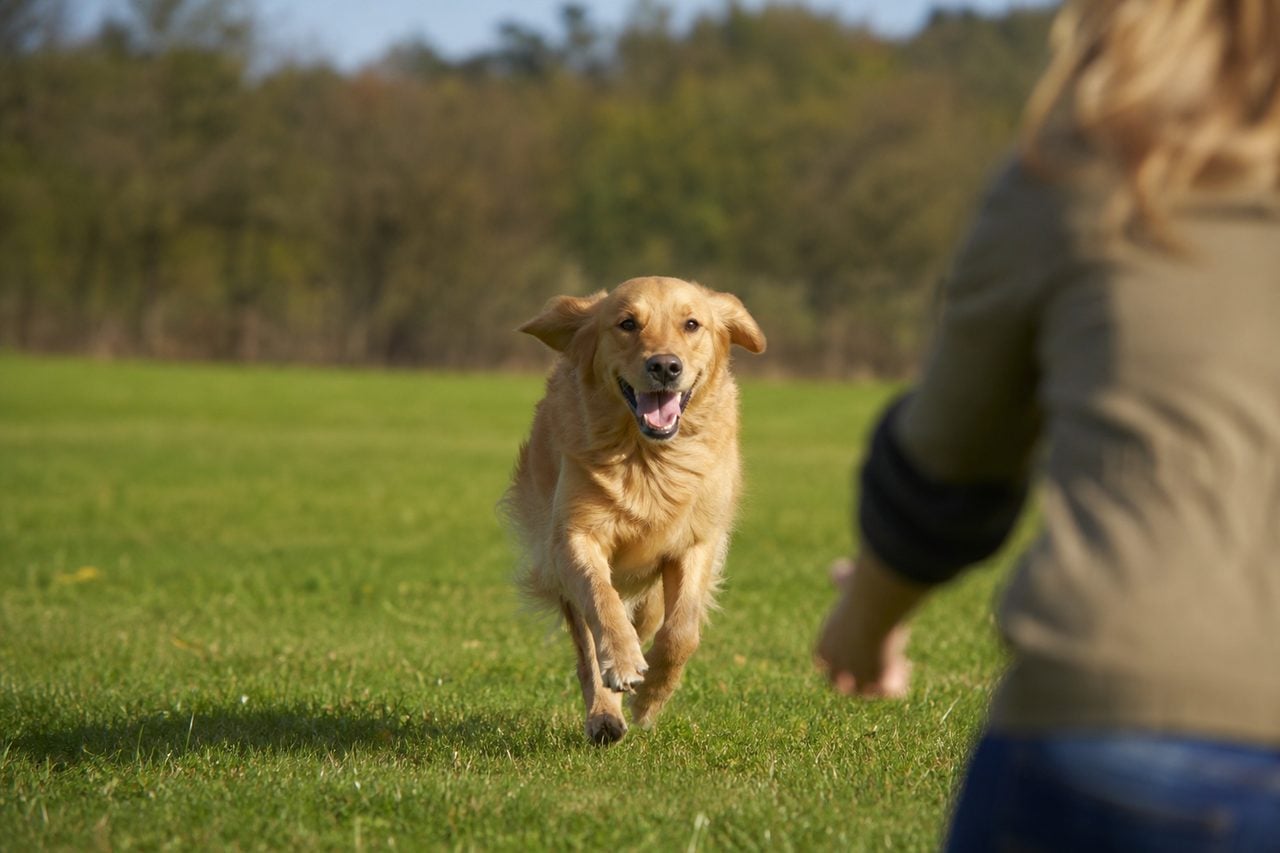
The dream of many dog owners is simple: a dog that can enjoy freedom off leash and come running back the moment it is called, every time, no matter the distraction. A reliable off-leash dog can hike, explore, and play with a level of freedom that leashed dogs never experience. But that freedom rests entirely on one thing — a genuinely dependable recall — and building it takes far more foundation work than most people expect. Off-leash reliability is earned through months of training, not switched on with a single tool.
For owners in the Bloomington and Monroe County area, this guide covers what a reliable recall actually requires, how off-leash training is built step by step, where e-collar work fits and where it does not, and how to practice safely on the region’s quieter trails and natural areas. It also explains why off-leash specialty training is somewhat harder to find locally than the more common reactivity and manners help, and why some owners choose to travel for advanced instruction. Throughout, the emphasis is on doing this responsibly, because an off-leash dog that is not truly ready can be a danger to itself, to wildlife, and to other trail users.
It is also worth setting expectations honestly at the outset. Off-leash reliability is not a single skill you teach and check off, but a standard you build and then maintain for the life of the dog. Even a well-trained dog needs ongoing practice, and even a reliable dog is only as safe as the handler’s judgment about the environment on a given day. Wind, wildlife, an unfamiliar dog rounding a bend, or a road nearby can all change what is safe in an instant. The best off-leash handlers are not the ones with the flashiest recall but the ones who read situations well, keep their dogs close in doubt, and never treat freedom as automatic.
What Reliable Off-Leash Really Means
It is worth being clear-eyed about what off-leash reliability requires, because the gap between a dog that comes when called in the backyard and one that comes when called away from a deer is enormous. A truly off-leash-reliable dog will recall through distractions, at distance, in unfamiliar places, and when it is already engaged in something exciting. Reaching that standard is a serious undertaking, and not every dog or every environment is a good candidate.
The foundation is a rock-solid recall built to near-automatic reliability in easy settings first, then generalized to harder and harder situations one careful step at a time. Alongside recall, an off-leash dog needs impulse control, a strong connection to its handler, and the handler’s honest judgment about when the environment is safe. Some dogs, because of strong prey drive, deep-seated fear, reactivity, or aggression, may never be appropriate candidates for true off-leash freedom, and forcing the issue with those dogs is unfair and unsafe.
Off-leash freedom is also a privilege that comes with responsibility to the community and the environment. A dog off leash near Lake Monroe or on a shared trail must not chase wildlife, disturb other people and their dogs, or wander out of the handler’s control. Leash requirements in the region are set by local ordinances across the Bloomington area and by the rules of individual parks and properties rather than by a single statewide leash statute, so it is always the owner’s job to know and follow the specific rules wherever they are.
Building the Foundation: Recall First
Every off-leash program begins on leash. The order matters: you build the behavior in easy conditions and only add freedom and difficulty once the behavior is genuinely solid. Skipping steps is the most common reason off-leash training fails.
A sound progression looks like this:
- Charge the recall cue indoors. Pick a word you will use only for coming when called and pair it, many times, with an outstanding reward. The recall cue should mean something wonderful always happens.
- Build value with recall games. Games like back-and-forth recalls between two people, or hide-and-seek in the house and yard, make coming when called a joyful habit rather than an obligation.
- Add mild distractions gradually. Practice in the yard, then a quiet park, adding difficulty in small increments and always setting the dog up to succeed.
- Use a long line as the safety bridge. A long training line — fifteen to thirty feet — lets the dog experience freedom while you retain a physical safety net. This stage is essential and often lasts weeks or months. You practice recalls at increasing distances and distraction levels, never giving the dog a chance to learn that ignoring you works.
- Proof against real distractions. Only once the dog reliably recalls on a long line through squirrels, other dogs, and interesting smells do you consider dropping the line in genuinely safe, enclosed, or low-risk areas.
Two rules protect a recall for life. First, never call your dog to you for something it dislikes — if you must do something unpleasant, go get the dog rather than poisoning the cue. Second, make coming back worth it every time, so the dog never has to choose between you and the environment because you are always the better option. Rushing any of these steps produces a dog that comes when called only when nothing interesting is happening, which is exactly when off-leash reliability matters least.
A useful mental model is that you are building a savings account of successful recalls. Every time your dog hears the cue and comes back to something rewarding, you make a deposit; every time the dog hears the cue and ignores it, or comes back to something unpleasant, you make a withdrawal. Keep the account well in the black by managing the environment so the dog almost never has the chance to fail. That is exactly what the long line is for — it lets you prevent the withdrawal of a blown-off recall while you keep making deposits. Alongside the formal recall, a strong voluntary check-in habit is gold: reward your dog generously any time it chooses to look back at you or drift toward you on its own, and you will grow a dog that keeps tabs on you without being asked, which is the real heart of off-leash safety.
Where E-Collar Training Fits — and Where It Does Not
Electronic collars, also called e-collars or remote collars, are a topic of genuine debate, and owners considering them deserve a clear, responsible picture. An e-collar is a tool, and like any tool its outcome depends entirely on how, when, and by whom it is used. It is not a shortcut that replaces training, and in the wrong hands or on the wrong dog it can do real harm.
The most important principle is foundation first. An e-collar should never be the starting point for teaching recall. A dog must already understand the recall cue thoroughly, through positive training, before any remote tool enters the picture; otherwise the dog has no idea what it is being asked to do and simply feels discomfort with no clear meaning. When used, modern low-level e-collar work in skilled hands aims to be a communication signal at a level the dog barely notices, layered onto a behavior the dog already knows, not a punishment.
Just as important is knowing when an e-collar is not appropriate. It is not suitable for fearful, anxious, reactive, or aggressive dogs, where adding any aversive can intensify fear and worsen behavior, sometimes dangerously. It requires careful conditioning, correct fit, appropriate levels, and precise timing that most owners cannot achieve without hands-on instruction. For these reasons, e-collar work should only be undertaken with guidance from a qualified, experienced professional who can assess whether your individual dog is a suitable candidate at all, condition the tool properly, and coach your timing. Many dogs reach excellent off-leash reliability without any e-collar, purely through strong positive-reinforcement foundations and long-line work. An e-collar is one possible tool for specific situations and specific dogs, never a default, and never a substitute for the foundation.
Practicing Safely on Quiet Local Trails
Once your dog has a strong foundation, real-world practice in gradually more challenging environments is what turns a trained recall into a reliable one. The Bloomington region offers a range of natural areas, and the key is to match the setting to your dog’s current stage and to always prioritize safety and courtesy.
Start proofing in quiet, low-traffic settings and at off-peak times — early mornings on weekdays are ideal for having space to yourself. Keep the long line on until your dog is genuinely reliable at that location and difficulty. Natural areas around the region such as Griffy Lake Nature Preserve, the wooded terrain near Lake Monroe, and the state parks within reach — including Brown County State Park near Nashville and McCormick’s Creek State Park — offer varied, engaging environments, but each has its own rules, and many require dogs to remain leashed. Always confirm and follow the specific posted rules and local ordinances for wherever you go; where a leash is required, that is not the place for off-leash practice, and a long line used as a leash may be the appropriate compromise.
Wherever you practice, be a responsible steward. Keep your dog from chasing or disturbing wildlife, which is both an ethical duty and a legal one in protected natural areas. Yield to other trail users, leash up when you encounter other people or dogs, and never let your dog approach strangers or other dogs uninvited. Avoid off-leash work near roads, water hazards, or steep terrain until your dog is completely dependable, and even then keep the environment in mind. The mark of a good off-leash handler is not how far the dog roams but how consistently it stays connected and comes back — and how little impact the dog has on everyone and everything else sharing the space.
Common Mistakes That Undermine Off-Leash Reliability
Off-leash training fails in predictable ways, and most of the failures come from moving too fast or accidentally teaching the dog the wrong lesson.
- Dropping the line too soon. The most common and most dangerous mistake. If the dog is not reliably recalling on a long line through distractions, it is not ready for true off-leash freedom, no matter how tempting the open trail looks.
- Poisoning the recall. Calling the dog only to end the fun — to leash up and go home, or to do something the dog dislikes — teaches the dog that coming back is a bad deal. Recall must reliably lead to good things.
- Repeating the cue. Calling the dog over and over when it ignores you teaches it that the cue is optional. If the dog does not respond, that is information: the distraction was too high or the foundation is not there yet. Go back a step rather than nagging.
- Treating an e-collar as a fix. Reaching for a remote collar to compensate for a shaky foundation, or using it on a fearful or reactive dog, tends to make things worse. The tool cannot install a recall that was never built.
- Ignoring the individual dog. Some dogs have prey drive or temperament traits that make full off-leash freedom unrealistic. Pushing those dogs into situations they cannot handle risks their safety and others’.
- Skipping the community responsibility. Letting a dog off leash where rules require a leash, or where it disturbs wildlife or other people, is both unsafe and unfair to the shared spaces everyone relies on.
Slow, honest, step-by-step training is the reliable path. Every time you resist the urge to skip ahead, you protect the recall you are building.
When to Seek Professional Help and Consider Traveling for It
Off-leash reliability, and especially any e-collar work, is an area where skilled professional guidance pays off enormously. A qualified trainer can assess whether your individual dog is a good candidate for off-leash freedom, design a foundation program, coach your timing on recall and long-line work, and determine whether and how a tool like an e-collar should ever be introduced. Poor guidance in this specialty can be worse than none, so choosing an experienced, reputable professional matters.
Within the immediate Bloomington area, hands-on help for the most common behavior challenges — general manners, leash reactivity, and anxiety — is more readily available than deep specialty instruction in advanced off-leash and remote-collar work. Because that particular niche is thinner locally, some owners choose to travel for it. Indianapolis, roughly an hour north via SR-37 and I-69, is a considerably larger metro with a broader pool of trainers, including those who specialize in advanced off-leash reliability and structured e-collar programs. For owners who want that specialized expertise, the drive can be worthwhile, whether for an intensive program, board-and-train option, or ongoing coaching.
If you do look further afield, apply the same standards you would locally: seek a professional who prioritizes a positive-reinforcement foundation, who is transparent about their methods, who will honestly tell you if your dog is not a candidate for off-leash freedom or e-collar work, and who treats any tool as one carefully applied part of a bigger plan rather than a magic solution. Whether you train locally or travel for specialized help, the goal is the same: a dog that enjoys real freedom because it has genuinely learned to stay connected and come back, safely and reliably, every time.
Finally, keep the long view. There is no prize for getting your dog off leash quickly, and there is real cost to getting it wrong — a dog that bolts after a deer near a road, or that runs up to a leashed reactive dog on a trail, can create a dangerous situation in seconds. Every week you spend building a genuine foundation, and every honest decision to keep the long line on a little longer, is an investment in a lifetime of safe outings. Owners around Bloomington are fortunate to have varied natural areas within easy reach, and the dogs that get to enjoy them off leash responsibly are the ones whose owners took the time to earn it step by step.
A last word on temperament and honesty. Part of responsible off-leash training is being willing to conclude that full off-leash freedom is not the right goal for a particular dog, at least not everywhere. A dog with intense prey drive that cannot resist bolting after wildlife, or a dog whose fear or reactivity makes loose encounters risky, can still live a rich, happy life on a long line in open spaces, enjoying most of the freedom without the danger. That is not a defeat; it is sound judgment. The aim is a safe, connected dog and a confident handler, and there are many ways to reach a version of that goal that fits the individual dog in front of you rather than an idealized picture of what off-leash should look like.
Off-Leash Dog Training in Bloomington: Local Options & Nearest Specialists
A few Bloomington-area trainers can help with milder off-leash dog training needs:
- Jolly Dogs — 5.0★ (45 reviews)
Nearest off-leash dog training specialists — Indianapolis
For complex cases, some families travel to the larger pool of specialists in the Indianapolis area for an assessment or a board-and-train stay. Top-reviewed options:
- Off-Leash K9 Training Indianapolis — 5.0★ (454 reviews)
- Canine Retreat — 4.9★ (10 reviews)
See all Indianapolis off-leash dog training trainers →
Frequently Asked Questions
What is the most important foundation for off-leash training?
A rock-solid recall is the foundation of everything. Before a dog earns off-leash freedom, it needs to come when called reliably — through distractions, at distance, and in unfamiliar places. That is built step by step, starting on leash and progressing through long-line work over weeks or months, with coming back always leading to something wonderful. Without a dependable recall, off-leash freedom is unsafe for the dog, for wildlife, and for other people sharing the space.
Is an e-collar necessary for off-leash reliability?
No. Many dogs reach excellent off-leash reliability purely through positive-reinforcement foundations and long-line proofing, with no e-collar at all. An e-collar is one possible tool for specific dogs and situations, never a default and never a replacement for training. If it is used, it should only be introduced after the dog already knows the recall thoroughly, and only under the guidance of a qualified, experienced professional who can assess whether your dog is even a suitable candidate.
When is an e-collar not appropriate?
An e-collar is not appropriate as a starting point for teaching recall, and it is not suitable for fearful, anxious, reactive, or aggressive dogs, because adding an aversive can intensify fear and make behavior worse, sometimes dangerously. It also requires careful conditioning, correct fit, appropriate levels, and precise timing that most owners cannot achieve without hands-on instruction. Because of this, any e-collar work should be undertaken only with professional guidance and only on dogs assessed as appropriate candidates.
Where can I safely practice off-leash recall near Bloomington?
Start in quiet, low-traffic areas at off-peak times, keeping a long line on until your dog is genuinely reliable there. The region offers natural areas such as Griffy Lake Nature Preserve, the terrain near Lake Monroe, and nearby state parks like Brown County State Park and McCormick’s Creek State Park. However, many of these require dogs to remain leashed, so always confirm and follow the specific posted rules for each location. Where a leash is required, a long line used as a leash is the appropriate way to practice.
Is there a statewide leash law in Indiana?
Leash requirements in the Bloomington area come from local ordinances and the rules of individual parks and properties rather than a single statewide leash statute. That means the rules can differ from one park, trail, or municipality to the next, and many natural areas require dogs to be leashed. It is always the owner’s responsibility to know and follow the specific rules wherever they are, and to keep their dog under control and away from wildlife and other trail users.
Why might I travel to Indianapolis for off-leash training?
Around Bloomington, help for common issues like manners, leash reactivity, and anxiety is easier to find than deep specialty instruction in advanced off-leash reliability and structured e-collar work. Because that niche is thinner locally, some owners travel for it. Indianapolis, about an hour north via SR-37 and I-69, is a larger metro with a broader pool of trainers, including those who focus on advanced off-leash programs. For owners who want that specialized expertise, the drive can be worthwhile, and the same standards for choosing a reputable, foundation-first professional apply.
Related: read our complete off-leash dog training guide or the full Bloomington dog training overview.
Ready to find the right off-leash dog training pro in Bloomington?