
Off-Leash Dog Training in Muncie, IN
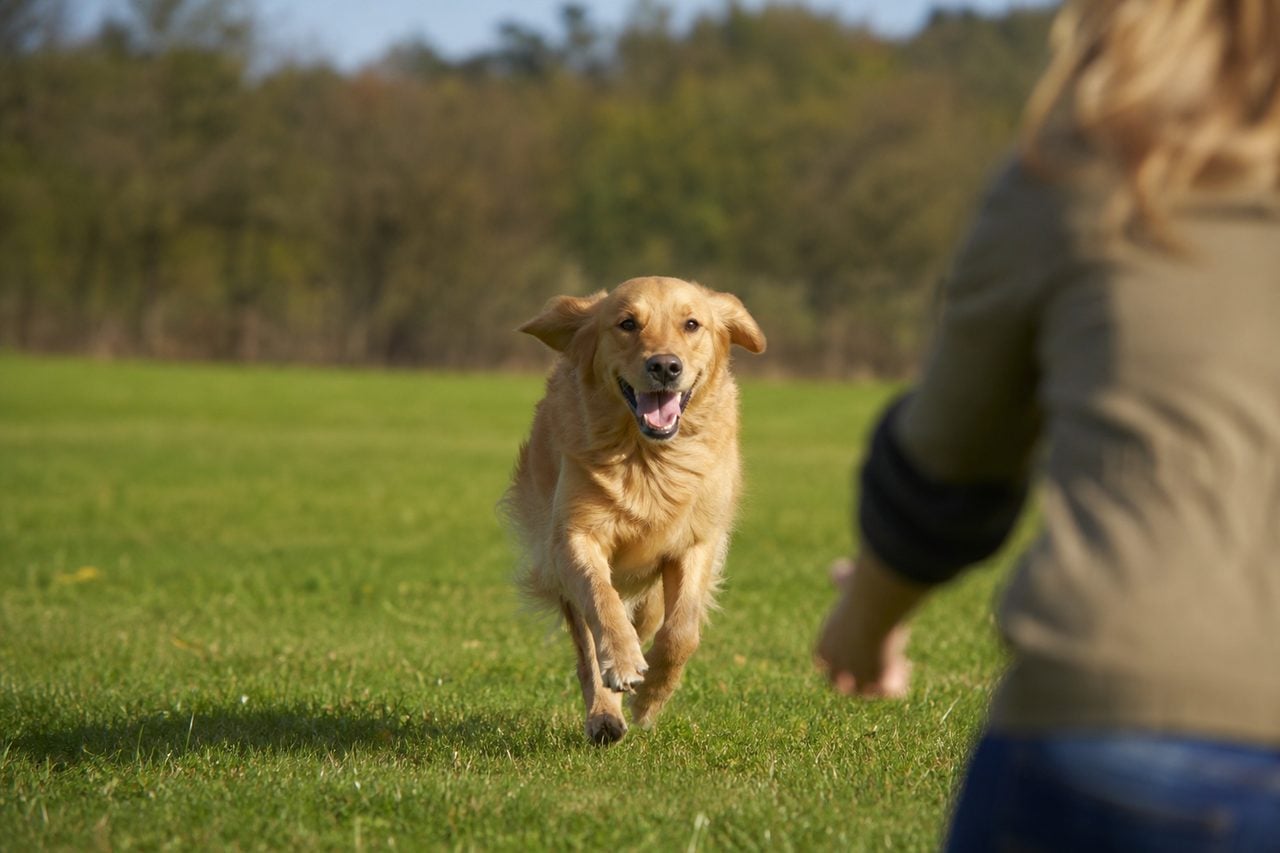
A dog that reliably comes when called and stays close off leash is one of the great joys of dog ownership — and one of the hardest skills to build honestly. Around Muncie and Anderson, owners dream of hiking, exploring, and letting their dog run, but off-leash freedom is earned through months of foundation work, not bought with a single tool or weekend course. This guide lays out what real off-leash reliability requires, the main training methods, and where it is actually legal and appropriate to practice in our area.
The heart of off-leash training is a bombproof recall — a dog that turns on a dime and returns to you every single time, even when a squirrel bolts or another dog appears. That reliability is built on a long line first, with a clear choice between long-line/positive-reinforcement methods and remote (e-collar) training. Both can work in skilled hands, and both can be done badly. We’ll cover the honest tradeoffs of each so you can decide what fits your dog and your comfort level.
Delaware and Madison County trainers can build the obedience and recall foundation locally. For dedicated, structured off-leash programs — especially board-and-train style intensives — the deeper specialist pool sits about an hour southwest in Indianapolis. Here’s how to think it through from foundation to freedom.
What Off-Leash Reliability Actually Requires
Off-leash reliability is not one skill — it is a stack of them, and recall is the keystone. A dog ready for off-leash freedom can hold attention around distractions, respond to a recall cue instantly regardless of what’s happening, hold a stay until released, and check in with you voluntarily without being asked. If any of those pieces is shaky on a leash, they will collapse the moment the leash comes off.
The honest truth many owners resist is that off-leash work is the graduation, not the starting point. A dog needs a rock-solid on-leash and long-line foundation before freedom is even on the table. Rushing this stage is how dogs end up chasing deer across a road or ignoring a frantic owner in a parking lot — the freedom was granted before the reliability existed.
Temperament and breed also matter. A biddable dog that naturally orients to its handler will reach reliable off-leash status far faster than an independent scent hound or a high-prey-drive breed built to work at a distance from people. Some dogs, honestly, should stay on a long line in most environments for their whole lives, and there is no shame in that — it’s responsible ownership. Setting realistic expectations for your specific dog is the first step.
Age and maturity factor in too. A young puppy often sticks close and recalls beautifully — then hits adolescence, discovers the wider world, and starts “going deaf” to cues that used to work. That regression is normal, not a sign your training failed; it just means the reliability wasn’t fully proofed yet. Plan for it by keeping adolescent dogs on a long line through that stage, and don’t mistake early puppy clinginess for true, trained-in recall. Real off-leash reliability holds up through maturity, distraction, and the specific temptations your individual dog finds hardest to resist.
Building a Bombproof Recall
Recall is built through hundreds of successful repetitions, starting easy and slowly adding difficulty. Begin indoors with zero distractions: say your recall word once, and when the dog comes, throw a party — exceptional food, praise, play. The cue must always predict something better than whatever the dog was doing. Never call your dog to do something it dislikes (nail trims, ending playtime) using your recall word, or you’ll poison it.
The three variables to raise one at a time are distance, distraction, and duration. Move from the living room to the yard, then to a quiet outdoor space, then near mild distractions, always keeping success rates high. The moment your dog starts failing, you’ve raised difficulty too fast — back up to where it succeeds. A recall that works at home but fails at the park isn’t a reliable recall yet; it’s a work in progress.
Protect the cue fiercely. Never repeat it over and over (that teaches the dog the word means “come eventually”), never call when you can’t enforce or reward it, and keep the payoff high even after months of success — an occasional jackpot keeps the behavior strong. Many trainers also teach an emergency recall on a separate, super-high-value word reserved only for true emergencies and never watered down. Consistency across everyone in the household is what turns a good recall into a bombproof one.
Build recall games into everyday life so it stays fun rather than feeling like drilling. Play round-robin recalls with family members across the yard, hide and call your dog to find you, or do surprise recalls mid-walk followed by a jackpot and release back to sniffing. The goal is for your dog to genuinely love turning toward you — because coming back has a long, unbroken history of being the best decision it ever makes. A dog that has been called away from fun a hundred times and always got something wonderful (and often went right back to the fun) becomes a dog that recalls without hesitation.
The Long-Line Foundation
Before any off-leash freedom, the long line is the essential bridge. A fifteen- to thirty-foot lightweight line lets your dog experience distance and freedom while you retain a safety net and the ability to prevent failures. It is the single most important piece of off-leash equipment, and skipping it is the most common mistake owners make.
The long line does two jobs. It guarantees the dog can never rehearse ignoring you — if the recall fails, you can gently reel the dog in, so the dog never learns that blowing you off works. And it lets you practice real off-leash scenarios (recall from a distraction, calling away from another dog) with the safety to prevent a dangerous outcome. You essentially run your entire off-leash program on the long line until the dog is succeeding so consistently that the line is clearly just decoration.
Handling a long line takes a little practice — keep it from tangling around legs, let it drag in safe open areas so the dog forgets it’s there, and use a harness rather than a collar to avoid a hard jolt to the neck if the dog hits the end at speed. This positive-reinforcement, long-line path is the method most force-free trainers use to reach off-leash reliability, and for many dogs it’s all that’s ever needed.
Think of the long line as a dimmer switch, not an on/off switch, for freedom. As reliability grows you can use a longer line, let it drag more, and eventually work in a securely fenced area with the line off entirely before ever considering an unfenced space. Wear gloves to protect your hands, never wrap the line around your wrist, and keep it out of the way of other trail users. The discipline of staying on the long line longer than you think you need to is exactly what separates dogs that are genuinely reliable from dogs that get away with it until the one day they don’t.
E-Collar Training: The Honest Tradeoffs
Remote-collar (e-collar) training is a widely used method for off-leash reliability, and it’s worth understanding honestly rather than through slogans. In skilled, modern hands, an e-collar is used at very low levels — often barely perceptible to the dog — as a tap-on-the-shoulder cue to reinforce a recall the dog already knows, not as punishment. Proponents value it because it can maintain a signal at distances where a long line can’t reach, giving true off-leash range for high-drive or independent dogs.
The tradeoffs are real. Done poorly — high levels, bad timing, no proper conditioning — an e-collar can create fear, confusion, or even aggression, and the dog may associate the sensation with the wrong thing (another dog, a person, the environment). The tool amplifies the skill of the person holding the remote; it is not a shortcut that replaces foundation training. Any legitimate e-collar program still starts with the same recall and long-line work described above; the collar layers on top of an already-known behavior.
Because the stakes are high, e-collar work is not a DIY project for most owners. If you go this route, use a professional who conditions the collar carefully, works at the lowest effective level, and can explain their process clearly. Many force-free trainers reach the same off-leash reliability using long-line and reinforcement methods alone. Neither camp is automatically right — what matters is a competent trainer, a sound foundation, and honest assessment of your dog and your own handling skill.
It’s a genuinely debated topic in the training world, and you’ll find respected professionals on both sides. Our job is to give you the honest picture, not to sell you a method: know that force-free long-line training reaches full reliability for most pet dogs, that a well-run low-level e-collar program can add distance for the dogs that need it, and that a badly-run e-collar program can do real harm. If you’re unsure, start with the long-line path — you can always add a professionally-guided e-collar later, but you can’t easily undo a fear association created by a tool used wrong.
Where Off-Leash Is Legal and Appropriate Locally
This is where many owners get into trouble: reliability is not the only requirement — legality and appropriateness matter too. Most public parks, trails, and natural areas in Indiana require dogs to be leashed, and that includes popular local spots. State properties such as Mounds State Park in Anderson enforce leash rules, and rail-trails like the Cardinal Greenway and the White River Greenway are shared with cyclists, runners, and other dogs where an off-leash dog is both illegal and genuinely risky. Always assume leashes are required unless signage clearly says otherwise.
The appropriate places to enjoy and practice true off-leash freedom are private property with permission, a securely fenced area, or a designated off-leash dog park — check the City of Muncie, City of Anderson, and county parks departments for current, official rules, since these change. A fenced space is also the safest environment to build the final stages of reliability before you ever consider an unfenced area. Even a “bombproof” dog should only be off leash somewhere legal and safe from roads, wildlife, and unwilling strangers.
Appropriateness is also about your dog and the setting. An off-leash dog near a road, near livestock, in wildlife habitat, or around people and dogs who didn’t consent is a problem even if your recall is perfect. Responsible off-leash ownership means reading the environment honestly every single time and defaulting to the long line whenever there’s any doubt about legality, safety, or your dog’s reliability that day.
Remember that off-leash freedom is also a courtesy question. Not everyone on the trail wants to meet your dog — some people are afraid, some are handling their own reactive dog, and some are working dogs that can’t be interrupted. A loose dog running up to say hi, however friendly, can wreck another owner’s hard training work or frighten a child. The gold standard is a dog that’s only off leash where it’s explicitly allowed, that recalls instantly, and that you leash up the moment anyone else appears. That combination keeps trails welcoming for everyone and keeps off-leash access from being restricted further.
Local Training vs. Indianapolis Off-Leash Programs
The foundation for off-leash success — obedience, attention, a strong recall on the long line — can absolutely be built with a good trainer in the Muncie or Anderson area. Weekly coaching that watches your timing and handling is invaluable, and much of this work you’ll do yourself over months regardless of who you hire. For most family dogs, that local foundation plus disciplined long-line practice gets you where you want to go.
Where the local market thins out is dedicated, structured off-leash programs — particularly intensive board-and-train setups and specialized e-collar programs. That deeper pool sits about an hour southwest in Indianapolis, where you’ll find trainers who run focused off-leash curricula and have the facilities to proof reliability across many environments. If you want a formal, fast-tracked off-leash program or professional e-collar conditioning, that’s the market to look in.
When choosing any off-leash trainer, ask direct questions: What’s your recall-building process? Do you use a long-line foundation? If you use an e-collar, how do you condition it and at what levels? What happens when the dog gets it wrong? A confident, specific answer — and a willingness to show you the foundation work rather than promising instant results — is what separates a real off-leash program from a gimmick. Look for certification through science-based bodies such as the CCPDT or IAABC as one useful signal.
If you consider a board-and-train, understand its real limit: the dog may perform beautifully for the professional but fall apart at home, because reliability doesn’t automatically transfer to a new handler and environment. The best programs build in substantial owner training — they teach you to maintain and generalize the skills — and offer follow-up support. Be skeptical of any program promising a finished off-leash dog in a week or two with no ongoing work required from you. Off-leash reliability is maintained, and the handler on the other end of the (invisible) leash is you.
Realistic Timelines and Safety Habits
Off-leash reliability is a months-long project, not a weekend achievement. Expect to spend weeks building an indoor and yard recall, then more weeks proofing it on a long line across increasingly distracting environments before the leash ever comes off in a safe, enclosed space. High-drive or independent breeds take longer, and some dogs are best kept on a long line in most settings for life — a perfectly responsible choice.
Certain safety habits should be permanent. Always carry high-value rewards, even with a well-trained dog, to keep the recall strong. Reassess the environment every outing — roads, wildlife, other dogs, other people — and default to the long line whenever conditions are uncertain. Keep up occasional recall practice so the skill doesn’t rust, and make sure your dog wears ID and is microchipped, because even the best recall can fail on the worst day.
Above all, be honest about your specific dog. Off-leash freedom is a privilege you grant when the reliability, the legality, and the environment all line up — not a right you owe your dog everywhere. Build the foundation properly, respect local leash laws, practice only where it’s legal and safe, and bring in an Indianapolis specialist if you want a formal program. That combination gives you the off-leash partner you’re hoping for without the heartbreak of a preventable mistake.
Have a plan for the day it goes wrong, because eventually something will surprise even a well-trained dog. Practice an emergency recall regularly, teach a rock-solid “wait” or emergency stop for when your dog is heading toward a road, and never chase a loose dog — running away from it while calling excitedly usually works far better, since chasing turns it into a game. Keep current ID tags and a registered microchip at all times. Preparing for the worst-case scenario isn’t pessimism; it’s the same responsible mindset that earns a dog its off-leash freedom in the first place.
Off-Leash Dog Training in Muncie: Local Options & Nearest Specialists
Right now there are no listed Muncie trainers focused specifically on off-leash dog training. Many general Muncie dog trainers can help you get started, and the nearest specialists for this focus are below.
Nearest off-leash dog training specialists — Indianapolis
For complex cases, some families travel to the larger pool of specialists in the Indianapolis area for an assessment or a board-and-train stay. Top-reviewed options:
- Off-Leash K9 Training Indianapolis — 5.0★ (454 reviews)
- Canine Retreat — 4.9★ (10 reviews)
See all Indianapolis off-leash dog training trainers →
Frequently Asked Questions
How long does it take to train a dog to be reliable off leash?
Plan on months, not weeks. You typically spend the first weeks building an indoor and yard recall, then more weeks proofing it on a long line across distracting environments before removing the leash in a safe, enclosed space. High-drive or independent breeds take longer, and some dogs are best kept on a long line in most settings for life — a responsible choice, not a failure.
Do I need an e-collar for off-leash training?
No. Many trainers reach full off-leash reliability using long-line and positive-reinforcement methods alone. An e-collar, used skillfully at very low levels, can maintain a signal at distances a long line can’t reach, which appeals for high-drive dogs — but done poorly it can cause fear or confusion. If you use one, work with a professional who conditions it carefully; it layers on top of a foundation, it doesn’t replace one.
Why is a long line so important?
A fifteen- to thirty-foot long line gives your dog freedom while keeping a safety net, so it can never rehearse ignoring you and you can prevent dangerous outcomes. You essentially run your whole off-leash program on the long line until the dog succeeds so consistently that the line is just decoration. Skipping this stage is the most common off-leash training mistake.
Can I let my dog off leash on the Cardinal Greenway or at Mounds State Park?
No — assume leashes are required in these shared public spaces. Rail-trails like the Cardinal Greenway and White River Greenway are used by cyclists, runners, and other dogs, and Indiana state properties such as Mounds State Park enforce leash rules. Practice true off-leash freedom only on private property with permission, in a securely fenced area, or at a designated off-leash dog park, and always confirm current official rules.
Should I train off-leash skills locally or drive to Indianapolis?
The foundation — obedience, attention, and a long-line recall — can be built with a good Muncie- or Anderson-area trainer, and much of the work you’ll do yourself over months. For dedicated structured off-leash programs, intensive board-and-trains, or professional e-collar conditioning, the deeper specialist pool is about an hour southwest in Indianapolis.
What questions should I ask an off-leash trainer?
Ask about their recall-building process, whether they use a long-line foundation, how they condition an e-collar and at what levels if they use one, and what happens when the dog gets it wrong. A confident, specific answer and a willingness to show foundation work — rather than promising instant results — separates a real program from a gimmick. Certification through science-based bodies like the CCPDT or IAABC is a useful signal.
Related: read our complete off-leash dog training guide or the full Muncie dog training overview.
Ready to find the right off-leash dog training pro in Muncie?