
Off-Leash Dog Training in Terre Haute, IN
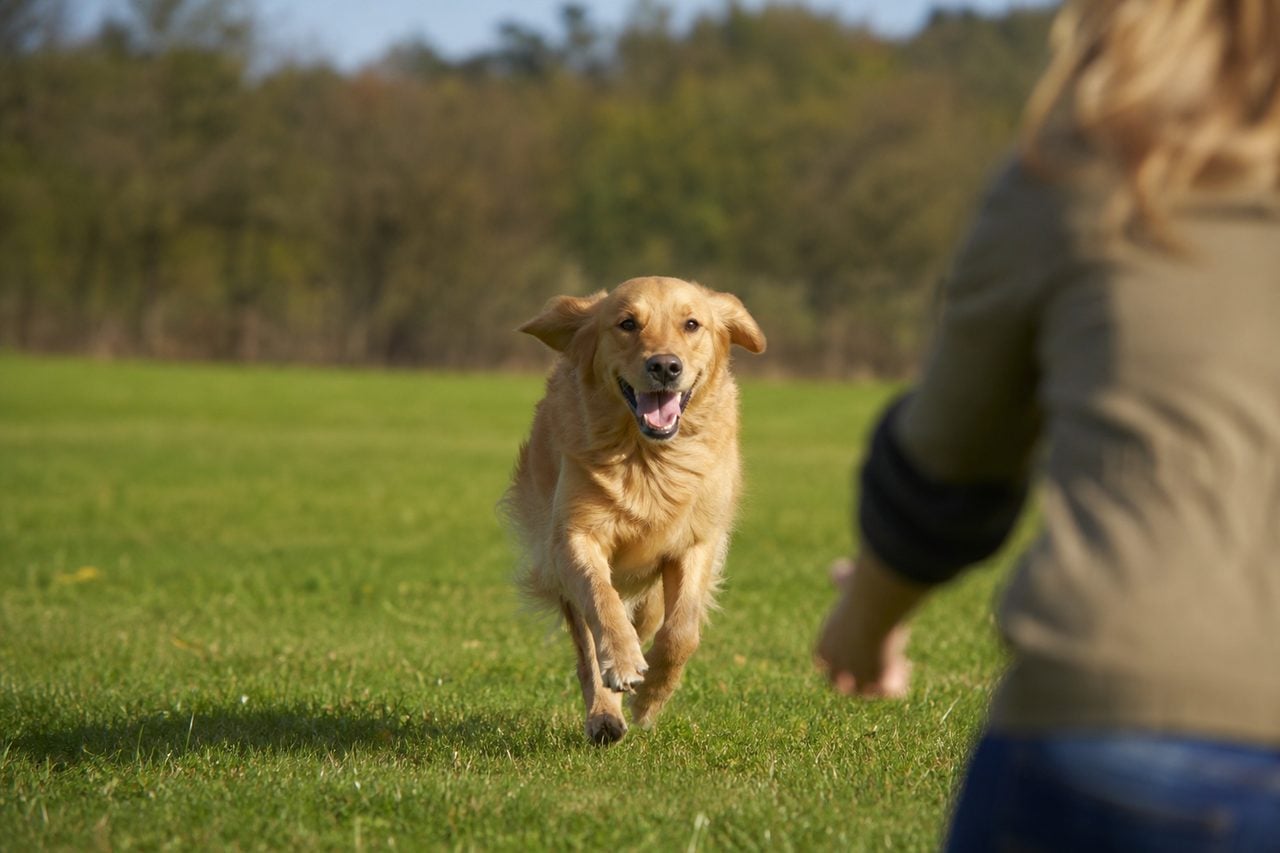
Off-leash training is the thing most owners picture when they imagine a well-trained dog: a hike through the woods at Fowler Park with the dog ranging ahead and coming back the moment you call, a recall that holds when a rabbit breaks cover, a dog you can trust because it has been genuinely taught rather than merely restrained. It is a legitimate goal, and it is achievable for a great many dogs. It is also the training goal most often oversold, misunderstood, and attempted far too early.
Terre Haute owners should know one thing up front: as of now, no trainer in the Vigo County metro publishes a dedicated off-leash program. Unlimited Pawsibilities on N Fruitridge Avenue runs strong obedience and the full AKC ladder plus behavior work; VonBernd K9 Training Center on S US Highway 41 does obedience, tracking and man-trailing with 47 years of experience behind it; K9.5 Training Academy on Erie Canal Road offers a solid obedience foundation through its board-and-train and owner-attends courses. Those are all real building blocks. But if you want a program built specifically and exclusively around off-leash reliability, Indianapolis — about an hour and fifteen minutes east on I-70 — is where the dedicated providers are.
This page covers what off-leash reliability actually requires, how long-line work and e-collar work differ, how to judge which is right for your dog and your own handling, and the local realities of where off-leash is and is not appropriate around the Wabash Valley.
What “off-leash reliable” really means
The phrase gets used loosely, so it is worth defining precisely. A dog is off-leash reliable when it will perform a small set of behaviors — come, stop, wait, leave that — the first time they are asked, at a distance, while distracted, in an environment it has never seen before, when the handler has nothing in hand and no way to enforce anything. That last clause is where most dogs that look trained fall apart.
Contrast that with what many owners actually have: a dog that comes when called in the back yard, comes when it feels like it at the park, and does not come at all when there is a squirrel, another dog, or a delivery van. That is not a partial version of off-leash reliability. It is a different thing entirely, because the moments that matter — the dog heading toward a road, the deer breaking from the treeline — are precisely the moments when distraction is maximal.
Reliability is built from three components. First, motivation: the dog has to want to come back, which means recall has been paid generously and has never been used to end fun or to summon the dog for something it dislikes. Second, proofing: the behavior has been rehearsed successfully across many environments, distances and distractions, deliberately and progressively. Third, a way to be right when the dog is wrong — some means of following through so that ignoring a cue does not simply become an option that works.
Realistically, this takes months of consistent work for most dogs, and it is not equally achievable for all of them. Breed matters — a scenthound in full cry and a sighthound at speed are genuinely harder propositions than a biddable herding dog. Age matters. History matters most of all: a dog with two years of practice at ignoring recall has a deeper hole to climb out of than a six-month-old puppy.
Foundations before freedom
Nearly every failed off-leash attempt shares a cause: the dog was given freedom before the underlying relationship and skills were built. There is a set of prerequisites worth being honest about before anyone starts talking about dropping the leash.
Your dog should have a genuine, joyful recall on a six-foot leash in low distraction. It should reliably check in with you on walks — glancing back to locate you without being called — which is the single best predictor of how a dog will behave with more freedom. It should have a working “wait” or positional stop, which is often more valuable than recall itself, because a dog stopped on the far side of a hazard is safer than a dog recalled across it. It should not be reactive to dogs or people, since off-leash reactivity is a very different and much more serious problem. And it should be old enough and physically sound enough for the work.
Behind all of that sits something less mechanical: does your dog find you interesting? Dogs that treat their handler as the source of good things — food, play, novelty, access to fun — come back readily. Dogs whose handlers are essentially a leash-holder and an end-of-walk announcement do not. If every recall in your dog’s life has been followed by the leash going on and the fun stopping, you have carefully taught it that coming when called is a bad deal.
This is why a solid obedience foundation is worth having locally even without a dedicated off-leash program. Unlimited Pawsibilities offers group obedience, private and in-home training and the AKC ladder from Canine Good Citizen through Community Canine and Urban CGC — the latter two assessed in real public environments, which is exactly the kind of proofing off-leash work depends on. K9.5 Training Academy runs a 12-day board-and-train and a 6-day owner-attends obedience program from a 10,000 square foot facility on Erie Canal Road, which is a reasonable route to a foundation. VonBernd K9 does obedience alongside tracking and man-trailing, which builds a working relationship at distance.
The long-line approach
The long line is the traditional and lowest-risk route to off-leash work. You use a light 15, 30 or 50 foot line attached to a harness, and it does two things at once: it prevents the dog from ever successfully self-rewarding by running off, and it gives you a way to be right without confrontation. The dog experiences something close to freedom while you retain the ability to stop a disaster.
The progression is straightforward. Recall on a short leash with food. Move to a fifteen-foot line in the yard. Move to thirty feet in a quiet park. Increase distraction gradually — new smells, then distant people, then distant dogs, then wildlife. Eventually you let the line drag so you are not holding it but can still step on it. Then a shorter dragging line. Then, in a genuinely safe enclosed or remote area, nothing.
The advantages are real. It is safe for the dog, forgiving of imperfect handler timing, and it cannot cause the fallout that a mistimed aversive can. It builds the motivation side of recall properly, because almost everything is being paid rather than compelled. For fearful or sensitive dogs, and for owners who are not confident in their own timing, it is clearly the better starting point.
The limitations are equally real. It is slow, and it demands patience across dozens of sessions. Long lines tangle, snag on brush and can burn hands and legs — gloves and a biothane line help considerably. And there is a genuine transition problem: some dogs learn that the line is on or off and behave accordingly. The remedy is a long overlap phase with a dragging line and short, unpredictable stretches of true freedom in safe places, so that off-leash never becomes a distinct and obviously different state.
The e-collar approach, described fairly
Remote collars are the other common route to off-leash reliability, and they generate more heat than any other topic in dog training. A fair description: a modern e-collar delivers an adjustable electrical stimulation, with usable ranges spanning from a level most people cannot feel on their own hand up to genuinely aversive. Competent trainers work at low levels and use the tool to add follow-through at distance rather than to punish.
The standard responsible protocol is worth knowing so you can recognize whether it is being followed. The dog is first taught the behavior thoroughly on a leash and long line without any collar. The collar is then conditioned separately, at a level identified by watching for the faintest recognition — an ear flick, a head turn — not a yelp or a jump. Stimulation is paired with a known cue and turned off the instant the dog complies, so the dog learns it has control over it. The collar is worn for weeks before it is ever activated, so it never becomes a predictor by itself. Fit and rotation are managed carefully to avoid pressure sores.
The honest advantages: it works at distance where nothing else can reach, it can produce reliability faster than long-line work alone, and for high-drive dogs in high-stakes environments it gives a genuine safety margin. The honest risks: in unskilled hands it does real damage. Too high a level, poor timing, or use as a punishment rather than as information can create a dog that is anxious, shut down, or that associates the sensation with whatever it happened to be looking at — a child, another dog. Fallout of that kind is difficult to undo.
The practical conclusion is not that one tool is virtuous and the other is not. It is that the e-collar is skill-dependent in a way the long line is not. If you go that route, go with a professional who conditions properly and coaches your handling in person over multiple sessions, and treat any offer to strap one on and hand you the remote in a single appointment as a reason to leave. Terre Haute owners should note that with no dedicated local off-leash program published, this is a common reason to look toward Indianapolis.
Where off-leash is appropriate around Terre Haute
Two separate questions matter here and they get conflated constantly. Where is off-leash legal, and where is it appropriate?
On legality: leash requirements in Indiana are set by local ordinance and by the rules of whichever agency manages the land, not by a single statewide rule you can look up once. City ordinances, Vigo County ordinances, individual park regulations, and Indiana DNR rules for state properties can all differ, and they change. Do not take a trainer’s word, a neighbor’s word, or this page’s word for it — check the current posted rules for the specific property you intend to use, and check with the managing authority if the signage is ambiguous. Assume that developed city and county parks — Deming, Fowler, Hawthorn, Dobbs — and the National Road Heritage Trail require dogs to be leashed unless posted otherwise, because that is the norm for developed public recreation land.
On appropriateness, the constraint is your dog’s current level, not the rules. Even where off-leash is permitted, a dog whose recall is not proofed against wildlife has no business loose near a treeline, and no dog with an unproven recall should ever be loose within running distance of a road. Around the Wabash Valley that includes US-40 and US-41 corridors, the I-70 approaches, and rural county roads where traffic is fast and sightlines are short.
The realistic path for most Terre Haute owners is private land with permission, or a securely fenced private area rented or borrowed for the purpose, plus long-line work everywhere else. The countryside around Brazil in Clay County, out toward Rockville in Parke County, and south along the river gives plenty of open ground — but open ground you have explicit permission to use, not open ground that merely looks empty. Agricultural land, hunting seasons and livestock are all live considerations out there.
Fenced dog parks are a separate thing entirely and are not off-leash training. They are unstructured social environments with no distance control, and a dog practicing ignoring you inside a fence is practicing exactly the wrong skill.
Choosing a program, and what to ask
Since the metro has no dedicated off-leash provider, most Terre Haute owners face a choice between building the foundation locally and then either self-directing the off-leash phase, or making the drive east for a specialist program.
Building locally is a perfectly reasonable route. Get a genuine obedience foundation and a real relationship with a competent local trainer, then do long-line work yourself with periodic coaching. Unlimited Pawsibilities’ private and in-home training plus the AKC ladder gives you structured, externally assessed milestones; K9.5 gives you an obedience base through its board-and-train or owner-attends format; VonBernd’s tracking and man-trailing work is a genuinely useful adjacent discipline for building a dog that works at distance from its handler. Nose work, also offered at Unlimited Pawsibilities, has a similar benefit — a dog that has learned to work independently and then reconnect is halfway to the mindset off-leash needs.
If you go to Indianapolis for a dedicated program, ask hard questions. What exactly is the protocol, step by step? If an e-collar is used, how is it conditioned, at what levels, over how many sessions, and how much of the work happens without it? How much of the program involves coaching me, and what does follow-up look like at three and six months? What environments will my dog be proofed in, and are any of them like the places I actually walk? What happens if my dog is not a good candidate — will you tell me? Ask for a candid assessment of your specific breed and history.
Be sceptical of guaranteed off-leash reliability, of programs that promise it in one or two weeks, and of anyone who does not want you present for the work. Also be sceptical of yourself: a board-and-train that produces a dog with excellent off-leash behavior for a professional handler and no plan for transferring that to you has solved someone else’s problem.
Maintenance, honesty, and knowing your dog’s ceiling
Off-leash reliability decays. It is not a certificate you earn and keep; it is a set of behaviors that stay strong only while they keep getting reinforced. A dog that has been off leash all summer with recall paid every time will be sharper in September than a dog that got a program in spring and then coasted. Keep paying recalls occasionally forever, and keep some long-line work in rotation.
Protect the cue itself. Never call your dog to do something it dislikes — nail trims, baths, the end of the park visit. Use a different word or go and collect the dog instead. Never call a recall you cannot back up in a situation where you are likely to be ignored, because each unenforced ignored recall teaches the dog that the cue is optional. And never, under any circumstances, punish a dog that comes back late; from the dog’s point of view you have punished the coming back.
Finally, be honest about ceilings. Some dogs will never be safely off leash in open, unfenced areas, and that is a legitimate outcome rather than a training failure. A high-prey-drive terrier or a sighthound with a strong chase response can have an excellent recall in ninety-nine situations and be gone in the hundredth, and the hundredth is the one that costs you the dog. A long line on the National Road Heritage Trail, a securely fenced yard, and rented private acreage for real running give that dog a genuinely good life without asking it to override hardwired behavior.
For dogs whose off-leash problems are really behavior problems in disguise — a dog that bolts out of fear, that will not disengage from other dogs, that has an anxiety component — the answer is behavior work first. Unlimited Pawsibilities takes anxiety, fear, reactivity and aggression cases locally, and for the genuinely severe end, Indianapolis is an hour and fifteen minutes east while Purdue’s veterinary behavior service in West Lafayette is about an hour and a half north. Freedom is a reward for a stable dog, not a treatment for an unstable one.
Off-Leash Dog Training in Terre Haute: Local Options & Nearest Specialists
Right now there are no listed Terre Haute trainers focused specifically on off-leash dog training. Many general Terre Haute dog trainers can help you get started, and the nearest specialists for this focus are below.
Nearest off-leash dog training specialists — Indianapolis
For complex cases, some families travel to the larger pool of specialists in the Indianapolis area for an assessment or a board-and-train stay. Top-reviewed options:
- Off-Leash K9 Training Indianapolis — 5.0★ (454 reviews)
- Canine Retreat — 4.9★ (10 reviews)
See all Indianapolis off-leash dog training trainers →
Frequently Asked Questions
Is there an off-leash training program in Terre Haute?
No local trainer currently publishes a dedicated off-leash program. What the metro does offer is solid obedience groundwork: Unlimited Pawsibilities runs group, private and in-home obedience plus the AKC ladder including Community Canine and Urban CGC; K9.5 Training Academy offers a 12-day board-and-train and a 6-day owner-attends obedience course; VonBernd K9 does obedience, tracking and man-trailing. For a program built specifically around off-leash reliability, Indianapolis is about an hour and fifteen minutes east on I-70.
Long line or e-collar — which should I use?
Both can produce reliable recall. The long line is slower but far more forgiving of imperfect timing and carries essentially no risk of fallout, which makes it the better default for most owners and for sensitive dogs. A remote collar can reach further and get there faster, but it is highly skill-dependent: correct conditioning, very low working levels, precise timing and weeks of collar-wearing before activation. If you use one, use it with a professional coaching your handling in person, not off a video.
Where can I legally let my dog off leash near Terre Haute?
Leash rules come from local ordinances and from the rules of whoever manages the property — city, county, or Indiana DNR — and they differ by site and change over time. Check the current posted rules for the specific park or trail and confirm with the managing authority if signage is unclear. Assume developed parks such as Deming, Fowler, Hawthorn and Dobbs, and the National Road Heritage Trail, require a leash unless posted otherwise. Private land with the owner’s permission or a securely fenced area is the practical option for real off-leash work.
How long does it take to get a reliable recall?
For most dogs, months of consistent work rather than weeks. The variables are the dog’s breed and drive, its age, how much practice it already has at ignoring recall, and how much time you put in. A puppy with no bad history moves faster than an adult with two years of successfully blowing you off. Anyone promising off-leash reliability in one or two weeks is describing a demonstration, not proofed behavior.
Can any dog be trained off leash?
Not safely, and pretending otherwise gets dogs killed. Some high-prey-drive dogs — certain terriers, sighthounds, some scenthounds in full cry — can have excellent recall in almost every situation and still be unrecoverable in the one that involves a running rabbit near a road. That is a hardwired ceiling, not a failure of training. A long line, a secure fenced yard, and private acreage for real running give those dogs an excellent quality of life without the risk.
My dog only comes when I have treats. What now?
That usually means recall has been lured rather than trained, and reinforced too predictably. Move to paying after the dog arrives rather than showing food first, vary the reward so the dog cannot predict what it gets, and make some rewards very large so the gamble is worth taking. Also audit what recall predicts in your dog’s life: if calling the dog reliably ends the fun or precedes the leash, you have taught it that coming back is a bad deal. Practice on a long line so ignoring you is never an option that works.
Related: read our complete off-leash dog training guide or the full Terre Haute dog training overview.
Ready to find the right off-leash dog training pro in Terre Haute?