
Off-Leash Dog Training in Philadelphia, PA
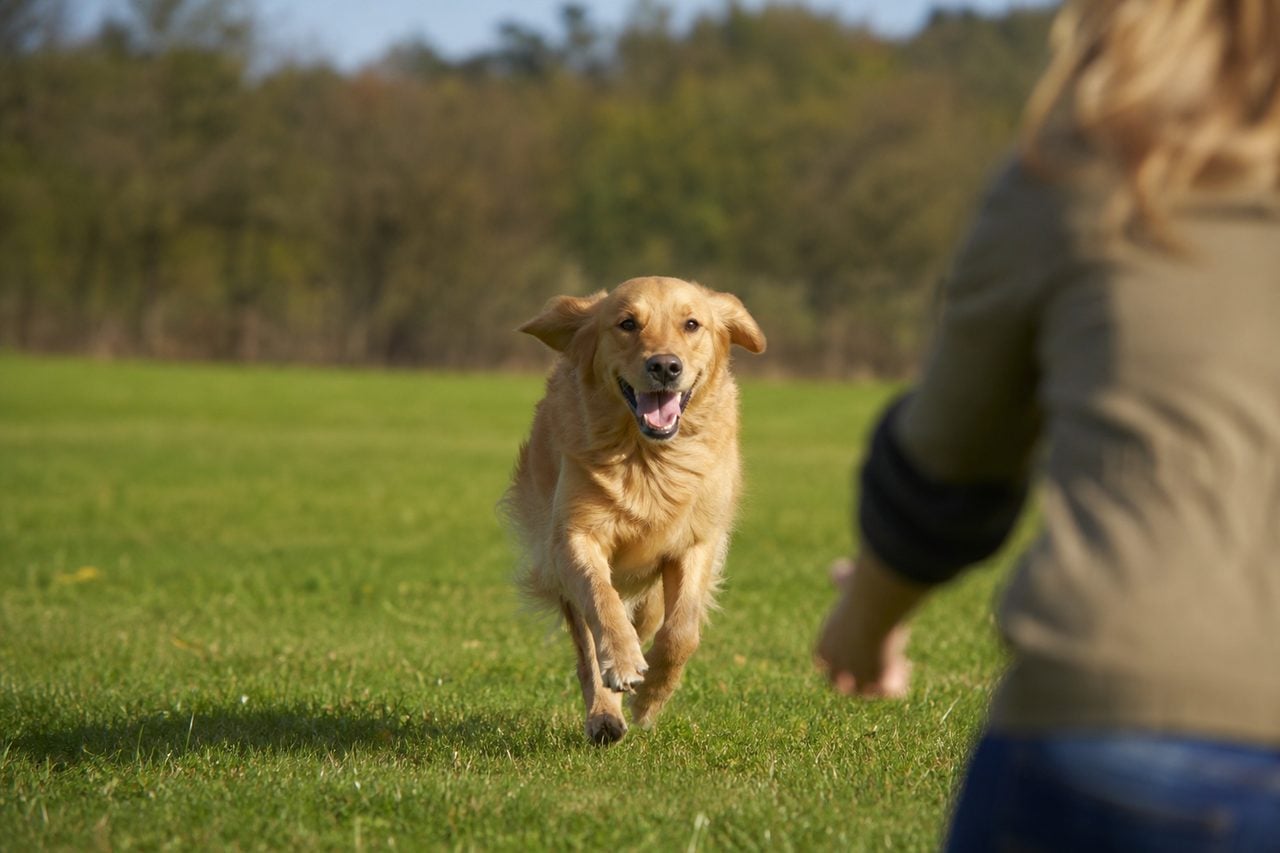
There is a particular kind of freedom in watching a dog gallop across an open meadow at Valley Forge or trot along the Wissahickon’s Forbidden Drive, ranging ahead and then checking back in without a leash to hold it. For many Philadelphia owners, reliable off-leash control is the ultimate goal — the difference between a dog that merely tolerates a walk and one that can truly explore the region’s parks and trails. But getting there safely, in a dense city ringed by busy roads, takes a deliberate, staged training process.
- What Off-Leash Reliability Actually Means
- Building A Bombproof Recall From The Ground Up
- The Long Line: Your Bridge To True Freedom
- E-Collars And Other Proofing Tools
- Where To Practice Off-Leash Around Philadelphia
- Off-Leash In The City Versus The Suburbs
- Maintaining Off-Leash Skills Over Time
- Reviewed trainers
- FAQ
Off-leash training is fundamentally about recall and proofing. Recall is your dog’s ability to come back to you immediately, every time, regardless of distractions. Proofing is the process of testing and strengthening that recall against progressively harder temptations — squirrels, other dogs, joggers, and the smells of a forest floor — until it holds even when it matters most. This is a different discipline from leash-reactivity work, which focuses on managing on-leash emotions, and from behavior work, which addresses fear and anxiety.
This guide walks through how off-leash training typically progresses across Philadelphia and the surrounding counties, where you can legally and safely practice, the role of tools like long lines and e-collars, and how to judge when your dog is truly ready for that first off-leash moment. Whether you live in Center City and need a dog that is bombproof near traffic, in Chestnut Hill with the Wissahickon at the end of the block, or out in Bucks County with trail access behind the house, the principles are the same: build the foundation, then test it relentlessly before you trust it. The destination differs — an enclosed dog park for one owner, miles of open trail for another — but the staged path from leash to long line to true freedom does not change.
What Off-Leash Reliability Actually Means
Off-leash reliability is not a single trick — it is a cluster of behaviors that work together under pressure. At its core is a recall so strong that your dog turns and comes the instant you call, even mid-chase. Around that sit supporting skills: a solid stay, an emergency stop or down at a distance, a check-in habit where your dog naturally orients back to you, and impulse control around the things it most wants to chase.
The standard most trainers use is reliability under distraction, not just in a quiet yard. A dog that recalls perfectly in your living room but ignores you when a deer crosses the Wissahickon trail is not off-leash ready. Real reliability means the behavior holds at a distance, with competing temptations, and in novel environments your dog has never seen before.
It is also worth being honest about risk. No dog is one hundred percent guaranteed, which is why responsible off-leash work pairs training with judgment: choosing legal, appropriate locations, reading the environment, and knowing your individual dog’s limits. Some dogs — certain breeds with intense prey drive, for instance — may always need a long line in high-temptation areas, and that is a perfectly responsible outcome.
Building A Bombproof Recall From The Ground Up
Every off-leash program starts with recall built in easy conditions and made progressively harder. The foundation is a recall cue that always predicts something wonderful — a high-value treat, a favorite toy, or enthusiastic play. You begin indoors with zero distractions, rewarding generously every single time, so the cue becomes an automatic, happy reflex rather than a command your dog weighs against the alternative.
From there you add the three D’s: distance, duration, and distraction, changing only one at a time. You call from across the room, then from another floor of your rowhouse, then from across a quiet fenced yard. You never poison the cue by using it to end fun or to punish — coming back must always pay off. If your dog ever blows off the cue, that is a sign you raised the difficulty too fast and need to back up.
A reliable recall is the gatekeeper for everything that follows. Many Philadelphia trainers will not advance a dog to any off-leash freedom until the recall is fluent against moderate distractions on a long line. Rushing this stage is the single most common reason off-leash attempts fail, so treat the foundation as the bulk of the work rather than a quick prerequisite.
The Long Line: Your Bridge To True Freedom
The long line — typically a fifteen-to-thirty-foot leash — is the essential bridge between on-leash control and true off-leash work. It lets your dog range, explore, and feel a sense of freedom while you retain a physical safety net. This is where most of the real proofing happens, and skipping it is the fastest route to a lost dog.
On a long line, you can practice recalls at realistic distances in real environments: the open fields at Valley Forge, the wide gravel of Forbidden Drive, or a quiet stretch of Ridley Creek State Park. Your dog gets to investigate a scent, drift toward another dog, or fixate on a squirrel, and you get to test whether your recall holds — with the line there to prevent a failure from becoming a disaster.
Used well, the long line teaches your dog that freedom and responsiveness go together. You let the line go slack so the dog forgets it is there, then call and reward. Over weeks, you fade the line’s influence until you are confident the behavior would hold without it. Only after sustained success on a long line, across many environments and distractions, should you consider dropping it entirely — and even then, only where it is legal and safe to do so.
E-Collars And Other Proofing Tools
Some trainers in the Philadelphia region use remote e-collars as a proofing tool for off-leash reliability, particularly for high-drive dogs that will be working in large, unfenced spaces near hazards. When used, a modern e-collar is introduced at low levels purely as a communication and reinforcement aid layered on top of an already-trained recall — never as a shortcut that skips the foundation. Proper introduction, fit, and conditioning are critical, and this is an area where professional guidance genuinely matters.
E-collars are also controversial, and many excellent trainers achieve reliable off-leash recall using only positive reinforcement and the long line. There is no single correct path. What matters is that any tool is introduced humanely, with the dog properly conditioned to understand it, and that the trainer can clearly explain how and why they use it. If a trainer cannot or will not explain their methodology, keep looking.
Whatever the toolkit, the proofing principle stays the same: you systematically expose your dog to harder and harder distractions — other dogs, wildlife, joggers, food on the ground — and confirm the recall holds before increasing freedom. Ask any prospective trainer about their proofing process and their stance on tools so you can choose someone whose approach matches your values and your dog’s temperament.
Where To Practice Off-Leash Around Philadelphia
Location choice is both a training and a legal matter. Philadelphia has leash laws, and many parks require dogs to be leashed except in designated areas, so part of responsible off-leash ownership is knowing and following local rules. Always confirm the current regulations for any specific park or trail before letting your dog off-leash, since rules vary by jurisdiction and can change.
For training and proofing on a long line, the region offers excellent options: the meadows and trails of Valley Forge, the Wissahickon Valley’s Forbidden Drive, Pennypack Park, and the state parks like Ridley Creek give you room to work at distance. Designated dog parks and enclosed fields provide secure spaces where a recall failure has lower stakes, which makes them useful for early proofing.
The collar counties — Montgomery, Bucks, Delaware, and Chester — add more trail systems and open space than the dense city core, and the Main Line and outer suburbs often have quieter areas suitable for graduated practice. Wherever you go, factor in seasonal realities: icy winter trails and hot, humid summers both affect where and when it is safe to do demanding off-leash work. Match the location to your dog’s current stage, not to the freedom you hope to reach someday.
Off-Leash In The City Versus The Suburbs
The off-leash goal looks different depending on where you live. For a Center City or River Wards owner, true off-leash freedom on the street is rarely the aim — the traffic, crowds, and leash laws make that neither legal nor safe. Instead, urban off-leash training usually targets reliability inside enclosed dog parks and rock-solid control on-leash near distractions, with off-leash freedom reserved for trips out to the region’s parks.
In the Northwest neighborhoods like Chestnut Hill and Mount Airy, proximity to the Wissahickon changes the calculation: residents can reach long-line and proofing terrain quickly, making serious off-leash work part of the regular routine. The same is true for suburban owners in Bucks or Chester County with trail access, where ranging room is far more available.
This geography should shape your training plan. An honest trainer will ask where you live and where you actually want off-leash freedom, then build toward that specific reality rather than selling a one-size-fits-all program. A city dog and a trail-town dog need different proofing emphases even though both are working from the same recall foundation.
Maintaining Off-Leash Skills Over Time
Off-leash reliability is not a certificate you earn once — it is a skill that decays without practice. Even a well-trained dog will gradually get sloppy if recalls go unrewarded for months and distractions go untested. The owners whose dogs stay reliable are the ones who keep the recall fresh with occasional high-value rewards and periodic check-ups against real temptations.
Build maintenance into your normal routine. Call your dog back during play and reward it, then release it to keep playing, so coming back never signals the end of fun. Periodically return to a long line in a new or harder environment to confirm the behavior still holds, especially after any close call or a long stretch indoors during a snowy Philadelphia winter.
Stay alert to your individual dog’s lifelong limits. A dog with strong prey drive may need a long line near wildlife for its entire life, and adolescence or a change in environment can temporarily loosen even a solid recall. Treat off-leash freedom as a privilege you continually re-earn through proofing rather than a permanent status, and you will keep your dog safe across the region’s parks and trails for years.
Reviewed Off-Leash Dog Training Trainers in Philadelphia
These reviewed Philadelphia-area trainers from our directory handle off-leash dog training. Each links to a full profile with specialties, certified credentials, reviews, and contact info:
- Taking the Lead Dog Training — 5.0★ (141 reviews)
- Titan K9 Dog Training — 5.0★ (55 reviews)
- Tri-Dog Solutions: Dog Training + Human Coaching — 5.0★ (40 reviews)
- On Your Mark K9 — 5.0★ (38 reviews)
- Purposeful Canines LLC — 5.0★ (29 reviews)
- Always Faithful Dog & Puppy Training Philadelphia PA — 5.0★ (13 reviews)
- Absolute Canine — 5.0★ (11 reviews)
- The Art of Dog Training — 5.0★ (10 reviews)
- Athena Canine — 5.0★ (6 reviews)
- Athena Canine — 5.0★ (3 reviews)
See all Philadelphia off-leash dog training trainers →
Frequently Asked Questions
Is off-leash walking even legal in Philadelphia?
Philadelphia and many surrounding areas have leash laws, and most parks require dogs to be leashed except in designated off-leash areas. That means responsible off-leash training is largely about building reliability for legal settings — enclosed dog parks, designated areas, and parks or private land where it is permitted. Always confirm the current rules for any specific location before letting your dog off-leash, since regulations vary by jurisdiction and can change over time.
How long does it take to train a reliable off-leash recall?
It varies widely by dog and by how consistently you practice, but a dependable recall is generally built over months, not days. The foundation — an enthusiastic, automatic recall in easy conditions — can come together fairly quickly, but proofing it against real distractions on a long line is the longer part of the work. High-drive dogs and dogs with strong prey instincts often take longer and may always need a long line in tempting environments.
Do I have to use an e-collar for off-leash training?
No. Many trainers achieve reliable off-leash recall using only positive reinforcement and a long line. Some trainers do use modern e-collars as a proofing tool, introduced at low levels on top of an already-trained recall, particularly for high-drive dogs in large open spaces. There is no single correct path. If you consider an e-collar, work with a professional who can introduce it humanely and clearly explain their methodology and reasoning.
What is a long line and why does it matter so much?
A long line is a fifteen-to-thirty-foot leash that lets your dog range and explore while you keep a physical safety net. It is the essential bridge between on-leash control and true off-leash freedom because it lets you proof your recall against real distractions — squirrels, other dogs, scents — without risking a lost dog. Most serious off-leash work happens on a long line, and skipping this stage is the most common reason off-leash attempts fail.
Where can I practice off-leash work near the city?
For long-line and proofing work, the region offers excellent options like Valley Forge, the Wissahickon Valley’s Forbidden Drive, Pennypack Park, and state parks such as Ridley Creek, plus designated dog parks and enclosed fields for lower-stakes early practice. The collar counties add more trail systems and open space. Always confirm the leash and off-leash rules for any specific spot first, and match the location to your dog’s current training stage.
Can a city dog ever be truly off-leash?
For most Center City and River Wards owners, off-leash freedom on the street is not the realistic goal because of traffic, crowds, and leash laws. Instead, urban off-leash training usually aims for reliability inside enclosed dog parks plus excellent on-leash control near distractions, with genuine off-leash freedom reserved for trips to the region’s parks and trails. Owners near the Wissahickon or in the suburbs have far more day-to-day off-leash terrain available.
Related: read our complete off-leash dog training guide or the full Philadelphia dog training overview.
Ready to find the right off-leash dog training pro in Philadelphia?