
Off-Leash Dog Training in Lancaster, PA
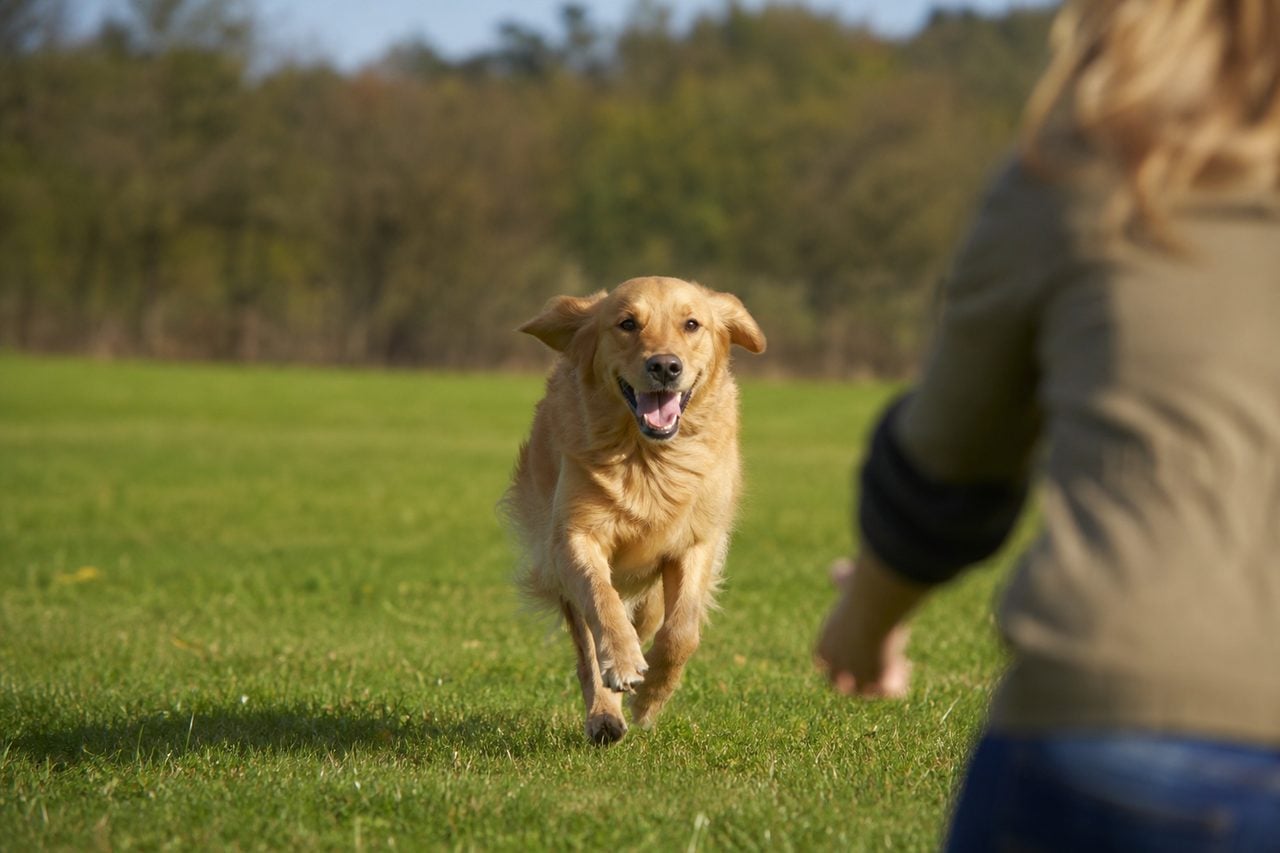
For many Lancaster County dog owners, the dream is simple: a dog who can roam ahead on the NW Lancaster County River Trail, scramble over the boulders at Money Rocks, or hike a quiet stretch of the Enola Low Grade Trail and come flying back the instant you call. With so much open country, rural acreage, and trail mileage around here, reliable off-leash freedom is genuinely worth pursuing — but it is earned, not granted, and it rests almost entirely on a rock-solid recall.
Off-leash training is not a single trick. It is a layered process that builds a recall so dependable it works even when your dog is chasing a deer scent across an Amish-country field. That means starting in low-distraction settings, proofing the behavior against ever-bigger temptations, and using tools — long lines and, for some dogs, properly introduced e-collars — that keep the dog safe while the reliability is still being built. A dog who comes when called in the kitchen has barely started; the real test is whether he comes when a rabbit bolts across a field. Rushing the process is how dogs end up loose, frightened, and at risk near roads or livestock, and it is the single most common mistake well-meaning owners make.
This guide walks through how off-leash training typically progresses in Lancaster County, where you can legally and safely practice, and what realistic milestones look like. It covers building a recall from scratch, the role of long lines, how modern e-collar training works when done humanely, and the honest limits of off-leash freedom. Whether you picture trail hikes near Columbia and the Susquehanna or simply a dog who stays close on your own rural acreage, the underlying skills are the same. The goal is a dog you can trust in the right places — and just as importantly, the judgment to know where those places are and when the leash should stay on.
What Off-Leash Reliability Really Means
Off-leash training is often misunderstood as simply removing the leash. In reality, it means building a recall and a set of control behaviors so reliable that your dog will respond even surrounded by distractions, far from you, and deep in drive. A dog who comes when called in your living room is not off-leash trained; a dog who comes when called away from a fleeing rabbit on the River Trail is getting close.
True reliability is measured by percentages. A recall that works ninety percent of the time still fails one time in ten — and that tenth time might be the one near a road or a herd of cattle. Trainers aim to push reliability as high as possible through systematic proofing, while being honest that no dog is one hundred percent in every situation. That honesty shapes where you choose to let the leash off.
Reliability also depends on the dog. Breed, age, scent-drive, and temperament all matter. A laid-back companion may earn freedom quickly, while a high-drive hunting breed in scent-rich Lancaster farm country needs far more proofing and may always wear a long line in the most tempting spots. A good trainer assesses your individual dog rather than promising a one-size-fits-all result.
Building A Bulletproof Recall
Everything in off-leash training starts with recall — the behavior of coming immediately and enthusiastically when called. A reliable recall is built, not assumed, and it begins in the easiest possible setting: a quiet room or fenced yard with no distractions. The dog learns that the recall word always means “run to my handler and something great happens.”
The cardinal rule is that the recall word must never be poisoned. If you call your dog and then do something he dislikes — end the fun, clip the nails, give a leash correction — the word loses its magic. Trainers protect the cue fiercely, pairing it only with rewards: high-value food, a favorite toy, or the resumption of play. The recall becomes the best deal in the dog’s life, never a trap.
From that foundation, you gradually add distance and mild distractions, then practice in slightly busier places — a calm corner of Lancaster County Central Park, a quiet field on rural acreage, a low-traffic stretch of trail at off-peak hours. Each step up in difficulty happens only after the dog is fluent at the previous level. This is the patient, unglamorous work that makes everything later possible.
The Long Line As A Safety Bridge
Between “works in the yard” and “trustworthy off leash” lies a crucial middle stage, and the long line is the tool that bridges it. A long line is a lightweight lead of fifteen to fifty feet that lets the dog experience near-total freedom while you retain a physical safety net. It is the single most important piece of off-leash equipment for most owners.
With a long line, you can practice recalls at real distances, let the dog explore and make choices, and still prevent a disaster if a deer bolts across the trail. If the dog ignores a recall, you can calmly reel in or step on the line rather than watching him vanish over a ridge. Crucially, the long line lets the dog rehearse success at distance hundreds of times before you ever fully unclip.
The open spaces around Lancaster are ideal for this work. The wide grassy areas of Long’s Park, the long straightaways of the Enola Low Grade Trail, and private rural acreage all give you room to let a long line play out safely. Trainers often have owners spend weeks or months on the long line, treating the transition to fully off-leash as something earned through consistent success, not a date on the calendar.
How E-Collar Training Works When Done Right
For some dogs — particularly high-drive breeds in scent-rich environments — owners and trainers consider a remote training collar, or e-collar, as a tool for off-leash reliability. Modern e-collar training, done properly, is far gentler than its reputation suggests. The goal is communication at a low, barely perceptible level, not punishment, and humane use is built entirely on careful conditioning.
Reputable trainers begin by finding the dog’s “working level” — the lowest stimulation the dog can just barely perceive, often so faint a human can hardly feel it. The collar is then conditioned the same way a leash is: a gentle, consistent signal that the dog learns to turn off by performing a known behavior like recall. Used this way, it becomes a tap on the shoulder at distance, not a shock. The dog must already understand the recall before the collar is ever introduced.
This is not a do-it-yourself project. An improperly used e-collar can create fear, confusion, or new behavior problems, which is exactly the opposite of the goal. If you are considering one, work with a Lancaster-area trainer experienced in low-level, humane e-collar conditioning who will teach you proper technique, correct fit, and appropriate levels. For many dogs, a long line alone is enough and the e-collar is never needed.
Proofing Against Lancaster's Real Distractions
Proofing means practicing a behavior under progressively harder conditions until it holds up anywhere. A recall that works in the backyard must survive squirrels, other dogs, joggers, wildlife scent, and the shady chaos of a busy trailhead. Lancaster County offers a specific menu of distractions, and good off-leash training deliberately rehearses against them.
Scent is the big one here. Deer, rabbits, groundhogs, and farm animals leave trails across fields and woods, and a scent-driven dog can lock on instantly. Trainers proof recalls near these temptations on a long line first, rewarding the dog heavily for choosing to come back even when his nose says otherwise. Cyclists and walkers on the River Trail and Enola Low Grade Trail, plus the rocky scrambles at Money Rocks where footing demands attention, add motion and excitement to practice against.
Livestock deserves special mention. In a county threaded with working farms and Amish countryside, a dog who chases sheep, cattle, or chickens is a serious problem — dangerous for the animals, legally costly for you, and potentially fatal for the dog. Off-leash freedom near agricultural land requires an exceptionally proofed recall, and many trainers advise keeping a long line on near livestock no matter how reliable the dog seems.
Where You Can Legally Go Off Leash
Reliable recall is only half the equation; the other half is choosing legal, appropriate places to use it. Many public parks and trails in Lancaster County require dogs to be leashed, and rules vary by location, so the responsible move is to verify the regulations for any specific park or trail before unclipping. Posted signage and local park ordinances are the authority, and they change — assume leash-required unless you have confirmed otherwise.
The most reliable off-leash settings are private — your own fenced acreage, a friend’s farm with permission, or a properly fenced dog park where off-leash is the explicit purpose. Rural Lancaster County offers many owners private land where well-controlled off-leash time is realistic, provided you stay clear of neighbors’ livestock and property. Always keep your dog under genuine voice control and within sight.
On shared public trails like the NW Lancaster County River Trail or the Enola Low Grade Trail, expect leash requirements and heavy mixed use from cyclists, families, and other dogs. Even where rules allow flexibility, courtesy matters: leash up when passing others, yield on narrow sections, and never let an off-leash dog approach a leashed one. Good off-leash etiquette protects everyone’s access and keeps the trails welcoming to dogs at all.
Realistic Timelines And Limits
Off-leash reliability is a months-long project for most dogs, not a weekend course. A typical path runs from foundation recall in low distraction, to long-line work at distance, to careful proofing against real-world temptations, to limited off-leash freedom in appropriate places. Each stage takes as long as it takes, and skipping ahead is how dogs get lost or hurt.
It is also worth accepting that some dogs never become fully off-leash dogs, and that is fine. A scent hound in deer country, a dog with a strong prey drive, or a dog who simply has not generalized the recall may always do best on a long line in tempting settings. There is no shame in a long line — it provides nearly all the freedom with none of the catastrophic risk, and many experienced owners use one for life in high-distraction spots.
The honest standard is judgment. A well-trained off-leash dog and a responsible handler go together; the handler reads the environment, knows the dog’s limits, and keeps the leash on when conditions are wrong — near roads, livestock, wildlife, or unfamiliar dogs. Earned freedom in the right Lancaster settings, backed by an honest read of risk, is the realistic and rewarding goal worth working toward.
Reviewed Off-Leash Dog Training Trainers in Lancaster
These reviewed Lancaster-area trainers from our directory handle off-leash dog training. Each links to a full profile with specialties, certified credentials, reviews, and contact info:
- Carolyn Hart Dog Training — 5.0★ (63 reviews)
- Magnus K9 — 5.0★ (11 reviews)
- Ducey’s Dogs — 4.9★ (33 reviews)
- Custom Canine — 4.6★ (9 reviews)
See all Lancaster off-leash dog training trainers →
Frequently Asked Questions
How long does off-leash training take?
For most dogs it is a months-long process, not a quick course. The path runs from a foundation recall in low-distraction settings, to long-line work at distance, to proofing against real temptations like wildlife and other dogs, to limited off-leash freedom in appropriate places. Each stage takes as long as the individual dog needs. Rushing it is how dogs end up loose and at risk, so trainers treat full off-leash freedom as something earned through consistent success rather than a fixed timeline.
Is an e-collar cruel or dangerous?
Used improperly, an e-collar can cause fear and new behavior problems. Used properly by an experienced trainer, modern low-level e-collar work is far gentler than its reputation — the goal is a barely perceptible tap for communication at distance, not punishment, and the dog must already know the recall first. It is not a do-it-yourself tool. If you are considering one, work with a Lancaster-area trainer skilled in humane, low-level conditioning. For many dogs, a long line alone is enough and an e-collar is never needed.
Where can I legally let my dog off leash in Lancaster County?
Many public parks and trails require dogs to be leashed, and rules vary by location, so always verify the regulations for the specific park or trail before unclipping — posted signs and local ordinances are the authority. The most reliable off-leash options are private: your own fenced acreage, a friend’s farm with permission, or a fenced dog park. On shared trails like the River Trail or Enola Low Grade Trail, expect leash requirements and heavy mixed use, and leash up when passing others.
What is a long line and why use one?
A long line is a lightweight lead of roughly fifteen to fifty feet that gives your dog near-total freedom while you keep a physical safety net. It is the bridge between “recall works in the yard” and “trustworthy off leash.” With it you can practice recalls at real distances, let the dog explore, and still prevent a disaster if wildlife bolts across the trail. Lancaster’s open spaces like Long’s Park and rural acreage are ideal for long-line work, and many owners use one for life in high-distraction spots.
My dog comes when called at home but not outside. Why?
This is the most common off-leash problem and it is about distractions, not stubbornness. A recall that works in a quiet house has not yet been proofed against the squirrels, scents, other dogs, and excitement of the outdoors. The fix is systematic proofing on a long line: gradually practicing the recall in harder and harder settings, rewarding heavily when the dog chooses you over a temptation. Skipping straight from the living room to an open trail almost always fails — the in-between work is what builds reliability.
Can my dog be off leash near farms and livestock?
This requires extreme caution. In a county full of working farms and Amish countryside, a dog who chases sheep, cattle, or chickens is dangerous to the animals, legally costly for you, and potentially fatal for the dog. Off-leash freedom near agricultural land demands an exceptionally proofed recall, and many trainers advise keeping a long line on near livestock no matter how reliable the dog seems. When in doubt around farm animals, leave the leash on — the stakes are simply too high to gamble.
Related: read our complete off-leash dog training guide or the full Lancaster dog training overview.
Ready to find the right off-leash dog training pro in Lancaster?