
Puppy Training in Reading, PA
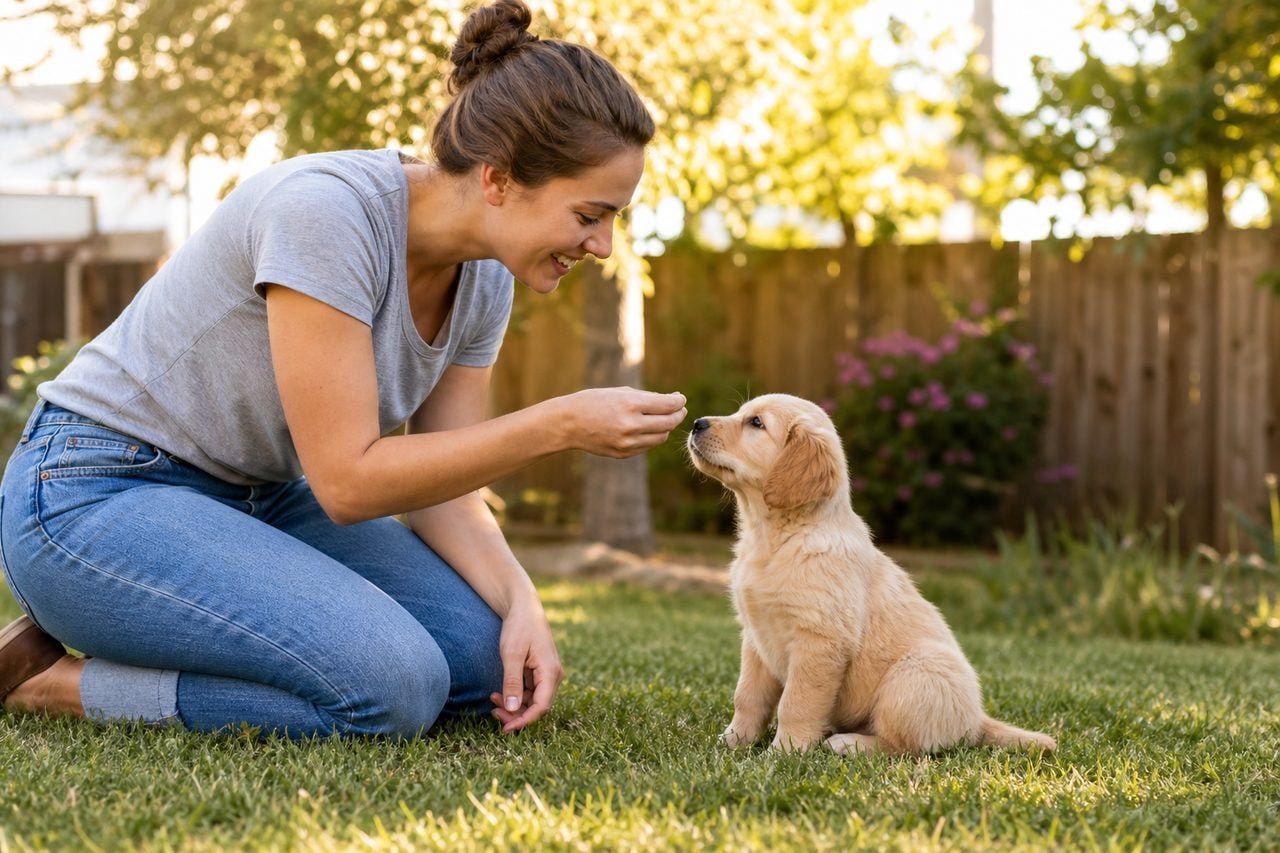
Bringing a puppy home in Reading means starting your training under skies that swing from humid July afternoons to the heavy, wind-driven snows that settle over Mount Penn and the Pagoda each winter. Those seasons shape everything about how a young dog learns here. A litter that arrives in spring gets months of easy outdoor practice along the Schuylkill River Trail before the cold sets in, while a December puppy will do most of its early house-training and crate work indoors, then meet the wider world once Berks County thaws. Smart Reading owners plan their first sixteen weeks around that calendar rather than fighting it, because the early weeks are short and they do not come back.
- Why Start Training the Day Your Puppy Comes Home
- House-Training Through Berks County's Wet, Snowy Winters
- Crate Training and Settling Into a New Home
- The Socialization Window: City, Suburb, and Farm Country
- Leash Skills for Reading Sidewalks and Trails
- Choosing a Puppy Trainer in the Reading Area
- Building a Daily Routine That Sticks
- Reviewed trainers
- FAQ
Reading sits at the heart of Berks County — the city of the old Reading Railroad and the Reading of the Monopoly board, home to the GoggleWorks and a downtown grid that gives way fast to Pennsylvania Dutch farm country. That mix matters for a puppy. One day you are teaching a settle on a busy Penn Street sidewalk, the next you are walking past dairy cattle and clattering farm equipment out toward the Oley Valley and Bernville. A puppy raised only in a quiet Wyomissing cul-de-sac can be blindsided by Kutztown's college-town bustle, a Fleetwood farmers' market, or the tractors of Berks farm country, so the goal from day one is gentle, varied, confidence-building exposure paired with simple, consistent obedience.
This guide walks Reading and Berks County families through what early puppy training actually involves — house-training through our wet, snowy winters, crate work that gives your puppy a safe den, the critical socialization window, foundational leash skills, building a daily routine, and how to choose the right local trainer in Reading, Wyomissing, Kutztown, or the eastern Boyertown corridor. The aim is simple: a calm, well-mannered dog that handles city, suburb, trail, and farm-country life with equal ease, season after Berks County season.
Why Start Training the Day Your Puppy Comes Home
Puppies begin learning the moment they cross your threshold, whether you are teaching them on purpose or not. Every time a Reading puppy is let outside after whining, or fed from the table during a Sunday meal, a habit forms. Starting deliberate training on day one simply means you decide which habits stick.
- The learning window is short. The richest period for shaping behavior runs roughly from 8 to 16 weeks, and it does not pause for a Berks County snowstorm. Use it.
- Small dogs grow into big habits. Jumping is cute at ten pounds and dangerous at seventy. Set rules early.
- Routine beats willpower. Feed, potty, play, and nap on a predictable schedule so your puppy can predict the day.
- Reward what you want. Mark and treat calm sitting, four-on-the-floor greetings, and quiet crate time the instant they happen.
Reading families who treat the first month as foundation work — rather than waiting for a “real” class at six months — almost always end up with an easier adolescent dog. The puppy that learns to settle quietly during a GoggleWorks visit at twelve weeks is the dog that walks calmly through downtown at twelve months.
House-Training Through Berks County's Wet, Snowy Winters
House-training in Reading runs straight into our weather. Summers are humid and buggy; winters bring snow and ice that make a reluctant puppy want to spin around at the door and head back to the warm living room. A consistent system carries you through both.
- Pick one potty spot near the door and shovel a clear patch the moment snow falls — puppies hate squatting in deep, cold powder.
- Go out on a schedule: after waking, after eating, after play, and every couple of hours for a young pup.
- Reward outside, immediately. Praise and treat the second the job is done, not back in the kitchen.
- Keep winter trips short and brisk so the puppy associates outside with success, not misery.
- Supervise or confine indoors — a loose, unwatched puppy in a Wyomissing split-level will find a corner.
If ice keeps you from a safe yard, a covered porch or a grippy mat can serve as a temporary outdoor-feel surface, but transition back to grass as soon as Reading's sidewalks clear. Accidents will happen during a hard Berks winter; clean them with an enzyme cleaner and tighten supervision rather than punishing after the fact.
Crate Training and Settling Into a New Home
A crate is not a cage — done right, it becomes your puppy's den, a safe spot to ride out a Mount Penn thunderstorm or rest while the family is out. For Reading owners juggling commutes toward Wyomissing offices or shifts in the city, a crate-comfortable puppy is far easier to live with.
- Size it correctly. Just enough room to stand, turn, and lie down. Too big invites one end becoming a bathroom.
- Feed meals inside with the door open at first, so the crate predicts good things.
- Build duration slowly: a few seconds, then minutes, then a calm nap, always before whining starts.
- Never use it for punishment — it must stay a positive, restful place.
- Cover it loosely for puppies that settle better in a darker, denlike space during summer storms.
Many Berks County puppies sleep through the night in a crate beside the bed within a couple of weeks. Pair crate work with a fixed bedtime routine — last potty, lights down, quiet — and you teach your puppy that nighttime in Reading means sleep, not play.
The Socialization Window: City, Suburb, and Farm Country
Reading offers a rare range of environments inside a short drive, and that variety is gold for a young puppy. The socialization window closes around 16 weeks, so the weeks before then are when you bank a lifetime of confidence.
- City sounds: downtown traffic on Penn Street, sirens, and crowds near GoggleWorks teach a puppy that bustle is normal.
- Suburban calm: sidewalks in Wyomissing and Sinking Spring for relaxed leash strolls and friendly neighbors.
- Farm-country novelties: the Oley Valley and Bernville offer livestock smells, tractors, and open space — from a safe distance.
- College energy: Kutztown's student crowds and skateboards are excellent controlled chaos.
- Trail surfaces: gravel, boardwalk, and grass at Nolde Forest or Blue Marsh Lake build sure footing.
Keep every new experience short and positive, and let your puppy approach at its own pace — never force it. Until vaccinations are complete, carry your puppy through higher-traffic spots and choose clean, low-risk surfaces. The Berks County puppy that meets snow, tractors, students, and city sirens calmly before four months grows into a remarkably steady adult.
Leash Skills for Reading Sidewalks and Trails
Loose-leash walking is the skill Reading owners use every single day, whether navigating a narrow city sidewalk, a Wyomissing neighborhood, or the wide Schuylkill River Trail. Start in low-distraction spots and build up.
- Begin indoors or in the yard so the leash itself is not exciting before you add the outside world.
- Reward position, not pulling. Treat your puppy when it walks near your side and the leash is slack.
- Stop when it pulls. A puppy learns fast that tension means the walk pauses.
- Use a flat collar or front-clip harness for a growing puppy; skip heavy correction tools at this age.
- Add distractions gradually — from a quiet street to the busier Schuylkill River Trail on a weekend.
Winter ice is a real hazard on Reading's hilly streets, so keep early walks on cleared, level ground and shorten them in extreme cold. A puppy that learns to check in with you on a calm Sinking Spring sidewalk will hold those manners later when a deer bolts across a Nolde Forest path or a cyclist whips by on the trail.
Choosing a Puppy Trainer in the Reading Area
The right local trainer can shorten your learning curve dramatically. Across Reading, Wyomissing, Kutztown, and the eastern Boyertown–Birdsboro corridor, you will find group puppy classes, private in-home sessions, and structured programs. Match the format to your puppy and your schedule.
- Ask about methods. Look for reward-based, positive-reinforcement training appropriate for young puppies.
- Check vaccination policies. Reputable puppy classes require proof of age-appropriate shots to protect every dog.
- Mind class size. Smaller groups mean more individual attention for a nervous pup.
- Consider location and weather. An indoor facility keeps training on track through a Berks County January.
- Watch a class first if you can, and see whether dogs and owners look relaxed and engaged.
Group classes double as socialization; private sessions suit shy puppies or specific issues like nipping. Expect puppy programs to fall in a modest per-class or per-package range — ask any Reading-area trainer for their current pricing directly. The best fit is a trainer whose approach you understand and can keep up at home between sessions.
Building a Daily Routine That Sticks
Consistency is what turns scattered lessons into a reliable adult dog. A Reading puppy thrives on a predictable rhythm that the whole household follows the same way, every day.
- Anchor the day with set meal times, potty breaks, short training bursts, and naps.
- Keep sessions short: five focused minutes several times a day beats one long, tiring drill.
- Train before meals when your puppy is hungry and motivated by food rewards.
- Get everyone aligned. If one family member allows couch-jumping, the puppy stays confused.
- Practice in real settings — a sit-stay at the GoggleWorks entrance, a settle at a Wyomissing cafe patio in summer.
Build in physical and mental outlets too: a young dog that has sniffed and explored at Nolde Forest is far calmer at home than one cooped up through a snowy week. As your puppy matures, fold obedience into ordinary Berks County life — waiting calmly at the door, settling during dinner, walking politely past distractions — until good behavior is simply the default. That is the payoff of starting early and staying consistent.
Reviewed Puppy Training Trainers in Reading
These reviewed Reading-area trainers from our directory handle puppy training. Each links to a full profile with specialties, certified credentials, reviews, and contact info:
- Cappuccino Dog Training Inc. — 5.0★ (109 reviews)
- Dentler’s Dog Training, LLC — 5.0★ (33 reviews)
- For Them Dog Training — 5.0★ (30 reviews)
- Kerber Dog Training — 5.0★ (28 reviews)
- Alpha U dog training — 5.0★ (23 reviews)
- The Clever Hound LLC — 5.0★ (11 reviews)
- The Virtuous Dog — 5.0★ (10 reviews)
- Woofs of Wisdom — 5.0★ (10 reviews)
- The Art of Dog Training — 5.0★ (10 reviews)
- Down To Earth Dog Lady — 5.0★ (3 reviews)
See all Reading puppy training trainers →
Frequently Asked Questions
When should I start training my puppy in Reading?
Start the day your puppy comes home, ideally around eight weeks. The most important learning window closes near sixteen weeks, so early house-training, crate work, and gentle socialization matter far more than waiting for a formal class at six months. Even in a Berks County winter, you can do plenty of foundation work indoors.
How do I house-train a puppy through a Berks County winter?
Keep a cleared, shoveled potty spot near the door, go out on a strict schedule, and reward immediately outside. Keep cold-weather trips short and brisk so your puppy associates going outside with quick success rather than misery. Supervise closely indoors and clean any accidents with an enzyme cleaner instead of punishing.
Is it safe to socialize my puppy before all vaccinations are done?
Yes, with care. Carry your puppy through higher-traffic Reading spots, choose clean and low-risk surfaces, and avoid contact with unknown dogs until shots are complete. You can still expose your puppy to city sounds, suburban sidewalks, and farm-country sights from a safe distance during the critical early window.
How much do puppy training classes cost in the Reading area?
Pricing varies by trainer and format, with group puppy classes generally costing less per session than private in-home work. We do not list fixed prices because they change often. Contact Reading, Wyomissing, or Kutztown-area trainers directly for current rates and package options that fit your schedule.
Should I choose group classes or private puppy training?
Group classes are excellent for socialization and basic manners around other dogs, which suits most confident puppies. Private sessions work better for shy or fearful pups, busy schedules, or specific problems like persistent nipping. Many Reading owners combine both, starting private and graduating to a group class.
How long does it take to train a puppy?
Basic house-training and crate comfort often come within a few weeks of consistent effort, while reliable obedience and good manners develop over months as your puppy matures. Short daily sessions and a steady household routine produce far faster results than occasional long drills. Adolescence may test your training, so stay patient and consistent.
Related: read our complete puppy training guide or the full Reading dog training overview.
Ready to find the right puppy training pro in Reading?