
Puppy Socialization in Reading, PA
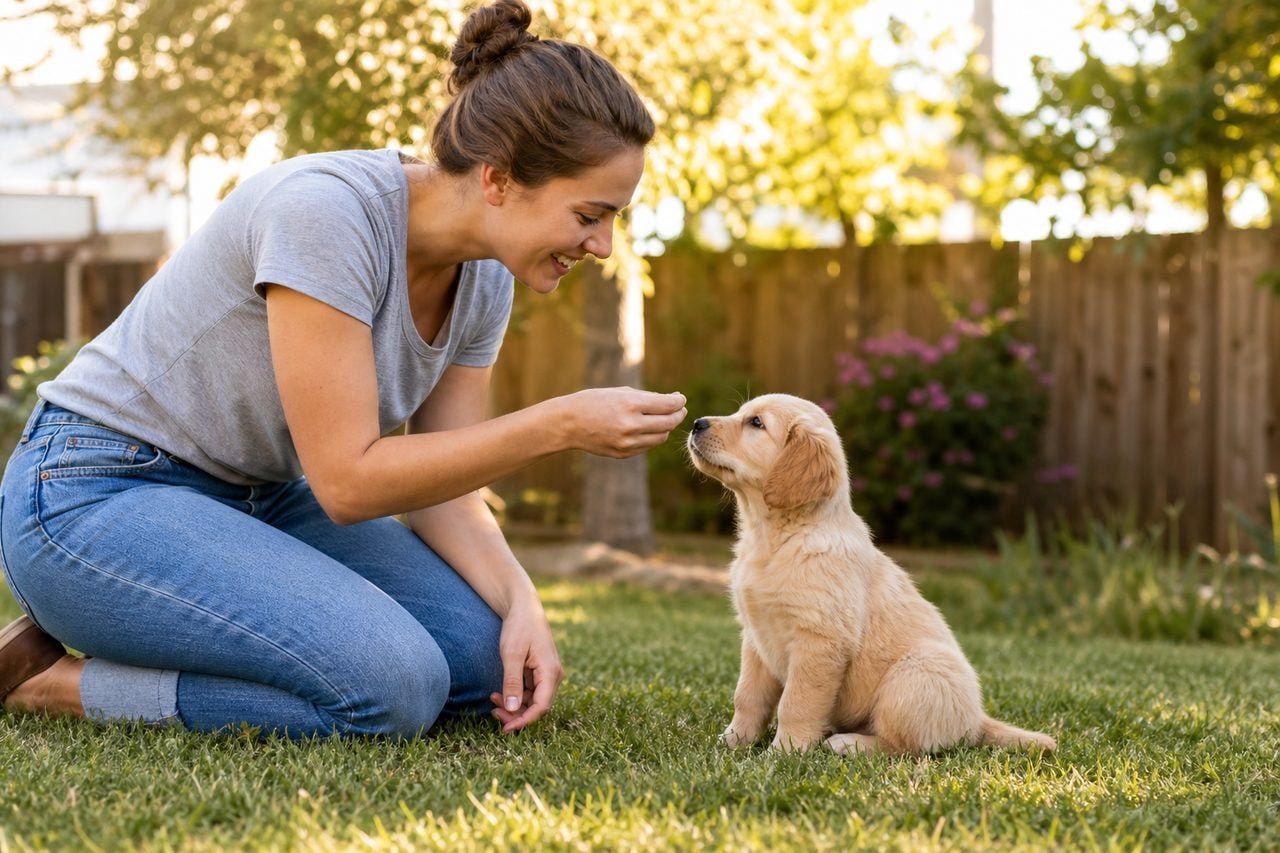
Socialization is the single most important thing you can do for a Reading puppy in its first few months, and Berks County happens to be an ideal place to do it. Within a short drive you can move from the downtown bustle of Penn Street and the GoggleWorks to the quiet sidewalks of Wyomissing and Sinking Spring, the college energy of Kutztown, and the open dairy country of the Oley Valley and Bernville. Few regions pack that much variety into so small an area, and a well-socialized puppy banks every bit of it as confidence for life — the kind of steady temperament that holds up at a crowded festival or a busy trailhead.
The science here is unforgiving on timing. A puppy's prime socialization window runs from roughly three to sixteen weeks of age, and it does not reopen. What your puppy meets calmly during that stretch — the rumble of a Reading Railroad-era freight line, snow underfoot on Mount Penn below the Pagoda, a tractor out near the Oley Valley, a crowd of Albright, Alvernia, or Kutztown students — tends to feel normal forever. What it misses, or meets in a frightening way, can become a lifelong fear that takes months of patient work to undo. That is why thoughtful, positive exposure beats sheer quantity every time, and why timing matters as much as effort.
This guide is built for Reading and Berks County families who want to use those crucial weeks well. We cover what socialization really means (and what it does not), the specific local sights and sounds worth seeking out across the county, how to read your puppy's body language, how to keep momentum through our wet springs and snowy winters, how to socialize safely before vaccinations are complete, and the common mistakes that quietly backfire. The reward is a steady, adaptable adult dog that takes city, suburb, trail, and farm-country life in stride.
What Socialization Really Means
Socialization is widely misunderstood as simply letting a puppy play with other dogs. In truth it is the deliberate, positive exposure to the full range of sights, sounds, surfaces, people, and situations your puppy will encounter in Berks County life — at a pace it can handle.
- It is about quality, not just quantity. Ten calm, happy encounters beat fifty overwhelming ones.
- It includes the inanimate world: umbrellas, snow, gravel, stairs, vacuum cleaners, and rumbling trucks all count.
- People of all kinds matter: children, people in hats, cyclists, mail carriers, and folks using mobility aids.
- Other animals, carefully: healthy, friendly dogs and the livestock smells of farm country — observed from a safe distance.
The goal is not to flood your puppy but to build a mental library that says, in effect, “I have seen something like this before, and it was fine.” A Reading puppy that learns this in its first months grows into a dog that can ride out a Pagoda fireworks night, a busy farmers' market, or a crowded trailhead without falling apart. Done well, socialization is the best insurance policy you will ever buy your dog.
The Critical Window: Three to Sixteen Weeks
Behavioral research is consistent on one point: the early socialization window is brief and powerful. From about three weeks, when the senses come online, to roughly sixteen weeks, a puppy's brain is primed to accept new things as normal. After that, novelty is increasingly met with caution.
- Weeks 3–7 usually happen at the breeder or shelter — ask what exposure your puppy already had.
- Weeks 8–12 are your prime window once the puppy is home; pack in gentle, varied experiences.
- Weeks 12–16 are for reinforcing and broadening, layering in busier Reading environments.
- Past 16 weeks socialization continues, but it takes more patience and repetition.
Because this window often overlaps with an incomplete vaccine schedule, Reading owners have to balance exposure with safety — carrying a puppy through risky areas, choosing clean surfaces, and avoiding unknown dogs. The cost of doing nothing is real: under-socialized puppies are far more likely to become fearful or reactive adults. Use the weeks you have, deliberately, and do not wait until the puppy is “fully protected” to start, or the most valuable window will have closed.
Reading Sights and Sounds Worth Seeking Out
Berks County gives you a ready-made checklist of experiences. Aim to expose your puppy to a wide range of these, briefly and positively, during the early weeks.
- City life: downtown Reading traffic, sirens, and pedestrian crowds near the GoggleWorks teach urban calm.
- Suburban routine: Wyomissing and Sinking Spring sidewalks, strollers, and friendly neighbors.
- Trains and trucks: the region's rail heritage means real train sounds — a great desensitization opportunity from a distance.
- Farm country: the Oley Valley and Bernville offer cattle, tractors, and wide-open fields.
- College crowds: Kutztown's students, skateboards, and bicycles are lively, controlled chaos.
- Nature surfaces: boardwalk, gravel, and grass at Nolde Forest, Blue Marsh Lake, or the Schuylkill River Trail.
Keep each outing short and end on a good note. If your puppy seems unsure of a passing freight train or a loud tractor, increase your distance and let it watch from a calmer spot. The aim is a puppy that files away Reading's full sensory range — city, rail, suburb, campus, and farm — as ordinary background to a happy life.
Reading Your Puppy's Body Language
Successful socialization depends on listening to your puppy. Pushing a frightened pup into a scary situation can create the very fear you are trying to prevent, so learning to read stress signals is essential.
- Relaxed signs: loose body, soft eyes, gentle tail wag, curiosity, willingness to take treats.
- Stress signs: tucked tail, flattened ears, lip-licking, yawning, freezing, or refusing food.
- Back off when stressed. Add distance, lower the intensity, and let your puppy reset before trying again.
- Let the puppy choose. Allow it to approach new people and objects rather than forcing contact.
- Pair novelty with reward. Treats and praise turn a strange sight into a positive memory.
A puppy that refuses a favorite treat is telling you it is over threshold — that is your cue to retreat, not to push harder. On a busy day near the GoggleWorks or amid a Kutztown crowd, watch for these signals and adjust in real time. Owners who respect their puppy's pace build trust, and a puppy that trusts you will follow you confidently into new Berks County experiences for years.
Socializing Through Berks County Seasons
Reading's four distinct seasons each bring socialization opportunities — and challenges. Planning around the weather keeps exposure consistent year-round instead of stalling every winter.
- Winter: introduce snow, ice underfoot, salted sidewalks, bulky coats, and the muffled quiet after a storm. Keep sessions short in the cold.
- Spring: mud, rain gear, umbrellas, thunder, and the return of crowds to trails and parks.
- Summer: humid heat (walk early or late), festivals, fireworks near the Pagoda, and busy lake days at Blue Marsh.
- Fall: rustling leaves, hunters' gear in farm country, and crisp, ideal weather for longer outings.
If a December puppy cannot get outside much, bring the world indoors — novel surfaces, household sounds, and visitors all count. Summer heat and humidity are no joke for a young dog, so favor early mornings and shaded trails, and never leave a puppy in a warm car. Treating each season as a fresh set of experiences keeps your Reading puppy progressing no matter what the Berks County sky is doing.
Safe Socialization Before Full Vaccination
The tension every Reading owner faces is real: the prime socialization window opens before the vaccine series is finished. The answer is not to wait — it is to socialize smartly and safely in the meantime.
- Carry your puppy through higher-risk areas like busy sidewalks and pet stores so it experiences sights and sounds without contact with the ground.
- Choose clean surfaces. Your own yard, friends' homes, and low-traffic spots are lower risk than dog parks.
- Invite the world in. Host calm, vaccinated dogs and a variety of people at home.
- Skip unknown dogs and high-traffic dog areas until your veterinarian clears your puppy.
- Use puppy classes that require proof of vaccination — a controlled, safer way to meet other pups.
This balanced approach lets you capture the critical early weeks without unnecessary disease risk. Most Reading-area veterinarians and trainers actively encourage early, careful socialization for exactly this reason — the behavioral cost of waiting usually outweighs the controlled risk. When in doubt, ask your vet which local settings they consider safe for your puppy's current stage.
Common Socialization Mistakes to Avoid
Even well-meaning Reading owners can undermine socialization with a few common errors. Knowing them in advance keeps your puppy on track.
- Flooding: overwhelming a puppy with too much at once, which creates fear instead of confidence.
- Forcing contact: pushing a scared puppy toward a stranger, dog, or object it is clearly avoiding.
- Stopping too soon: treating sixteen weeks as a finish line rather than easing off the gas.
- Only meeting dogs: neglecting people, surfaces, sounds, and farm-country sights.
- Ignoring stress signals: missing the lip-licks and tucked tails that say “too much.”
- Bad first experiences: letting an overexcited dog or rough child scare your puppy.
The fix for nearly all of these is the same: go slower, keep it positive, and follow your puppy's lead. Quality exposure beats a frantic checklist every time. A Reading puppy that meets the world gradually — city, suburb, trail, and farm, all at a comfortable pace — becomes the calm, adaptable dog every owner hopes for, while a rushed or careless approach can plant fears that take months to undo.
Reviewed Puppy Socialization Trainers in Reading
These reviewed Reading-area trainers from our directory handle puppy socialization. Each links to a full profile with specialties, certified credentials, reviews, and contact info:
- Cappuccino Dog Training Inc. — 5.0★ (109 reviews)
- Dentler’s Dog Training, LLC — 5.0★ (33 reviews)
- For Them Dog Training — 5.0★ (30 reviews)
- Kerber Dog Training — 5.0★ (28 reviews)
- Alpha U dog training — 5.0★ (23 reviews)
- The Clever Hound LLC — 5.0★ (11 reviews)
- The Virtuous Dog — 5.0★ (10 reviews)
- Woofs of Wisdom — 5.0★ (10 reviews)
- The Art of Dog Training — 5.0★ (10 reviews)
- Down To Earth Dog Lady — 5.0★ (3 reviews)
See all Reading puppy socialization trainers →
Frequently Asked Questions
What is the most important age for puppy socialization?
The critical window runs from about three to sixteen weeks of age. During this period a puppy's brain readily accepts new experiences as normal. After sixteen weeks socialization still helps, but it requires far more patience. For Reading owners, that means starting deliberate, positive exposure as soon as your puppy comes home.
Can I socialize my puppy before it is fully vaccinated?
Yes, and most experts encourage it. Carry your puppy through higher-risk areas, choose clean surfaces like your own yard, invite calm vaccinated dogs and people over, and use vaccination-required puppy classes. Avoid unknown dogs and busy dog parks until your veterinarian gives the all-clear. The behavioral cost of waiting usually outweighs the controlled risk.
Does socialization just mean meeting other dogs?
No. While friendly dog encounters matter, true socialization includes people of all kinds, surfaces, sounds, and situations — from Reading city traffic and trains to farm-country tractors and snow underfoot. A puppy that meets only other dogs can still grow up fearful of everyday objects, noises, and strangers.
How do I know if my puppy is overwhelmed?
Watch for stress signals: a tucked tail, flattened ears, lip-licking, yawning, freezing, or refusing treats it normally loves. These mean your puppy is over threshold. Add distance, lower the intensity, and let it reset before continuing. Respecting these signals builds trust rather than fear.
Where are good places to socialize a puppy near Reading?
Berks County offers great variety: downtown Reading for city sounds, Wyomissing and Sinking Spring for calm sidewalks, Kutztown for college-town energy, the Oley Valley for farm sights, and Nolde Forest, Blue Marsh Lake, or the Schuylkill River Trail for natural surfaces. Match each spot to your puppy's vaccination stage and comfort level.
What happens if I miss the socialization window?
It is not too late, but expect to work harder. Older puppies and adult dogs can still learn to accept new things through gradual, positive exposure and patience, sometimes with a trainer's help for fearful cases. Starting later simply means more repetition and a slower pace, so begin as early as you safely can.
Related: read our complete puppy socialization guide or the full Reading dog training overview.
Ready to find the right puppy socialization pro in Reading?